Monday, January 07, 2013

The Anti-Empire Report January 8th, 2013 by William Blum


The Anti-Empire Report

Where have you gone, Joe DiMaggio?

"France no longer recognizes its children," lamented Guillaume Roquette in an editorial in the Figaro weekly magazine in Paris. "How can the country of Victor Hugo, secularism and family reunions produce jihadists capable of attacking a kosher grocery store?" 1
I ask: How can the country of Henry David Thoreau, separation of church and state, and family Thanksgiving dinners produce American super-nationalists capable of firing missiles into Muslim family reunions in Pakistan, Afghanistan, Yemen, and Somalia?
Does America recognize its children? Indeed, it honors them. Constantly.
A French state prosecutor stated that "A network of French Islamists behind a grenade attack on a kosher market outside Paris last month also planned to join jihadists fighting in Syria." 2
We can add these worthies to the many other jihadists coming from all over to fight in Syria for regime change, waving al-Qaeda flags ("There is no god but God"), carrying out suicide attacks, exploding car bombs, and singling out Christians for extermination (for not supporting the overthrow of the secular Syrian government.) These folks are not the first ones you would think of as allies in a struggle for the proverbial freedom and democracy. Yet America's children are on the same side, with the same goal of overthrowing Syrian president Bashir Assad.
So how do America's leaders explain and justify this?
"Not everybody who's participating on the ground in fighting Assad are people who we are comfortable with," President Obama sad in an interview in December. "There are some who, I think, have adopted an extremist agenda, an anti-U.S. agenda, and we are going to make clear to distinguish between those elements." 3
In an earlier speech, Secretary of State Clinton acknowledged the scope of the threat from such movements. "A year of democratic transition was never going to drain away reservoirs of radicalism built up through decades of dictatorship," she said. "As we've learned from the beginning, there are extremists who seek to exploit periods of instability and hijack these democratic transitions." 4
"Extremist" ... "radicalism" ... No mention of "terrorists" (which is what Assad calls them). No mention of "jihadists" or foreign mercenaries. Or that they were preparing their movement to overthrow the Syrian government well before any government suppression of peaceful protestors in March of 2011, which the Western media consistently cites as the cause of the civil war. As far back as 2007, Seymour Hersh was writing in The New Yorker:
The U.S. has also taken part in clandestine operations aimed at Iran and its ally Syria. A by-product of these activities has been the bolstering of Sunni extremist groups that espouse a militant vision of Islam and are hostile to America and sympathetic to Al Qaeda.
Nor any explanation of what it says about the mission of the Holy Triumvirate (the United States, NATO and the European Union) that they have been supplying these jihadist rebels with funds, arms and training; with intelligence and communication equipment; with diplomatic recognition(!); later we'll probably find out about even more serious stuff. But President Obama is simply "uncomfortable" with them, because Assad, like Gaddafi of Libya, is a non-Triumvirate Believer, while the Jihadists are the proverbial "enemy of my enemy". How long before they turn their guns and explosives upon Americans, as they did in Libya?

Seeing is believing, and believing is seeing

Is it easier for a believer to deal with a tragedy like the one in Newtown, Connecticut than it is for an atheist? The human suffering surrounding the ending of life forever for 20 small children and six adults made me choke up again and again with each news report. I didn't have the comfort that some religious people might have had – that it was "God's will", that there must be a "reason" for such profound agony, a good reason, which you would understand if you could receive God's infinite wisdom, if you could be enlightened enough to see how it fit into God's Master Plan.
"How could God let this happen?", asked a Fox News reporter of former Republican governor of Arkansas and presidential candidate, Mike Huckabee. "Well," replied Huckabee, "you know, it's an interesting thing. We ask why there is violence in our schools, but we've systematically removed God from our schools. Should we be so surprised that schools would become a place of carnage because we've made it a place where we don't want to talk about eternity, life, what responsibility means, accountability? That we're not just going to have to be accountable to the police, if they catch us. But one day, we will stand before a Holy God in judgment. If we don't believe that, then we don't fear that."
So the former governor is clearly implying that the tragedy was the lord's retribution for not believing in, or not fearing, or just ignoring His Master Plan. Believing this may well reduce the grief Huckabee feels about what happened; perhaps even provide him some satisfaction that those who were not "accountable" are being punished. Whether he includes the children in this group, or only their parents, teachers, school officials and Democrats I don't know.
Local pastor Jim Solomon recounted the story of a girl in the first grade who, by playing dead, was the only one in her room to survive: "She ran out of the school building covered from head to toe with blood and the first thing she said to her mom was, 'Mommy, I'm OK but all my friends are dead'." This child was spared, said the pastor, "by God's grace". 5
Ah yes, God's grace. Do I need to ask the obvious question?
It may be relevant to recall that the fellow who slaughtered 87 young people in Norway last year was a fundamentalist Christian.
"With or without religion, good people will do good things and bad people will do bad things. But for good people to do bad things — that takes religion." - Steven Weinberg, Nobel Prize-winning physicist
"Guns don't kill people. People kill people."
How true. And nuclear bombs don't kill people. Government leaders who decide to use nuclear bombs kill people. So why have any bans on nuclear bombs? Get one for each member of the family; well, for those over 16 at least.
The crazed and the disturbed will always walk amongst us. What we must do is strive to deny them the facile ability to engage in mass murder. Everything else being equal, if the Connecticut killer's mother didn't have an arsenal of guns at home, including an assault weapon, the story would probably have been a very different one. Ah, but I hear you asking – on the left and on the right – so you wanna let the government have all the guns and the people nothing to defend themselves with? To which I reply: Do you really think the people could hold their own in an armed battle with the police and the military? Mass suicide.
In the past decade various important rights and freedoms of Americans have been seriously curtailed by the Bush and Obama administrations. Did the 300 million guns in private hands prevent any of this from happening? No. And the rights and the freedoms were taken away much more by pieces of paper than guns.
I'd be in favor of eliminating all guns except for some law enforcement purposes. But if that is not feasible, the goal should be to have as few guns in circulation as possible. Or just ban ammunition, which would be a lot easier and probably even more effective. It would be a good start toward our cherished national goal of becoming a civilized society.

The death of Osama bin Laden. What does it profit a country?

The books and the films are coming out. The subject is a sure winner. The American tracking down and execution of Osama bin Laden in May of 2011. Has there ever been a better example of Good triumphing over Evil? Of Yankee courage and cleverness? "The bin Laden operation was a landmark achievement by our country, by our military, by our Intelligence Community, and by our Agency," said the acting Director of the CIA, Michael Morell. 6
But even if everything the government has told us about the operation is true ... How important was it really? What did it change in Washington's glorious War on Terror? American taxpayers are not spending a penny less on the bloody spectacle. American soldiers still die in Afghanistan as before. American drones still bring extreme anxiety, death and destruction to children and parents in the Middle East, South Asia, and Africa. Guantánamo still holds numerous damned souls who wonder why they are there as they bang their head against a brick wall.
Anti-American terrorists are still being regularly created as a result of US anti-terrorist operations. (Even the way bin Laden was "buried" increased the hatred.) It's a mass-production terrorist assembly line working three shifts even if the bin Laden model has been discontinued. If only one in 10,000 of the world's 1.6 billion Muslims is moved to want to attack the US because of Washington's repeated outrages against Muslims, the United States will have created a pool of 160,000 Muslims devoted to seeking revenge against Americans.
"Remember when the United States had a drug problem and then we declared a War on Drugs, and now you can't buy drugs anymore? The War on Terrorism will be just like that," declared author David Rees in 2008. 7
The fear mongering remains as is; airport security has not gotten any less stupid, embarrassing, or destructive of civil liberties than before, only worse. "Will that be frisked or naked pictures with your airline ticket, sir?" The No-Fly list grows bigger with each passing day, listing people who are too guilty to fly, but too innocent to charge with anything.
Wherever you go — "If you see something, say something!"
People are entrapped as much as ever, charged with some form of terrorism (or "terrorism"), staged and financed by government agents, put away for terribly long periods. The State Department puts a country on its terrorist list, then the FBI persecutes Americans for helping someone in that country, perhaps no more than medical aid.
And surveillance of Americans ... the science fiction methods are expanded without end ... no escape from Fortress America. Protestors in America are monitored and harassed and recorded as much as before; witness the recent revelations concerning the FBI/Homeland Security/et al and the Occupy Movement. The Patriot Act is still the law of the land, now joined by the National Defense Authorization Act which makes it easier than ever to hold people in indefinite detention, for any reason, or no reason, including American citizens. And now we have the president's clandestine "kill list". 8 Could it be any worse if bin Laden were still alive?

Just imagine

Imagine there's no countries
It isn't hard to do.
Nothing to kill or die for
And no religion too ...
John Lennon's "Imagine".
Sung New Years Eve by a performer at Times Square.
Such subversive talk.
And on worldwide television.
Followed immediately by NBC-TV commentator Carson Daly declaring that we have to honor our brave soldiers.
I'm surprised that he didn't also mention honoring God.
Toshiba sponsored the giant glass ball which rose up to the top at midnight.
Viewers had the name "Toshiba" flashed in their face a hundred times during the evening in all kinds of ways.
Imagine that John Lennon had called upon us to "Imagine there's no Toshiba".
Without Toshiba would there not have been a New Years Eve?
Stuck in 2012 forever?
Imagine.
"Summer, 1969: I sit next to Fidel Castro as he watches on the University of Havana's color TV the astronauts landing on the moon. At times he asks me to render certain idioms. He watches with fascination. The program had begun with 'TANG: THE BREAKFAST FOOD PRESENTS ... THE MOON LANDING.'
"And without Tang," Castro asks, "would there have been no moon landing?"
– Saul Landau, author of numerous books and films on Cuba

One way to look at it

Capitalism can be seen in historical evolutionary terms, independent of any moral point of view or judgement. Broadly speaking, the organization of mankind's societies has evolved from slavery to feudalism to capitalism. And it's now time for the next step: socialism.
Socialism or communism have always been given just one chance to work, if that much, while capitalism has been given numerous chances to do so following its perennial fiascos. Ralph Nader has observed: "Capitalism will never fail because socialism will always be there to bail it out."
Capitalism gave rise to some very important innovations, such as mass production and distribution, and many technological advances. But now, and for some time past, the system has caused much more harm than good. It's eating its young. And our environment. We can take the advances instituted by capitalism for the purpose of profit and use them to create a society based on putting people before profit. Just imagine.

Notes

  1. Washington Post, October 21, 2012 ↩
  2. Associated Press, October 11, 2012 ↩
  3. Washington Post, December 11, 2012 ↩
  4. Washington Post, October 15, 2012 ↩
  5. Huffington Post, December 17, 2012 ↩
  6. Washington Post, December 22, 2012 ↩
  7. In his book Get Your War On ↩
  8. New York Times, May 29, 2012 ↩
–
William Blum is the author of:
  • Killing Hope: US Military and CIA Interventions Since World War 2
  • Rogue State: A Guide to the World's Only Superpower
  • West-Bloc Dissident: A Cold War Memoir
  • Freeing the World to Death: Essays on the American Empire
Portions of the books can be read, and signed copies purchased, at www.killinghope.org
Previous Anti-Empire Reports can be read at this website.
To add yourself to this mailing list simply send an email to bblum6 [at] aol.com with "add" in the subject line. I'd like your name and city in the message, but that's optional. I ask for your city only in case I'll be speaking in your area.
(Or put "remove" in the subject line to do the opposite.)
Any part of this report may be disseminated without permission. I'd appreciate it if the website were mentioned.

Thursday, December 06, 2012

Tomgram: Pepe Escobar, Obama in Tehran?


Imagine, for a moment, a world in which the United States is a regional power, not a superpower.  A world in which the globe’s mightiest nation, China, invades Mexico and Canada, deposing the leaders of both countries.  A world in which China has also ringed the Americas, from Canada to Central America, with military bases.  A world in which Chinese officials openly brag about conducting covert operations against and within the United States.  A world in which the Chinese launch a sophisticated and crippling cyber attack on America’s nuclear facilities.  A world in which the Chinese send spy drones soaring over the United States and position aircraft carrier battle groups off its shores.  What would Americans think?  How would Washington react?  Perhaps something like Iran’s theocratic leadership today.  After all, Iran has seen the United States invade its neighbors Iraq and Afghanistan, announcecovert operations against it, surround it with military bases, fly drones over it, carry out naval operations off its coast, conduct a gigantic build-up of military forces all around it, and launch acyberwar against it.
Imagine again, in this alternate universe, that China forged military alliances throughout the Americas, pulling Mexico and Canada, as well as Caribbean and Central American nations into its orbit.  Imagine that it started selling advanced military technology to those countries.  How might the U.S. government and its citizens respond? 
It’s a question worth pondering given Washington’s recent actions.  Last month, for instance, the U.S. quietly announced plans to further flood the Middle East with advanced weaponry. According to November notices sent by the Pentagon to Congress, the Department of Defense intends to oversee a $300 million deal with Saudi Arabia for spare parts for Abrams Tanks, Bradley Fighting Vehicles, and Humvees, and another for $6.7 billion in new advanced aircraft.  Add to this a proposed sale of $9.9 billion in Patriot missiles to Qatar, a $96 million deal with Oman for hundreds of Javelin guided missiles, and more than $1.1 billion in Terminal High Altitude Area Defense (THAAD) missiles for the United Arab Emirates.  And this was on top of deals struck earlier in the year that include a $63 million sale of Huey II helicopters to Lebanon, $4.2 billion in Patriot missiles for Kuwait, a $3 billion agreement to arm Qatar with advanced Apache attack helicopters, more than $1 billion in upgrades for Abrams tanks belonging to Morocco’s military, and the sale of $428 million worth of radar equipment and tactical vehicles to Iraq.
All this is worth keeping in mind while reading the latest assessment of U.S.-Iranian relations by that peripatetic reporter extraordinaire and TomDispatch regular Pepe Escobar who conjures up a very different alternate reality in which President Obama morphs into President Richard Nixon heading for Beijing, and Washington acts far less bellicose. Nick Turse
Mr. President, Tear Down This Wall 
Washington’s Iranian Future 
By Pepe Escobar
In Election 2012’s theatre-of-the-absurd “foreign policy” debate, Iran came up no less than 47 times. Despite all the fear, loathing, threats, and lies in that billionaire’s circus of a campaign season, Americans were nonetheless offered virtually nothing substantial about Iran, although its (non-existent) WMDs were relentlessly hawked as the top U.S. national security issue. (The world was, however, astonished to learn from candidate Romney that Syria, not the Persian Gulf, was that country’s “route to the sea.”)
Now, with the campaign Sturm und Drang behind us but the threats still around, the question is: Can Obama 2.0 bridge the gap between current U.S. policy (we don't want war, but there will be war if you try to build a bomb) and Persian optics (we don't want a bomb -- the Supreme Leader said so -- and we want a deal, but only if you grant us some measure of respect)? Don’t forget that a soon-to-be-reelected President Obama signaled in October the tiniest of possible openings toward reconciliation while talking about the “pressure” he was applying to that country, when he spoke of “our policy of... potentiallyhaving bilateral discussions with the Iranians to end their nuclear program.”
Tehran won’t, of course, “end” its (legal) nuclear program.  As for that “potentially,” it should be a graphic reminder of how the establishment in Washington loathes even the possibility of bilateral negotiations.

Mr. President, Tear Down This Wall
Let’s start with the obvious but important: on entering the Oval Office in January 2009, President Obama inherited a seemingly impregnable three-decade-long “Wall of Mistrust” in Iran-U.S. relations. To his credit, that March he directly addressed all Iranians in a message for Nowruz, the Iranian New Year, calling for an “engagement that is honed and grounded in mutual respect.” He even quoted the thirteenth century Persian poet Sa’adi: “The children of Adam are limbs of one body, which God created from one essence.”
And yet, from the start he was crippled by a set of Washington misconceptions as old as that wall, and by a bipartisan consensus for an aggressive strategy toward Iran that emerged in the George W. Bush years when Congress ponied up $400 million for a set of “covert operations” meant to destabilize that country, including cross-border operations by special forces teams. All of this was already based on the dangers of “the Iranian bomb.”
A September 2008 report by the Bipartisan Policy Center, a Washington think tank, was typical in assuming a nuclear-weapons-capable Iran as a fact.  It was drafted by Michael Rubin from the neoconservative American Enterprise Institute, the same AEI that had unashamedly promoted the disastrous 2003 invasion and occupation of Iraq. Several future Obama advisers “unanimously approved” the report, including Dennis Ross, former senator Charles Robb, future Deputy Secretary of Defense Ashton Carter, Anthony Lake, future U.N. ambassador Susan Rice, and Richard Clarke. The 2007 National Intelligence Estimate by all U.S. intelligence agencies stating that Iran had ended any nuclear weapons program in 2003 was bluntly dismissed.
Mirroring the Bush administration’s “all options are on the table” approach (including cyberwar), the report proposed -- what else? -- a military surge in the Persian Gulf, targeting “not only Iran’s nuclear infrastructure, but also its conventional military infrastructure in order to suppress an Iranian response.” In fact, such a surge would indeed begin before George W. Bush left office and only increase in scope in the Obama years.
The crucial point is this: as tens of millions of U.S. voters were choosing Barack Obama in 2008, in part because he was promising to end the war in Iraq, a powerful cross-section of Washington elites was drafting an aggressive blueprint for a future U.S. strategy in the region that stretched from North Africa to Central Asia and that the Pentagon was then still calling the “arc of instability.” And the key plank in this strategy was a program to create the conditions for a military strike against Iran.
R.e.s.p.e.c.t.?
With an Obama 2.0 administration soon to be in place, the time to solve the immensely complex Iranian nuclear drama is now. But as Columbia University’s Gary Sick, a key White House adviser on Iran during the Iranian Revolution and the Tehran hostage crisis of 1979-1981, has suggested, nothing will be accomplished if Washington does not start thinking beyond its ever-toughening sanctions program, now practically set in stone as “politically untouchable.”
Sick has proposed a sound path, which means that it has no hope of being adopted in Washington.  It would involve private bilateral discussions by credible negotiators for both sides based on a mutually agreed-upon agenda. These would be followed by full-blown negotiations under the existing P5+1 framework (the five permanent members of the U.N. Security Council -- U.S., Russia, China, France, and Britain -- plus Germany).
Considering the frantic post-2009 seesawing of sanctions, threats, cyber attacks, military surges, and colossal mutual incomprehension, no one in his right mind would expect a pattern of “mutual respect” to emerge easily out of Washington’s “dual track” approach.
It took Ambassador Hossein Mousavian, research scholar at Princeton University's Woodrow Wilson School of Public and International Affairs and spokesperson for the Iranian nuclear negotiating team from 2003 to 2005, to finally explain it all last August in a single sentence: "The history of Iran's nuclear program suggests that the West is inadvertently pushing Iran toward nuclear weapons." Chas Freeman, former U.S. Ambassador to Saudi Arabia, agrees,suggesting in a recent speech that Iran now “seems to be reenacting Israel’s clandestine weapons development program of five decades ago, developing capabilities to build and deliver nuclear weapons while denying that it intends actually to do any such thing.”
What makes these developments even more absurd is that a solution to all this madness exists.  As I’ve written elsewhere, to satisfy the concerns of the West regarding Iran's 20% stockpile of enriched uranium,
“a mutually acceptable solution for the long term would entail a ‘zero stockpile.’ Under this approach, a joint committee of the P5+1 and Iran would quantify the domestic needs of Iran for use of 20% enriched uranium, and any quantity beyond that amount would be sold in the international market or immediately converted back to an enrichment level of 3.5%. This would ensure that Iran does not possess excess 20% enriched uranium forever, satisfying the international concerns that Iran is seeking nuclear weapons. It would be a face-saving solution for all parties as it would recognize Iran's right to enrichment and would help to negate concerns that Iran is pursuing nuclear weapons.”
Time to Hit the New Silk Road(s)
The current U.S. strategy is not exactly a raging success.  Economist Djavad Salehi-Esfahani has explained how Tehran’s theocratic rulers continue to successfully manage the worst effects of the sanctions and a national currency in free fall by using the country’s immense oil and natural gas wealth to subsidize essential imports.  Which brings us to the bedrock question of this -- or possibly any other -- moment: Will Obama 2.0 finally admit that Washington doesn’t need regime change in Tehran to improve its relationship with that country?
Only with such an admission (to itself, if not the world) are real negotiations leading to a Wall of Mistrust-blasting deal possible.  This would undoubtedly include a genuine détente, an acceptance of Iran’s lawful pursuit of a peaceful nuclear program, guarantees that the result would not be a covert weapons project, and a turning away from the possibility of a devastating war in the Persian Gulf and the oil heartlands of the Greater Middle East.  
Theoretically, it could also include something else: an Obama “Nixon in China” moment, a dramatic journey or gesture by the U.S. president to decisively break the deadlock.  Yet as long as a barrage of furiously misinformed anti-Iran hawks in Washington, in lockstep with Prime Minister Benjamin Netanyahu’s Israeli government, deploy a relentless PR offensiveburning with incendiary rhetoric, “red lines,” deadlines, and preemptive sabotage of the P5+1 negotiations, such a moment, such a gesture, will remain the faintest of dreams.
And even such an elusive “Obama in Tehran” moment would hardly be the end of the story.  It would be more like a salutary twist in the big picture. To understand why, you need to grasp just how crucial Iran’s geopolitical positioning is.  After all, in energy and other terms that country is the ultimate crossroads of Eurasia, and so the pivot of the world.  Strategically, it straddles the supply lines for a sizeable part of the globe’s oil and gas reserves and is a privileged hub for the distribution of energy to South Asia, Europe, and East Asia at a moment when both China and India are emerging as potential great powers of the twenty-first century.
The urge to control that reality lies at the heart of Washington’s policy in the region, not an Iranian “threat” that pales as soon as the defense spending of the two countries is compared.  After all, the U.S. spends nearly a $1 trillion on “defense” annually; Iran, a maximum of $12 billion -- less, that is, than the United Arab Emirates, and only 20% of the total defense expenditures of the six Persian Gulf monarchies grouped in the Gulf Cooperation Council (GCC).
Moreover, the Iranian nuclear “threat” would disappear for good if Obama 2.0 ever decided to push for making the Middle East a nuclear-free zone. Iran and the GCC have endorsed the idea in the past. Israel -- a de facto (if never officially acknowledged) nuclear power with an arsenal of up to 300 warheads-- has rejected it.
Yet the big picture goes way beyond the strategic gaming of the U.S. and Israel about Iran’s possible future arsenal. Its position at the ultimate Southwest Asian strategic crossroads will determine much about the future New Great Game in Eurasia -- especially whose version of a modern Silk Road will prevail on the great energy chessboard I call Pipelineistan.
I’ve argued for years that all these intertwined developments must be analyzed together, including Washington’s announced Asian military “pivot” (aka “rebalancing”).  That strategy, unveiled in early 2012 by President Obama, was supposed to refocus Washington’s attention away from its two disastrous wars in the Greater Middle East to the Asia-Pacific region with a special focus on containing China. Once again, Iran happens to lie right at the heart of that new policy, given how much of its oil and natural gas heads east to China over waters patrolled by the U.S. Navy.
In other words, it hardly matters that Iran is a rickety regional power run by aging theocrats with an only modestly impressive military.  The relationship between Obama 2.0 and Iran is guaranteed to involve the nuclear question, but also (whether acknowledged or not) the global flow of energy across Pipelineistan, and Washington’s future relations with China and the rest of Asia. It will also involve Beijing’s concerted movements to prop up the yuan in relation to the dollar and, at the same time, accelerate the death of the petrodollar.  Finally, behind all of the above lies the question of who will dominate Eurasia’s twenty-first century energy version of the old Silk Road.
At the 2012 Non-Aligned Movement (NAM) meeting in Tehran, India, Iran, and Afghanistan pushed for the creation of what might be called a new southern Silk Road -- really a network of roads, railways, and major ports that would connect Iran and its energy wealth ever more closely to Central and South Asia. For Delhi (as for Beijing), getting closer to both Afghanistan and especially Iran is considered crucial to its Eurasian strategy, no matter how much Washington may disapprove.
India is betting on the port of Chabahar in Iran, China on the port of Gwadar in Pakistan (and of course a gas pipeline from there to Iran) as key transshipment hubs linking Central Asia and the Gulf. Both ports will be key pawns inPipelineistan’s New Great Game, which is quickly slipping from Washington’s control.  In both cases, despite its drive to isolate Iran, there is little the Obama administration can do to prevent these and other instances of closer Eurasian integration.
Washington’s grand strategy for a “Greater Central Asia” under its control once centered on Afghanistan and India.  Its disastrous Afghan War has, however, blown a hole through its plans; so, too, has its obsession with creating energy routes that bypass Iran (and Russia), which looks increasingly irrational to much of the rest of Eurasia.  The only version of a Silk Road that the Obama administration has been able to devise has been war-related: theNorthern Distribution Network, a logistical marathon of routes crisscrossing Central Asia for bringing military supplies into Afghanistan without relying fully on an increasingly unreliable Pakistan.
Needless to say, in the long term, Moscow will do anything to prevent a U.S./NATO presence in Central Asia. As with Moscow, so with Beijing, which regards Central Asia as a strategic rearguard area when it comes to its energy supply and a place for economic expansion as well.  The two will coordinate their policies aimed at leaving Washington in the lurch through the Shanghai Cooperation Organization. That’s also how Beijing plans to channel its solution for eternally war-torn Afghanistan and so secure its long-term investments in mineral and energy exploitation. Ultimately, both Russia and China want post-2014 Afghanistan to be stabilized by the United Nations.
The ancient Silk Road was humanity’s first globalization highway centered on trade.  Now, China in particular is pushing for its own ambitious version of a new Silk Road focused on tapping into energy -- oil and natural gas -- from Myanmar to Iran and Russia.  It would, in the end, link no less than 17 countries via more than 8,000 kilometers of high-speed rail (on top of the 8,000 kilometers already built inside China). For Washington, this means one thing: an evolving Tehran-Beijing axis bent on ensuring that the U.S. strategic target of isolating Iran and forcing regime change on that country will be ever just out of reach.   
Obama in Tehran?
So what remains of the initial Obama drive to reach out to Iran with an “engagement that is honed and grounded in mutual respect”? Not much, it seems.
Blame it -- once again -- on the Pentagon, for which Iran will remain a number one “threat,” a necessary enemy.  Blame it on a bipartisan elite in Washington, supported by ranks of pundits and think tanks, who won’t let go of enmity against Iran and fear campaigns about its bomb.  And blame it on an Israel still determined to force the U.S. into an attack on Iranian nuclear facilities that it desires.  In the meantime, the U.S. military build-up in the Persian Gulf, already at staggering levels, goes on.
Somebody, it seems, has yet to break the news to Washington: we are in an increasingly multipolar world in which Eurasian powers Russia and China, and regional power Iran, simply won’t subscribe to its scenarios. When it comes to the New Silk Road(s) linking South Asia, Central Asia, Southwest Asia, and China, whatever Washington’s dreams may be, they will be shaped and constructed by Eurasian powers, not by the United States.
As for an Obama 2.0 “Nixon in China” moment transplanted to Tehran?  Stranger things have happened on this planet.  But under the present circumstances, don’t hold your breath.
Pepe Escobar is the roving correspondent for Asia Times, an analyst for al-Jazeera and the Russian network RT, and a TomDispatch regular. His latest book is Obama Does Globalistan (Nimble Books, 2009).
Follow TomDispatch on Twitter @TomDispatch and join us on Facebook.  Check out the newest Dispatch book, Nick Turse’s The Changing Face of Empire: Special Ops, Drones, Proxy Fighters, Secret Bases, and Cyberwarfare.
Copyright 2012 Pepe Escobar

Tuesday, November 13, 2012

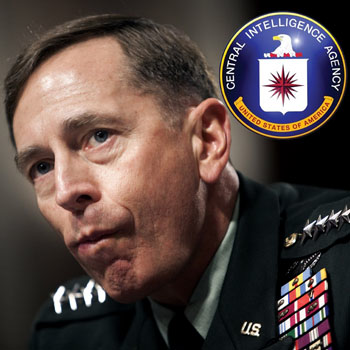
Skyfall, starring David Petraeus By Pepe Escobar


ROVING EYE
Skyfall, starring David Petraeus
By Pepe Escobar 

My name is Petraeus. David Petraeus. Move over, Bond, with your Skyfall; this is the real deal, a certified political/national security blockbuster to end them all. 

This is how Hollywood would market it; "He had the nation's highest security clearance. But above all he was an embedded lady killer." 

Now for the casting. Daniel Craig could easily play The General, although The General would rather teleguide a Hellfire than an 

  
Aston Martin, and wear a "fruit salad" (as in myriad decorations) instead of a killer Tom Ford suit. Demi Moore - sultry as ever - could play "Paula". Assorted Iraqis and Afghans would play "collateral damage". 

Meanwhile, murky does not even begin to describe alleged reality - as in the director of the Central Intelligence Agency, retired Gen David Petraeus, resigning over a bedroom farce only two days after President Barack Obama is re-elected, amid crossfire accusations raging for weeks regarding what the CIA was exactly doing in Libya, that godforsaken land liberated by the North Atlantic Treaty Organization and now ruled by a bunch of militias. 

As whodunits go, this plot is going nowhere. Nobody knows why this blockbuster was leaked last Friday - by the way only one day after President Obama himself had learned about it (on the other hand attorney general Eric Holder of The Fast and the Furiousfame knew about it since "late summer", according to the proverbial anonymous, "US officials"). 

Nobody knows what the Federal Bureau of Investigation was planning to do before all hell broke loose - considering that its four-month investigation had unearthed that Petraeus and his lover, West Point graduate, fitness fanatic, adoring biographer Paula Broadwell, had not breached national security. 

Or maybe they had. For starters, The General - possessor of the nation's highest national security clearance - was using a mere G-mail account to talk dirty to Paula, using what The Washington Post gleefully described as "a tactic of terrorists who are rightly wary of espionage". And when it was leaked that the FBI found no "major security breaches", this means there WAS a security breach. 

My guy
The bedroom farce elements are enough to have Moliere rolling in his tombe. The whole thing started when Floridian Jill Kelley complained about receiving harassing emails from Paula, the adoring co-author (with Washington Post journalist Vernon Loeb) of the full-access biography All In: The Education of General David Petraeus, published in January. Paula and Petraeus had been getting down to the nitty-gritty since November 2011, two months after Obama appointed him as head of the CIA. Talk about an embedded biographer. 

So Paula must have thought she was in a sexy quadrangle, not triangle. She obviously didn't know much about Jill Kelley - the third woman in the farce - the other three sides being Paula and Petraeus' wife, the now "furious" Holly. The Tampa Bay Times described The General as a grandfather to Kelley's family. 

Kelley also happened to be a critical player; a "social liaison" to the Pentagon's supreme, shadowy, counterterrorism/killing machine, the Fort Bragg-based Joint Special Operations Command (JSOC). It's crucial to know that it was the JSOC that allegedly led the CIA and the Pentagon into what had happened during the attack against the US consulate in Benghazi in which ambassador Chris Stevens was killed. 

None of this obviously mattered to Paula; in the harassing emails that culminated in this bombshell, she bluntly ordered Kelley to "stay away from my guy". 

As for "my guy", he has multiple questions to answer. First of all; why did the CIA tell the White House that the Benghazi drama was provoked by that stupid "Prophet Muhammad" YouTube video - and not an attack coordinated by previously NATO-enabled Salafi-jihadis? 

And then, no less important; why did The General not decide to commit his public seppuku over two weeks ago, when FBI agents talked to him in person about the investigation? Was it his paramount reason the desire not to bomb the Obama administration and practically hand the election over to the Republican Party? Or maybe he was hoping the whole thing would simply be covered up, like a Pashtun wedding party obliterated by a Hellfire missile? 

According to The New York Times, the whole thing blew over in late October after an "unidentified" FBI employee - now identified as sending photos of his shirtless torso to Jill Kelley - spilled the beans to Congress Republicans all the way to House Majority Leader Eric Cantor. Nobody knows what was this FBI's informer agenda. 

In a nutshell, the FBI didn't manage to keep the investigation secret. Cantor, according to the Times, had a serious meeting with FBI director Robert Mueller III on Halloween; then nobody knows what happened till Election Day, November 6, when the FBI went by the book and told James Clapper Jr, the Director of National Intelligence, about the bedroom farce. To say that Mueller and Cantor also have a few questions to answer is the understatement of the year. 

With US corporate media now totally berserk, the master narrative remains that The Samurai General did the honorable thing by resigning. It all goes back to good ol' American Puritanism. You can be a killing machine, responsible for the death of untold numbers of civilians. But don't you dare betraying your devoted wife. 

The General may be thinking he chose the wrong profession. What an unforgiving environment; James Bond gets to wear fabulous suits, drinks countless martinis, drives an Aston Martin, shoots every bad guy in sight and beds every foxy lady in the universe. 

The failed warrior 
David Petraeus was more of a PR genius than a samurai to begin with. His cinematic model would be Captain Willard as played by Martin Sheen in Coppola's Apocalypse Now; the warrior intellectual. Petraeus, who for quite a while actively positioned himself as a possible presidential candidate in 2012, was clever enough to sell to US public opinion - and gullible mainstream media - the notion that he was a winner in both Iraq and Afghanistan. These are two monumental fallacies. 

The revolving door ethos in Washington - in this case between the Pentagon and the CIA - reached new heights of absurdity when Petraeus, who adapted his counterinsurgency tactics from Iraq to Afghanistan, as in take, clear, hold and build, was put in charge, as CIA director, of analyzing ... the counterinsurgency in Afghanistan. The Taliban must be laughing all across the Hind Kush about Petraeus's counterinsurgency "success" - which, by the way, he imposed, along with other Pentagon generals, on Obama in late 2009. 

Petraeus is a product of the Pentagon. He could never, by himself, get rid of the inbuilt logic of Endless War, established by Republican strategists of what French political scientist Alain Joxe has characterized as "war neoliberalism". 

Iraq and Afghanistan were pure manifestations of "war neoliberalism". Petraeus's "surge" in Iraq was a sham. When he arrived with his suitcases full of cash to convince Sunni guerrillas to fight al-Qaeda in Iraq, and not American soldiers, the real surge was already being accomplished; this was the surge led by the Iraqi Interior Ministry and Muqtada al-Sadr's Mahdi Army, which had practically succeeded in the ethnic cleansing of Baghdad and surrounding areas, reverting the population balance to the benefit of Shi'ites. As for the Sunni guerrillas, at least they could pocket American money while biding their time to continue their fight against a Shi'ite-dominated government in Baghdad. 

Obama's foreign policy team certainly thought that Petraeus counterinsurgency mumbo-jumbo would allow Iraq - and later Afghanistan - at least some sort of what could be dubbed inter-communitarian democracy, saving American face in terms of a troop exit that would not replicate the last helicopter leaving a Saigon roof in 1975. 

But the fact is Petraeus did not win any hearts and minds in either Iraq or Afghanistan; his take, clear, hold and build tactics ultimately led to nowhere in both cases - and we're not even talking about serious instances of torture, extrajudicial killings, illegal detentions and widespread shadow war. His "mini-surge" could only have had a shot at succeeding in Afghanistan (and that's quite a stretch) if it was not mini; if he had had access to hundreds of thousands of troops - something politically unacceptable in the US. 

Then there's Benghazi. What may have really happened is that the US consulate in Benghazi was a sort of CIA safe house/spy house - thus under Petraeus responsibility, not the State Dept. This neatly dovetails with "Paula" casually saying, at the University of Denver on October 26, that "prisoners" were being held at the consulate (the CIA vehemently denied it, so there must be a degree of truth to it). 

That the consulate was attacked by Salafi-jihadis is out of the question. The State Department may have been the fall guys - while Petraeus/CIA got away with their incompetence. Well, until the bedroom farce exploded. 

It remains to be seen whether anyone in Washington will dare asking the pertinent questions. It remains to be seen whether Petraeus's relentless, hyper-counterproductive (not to mention collateral damage-laden) drone wars will be reevaluated. It remains to be seen whether Obama 2.0 will decide to practice diplomacy - and not shadow war - in the intersection between Central and South Asia. 

The inestimable Ray McGovern, a former CIA analyst, suggests Obama should stop listening to " faux experts - the neocon specialists at Brookings, AEI and elsewhere" and instead go for "genuine experts like former national intelligence officer for the Near East Paul Pillar, former State Department chief of staff Lawrence Wilkerson, and military historian and practitioner Andrew Bacevich (Lt Col, USA, ret). These are straight-shooters; they have no interest in 'long wars'; they will tell you the truth; all you need to do is listen." 

Forget about straight shooters. The Acting CIA Director is now Michael Morell, a puppet of counter-terrorism czar John Brennan. As for The General, what a sorry exit; he gets no fancy car, no martinis, no Tom Ford killer suit, he doesn't save the world. And in the end he doesn't even get the girl. 

Pepe Escobar is the author of Globalistan: How the Globalized World is Dissolving into Liquid War (Nimble Books, 2007) and Red Zone Blues: a snapshot of Baghdad during the surge. His most recent book is Obama does Globalistan (Nimble Books, 2009). 

He may be reached at pepeasia@yahoo.com 

Sunday, November 11, 2012

Why Did CIA Director Petraeus Resign? Why Was the U.S. Ambassador to Libya Murdered?


Why Did CIA Director Petraeus Resign? Why Was the U.S. Ambassador to Libya Murdered?


Petraeus-resigns-Getty

The Deeper Questions Behind the Ambassador’s Murder … and the CIA Boss’ Sudden Resignation

While the GOP is attacking (and Dems defending) the Obama administration in connection with the murder of the U.S. ambassador to Libya, there is a deeper story.
Sure, it is stunning that the State Department never requested backup or that people such as Lieutenant Colonel Anthony Shaffer allege that President Obama personally watched in real time the attacks as they occurred via video feeds from drones flying over the Benghazi consulate.
But these claims only can be assessed – and the whole confusing mess only makes sense – if the deeper underlying story is first exposed.

Many Syrian Terrorists Come from Libya

The U.S. supported opposition which overthrew Libya’s Gadaffi was largely comprised of Al Qaeda terrorists.
According to a 2007 report by West Point’s Combating Terrorism Center’s center, the Libyan city of Benghazi was one of Al Qaeda’s main headquarters – and bases for sending Al Qaeda fighters into Iraq – prior to the overthrow of Gaddafi:
WestPoint 1 LibyaAQvsAS Why Did CIA Director Petraeus Suddenly Resign ... And Why Was the U.S. Ambassador to Libya Murdered?
Al Qaeda is now largely in control of Libya.  Indeed, Al Qaeda flags were flown over the Benghazi courthouse once Gaddafi was toppled.
(Incidentally, Gaddafi was on the verge of invading Benghazi in 2011, 4 years after the West Point report cited Benghazi as a hotbed of Al Qaeda terrorists. Gaddafi claimed – rightly it turns out – that Benghazi was an Al Qaeda stronghold and a main source of the Libyan rebellion.  But NATO planes stopped him, and protected Benghazi.)
CNN, the Telegraph,  the Washington Times, and many other mainstream sources confirm that Al Qaeda terrorists from Libya have since flooded into Syria to fight the Assad regime.
Mainstream sources also confirm that the Syrian opposition is largely comprised of Al Qaeda terrorists.  See this, this, this, this, this, this, this, this, this and this.
The U.S. has been arming the Syrian opposition since 2006. The post-Gaddafi Libyan government is also itself a top funder and arms supplier of the Syrian opposition.

The Real Story At Benghazi

This brings us to the murder of ambassador Stevens and the sudden resignation of CIA boss David Petraeus.
The Wall Street Journal, Telegraph and other sources confirm that the US consulate in Benghazi was mainly being used for a secret CIA operation.
They say that the State Department presence in Benghazi “provided diplomatic cover” for the previously hidden CIA mission.
Business Insider reports that Stevens may have been linked with Syrian terrorists:
There’s growing evidence that U.S. agents—particularly murdered ambassador Chris Stevens—were at least aware of heavy weapons moving from Libya to jihadist Syrian rebels.
In March 2011 Stevens became the official U.S. liaison to the al-Qaeda-linked Libyan opposition, working directly with Abdelhakim Belhadj of the Libyan Islamic Fighting Group—a group that has now disbanded, with some fighters reportedly participating in the attack that took Stevens’ life.
In November 2011 The Telegraph reported that Belhadj, acting as head of the Tripoli Military Council, “met with Free Syrian Army [FSA] leaders in Istanbul and on the border with Turkey” in an effort by the new Libyan government to provide money and weapons to the growing insurgency in Syria.
Last month The Times of London reported that a Libyan ship “carrying the largest consignment of weapons for Syria … has docked in Turkey.” The shipment reportedly weighed 400 tons and included SA-7 surface-to-air anti-craft missiles and rocket-propelled grenades.
***
Reuters reports that Syrian rebels have been using those heavy weapons to shoot downSyrian helicopters and fighter jets.
The ship’s captain was ”a Libyan from Benghazi and the head of an organization called the Libyan National Council for Relief and Support,” which was presumably established by the new government.
That means that Ambassador Stevens had only one person—Belhadj—between himself and the Benghazi man who brought heavy weapons to Syria.
Furthermore, we know that jihadists are the best fighters in the Syrian opposition, but where did they come from?
Last week The Telegraph reported that a FSA commander called them “Libyans” when he explained that the FSA doesn’t “want these extremist people here.”
And if the new Libyan government was sending seasoned Islamic fighters and 400 tons of heavy weapons to Syria through a port in southern Turkey—a deal brokered by Stevens’ primary Libyan contact during the Libyan revolution—then the governments of Turkey and the U.S. surely knew about it.
Furthermore there was a CIA post in Benghazi, located 1.2 miles from the U.S. consulate, used as “a base for, among other things, collecting information on the proliferation of weaponry looted from Libyan government arsenals, including surface-to-air missiles” … and that its security features “were more advanced than those at rented villa where Stevens died.”
And we know that the CIA has been funneling weapons to the rebels in southern Turkey. The question is whether the CIA has been involved in handing out the heavy weapons from Libya.
In other words, ambassador Stevens may have been a key player in deploying Libyan terrorists and arms to fight the Syrian government.
Other sources also claim that the U.S. consulate in Benghazi was mainly being used as a CIA operation to ship fighters and arms to Syria.
Many have speculated that – if normal security measures weren’t taken to protect the Benghazi consulate or to rescue ambassador Stevens – it was  because the CIA was trying to keep an extremely low profile to protect its cover of being a normal State Department operation.

Why Did CIA Chief David Petraeus Suddenly Resign?

CIA boss David Petraeus suddenly resigned, admitting to an affair.  This could be the real explanation, given that affairs of high-level intelligence chiefs could compromise national security.
But the timing of Petraeus’ resignation becomes more interesting once one learns that that he was scheduled to testify under oath next week before power House and Senate committees regarding the Benghazi consulate.
Many speculate that it wasn’t an affair – but the desire to avoid testifying on Benghazi – which was the real reason for Petraeus’ sudden resignation.

The Big Picture

Whatever the scope of the CIA’s operation in Benghazi – and whatever the real reason for the resignation of the CIA chief – the key is our historical and ongoing foreign policy.
For decades, the U.S. has backed terrorists for geopolitical ends.
The U.S. government has been consistently planning regime change in Syria and Libya for 20 years, and dreamed of regime change – using false flag terror – for 50 years.
Obama has simply re-packaged Bush and the Neocons’ “war on terror” as a series of humanitarian wars.
And the U.S. and its allies will do anything to topple Iran … and is systematically attempting to pull the legs out from Iran’s allies as a way to isolate and weaken that country.
Americans should ask ourselves if that’s what we want …