Showing posts with label CIA front companies. Show all posts

Monday, August 24, 2015

Jeb Bush's missing CIA years: Caracas banker and Miami money launderer by Wayne Madsen


Jeb Bush's missing CIA years: Caracas banker and Miami money launderer
by Wayne Masen
During the recent Republican presidential candidates' "debate" in Cleveland, former Florida Governor John Ellis Bush (JEB) wanted to recount his eight years as governor of the Sunshine State. However, it is not Bush the politician who should be of interest to voters but Bush the Central Intelligence Agency "non-official cover" banker in Venezuela and Miami-based real estate businessman/money launderer who should alarm the American electorate. While Jeb's brother, George W. Bush, glossed over his AWOL status with the Texas Air National Guard, Jeb does not have a military record to defend but he does have a CIA employment record to fess up to.

Jeb's early work in Venezuela and south Florida is much more troubling than Dubya pretending to be on active duty in Texas while he was actually off in Alabama helping a GOP U.S. Senate campaign and getting sloppy drunk in redneck bars. Jeb should fully explain his relationship with Alberto Duque, a Colombian national  who laundered drug money for the Medellin and Cali narco-cartels and Nicaraguan contras while serving as owner of City National Bank of Miami and president of the General Coffee Company of Colombia. Apparently, there was more than coffee arriving in sacks of coffee coming into Miami from Colombia. Duque financed a $30 million real estate development project run by Jeb Bush. In 1983, Duque was convicted for fraud and sent to federal prison. Duque hired a Bush family CIA crony to serve as City National Bank's president. He was Don Beazley, who previously worked for the CIA's Nugan Hand Bank in Australia. Before it collapsed, Nugan Hand was responsible for laundering money from the CIA's Golden Triangle opium and heroin smuggling operations from Southeast Asia's Golden Triangle and paying off U.S. surrogates in Asia, including Ferdinand Marcos in the Philippines, Suharto in Indonesia, Park Chung Hee in South Korea, and various Thai generals.

In return for CIA money gifts, Marcos ordered his Energy Minister, Geronimo Velasco, to have the Philippines National Oil Corporation enter into business relationships with three Bush family-owned businesses: Zapata Petroleum Corporation, Zapata Offshore Company, and Overbey Oil Development Corporation. The three Bush firms were also linked to various CIA activities, including the abortive 1961 Bay of Pigs invasion of Cuba. Jeb Bush's Texas Commerce Bank was also the bank used by the Zapata companies. Velasco died of a sudden heart attack in San Francisco in 2007. Velasco's Republic Glass Corporation became a holding company that owned a number of British Virgin Islands-based subsidiaries.

Beazley had also been president of Great American Bank of Miami. The bank was indicted for drug money laundering in 1982. Beazley also negotiated the sale of Second National Bank of Homestead, a subsidiary of Great American, to Nugan Hand. It was in this environment of interconnected CIA money laundering banks that Jeb Bush found himself and his real estate business immersed in the 1980s.

On January 25, 1980, Frank Nugan, the Australian co-founder of Nugan Hand Bank, was found dead in his car near Bowenfels, New South Wales from a "self-inflicted" rifle shot wound to his head. The card of ex-CIA director William Colby, who, himself was found floating in Chesapeake Bay, Maryland in 1996, was found in Nugan's pocket. Colby was Nugan Hand's legal counsel. Hand had planned to move with his wife and three young children to Florida but someone apparently did not like the idea of Nugan showing up in Florida during the year George H W Bush was trying to become the president of the United States.

After serving as vice president for Texas Commerce Bank in Caracas from 1977 to 1979, Bush joined his father's presidential campaign in 1980. Serving with Bush on the campaign was the CIA official who gave him his in-brief at Langley in 1977, Robert Gambino, the deputy director of security at the agency. In the 1980s, Jeb Bush provided liaison between his father's national security adviser, Donald Gregg, and various Florida-based right-wing Nicaraguan and Cuban exile organizations helping to fight the clandestine war against the Sandinista government of Nicaragua. Jeb was appointed by his father to the board of the National Republican Institute, the GOP branch of the National Endowment for Democracy (NED), the CIA-financed money laundering operation that saw millions pour into the coffers of the Nicaraguan contras, Cuban exile groups, and Salvadorean, Guatemalan, and Honduran death squads. Jeb acted as a liaison between Dr. Mario Castejon, a right-wing candidate for president of Guatemala, and Vice President Bush. Castejon sought funding for a secret shipment of arms to the contras and other right-wing rebel groups in Central America that would be masked as "medical supplies."

Jeb Bush's relationship with City National Bank, whose other senior director was Leonard Abess, a director of the Anti-Defamation League (ADL) Foundation, ensured that a large share of NED money flowed to Israeli security firms like Tadiran, which helped Guatemala and Honduras track down leftist guerrillas and exterminate them. Jeb Bush's current support for Israel stems from his early business relationships with Zionists like Abess and other offshoots of the Meyer Lansky "Kosher Nostra" crime family in south Florida. Abess is currently a member of the Federal Reserve Bank branch of Miami. [See linked article below in "Summary" on pre-9/11 Fed money movement to Fed branch in Miami].


Jeb's thank you letter to Gambino after his 1977 CIA in-briefing at Langley. Texas Commerce Bank was owned by the family of James Baker, an early George H W Bush adviser as well as close friend.

It could be argued that Jeb Bush, from his in-brief by Gambino at the CIA in 1977, to his unsuccessful run for governor of Florida in 1994 was a reliable CIA and Israeli asset. In 1990, Jeb urged his father to pardon Cuban terrorist Orlando Bosch, a man wanted for the 1976 bombing of a Cuban civilian passenger plane that had taken off from Bridgetown, Barbados. Jeb Bush was also a supporter of the U.S. House of Representatives candidacy of Ileana Ros-Lehtinen, one of the most rabid anti-Castro and pro-Israeli members of Congress. Jeb also succeeded in having his father name Dexter Lehtinen, Ileana's husband, to be U.S. Attorney for Southern Florida. Lehtinen permitted a number of Jeb's friends in the Cuban and Jewish communities in southern Florida to escape prosecution for crimes ranging from drug money laundering to narcotics smuggling and contract assassinations to banking fraud.

Most of Jeb's business friends were CIA-linked bankers. In addition to Beazley, Duque, and Abess, these included Paul Helliwell, a Miami-based lawyer and the owner of two CIA money laundering banks, Great American Bank of Miami, later bought by Nugan Hand and indicted in 1982 for drug money laundering, and Castle Bank & Trust Ltd. of Nassau in the Bahamas. Helliwell, a veteran of the Office of Strategic Security (OSS) during World War II, died at the age of 62 on Christmas Eve of 1976, just a few weeks before George H W Bush departed as CIA director. The autopsy said Helliwell died from "complications of emphysema." Castle Bank shut down in 1977, the same year that Jeb moved to Caracas to work for Texas Commerce Bank. An affiliated bank that shared directors with Castle Bank, Mercantile Bank & Trust of Freeport, Bahamas, also suspended operations in 1977. Castle Bank, which had laundered CIA money to pay off such dictators as Marcos in the Philippines, Rafael Trujillo in the Dominican Republic, and Anastasio Somoza in Nicaragua, saw much of its revenue initially come from Nationalist Chinese drug smugglers operating out of the Golden Triangle in Southeast Asia.

In addition to Nassau, Helliwell's Castle Bank operated out of the Cayman Islands and Panama. Among the bank's account holders were the Pritzker family of Chicago, which owns the Hyatt Hotel chain, and the daughter of President Chiang Kai-shek of Taiwan. Between 1964 and 1975, Helliwell's major CIA front company, Sea Supply Corporation, ran covert military operations against Cuba from Andros Island, the largest island in the Bahamas.

Jeb's business deals also put him in close contact with two other Florida banks, Northside Bank of Miami, owned by the Cali cartel, and the Popular Bank and Trust Company, once owned by Nicaragua's Somoza but transferred to CIA control after his assassination by Sandinista commandos in Paraguay in 1980.

After his return from Caracas to Florida in 1979, Jeb befriended the right-wing Nicaraguan community as much as he did the right-wing exiled Cubans. Much of the billions of dollars that the Somoza family stole from Nicaragua ended up in CIA-connected banks that helped finance Jeb's many real estate and other ventures.


Jeb Bush as CIA "NOC" in the late 1970s [left]. Is Jeb Bush [right circled] at the 1980 funeral of ex-Nicaraguan fascist dictator Anastasio Somoza at Miami's Woodlawn Park Cemetery? Others in attendance included U.S. Representatives Larry McDonald (D-GA) and John Murphy (D-NY). Somoza was assassinated by a Sandinista car bomb in Asuncion, Paraguay. The explosion left only Somoza's feet intact.
One of Gambino's last acts as the CIA's director of security was to preserve the myriad of CIA special clearance categories, including those that permitted NOCs like Jeb Bush and drug- and arms-smuggling proprietary companies and money laundering banks to flourish. The Carter administration had ordered the intelligence community to reduce its compartmented access system with over 50 code words to just five special code word compartments by July 1980. The National Security Agency and Gambino balked and the new system, code named APEX, never materialized. When Jeb's father became vice president in 1981, APEX was scrapped for the original system, which saw the number of special compartments grow in number in order to accommodate operations that included trading weapons for hostages with Iran and covertly funding the Nicaraguan contras.

One CIA official who was alarmed over APEX was the man who CIA director George H W Bush named as deputy director for covert operations in 1976, Ted Shackley, aka the "Blond Ghost." Shackley was an old colleague of George H W Bush stemming from his days as the station chief of JMWAVE, the Miami CIA office dedicated to overthrow Fidel Castro in Cuba. It was there that Shackley and Bush became involved with Cuban exile  and mafia parties that were later tied to the assassination of President John F. Kennedy in Dallas in 1963. The "Cuba thing" was mentioned by President Richard Nixon on Oval Office tapes subpoenaed in the Watergate scandal. It is now known that the "Cuba thing" was code for the assassination of Kennedy and the CIA's involvement in the operation. Shackley was also involved with Donald Gregg in the Phoenix assassination program in South Vietnam and Project FUBELT, the CIA operation to overthrow President Salvador Allende of Chile on September 11, 1973.

An undated TOP SECRET memo to Shackley from a CIA official whose name is redacted but believed to be Gambino provides details of Shackley and the CIA's security division opposition to APEX. The memo states: "there is no intention of establishing under the Community Security Group responsibility for a centralized computerized data base of all SCI [Sensitive Compartmented Information] approvals. The CSG has no functional role in this area at this time, and one is planned for the future. The CIA Special Security Center's Compartmented Information Branch is the home of the community service on special access certifications and records. They handle SPECLE . . . Any effort to upgrade the SPECLE system is years away. Further, NSA has taken no steps toward inputting their COMINT clearances." In other words, the policy of President Jimmy Carter and his CIA director, Admiral Stansfield Turner, to limit CIA special compartments and display more accountability was being undermined by two Bush embeds in Langley, Gambino and Shackley. Shackley and Gambino were eventually forced by Turner to retire. The almost limitless penchant of the CIA to create special compartments permitted assets like Jeb Bush at the Texas Commerce Bank and Barack Obama, Jr. at Business International Corporation to evade public scrutiny as CIA employees. In a January 24, 1980 memo, to Gambino from the CIA member of the APEX Steering Group, special compartments are described as as protecting "industrial" personnel working for the CIA, NSA, and Defense Intelligence Agency.

Shackley became involved in the "October Surprise" plot by Bush and William Casey against Carter, also known as the "arms-for-no-hostages" conspiracy. Gambino joined the 1980 Bush for President and, later, the Reagan-Bush campaign. According to Jeff Stein, writing for Newsday'sJuly 25, 1980 issue, joining Gambino on the campaign were at least 40 other ex-CIA officers hired by Bush and Casey.

Jeb Bush's rise to financial and political power in Florida is coupled with a trail of dead bodies, failed banks and savings and loan institutions accused of laundering money for the CIA, and dubious characters who served as CIA assets. Until Jeb Bush fully accounts for his business activities in the 1970s, 80s, and early 90s, he is actually more unfit for the presidency than his draft-dodging and AWOL status brother, George W. Bush.



Wednesday, April 08, 2015

Jeb Bush's CIA "NOC" work in Venezuela


Jeb Bush's CIA "NOC" work in Venezuela
by Wayne Madsen
Former Florida Governor and 2016 presidential hopeful Jeb Bush may have thought he could pass himself off as "Hispanic" when he ticked off that ethnic option on his 2009 voter registration form but he was not able to easily pass himself off as a "banker" in Venezuela in the late 1970s.

One of the last things then-Central Intelligence Agency director George H. W. Bush did for his son Jeb, whose actual name is John Ellis Bush from which the "Jeb" is derived as an acronym, is to have him hired by the international division of the Texas Commerce Bank as a CIA "non-official cover" officer or "NOC." Texas Commerce Bank was an optimal cover for CIA activities. The bank was founded by the family of James Baker. All the elder Bush had to do was to call his close friend Baker to have his son hired by the bank's international division, the usual branch where CIA NOCs were placed within banks and investment firms. Other banks used by the CIA for NOC embeds included Bank of America, Chase Manhattan Bank, and Manufacturers Hanover.

Texas Commerce Bank, bought by Chemical Bank in 1987 and which is now part of J.P Morgan Chase, had the right pedigree to enable it to work closely with the CIA. In 1977, its board members included Lady Bird Johnson and the recently-defeated President Gerald Ford. In the 1980s, Kenneth Lay, who founded the CIA-connected Enron, became a board member of Texas Commerce Bank. Howard Hughes's CIA-linked Summa Corporation used Texas Commerce Bank to purchase a number of properties on the Las Vegas strip.

In 1977, a short time after his father left the CIA as director, Jeb, fluent in Spanish as a result of his time as an exchange student in Guadalajara, was sent, along with his Mexican wife Columba, to Caracas, Venezuela to work as a "branch manager" and "vice president" at the young age of 24. But Jeb was no ordinary "branch manager." He was, officially, Texas Commerce Bank's top point man in the Venezuelan capital and, unofficially, the CIA's main financial liaison to the Venezuelan oil industry and the Colombian narcotics cartels. Jeb would regularly report to his CIA "official cover" counterpart attached to the U.S. embassy in Caracas as a State Department "diplomat."

 
Jeb as a CIA "NOC" in Caracas for Texas Commerce Bank, owned by James Baker

Jeb helped lay the groundwork for the future Reagan-Bush administration's 1980s covert war against Nicaragua and leftist guerrillas in El Salvador by establishing banking and money laundering links between the CIA and the Medellin and Cali drug cartels. Jeb's friends in the Colombian cartels, particularly Medellin cartel boss Pablo Escobar, would helped finance the Nicaraguan contras in return for CIA-supplied weapons. While in Venezuela, Jeb cleverly managed to hide the Colombian cartel's drug revenues as oil industry revenues of "front" companies. Texas Commerce Bank was the bank of choice for Latin American drug cartels. It was later discovered to have stashed $7 million in drug profits for the Gulf cartel of Mexico.
http://toprightnewscom.c.presscdn.com/wp-content/uploads/2014/04/JebDubya.jpg
Jeb ready to continue the CIA's lock on the White House

Baker sold Texas Commerce Bank's Houston skyscraper to the head of the National Commercial Bank of Saudi Arabia, Sheikh Khalid bin Mahfouz, in 1985. Bin Mahfouz was later identified as a key member of Saudi Arabia's support network for the 9/11 terrorist attacks against the United States, which is noted in the still-classified 28 pages of U.S. Senate Intelligence Committee Report on 9/11 intelligence failures. Bin Mahfouz, who lived in the River Oaks section of Houston near George H. W. Bush, died suddenly in 2009 at the age of 59. Bin Mahfouz, who was also an Irish citizen, threatened with confiscatory lawsuits any publication that reported his links to 9/11 and his family ties to Osama bin Laden.

Jeb had no problems with the Venezuelan government in providing financial support for the Colombian cartels. For much of Jeb's stay in Venezuela, the extremely corrupt Carlos Andres Perez, known as "CAP," was president. His extravagant spending using Venezuela's revenue from the recently-nationalized oil industry earned his government the nickname of "Saudi Venezuela." Although CAP nationalized the oil industry and created the Petroleos de Venezuela (PdVSA) state-owned oil firm, he also was generous to American firms bidding for work with PdVSA. One of them was Bechtel Corporation, the firm of future Reagan-Bush cabinet members George P. Shultz and Caspar Weinberger. With a number of Bechtel employees in Venezuela, Jeb was not the only CIA "NOC" present in the country. But, he was the most influential.

During CAP's second term as president from 1989 to 1993, a young army officer named Hugo Chavez attempted to overthrow the corrupt CAP in a coup. Many of Venezuela's elite who Jeb befriended during his days as Langley's main NOC in Caracas later became involved with repeated CIA attempts to overthrow Chavez and his successor, Nicolas Maduro. Today, they and their progeny live in the Miami-Dade area, particularly in Doral, nicknamed "Doralzuela," and are among Jeb's strongest and most deep-pocketed political supporters.

In 1989, CAP crushed popular protests against his government by killing as many as 3000 protesters. The massacre is known as the "Caracazo" massacre. After leaving office the second time, Andres Perez was convicted of corruption and sentenced to 28 months in prison.

After leaving Venezuela in 1980 to help with his father's presidential and vice presidential campaigns, Jeb hooked up with Cuban-American Miami businessman Armando Codina, who had his own connections with CIA-supported anti-Castro Cuban exiles in south Florida. It was Codina who helped Jeb make millions of dollars in the real estate business and eventually help launch him on his political career that took him to the Governor's Mansion in Tallahassee. Jeb, as a principal of the Codina Group, was able to arrange the sale of high-priced condos and mansions in the Miami area to his elite friends in Venezuela, with Jeb receiving handsome sales commissions.

One of Jeb's close Miami associates was Cuban terrorist Orlando Bosch. Bosch was a key figure in the CIA's Operation Condor, which was an alliance of Latin American military dictatorships that targeted leftist leaders for assassination across international borders. Bosch helped carry out the October 1976 bombing of Cubana Airlines flight 455, which was en route from Barbados to Jamaica. All 73 passengers and crew were killed in the attack, including children and the Cuban fencing team.

The Cubana bombing plot was discussed at a 1976 meeting in Washington between Bosch; another Cuban terrorist, Luis Posada Carriles; and Michael Townley of the CIA. Jeb's father, the CIA director, was fully aware of the plot, as well as another plot to kill former Chilean Foreign Minister Orlando Letelier. Letelier and Roni Moffitt, his American associate, were killed when their car exploded on Sheridan Circle in front of the Irish embassy in Washington on September 21, 1976, a few weeks before the Cubana airliner was blown out of the sky off Barbados.

Codina, Bosch, and Posada Carriles were all part of Jeb's inner circle of friends, which also included Cuban businessman Camilo Padreda, a former spy for Cuban dictator Fulgencio Batista, and Hernandez Cartaya, both later indicted for systematically embezzling funds from the Jefferson Savings and Loan of McAllen, Texas. Padreda and Cartaya were also identified as CIA agents who helped skim funds from Jefferson and other S&Ls to fund the Nicaraguan contras. Jeb's work for the CIA in Caracas in 1977 came a few months after the CIA's worst terrorism spree in history, which also happened to coincide with George H. W. Bush's single year as CIA director.

After his father became Vice President, Jeb served as the liaison for the Nicaraguan contras and he arranged meetings between them and their supporters and the White House point man for covert assistance to the Nicaraguan rebels, one Marine Corps Lieutenant Colonel by the name of Oliver North. Another one of Jeb's Cuban cronies, Miguel Recarey, owner of Miami-based International Medical Center, an HMO, was awash in ill-gotten Medicare funds. Recarey and his brother, who had close ties to the CIA, were also funded by Florida Mafia boss Santo Trafficante, Jr., a co-conspirator in several CIA plots to assassinate Fidel Castro and a suspected co-plotter in the assassination of President John F. Kennedy.

A Jeb Bush presidency would maintain the CIA's lock on the White House. Barack Obama's and his family's CIA connections are a historical fact. George W. Bush ensured the CIA's control over the presidency for eight years and before him, Bill Clinton, who had his own links to the CIA's contra-cocaine network through Mena, Arkansas, has seen his Clinton Foundation benefit from a $1 million contribution from one of Jeb's old Cuban-Venezuelan friends, Gustavo Cisneros, the multi-billionaire "Berlusconi of Venezuela." Cisneros, now exiled in the Dominican Republic, was involved in the CIA's 2002 abortive coup against Chavez.

Bomb-making terrorists are being trained on U.S. soil -- by the CIA

Bomb-making terrorists are being trained on U.S. soil -- by the CIA
by Wayne Madsen
The FBI claimed another "success" in the war against terrorism when it arrested two female roommates in Queens, New York. 
Noelle Velentzas, 28, and Asia Siddiqui, 31, for attempting to construct crude bombs using propane tanks. The pair were said to have watched videos on YouTube produced by the Islamic State. The FBI's "success" story, however, appears to be yet another entrapment of two hapless individuals who managed to fit a "profile" established by the FBI for those likely to fall for a sting operation.

Once again, as with a number of such cases, the two women had an FBI undercover "handler" who coached them on procuring 
fertilizer, propane, copper wires, potassium gluconate, table salt, a pressure cooker, and "jihadist" literature until the FBI could launch its sting arrest.

While the FBI has arrested a number of individuals in similar "coached" operations, including the "Liberty City Seven" in Miami, the Times Square "fizzle" bomber, and the "Lackawanna Six" in Buffalo, the Central Intelligence Agency, either directly, or through proxies like the U.S. Agency for International Development (USAID) and U.S. Special Operations Command, has trained on U.S. soil irregular foreign forces, including mercenaries, to construct bombs and deploy them in terrorist attacks.

Currently such training takes place at the super-secret CIA "bomb school" at Harvey Point, North Carolina. As reported by WMR on March 4, 2011, Harvey Point has been used to train terrorists in bomb making and other tactics for decades. Among those terrorists trained at Harvey Point have been those within the ranks of 
the Kosovo Liberation Army; anti-Castro commandos of Brigade 2506 and Alpha 66; Afghan mujaheddin guerrillas, some of whom later joined Al Qaeda; Lebanese Phalangist paramilitary forces; anti-Qaddafi Libyan guerrillas; Chechen Islamist guerrillas, El Salvadorean death squads under the command ofMajor Roberto d'Aubuisson; some of whom now fight for the Islamic State in Syria and Iraq; and the infamous Honduran death squadMovimiento Anti-Communista Hondureno (MACHO). The terrorists were trained at Harvey Point in the use of sophisticated fuses, timers, and explosives, as well as remote-control devices for triggering mines and bombs.

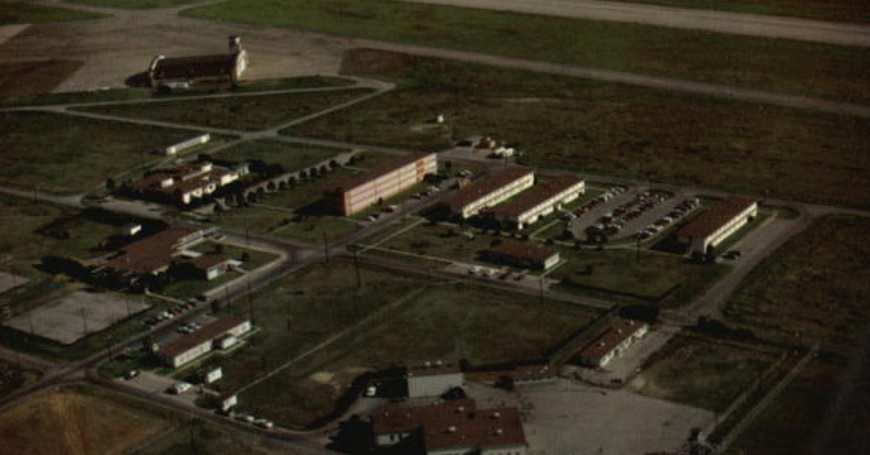
Before Harvey Point became the CIA's favorite terrorist training school, the agency relied on a secret "counterinsurgency school" near Los Fresnos, Texas, in the Rio Grande Valley. The school was operated under the aegis of the U.S. Border Patrol, but funded with CIA money through Langley's favorite government financial laundry, USAID.
At Los Fresnos, CIA instructors trained terrorists in tactics and weapons. The school offered such courses as the nondescript four week-long "Technical Investigations Course" but also more telling courses with the names:

  • Terrorist Concepts
  • Terrorist Devices
  • Fabrication and Functioning of Devices
  • Improvised Triggering Devices (today called Improvised Explosive Devices or "IEDs")
  • Incendiaries
  • Assassination Weapons: A discussion of various weapons which may be used by the assassin
  • Bomb Making
Senator James Abourezk (D-SD) exposed the terrorist training at Los Fresnos in 1973. USAID officials admitted in testimony that the Los Fresnos school did not train personnel in bomb disposal but in actual bomb making. One USAID official testified that "The thrust of the instruction ... introduces trainees to commercially available materials and home laboratory techniques . . . in the manufacture of explosives and incendiaries.... Different types of explosive devices and 'booby-traps' and their construction and use by terrorists are demonstrated." Trainees were schooled on the use of terrorist devices when they were sent back home by their CIA handlers. Most of the students came from Colombia, Guatemala, Uruguay, Thailand, El Salvador, and Panama. The results of the CIA training was later seen in horrific terrorist attacks carried out in Nicaragua, Lebanon, Kosovo, Honduras, Cuba, Venezuela, Afghanistan, Pakistan, Chechnya, Palestine, Somalia, and today, in Libya, Yemen, Iraq, and Syria. 

One of the most infamous graduates of Los Fresnos was Major Alexander Hernandez, who commanded the blood thirsty 3-16 Battalion death squad in Honduras.


The old CIA "terrorist bomb making" school at Los Fresnos, Texas

The FBI does not need to entrap and sting "useful idiots" like the two women from Queens in order to grab terrorists. The CIA headquarters entrance in Langley is well-marked along the George Washington Parkway, a 15-minute car ride from FBI headquarters in Washington. If the FBI is truly interested in bringing terrorists to justice, it can start by arresting CIA director John Brennan and then work its way down the ranks of the active agents and retirees and contractors.

Saturday, February 21, 2015

The long history of CIA penetration of Danish intelligence by Wayne Madsen


 The long history of CIA penetration of Danish intelligence
by Wayne Madsen
Although he was named as the gunman who attacked a freedom of speech conference and a synagogue in Copenhagen, Danish police were still reticent to name Danish national Omar Abdel-Hamid El-Hussein as a member of a global jihadist network or even, as of February 17, a suspect in the attack.

El-Hussein, a Danish-Palestinian, 
grew up, from the age of 15, as a violent gang member in Denmark. In 2013, while said to be high on heroin, El-Hussein began stabbing other passengers and served time in prison. The Danish Defense Intelligence Service (PET), which is officially part of the national police, usually follows the orders of its closest allies: First and foremost, the Central Intelligence Agency, and secondly, Israel's Mossad.

The Danish Prison Service, which admitted it sent a report on El-Hussein's radical thoughts he was said to have picked up in prison, to the PET. As with similar reports maintained by French police on its own alleged Muslim radical assassins, no action was taken by authorities to monitor the future "terrorists." The PET claims that it did not believe that El-Hussein's reported "radicalization" in prison merited any type of special surveillance of him after his release.

The PET statements, themselves, are providing ammunition for those who believe that European police have developed "patsies" to take the blame for a number of terrorist attacks that are being used to justify more intrusive police surveillance in Denmark, France, Belgium, Germany, and other countries outside of Europe, including Canada and Australia.

A review of recent killings in Europe, as well as at the Boston Marathon, which were blamed on Islamist radical supporters of the "Islamic State" and other such groups have yielded a number of similarities. First, those accused of the killings were already known to various intelligence agencies either from their time in prison or from travels to the Middle East, particularly to Syria, and in the case of Tamerlan Tsarnaev, one of the two Boston bombers, to the Republic of Georgia, a NATO applicant, and Dagestan, a primarily Islamic autonomous republic of Russia in the Caucasus.

Tamerlan was included on the Central Intelligence Agency's 
Terrorist Identities Datamart Environment (TIDE) and the Russian Federal Security Bureau notified the FBI of his ties to jihadist terrorists. No action was taken by either agency to forestall the Boston bombing. In addition, the Tsarnaev brothers' uncle, Ruslan Tsarni (née Tsarnaev) was the son-in-law of retired CIA official Graham Fuller whose interests included liaison with anti-Russian Islamists in places like Dagestan and Georgia, where Tamerlan had spent time before returning to the United States to allegedly carry out the Boston Marathon bombing.

Franco-Algerian Mehdi Nemmouche, 29, arrested in Marseille, was charged with carrying out the May 30, 2014 shootings at the Jewish Museum in Brussels. He denied the charges through his attorney. French authorities knew Nemmouche traveled to Syria to fight against the Damascus government in 2013. In fact, Nemmouche's travels were known to about a half dozen intelligence agencies before is is said to have carried out the Brussels attack. 
French and Turkish intelligence tracked Nemmouche to Istanbul in 2013. In February 2014, Nemmouche traveled to Malaysia and Singapore, where Malaysian and Singaporean intelligence picked up his trail. Nemmouche arrived in Frankfurt in 2014. German federal police passed Nemmouche and his arrival to French intelligence agencies.
Amedy Coulibaly, the chief suspect in the hostage-taking and shooting at the Hyper Cacher Jewish market in Paris was well-known to French police. He had spent time in prison for an attempt
 to free from French penal detention the Franco-Algerian Islamist cleric Smain Ait Ali Belkacem. While in prison, Coulibaly met one of the accused Charlie Hebdo shooters, Cheriof Kouachi, another Franco-Algerian, who was serving three years in prison for assisting Abu Musab al-Zarqawi's Al Qaeda in Iraq, the forerunner of ISIL. French authorities were aware of the "radicalization" of Coulibaly and Cherif Kounachi in prison but took no special precautions when both were released.

In 2009, Coulibaly, an employee of Coca Coca, met with French President Nicolas Sarkozy at the Élysée Palace.

Kouachi's brother Said, traveled to Yemen between 2009 and 2011 where he met and befriended 
Umar Farouk Abdulmutallab who was permitted to board Northwestern flight 253 at Amsterdam's Schiphol Airport in 2009 without a passport but special "refugee" papers provided to him at Schiphol, where security is overseen by an Israeli company, by an unknown English-speaking interlocutor. Abdulmutallab later tried to detonate explosives in his underpants as the plane began its descent to Detroit International Airport.

In March 2012, Franco-Algerian Mohammed Merah, who, like El-Hussein of Denmark and Coulibaly, served time in prison for criminal behavior not tied to any religious extremism, was accused of killing French troops in Montauban and Toulouse and three children and their teacher at a Jewish day school in Toulouse. A French intelligence document stated that Merah was under surveillance by French authorities since 2006. French intelligence concluded 
that Merah led a "double life" that allowed him to drin alcohol at nightclubs while secretly visiting Afghanistan, Egypt, and Pakistan in order to plot attacks for Al Qaeda. In 2008, Merah is said to have tried to join the French military but was rejected because of his criminal past. However, he also tried to join the French Foreign Legion, where one's criminal past is no detriment. It was after Merah tried to enlist in the Foreign Legion that he became the subject of French intelligence surveillance. Or was he being monitored for his loyalty to the counter-espionage arm of the Foreign Legion?

On December 11, 2010, Swedish-Iraqi national 
Taimour Abdulwahab al-Abdaly was said to have died when the bomb he was carrying exploded prematurely in downtown Stockholm. Al-Abdaly is said to have carried out a previous bombing in Stockholm, reported around the world to be the first Islamist "suicide" attack in Scandinavia. In 2010, Al-Abdaly named his son "Osama," yet the Swedish security police (SAPO) supposedly took no notice.


Similarities between "Islamist" attacks and young Muslim men

Taimour Abdulwahab al-Abdaly     28Stockholm: Killed by prematurely exploded suicide bomb
Mohammed Merah23Toulouse: Killed in a police raid. Took videos of his shootings with a Go-Pro camera. Attempted to enlist in French Army and Foreign Legion.
Said Kouachi34Dammartin-en-Goële: Killed in police raid. 
Cherif Kouachi32Dammartin-en-Goële: Killed in police raid.
Amedy Coulibaly32Paris: Killed in police raid. Took videos of his shootings with a Go-Pro camera.
Omar Abdel Hamid El-Hussein22Copenhagen: Killed in police standoff.
Mehdi Nemmouche29Marseille: Arrested by police.
Tamerlan Tsarnaev26Boston: Killed by police.
Dzhokhar Tsarnaev21Boston: Injured in police shootout. Currently on trial.

As seen in the chart above, out of nine Islamist terrorist incidents, seven of the assailants were killed in police encounters. Only Nemmouche, who has declared his innocence, and Dzokhar Tsarnaev, who pled not guilty to 30 criminal charges brought against him, remain alive. Attorney General Eric Holder said the U.S. would seek the death penalty against Tsarnaev.

As for the Danish PET providing cover for a set of CIA-inspired false flag attacks in Copenhagen, the Danish agency has long had a subservient role with the CIA since the days of the Vietnam War. In those days, Denmark became a refuge for U.S. servicemen who went AWOL rather than be transferred to duty in South Vietnam. Copenhagen also became the host for a diplomatic office of the Viet Cong's National Liberation Front. Danish public pressure forced the Social Democratic government of Prime Minister Anker J
Ørgensen and the center-right "VKR" government of Liberal Prime Minister Poul Hartling to allow Denmark to become a headquarters for the anti-Vietnam War movement in Europe. The CIA was not happy about this and it relied on the PET to infiltrate the U.S. servicemen organizations and anti-war Danish Vietnam Committees in the country. All this time, the PET was acting directly against the policies of the Danish government. The CIA set up an infiltration office a Kastanievej Number 5 in Copenhagen manned by three non-official cover CIA agents.


Dead men tell no tales: El Hussein lies dead on pavement in Copenhagen's N
Ørrebro district, once the nexus for CIA operations in the Danish capital

The CIA office was, on paper, Interland Marketing Research, Inc. (IMR), with its headquarters in Frankfurt, West Germany and was said to track the financial liquidity of companies. However, the firm showed up nowhere on the Danish government's listing of registered companies and it did not even have an office telephone. IMR was as much a CIA proprietary company as was Business International Corporation of New York, which employed a young Columbia graduate named Barack Obama in 1983.

Ironically, the center for the CIA's surveillance of the anti-Vietnam War movement in Copenhagen was N
Ørrebro, the very same neighborhood where Omar Abdel-Hamid El-Hussein was shot dead by police outside an Internet café. 

Saturday, January 17, 2015

Kiev was hotbed of neo-Nazism even during Soviet times by Wayne Madsen


Kiev was hotbed of neo-Nazism even during Soviet times
by Wayne Madsen

The CIA archives contain an obscure newspaper article from the New York Herald Tribune, dated September 14, 1964 that points out that neo-Nazism and anti-Semitism ran rampant in the Ukrainian capital of Kiev even during the time of the Ukrainian Soviet Socialist Republic. This fact makes the current love affair between neoconservative Zionists like Assistant Secretary of State for European and Eurasian Affairs, U.S. ambassador to Ukraine Geoffrey Pyatt, and incoming Central Intelligence Agency director David Cohen and the neo-Nazi imbued government of Ukraine all the more perplexing.


Senator John McCain, the new chairman of the Senate Armed Services Committee, is flanked by neo-Nazi Svoboda leader Oleh Tyahnbok [right] and gives his very best "Heil Hitler" salute to protesters at Maidan Square in Kiev last year.

The neo-Nazism of the Ukrainian government was recently on full display when Prime Minister Arseniy Yatsenyuk, known affectionately as "Yats" by Nuland, described the Soviet Red Army's move into Nazi Germany not as a "liberation" but as an "invasion." Ukrainian President Petro Poroshenko recently awarded one of Ukraine's top medals to Belarusian 
Serhiy Korotkykh, a member of the far-right Russian National Unity party and founding member of the neo-Nazi National Socialist Society (NSS) in Russia. Korotokykh has recently been engaged in a pogrom of ethnic Russians in eastern Ukraine as a member of the Azov Battalion, the Ukrainian neo-Nazi paramilitary unit financed and armed by Ukrainian-Israeli Zionist billionaire tycoon Ihor Kolomoisky.

The head of the Azov Battalion is Andriy Biletsky, a neo-Nazi activist who has switched his allegiance between the two main neo-Nazi parties, Svoboda and Right Sector. The alliance between Zionists like Kolomoisky and neo-Nazis like Biletsky must be viewed in the context of Ukrainian history where even Ukrainian Communist leaders during the Soviet Union expressed neo-Nazi sympathies in direct challenges to Moscow's wishes.

The Herald Tribune article describes the Ideological Commission of the Soviet Communist Party and Communist Party General Secretary Nikita Khrushchev as being furious over the 1963 publication by the Ukrainian Academy of Sciences of an anti-Semitic publication, complete with Nazi-like caricatures, titled "Judaism Without Embellishment." That publication was followed in 1964 by another book published by the State Publishing House of the Moldavian Soviet Socialist Republic in Kishniev titled "Contemporary Judaism and Zionism," which expressed similar Nazi-like views to the Ukrainian book but without the Nazi cartoons.
http://louisianaconservative.com/wp-content/uploads/2012/02/khrushchev-photo1.jpg https://takeleft.files.wordpress.com/2014/04/putin1.jpg
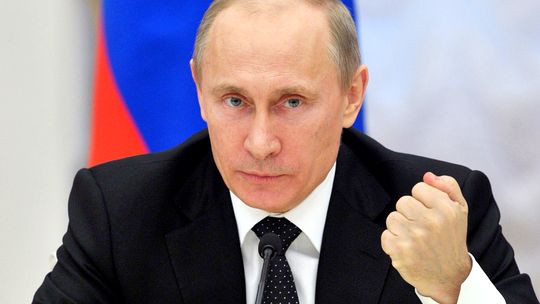
Nikita Khrushchev [left], like Vladimir Putin, had to deal with neo-Nazis in Kiev.

Today, the ideological sons and daughters of the crypto-Nazis who proclaimed they were Ukrainian Communists are in power in Kiev. Their major support comes from neoconservatives like Nuland, Pyatt, and B'nai B'rith. In 1964, the latter organization rented a room in the Waldorf-Astoria Hotel in New York where B'nai B'rith president Label A. Katz condemned the Nazi-like policies of the Ukrainian Communist Party which his successors actively support today in pro-Western Ukraine.

It is not the Russian government that should stand accused before the international court of public opinion but the neo-Nazis of Kiev and their Zionist Jewish enablers in New York and Washington, DC.

Monday, January 05, 2015

CIA cold case becomes murkier by Wayne Madsen


CIA cold case becomes murkier

On December 16, 2014, WMR reported on the suspicious death of CIA stenographer Joanne (also reported as Jeanne) Fecteau in 1953. CIA archives include two Washington, DC newspaper articles that stated Fecteau's husband, described as an Army civilian, disappeared in December 1952 on a C-47 military flight from Japan to Korea. In fact, Joanne's husband, Richard G. Fecteau, was a CIA agent who was shot down over Manchuria in mainland China along with John T. Downey. The two CIA agents were dropping supplies to anti-Communist agents. Other reports suggest that the two agents were trying to pick up a CIA agent in Manchuria when their plane was downed.

Fecteau and Downey were later released by the Chinese, Fecteau in 1971 and Downey in 1973. Fecteau was released as a Chinese gesture to the United States after secret talks paved the way for President Richard Nixon's historic trip to China. Downey was only released after Nixon agreed to publicly admit that Downey worked for the CIA. Up until that time, the U.S. State Department maintained that Fecteau and Downey were "civilian Army employees lost on a 'routine flight' from Seoul, South Korea, to Japan." However, The Washington Post reported at the time of Joanne's death that Fecteau was on a flight from Japan to Korea, not the other way around. In November 2013, the CIA awarded Fecteau and Downey the Distinguished Intelligence Cross. The CIA admitted that the CIA asset that agents Downey and Fecteau were to rescue in China had already been compromised by Chinese intelligence. The Chinese were waiting for the CIA aircraft and they hit it with anti-aircraft fire. The plane made a controlled crash but the CIA said the two CIA Civil Air Transport (CAT) proprietary firm pilots, Robert C. Snoddy and Norman A. Schwartz, died. Snoddy's remains were later recovered and buried in Eugene, Oregon. Schwartz's remains were never recovered.

The CIA's agent exfiltration operation was doomed from the start. The CIA had decided to airdrop Chinese nationalist exiles into Manchuria in order to link up with anti-Mao Zedong renegade communist generals. The problem was that no such generals existed. Mao had ironclad support from the leadership of the People's Liberation Army.

CIA director John Brennan said at the ceremony honoring Downey and Fecteau that, “It has been 61 years since Dick and Jack took to the skies over North Korea and China during the Korean War, and their ordeal remains among the most compelling accounts of courage, resolve, and endurance in the history of our agency." Amid all the honorific press stories about Fecteau and Downey, there is no mention of Fecteau's wife Joanne and the suspicious fire that took the life of the CIA stenographer on one autumn day on the western shore of the Chesapeake Bay. The Boston Globe attempted to interview Fecteau, a resident of Lynn, Massachusetts, after his award from Brennan but the paper reported that he could not be reached for comment. Downey, who became a Connecticut state judge in 1987, died on November 17, 2014.


Neither the Nashua Telegraph of January 6, 1972 nor any other periodical to this day mentions the suspicious death of Richard Fecteau's CIA wife Joanne nine months after he was captured by the Chinese.

The few stories written about Fecteau after his release by the Chinese fail to mention Joanne Fecteau and her suspicious death. One news article appearing in Yankee magazine in 1982 states Fecteau, who returned to work for the CIA until 1976 when he became assistant athletic coach at his Boston University alma mater, rekindled his relationship with his ex-wife Peg (Margaret), who he divorced before marrying Joanne. The article states that Fecteau's two daughters were 22 at the time of his release. They were two-years old at the time of his capture. Fecteau was 25 years old at the time of his capture and he was already divorced and remarried, relatively rare for 1952 American society. The Yankee article states: "He [Fecteau] rekindled his relationship with his ex-wife Peg, who had "waited and prayed for him for 19 years." Fecteau and his ex-wife remarried in 1976.  On the same day that President Bill Clinton arrived in Beijing in 1998, CIA director George Tenet presented Fecteau and Downey with the CIA Director's Award at a ceremony at the Langley headquarters. A documentary film released by the CIA in 2011 about the ordeal of Fecteau and Downey, titled "Extraordinary Fidelity," omits any mention of Joanne. The CIA simply erased its employee Joanne Fecteau from their history except for two newspaper articles on her death contained in the CIA archival files.
The CIA in 2011 released a film, "Extraordinary Fidelity, - See more at: http://www.legacy.com/ns/obituary.aspx?n=john-downey&pid=173197122#sthash.XuEv10pO.dpuf

John Downey (left) and Richard Fecteau, who were held prisoner in China, were honored by the CIA last month.
Downey [left] and Fecteau [right] after being awarded the CIA's top honor in November 2013.

The following is what WMR reported last month:

"CIA archives contain two articles dated September 29, 1953, published in The Washington Post and Washington Star, regarding the horrible death by burning of a stunningly attractive red-headed stenographer for the CIA. CIA veterans confirm that as a stenographer, Joanne Fecteau, 27, would have had access to the senior executives of the agency, including director Allen Dulles. Fecteau's burned body was found on September 29 underneath a bed in a cabin in Avalon Shores, Maryland, between Annapolis and Chesapeake Beach. The story of the beautiful CIA stenographer becomes murkier. Her husband, Army civilian administrative assistant Richard G. Fecteau had disappeared in December 1952 while on a transport flight from Japan to Korea.

The cabin where Joanne Fecteau's body was discovered was owned by Major Carl Garver, 39, an Air Force ROTC instructor at George Washington University. When flames broke out inside the cabin at around 6 pm, Garver claimed he tried frantically to break into the house but was 'driven back' by the flames. The conclusion by fire inspectors was that the fire was caused by faulty wiring in a hot plate in the kitchen. The Anne Arundel coroner stated that Fecteau's death was caused by burns and carbon monoxide poisoning.


Another possible murder cold case from the files of the CIA: CIA stenographer Joanne Fecteau burned to death in Maryland cabin on the infamous Chesapeake Bay, the bay that also claimed the lives of CIA director William Colby and CIA operations officer John Paisley.

According to the Post article, Garver's residence was at the Army-Navy Club in downtown Washington while Fecteau's residence was listed as the Dupont Plaza Hotel, a luxury hotel on Dupont Circle in downtown DC. The Star reported Garver's residence as 3801 Connecticut Avenue in Washington, just north of the Cleveland Park neighborhood."

* Update 1x. Curiously, The Washington Post had Mrs. Fecteau's name as "Joanne" while The Washington Star reported her name as "Jeanne." A handwritten CIA notation on the Star article has the name "Joanne" written in cursive letters before "FECTEAU," which is written in block capital letters. The Post article has a CIA handwritten note of "Richard G. Fecteau" under a redacted notation. The Star reported that the Washington, DC homicide squad told Anne Arundel authorities that Fecteau had suffered a burn on her hand during an earlier August 13, 1953 blaze in an apartment on the 2600 block of Tunlaw Road in Northwest Washington. Police said the fire was caused by careless smoking. There is no explanation of why DC homicide was involved in two blazes allegedly caused by a faulty hot plate in Maryland and careless smoking in DC.

 
Joanne or Jeanne? DC's two major newspapers conflicted on name of dead CIA employee.

Monday, December 29, 2014

Business International Corp. and Business Security International linked in 80s anti-Nicaragua activities By Wayne Madsen


Business International Corp. and Business Security International linked in 80s anti-Nicaragua activities

Another link has emerged between the post-graduate Central Intelligence Agency "non-official cover" or "NOC" work of Barack Obama for known CIA front Business International Corporation (BIC) and Ronald Reagan administration anti-Communist paramilitary operations. As previously reported by WMR, Obama worked as a CIA cover "journalist" for BIC after he graduated from an international relations studies program at Columbia University, the details of which remain undisclosed by the White House. While at the New York City-based BIC, Obama covered events in Latin America for the company's various newsletters. BIC admitted that it provided journalistic cover for CIA agents around the world.

It turns out that BIC was not the only CIA front company operating in Latin America at the time Obama was providing reports on such countries as Mexico and Brazil. A shadowy company with a similar-sounding name to BIC, Business Security International (BSI), was established by Langley to provide paramilitary U.S. Support for the Nicaraguan Contras at a time when the Boland Amendment expressly prohibited such assistance to the anti-Sandinista Nicaraguan guerrillas. Obama's failure to bring officials of the CIA's torture program to justice and his failure to prosecute the agency and its director, John Brennan, for spying on U.S. Senate computers likely has its roots in the CIA front companies' participation in the illegal Nicaraguan Contra support network run by Langley during Obama's employment at BIC.

BIC and BSI were popular under the CIA directorship of William Casey, an advocate of using "off-the-shelf" companies to evade Congressional and Inspector General oversight. BSI was headquartered in Annandale, Virginia. The firm's chief was Army Lt. Col. Dale Duncan, who was later convicted of fraud and was sentenced to 10 years in the military prison at Fort Leavenworth, Kansas. Much of the transcript of Duncan's court-martial remains classified to this day. While BIC provided the CIA intelligence on the threats posed by nationalistic and left-wing governments and political parties in Latin America and elsewhere, BSI concentrated on left-wing political and guerrilla insurgency threats. the two companies made for a perfect pair for an administration that was convinced it had to re-ignite the Cold War.

Norman Wellen, BIC's chief executive officer while Obama worked for the firm, was very concerned about Central America. Wellen was concerned that the Sandinista government of Nicaragua and the leftist insurgency in El Salvador could pose a threat to U.S. business activities in those nations. Wellen, who worked for Bear Stearns after BIC was told to The Economistin 1986 and merged into its Economist Intelligence Unit, a bevvy of former British MI-6 agents, worried about "spillover" from the conflicts in Nicaragua and El Salvador on business. BIC specialized in providing intelligence on direct foreign investment in Latin America and the Sandinistas in Nicaragua and the Farabundo Marti National Liberation Front in El Salvador were seen as threats to such investments by U.S.-based multinational corporations. Wellen's 2011 obituary in the Newark Star-Ledger described him as
 "a real Mensch."

One of Obama's co-workers at BIC's Manhattan office, Gary Springer, specifically tracked events in Nicaragua for the company, which, in turn, provided the analysis to "The Company" Langley. Springer founded the firm Strategic Eventualities, Inc. in 2001. However, curiously, his biography merely states 
that in the 1980s he was the associate editor of 
Business Latin America (now a division of the Economist Intelligence Unit) in New York City. No mention is made of BIC, which published Business Latin America. Springer is not the only ex-BIC employee to omit a reference to the firm in later writings. In his 1995 memoir, Dreams From My Father, Obama failed to mention that the firm he went to work for in Manhattan after graduating from Columbia was, in fact, BIC. Obama only revealed that he worked for "a consulting house to multinational corporations" where he was a "research assistant" and "financial writer."
Obama's fellow BIC editor Lou Celi also concentrated on Latin American affairs. Reagan later appointed him 
as a member of the White House’s business advisory committee for Latin America. Obama's first CIA-directed coup against a democratically-elected president was overthrew Honduran President Manuel Zelaya in 2009, Obama's first year in office. That was followed by Obama authorizing destabilization and coup-making operations against the democratically-elected governments of Ecuador, Venezuela, Bolivia, Paraguay, Haiti, Suriname, Guatemala, Brazil, Panama, Argentina, and Nicaragua. Obama has been much more aggressive against Latin America than was his neo-conservative predecessor, George W. Bush, whose 2002 coup against Venezuelan President Hugo Chavez was quickly reversed. There were no reversals of the Obama coups against Zelaya and Paraguay's Fernando Lugo.
obama_cia_0421
Obama: always at home with his NOC employer.

To carry out its clandestine activities in Central America, BSI utilized a Credit Suisse bank account in Switzerland and the company operated under a classified project called Operation YELLOW FRUIT. Those Reagan administration officials with access to the Credit Suisse account included Lt. Col. Oliver North, Casey's "eyes and ears" inside the National Security Council, and Air Force General Richard Secord. Some of the money that ended up in the Swiss bank account was provided by Saudi ambassador to the U.S. Prince Bandar bin Sultan. BSI allegedly provided a satellite communications link between the Contras based in Honduras and CIA headquarters in Langley. Defense Secretary Caspar Weinberger denied any knowledge of BSI or YELLOW FRUIT and it appears that the operation was a CIA cut-out within the Army. Another classified project involving BSI was code-named SEASPRAY and it was responsible for flying reconnaissance missions for the Contras on behalf of the CIA and the National Security Agency (NSA). Some of these aircraft were involved in smuggling weapons to Central America and drugs from the region into the United States. One of YELLOW FRUIT's key operatives was Drug Enforcement Administration informant Barry Seal, who was gunned down in Baton Rouge in 1986 prior to his testifying in a trial that would have implicated Vice President George H W Bush in drug and arms smuggling in the Iran-Contra scandal. BSI also reportedly provided the CIA with cover for its operations in the Middle East. Within the Pentagon and CIA, the BSI operation was known as 
"2 BSI / YELLOW FRUIT."

Young Barack Obama's entrée into the world of covert CIA operations came at a time when the Reagan administration not only flouted the will of Congress but when Casey and his clandestine operatives, who included John Brennan, relied on firms like BSI and BIC to evade oversight by Congress, auditors, Inspectors General, and the press.

Obama's reticence in holding the CIA and NSA accountable for their massive crimes against the U.S. Constitution and the American people can best be explained by what Obama said in 2008 about Ronald Reagan, the president who gave the green light for U.S. intelligence excesses after they had been curtailed following the Nixon administration and Watergate:

"I think Ronald Reagan changed the trajectory of America in a way that Richard Nixon did not and in a way that Bill Clinton did not.  He put us on a fundamentally different path because the country was ready for it.  I think they felt like with all the excesses of the 1960s and 1970s and government had grown and grown but there wasn't much sense of accountability in terms of how it was operating.  I think people, he just tapped into what people were already feeling, which was we want clarity we want optimism, we want a return to that sense of dynamism and entrepreneurship that had been missing."

Barack Hussein Obama, who, during his CIA stint was also known on his valid Indonesian passport as Barry Soetoro, and as Barry Obama in other facets, was a "company man" in the 1980s and he continues to be one to this day.
---

Friday, December 26, 2014

CIA-linked program official advising Ukrainian police by Wayne Madsen


 CIA-linked program official advising Ukrainian police

Ron Glensor, an official of the U.S. Department of Justice's International
International Criminal Investigative Training Assistance Program (ICITAP), - See more at: http://www.intrepidreport.com/archives/12659#sthash.LU7PBJaj.dpuf
 Criminal Investigative Training Assistance Program (ICITAP) program and U.S. citizen, is now advising Ukrainian police with his initial posting at the Ministry of Internal Affairs for the Khmelnytsky region. Glensor's appointment follows the naming of U.S. citizen Natalie Jaresko, another U.S. citizen, as Ukraine's Finance Minister. To overcome Ukrainian constitutional prohibitions against foreign nationals serving as government leaders, Jaresko was given Ukrainian citizenship by the Kiev regime.

Jaresko is currently involved in a contentious divorce with her ex-husband and ex-business partner, Ihor Figlus, over ownership of the assets of Jaresko's and Figlus's joint company, Kiev-based Horizon Capital, established 20 years ago with a $150 million grant from the U.S. Agency for International Development (USAID). Horizon Capital operated the Emerging Europe Growth Fund, a group charged with illegal insider trading of Ukrainian securities. According to court divorce documents, Horizon Capital bought Ukrainian artwork, Georgian carpets, expensive cars, and antique furniture. Jaresko also managed the USAID-financed
Western NIS Enterprise Fund (WNISEF), a CIA contrivance that steered U.S. investment dollars into "pro-democracy" movements in Moldova and Belarus. WNISEF and Horizon also laundered a sizable chunk of the $5 billion in U.S. aid that helped overthrow the government of Ukrainian President Viktor Yanukovych.

The U.S. taxpayers not only paid for the couple's opulent life style but they helped pay the freight to embed Natalie Jaresko in a major Ukrainian government post in order to help steer Ukraine closer to the NATO and western economic orbit. As a member of Ukrainian Prime Minister Arseniy Yatsenyuk's Cabinet, Jaresko was instrumental in urging the Ukrainian Rada (parliament) to end Ukraine's status as a non-aligned country and subjugate Ukraine's economy to the IMF anf World Bank.

Jaresko is not the only foreigner in Ukraine's Cabinet. She is joined by the Lithuanian-Jewish Aivaras Abromavicius, who serves as the Economy Minister, and Aleksandr Kvitashili, the Health Minister who is also a Georgian citizen. Furthermore, former Georgian President Mikheil Saakashvili has been serving as an adviser to the Ukrainian government of President Petro Poroshenko. Abromavicius was a partner of East Capital and in 2012 he participated in the 9th Annual Yalta Meeting where a number of neocons and CIA assets in Eastern Europe were also present. The Yalta Meeting is a mini-Davos meeting, which has been sponsored annually since 2004 by Ukrainian Jewish billionaire Victor Pinchuk, a friend of Steven Spielberg and Henry Kissinger. The 2012 meeting brought together all the key players in the 2013 coup against Yanukovych, including Yatsenyuk, Poroshenko, Abromavicius, and Elena Andrianova of the Rothschild Trust Group responsible for Russia and the former Soviet Eurasian countries. Also present at Yalta were some of the habitués of George Soros-sponsored international "New World Order" symposia, including Yatsenyuk's wife and head of the Soros-financed Open Ukraine Foundation Tereziya Yatsenyuk, Swedish Foreign Minister Carl Bildt, Newt Gingrich, Condoleezza Rice, Rebecca Harms of the European Parliament's Green Party bloc, Walter Isaacson of the Aspen Institute, Levi Matusof of the European Center for Jewish Public Affairs (Europe's version of the American Israel Public Affairs Committee-AIPAC), former World Bank president Robert Zoellick, and former International Monetary Fund managing director Dominique Strauss-Kahn.

Ukraine's new top traffic cop, Glensor, is a retired assistant chief of police of the Reno, Nevada police department and a former fellow of the Police Executive Research Forum (PERF) in Washington, D.C.  In 1999, the editor reported in The Progressive that "Janice Stromsen, a career employee of the Justice Department who served as ICITAP's director, resisted the program's takeover by CIA elements. In February [1999], Stromsen was relieved of her duties after complaining to the Justice Department Inspector General that ICITAP was being used by the CIA to recruit agents among foreign police officials." The Progressive article was cited by Project Censored as among the top 25 censored news stories of 1999. Stromsen died from pancreatic cancer in 2012.


ICITAP is used by the CIA to recruit foreign police officers, including in Ukraine.

Mostly outsourced to a favorite CIA contractor, Science Applications International Corporation (SAIC), ICITAP provided cover for the CIA to infiltrate police agencies around the world. After initiially blowing the whistle on ICITAP's intelligence-related operations, Stromsen was joined by another ICITAP employee, Martin "Mick" Andersen, who charged that agencies other than the Justice Department were engaging in “illegal activities” in Haiti. Charles Allen, who worked for the Richardson, Texas police department and was assigned to ICITAP in 1995, said that the CIA would approach foreign police students enrolled in ICITAP training programs during off hours and weekends in an attempt to recruit them to be American spies. Other CIA recruitment of foreign police officers occurred during ICITAP training sessions at Fort Leonard Wood, Missouri.

ICITAP first began providing the CIA with "official cover" to infiltrate foreign police agencies in 1990 when it began its first operations in Panama after the U.S. military invasion. These operations were then expanded to Rwanda, Bosnia-Herzegovina, Kosovo, Georgia, the Eastern Slavonia province of Croatia, Serbia, Armenia, Moldova, Azerbaijan, Bulgaria, Montenegro, Macedonia, Tajikistan, Ukraine, Kazakhstan, Belarus, Mongolia, Kyrgyzstan, Uzbekistan, Albania, Liberia, Kenya, Nigeria, Ghana, Nepal, Pakistan, Bangladesh, Thailand, South Africa, and Iraq. ICITAP and CIA operations were closely linked in counter-narcotics/insurgency operations in Bolivia, Costa Rica, Colombia, Mexico, Guatemala, El Salvador, Belize, Haiti, and Panama.

ICITAP grew out of a U.S. Agency for International Development (USAID) program started in the early 1960s that saw U.S. police officers assigned to foreign police agencies for the purpose of training. However, it soon became obvious that the CIA was using the USAID program to gain influence over foreign police agencies to combat Soviet and Chinese influence. This was particularly the case in Somalia, where the Somali National Police served as a pro-U.S. counterpart to the pro-Communist bloc Somali armed forces. The chief CIA liaison working with the Somali National Police was a police officer on loan from the Los Angeles Police Department.