London playing Ottawa's card in reneging on Scotland power
The London coalition government of the Conservatives and Liberal Democrats, as well as the opposition Labor Party, are playing the same game with Scotland that the Ottawa government played with Quebec after the French-speaking province voted to reject independence in a 1980 referendum. English politicians, after promising increased powers to Scotland if the country voted to reject independence, are already backtracking on "devolution max," meaning Scotland would basically have control over almost everything except foreign affairs, defense, and energy policy.
In 1980, Quebec held a referendum on independence from Canada. As the May 20 referendum date approached, polls showed the "Yes" side, those wanting independence, gaining ground. Frightened over the polls, Canadian Prime Minister Pierre Trudeau, a Liberal, promised that if Quebeckers voted "No," Quebec would gain new powers to determine their own affairs in a revised Canadian Constitution. Quebec's governing Parti Quebecois (PQ) government led by Quebec Prime Minister Rene Levesque warned Quebec voters that Trudeau was laying a trap. However, Quebec voters swallowed Trudeau's and his fellow Liberals' bait and voted 59.56% to 40.44% against independence. Scottish First Minister Alex Salmond similarly warned Scots against London's bribe of more powers for Scotland in return for a No vote on independence. The "Yes" side in Quebec was dejected by the landslide won by the "No" supporters, even though referendum eve polls indicated a much closer result. So far, this should all sound familiar to the people of Scotland.
The United States and NATO issued dire warnings about how an independent Quebec would make the West weaker against the "Soviet threat." Before the September 18 Scottish referendum, the words "Soviet threat" were merely replaced by "terrorist threat" by the unionists and status quo enthusiasts.
Ottawa's promise of increased powers for Quebec died when Canada elected a Conservative government led by Prime Minister Brian Mulroney in 1984. Mulroney's promises of support for increased Quebec powers led to a split in Quebec's PQ government. Levesque agreed to work with Mulroney on increased powers for Quebec but when it became apparent that Mulroney was being deceptive, Levesque resigned as Quebec prime minister and retired from politics. Without Levesque at the helm, Quebec independence was dead for the moment. Levesque's resignation was very similar to that of Salmond after Scotland's Yes campaign lost by 10% in a vote marred by charges of election irregularities and fraud. In 1985, Liberal leader Robert Bourassa, a unionist, became Quebec prime minister.
Mulroney engaged in negotiations with Bourassa about increased Quebec sovereignty. These negotiations, held in concert with other Canadian provincial premiers, were held in Meech Lake in 1987 and Charlottetown in 1992. Proposed constitutional changes were rejected in a nationwide referendum marked by anti-Quebec and anti-French xenophobia from pro-unionist governments in western and maritime Canada, especially Alberta and Newfoundland.
Eventually, PQ leader Jacques Parizeau was elected Quebec prime minister and he ensured another independence referendum in 1995. Stung once by Ottawa's false promises, the 1995 vote was closer, but 50.58% voted No and 49.42% voted Yes. There were charges that the "Unity" campaign, the "Yes" side, engaged in massive election fraud and illegal campaign spending. Parizeau claimed that what narrowly defeated the Yes vote was"money and the ethnic vote." It was believed by many that Parizeau was referring to Montreal's powerful Jewish community, which rallied against independence and ensured that the Jewish-dominated Canadian media echoed their opposition to Quebec independence. The same dynamics played out in the Scottish referendum, with the Zionist media represented by Rupert Murdoch's British papers and networks and Guy Zitter's Daily Mail taking aim at Salmond and his Scottish National Party (SNP) in the same manner that Zionists Conrad Black and Israel (Izzy) Asper launched a coordinated attack by their Canadian media operations against Parizeau and the PQ in 1995. Asper died in 2003, but the anti-Quebec cause has been assumed by his two sons Leonard and David Asper, especially via the pages of the neocon National Post.
Now, as Tory British Prime Minister David Cameron and his Liberal Democratic partners face an uphill re-election battle against Labor, promises to Scotland for Devolution Max have been placed on the back-burner. Many Scots who voted No now feel betrayed by English political leaders just as Quebeckers felt betrayed after increased sovereignty promises made by Trudeau in 1980 turned out to be clever campaign lies. The lies by Canadian unionists in 1980 eventually led to the second Quebec referendum in 1995.
The defeat of the PQ government of Prime Minister Pauline Marois in April after a party-wide split and major "engineered" defections, as well as an election fraught with voting irregularities, led to a Liberal unionist government. The Quebec Liberal Party government led by Philippe Couillard has since made nice with Canada's neo-conservative Prime Minister Stephen Harper and talk of Quebec sovereignty is dead for now. The British unionist parties are hoping for a similar fate for the SNP government now ruling Scotland, especially after Salmond's resignation as First Minister.


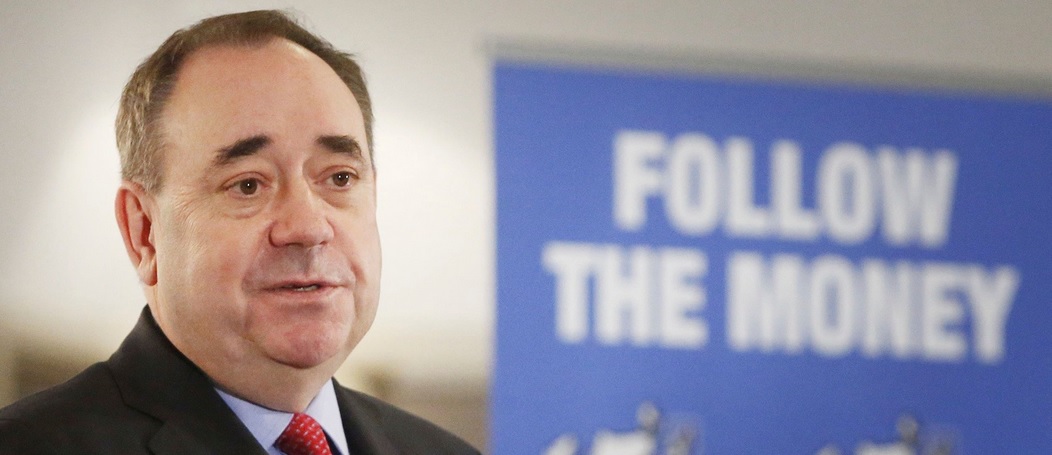
From Rene Levesque [left] to Jacques Parizeau [center] and Alex Salmond [right], Quebec and Scottish nationalists have been smeared by an all-too-familiar brush but all one needs to do is "follow the money" as Salmond's campaign poster advises.
The Zionist interests were convinced that the SNP's support for Palestinian rights would spell a consistent vote against Israel in the United Nations. That ensured the flow of Zionist money to the No campaign's coffers. Similar pronouncements by the PQ led to Montreal's wealthiest of Jews opening up their check books to Quebec's No campaign in 1995. The idea of an independent Quebec sitting alongside Qatar in the UN and casting anti-Israel votes was too much for Montreal's Zionist clique. Because nationalist movements often side with Palestine, Zionists have cleverly linked nationalist causes to "anti-Semitism," the old familiar canard that always seems to work for the Zionists. Except in cases that are beneficial to Israeli interests, such as Kurdistan and South Sudan, nationalist movements from Northern Ireland and eastern Ukraine (Novorossiya) to Catalonia and Flanders have been painted with the anti-Semitism brush by the Zionists and their controlled media.
However, as the people of Quebec and Scotland begin to compare notes on how their movements for independence have been stymied by false promises, outright lies, Zionist money interests, and brazen election theft, future votes for independence are almost guaranteed. Salmond recently warned that if London reneged on promises of independence, Scotland could unilaterally declare its independence without a referendum. The PQ, after two referenda marked by dishonesty from Ottawa, could do the same. And that is what the elites and the Zionist moneyed interests fear the most: having to shift their wars of chicanery from the sands of the Middle East and steppes of Ukraine to the streets of Edinburgh, Glasgow, Montreal, and Quebec City.
The London coalition government of the Conservatives and Liberal Democrats, as well as the opposition Labor Party, are playing the same game with Scotland that the Ottawa government played with Quebec after the French-speaking province voted to reject independence in a 1980 referendum. English politicians, after promising increased powers to Scotland if the country voted to reject independence, are already backtracking on "devolution max," meaning Scotland would basically have control over almost everything except foreign affairs, defense, and energy policy.
In 1980, Quebec held a referendum on independence from Canada. As the May 20 referendum date approached, polls showed the "Yes" side, those wanting independence, gaining ground. Frightened over the polls, Canadian Prime Minister Pierre Trudeau, a Liberal, promised that if Quebeckers voted "No," Quebec would gain new powers to determine their own affairs in a revised Canadian Constitution. Quebec's governing Parti Quebecois (PQ) government led by Quebec Prime Minister Rene Levesque warned Quebec voters that Trudeau was laying a trap. However, Quebec voters swallowed Trudeau's and his fellow Liberals' bait and voted 59.56% to 40.44% against independence. Scottish First Minister Alex Salmond similarly warned Scots against London's bribe of more powers for Scotland in return for a No vote on independence. The "Yes" side in Quebec was dejected by the landslide won by the "No" supporters, even though referendum eve polls indicated a much closer result. So far, this should all sound familiar to the people of Scotland.
The United States and NATO issued dire warnings about how an independent Quebec would make the West weaker against the "Soviet threat." Before the September 18 Scottish referendum, the words "Soviet threat" were merely replaced by "terrorist threat" by the unionists and status quo enthusiasts.
Ottawa's promise of increased powers for Quebec died when Canada elected a Conservative government led by Prime Minister Brian Mulroney in 1984. Mulroney's promises of support for increased Quebec powers led to a split in Quebec's PQ government. Levesque agreed to work with Mulroney on increased powers for Quebec but when it became apparent that Mulroney was being deceptive, Levesque resigned as Quebec prime minister and retired from politics. Without Levesque at the helm, Quebec independence was dead for the moment. Levesque's resignation was very similar to that of Salmond after Scotland's Yes campaign lost by 10% in a vote marred by charges of election irregularities and fraud. In 1985, Liberal leader Robert Bourassa, a unionist, became Quebec prime minister.
Mulroney engaged in negotiations with Bourassa about increased Quebec sovereignty. These negotiations, held in concert with other Canadian provincial premiers, were held in Meech Lake in 1987 and Charlottetown in 1992. Proposed constitutional changes were rejected in a nationwide referendum marked by anti-Quebec and anti-French xenophobia from pro-unionist governments in western and maritime Canada, especially Alberta and Newfoundland.
Eventually, PQ leader Jacques Parizeau was elected Quebec prime minister and he ensured another independence referendum in 1995. Stung once by Ottawa's false promises, the 1995 vote was closer, but 50.58% voted No and 49.42% voted Yes. There were charges that the "Unity" campaign, the "Yes" side, engaged in massive election fraud and illegal campaign spending. Parizeau claimed that what narrowly defeated the Yes vote was"money and the ethnic vote." It was believed by many that Parizeau was referring to Montreal's powerful Jewish community, which rallied against independence and ensured that the Jewish-dominated Canadian media echoed their opposition to Quebec independence. The same dynamics played out in the Scottish referendum, with the Zionist media represented by Rupert Murdoch's British papers and networks and Guy Zitter's Daily Mail taking aim at Salmond and his Scottish National Party (SNP) in the same manner that Zionists Conrad Black and Israel (Izzy) Asper launched a coordinated attack by their Canadian media operations against Parizeau and the PQ in 1995. Asper died in 2003, but the anti-Quebec cause has been assumed by his two sons Leonard and David Asper, especially via the pages of the neocon National Post.
Now, as Tory British Prime Minister David Cameron and his Liberal Democratic partners face an uphill re-election battle against Labor, promises to Scotland for Devolution Max have been placed on the back-burner. Many Scots who voted No now feel betrayed by English political leaders just as Quebeckers felt betrayed after increased sovereignty promises made by Trudeau in 1980 turned out to be clever campaign lies. The lies by Canadian unionists in 1980 eventually led to the second Quebec referendum in 1995.
The defeat of the PQ government of Prime Minister Pauline Marois in April after a party-wide split and major "engineered" defections, as well as an election fraught with voting irregularities, led to a Liberal unionist government. The Quebec Liberal Party government led by Philippe Couillard has since made nice with Canada's neo-conservative Prime Minister Stephen Harper and talk of Quebec sovereignty is dead for now. The British unionist parties are hoping for a similar fate for the SNP government now ruling Scotland, especially after Salmond's resignation as First Minister.
From Rene Levesque [left] to Jacques Parizeau [center] and Alex Salmond [right], Quebec and Scottish nationalists have been smeared by an all-too-familiar brush but all one needs to do is "follow the money" as Salmond's campaign poster advises.
The Zionist interests were convinced that the SNP's support for Palestinian rights would spell a consistent vote against Israel in the United Nations. That ensured the flow of Zionist money to the No campaign's coffers. Similar pronouncements by the PQ led to Montreal's wealthiest of Jews opening up their check books to Quebec's No campaign in 1995. The idea of an independent Quebec sitting alongside Qatar in the UN and casting anti-Israel votes was too much for Montreal's Zionist clique. Because nationalist movements often side with Palestine, Zionists have cleverly linked nationalist causes to "anti-Semitism," the old familiar canard that always seems to work for the Zionists. Except in cases that are beneficial to Israeli interests, such as Kurdistan and South Sudan, nationalist movements from Northern Ireland and eastern Ukraine (Novorossiya) to Catalonia and Flanders have been painted with the anti-Semitism brush by the Zionists and their controlled media.
However, as the people of Quebec and Scotland begin to compare notes on how their movements for independence have been stymied by false promises, outright lies, Zionist money interests, and brazen election theft, future votes for independence are almost guaranteed. Salmond recently warned that if London reneged on promises of independence, Scotland could unilaterally declare its independence without a referendum. The PQ, after two referenda marked by dishonesty from Ottawa, could do the same. And that is what the elites and the Zionist moneyed interests fear the most: having to shift their wars of chicanery from the sands of the Middle East and steppes of Ukraine to the streets of Edinburgh, Glasgow, Montreal, and Quebec City.


