Showing posts with label Jared Kushner. Show all posts

Thursday, March 29, 2018

Worry at NSA that Kushner gave away the store to Israel - By The Wayne Madsen Report


Worry at NSA that Kushner gave away the store to Israel
                                                   By The Wayne Madsen Report

T
here are increasing worries that Donald Trump's special adviser and son-in-law, Jared Kushner, specifically requested Top Secret intelligence files to pass gleaned information to Israeli intelligence. WMR has learned from knowledgeable sources that Kushner's compromise of National Security Agency and allied FIVE EYES partners' intercepts of foreign leaders led to his losing his temporary access to Top Secret/Special Compartmented Information (SCI).

According to our sources, NSA intelligence analysts became suspicious when Israeli companies specializing in not only gathering signals intelligence (SIGINT) information, but also protecting against such collection, began aggressively marketing their services to particular countries, especially those in Africa.

Kushner has already been accused of passing NSA communications intercept transcripts on key government and business leaders in Saudi Arabia to Crown Prince Mohammed bin Salman (MbS). After determining who in the House of Saud and Saudi business community were opposed to his rise to power, MbS singled them out for arrest and torture. In a few cases, MbS's targets were executed.

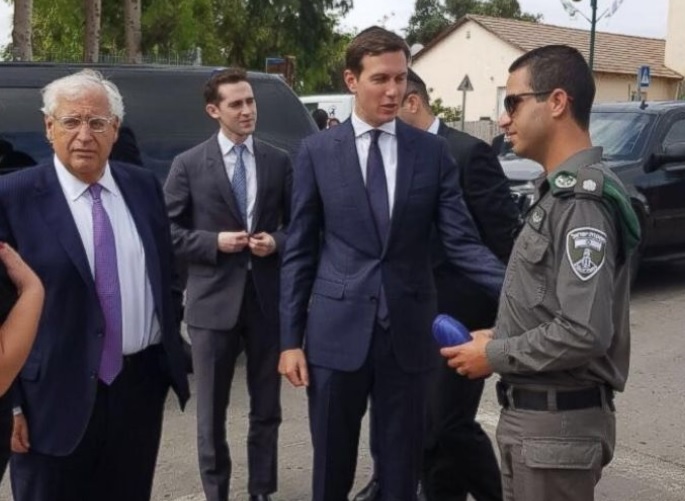
NSA fears that not only transcripts of its intercepts of Saudi officials were passed by Kushner to MbS, but also to the Israeli government. [right, Kushner pictured with his Israeli handlers in Jerusalem] This not only compromised targets of NSA's wide surveillance net, but also the agency's sensitive sources and methods for collecting such intelligence.
What alarmed NSA officials more than anything else is their observation that Israeli signals intelligence (SIGINT) companies, comprised of former SIGINT officers with Israel's Unit 8200 communications intercept agency, began aggressively marketing offensive and defensive SIGINT capabilities to other countries. These countries are routine targets for NSA collection efforts. Through the use of the joint NSA-Central Intelligence Agency Special Collection Service (SCS), intercepts of diplomatic, military, and other official communications are provided in either full or abridged transcript form to cleared U.S. policymakers. These are the files that were routinely requested by Kushner for no apparent reason, raising eyebrows within the upper echelon of the National Security Council. One of those who raised concerns about Kushner's "curiosity" for such information was Lt. General H. R. McMaster, who was recently fired by Trump, largely at the urging of Kushner and his wife, Ivanka Trump. National Security Adviser John Bolton, a pro-Israeli neo-conservative, has vowed to fire those who questioned Kushner's motives and those of his father-in-law in not taking immediate steps to curtail Kushner's access to such intelligence.

Kushner, who has no intelligence or military experience, specifically requested intercept transcripts on governments that are now on the receiving end of aggressive Israeli marketing efforts. Although Kushner has reported responsibilities for U.S. relations with the Middle East, Mexico, and China, there is no valid reason for him to have requested and read NSA transcripts of intercepted communications of such African leaders as Senegal's President Macky Sall, Cote d'Ivoire's President Alassane Ouatarra, Nigeria's President Muhammadu Buhari, or Gabon's President Ali Bongo.
Many African countries use low-level forms of encryption, mostly supplied by French firms, that are easy to break.
NSA is able to decrypt foreign communications, including those transmitted over Virtual Private Networks (VPNs), using a system code-named BIRDWATCHER, which forwards such coded communications to other NSA systems for code-breaking. However, Israeli firms are now able to sell more sophisticated systems to such governments. What the foreign governments do not realize is that Israeli intelligence has the decryption keys. Upgrading foreign government encryption with Israeli products also makes it that much harder for NSA to decrypt the communications, including e-mail. By providing such information on communication security vulnerabilities to the Israelis, Kushner has caused irreparable harm to U.S. national security. If such a security violation resulted in a criminal indictment, Kushner could be looking at multiple life terms in federal prison.
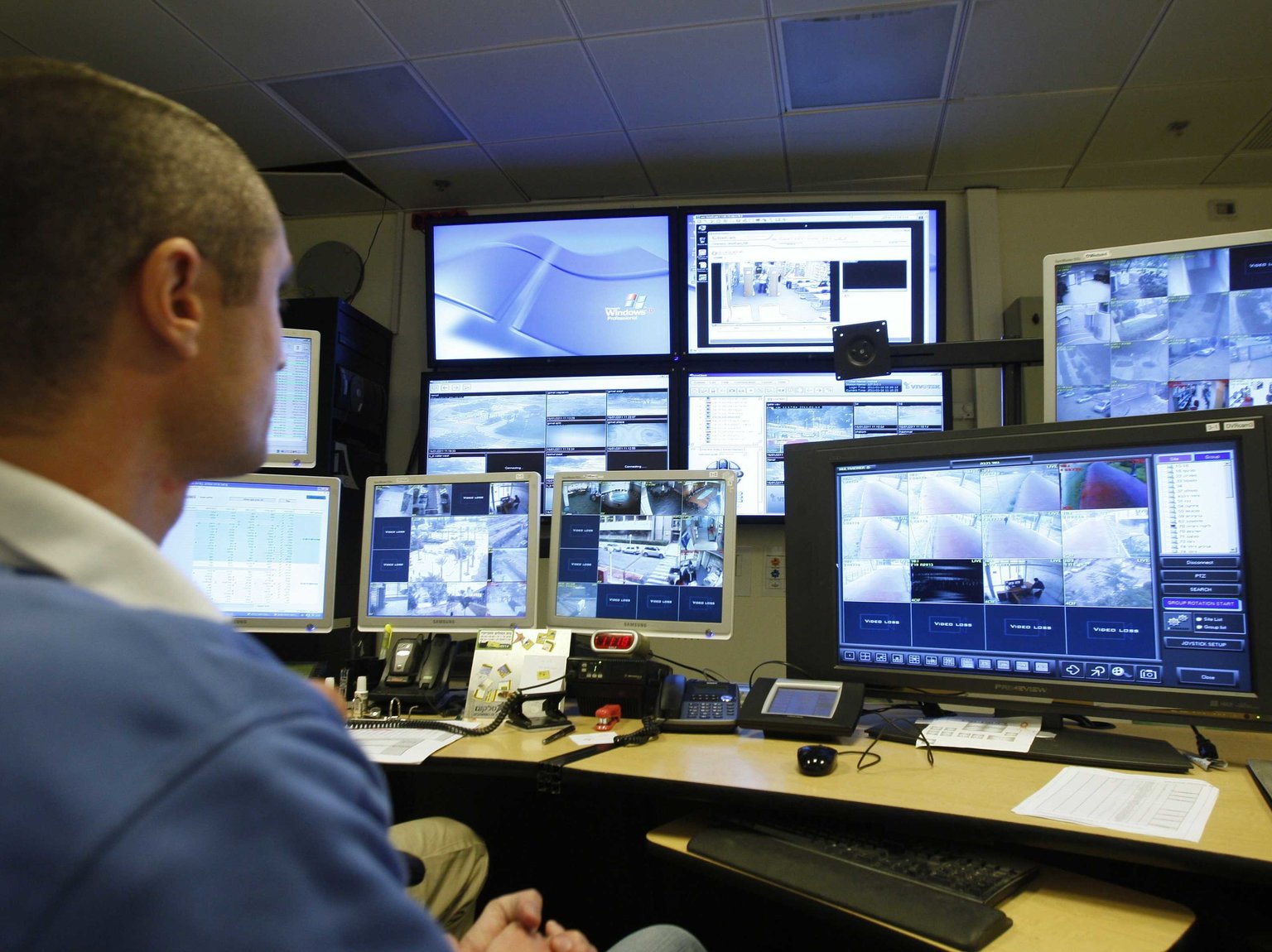
One such Israeli company that has moved into Africa to the chagrin of NSA and its partners in Britain and Canada is SAFNA, a firm headquartered in Israel's "intelligence city" of Herzliya, where Unit 8200, [pictured left] the lesser known Unit 8100, and various Mossad operations are located. The company's president is a Moroccan-born Jew named Didier Sabag, who also runs two Israeli firms based in Hong Kong, Hamsa Ltd. and Orot Ltd., both of which appear to be Israeli intelligence fronts. NSA is concerned that SAFNA will stymie its ability to monitor governments in the Sahel region that are also targets for the Islamic State and Al Qaeda jihadists. Governments courted by SAFNA include Morocco, Guinea-Bissau (a major transshipment point for narcotics from Latin America to North Africa and Europe), Benin, and the Central African Republic.

Another Israeli firm, A.D. Consultants of Nes-Ziona, Israel is marketing communications intercept and security equipment to President Alpha Condé of Guinea. Guinea is the location of mining resources coveted by Kushner's real estate business partners, the Steinmetz family of Israel. Other African countries receiving full-court presses from A.D. Consultants, include Madagascar, Burkina Faso, Chad, Mali, Mauritania, Cote d'Ivoire, Cabo Verde, Togo, Democratic Republic of Congo, Burundi, Gabon, Senegal, Equatorial Guinea, Sao Tome and Principe, Rwanda, Nigeria, and Niger.

Other Israeli SIGINT firms are marketing their services in India. A recent visit by Israeli Prime Minister Binyamin Netanyahu to India cemented growing military and intelligence links between Tel Aviv and Delhi. Similar aggressive Israeli SIGINT marketing is being reported from Azerbaijan, which shares a border with Iran; Angola; Mozambique; Saudi Arabia; Bahrain; and the United Arab Emirates.

The compromise of SIGINT by Kushner followed the revelation that Lt. General Michael Flynn, Trump's short-lived National Security Adviser, had a contractual relationship with another large Israeli cyber-warfare firm specializing in hacking computer systems. The firm was
NSO Group Technologies, also located in the Herzliya espionage metroplex. Trump --whose presidential campaign's links to the data mining firm Cambridge Analytica have been established -- may also be linked to another Israeli electronic surveillance firm, Black Cube, primarily consisting of ex-Mossad officers. Black Cube cyber-spies were retained to penetrate the email and medical records of Nigerian President Muhammadu Buhari, while he was a presidential candidate; and to dig up dirt on Kenyan opposition politicians; Mexican, United Arab Emirates, Moroccan, and Bahraini human rights activists; and women who accused disgraced Hollywood producer Harvey Weinstein of sexual assault.

Sunday, February 04, 2018

MBS to celebrate his palace coup in Washington with Trump, Kushner By The Wayne Madsen Report


MBS to celebrate his palace coup in Washington with Trump, Kushner 
By The Wayne Madsen Report

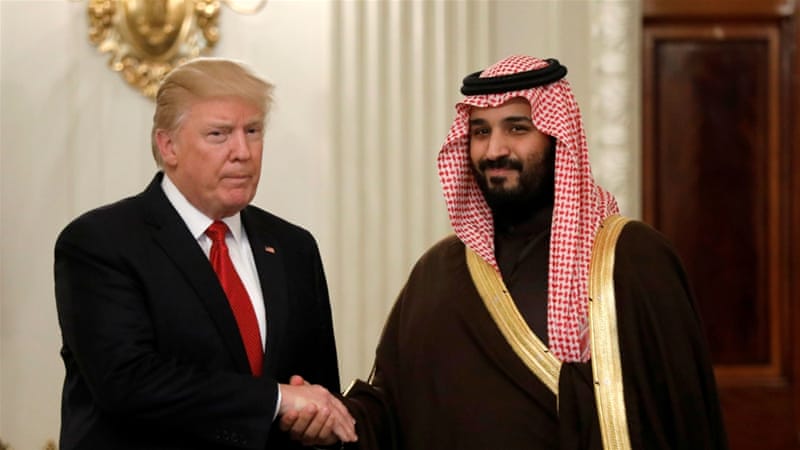
Saudi Crown Prince Mohammed bin Salman, known as "MBS," will lead a large Saudi delegation to Washington this month, undoubtedly to brief Donald Trump and Middle East "special envoy" Jared Kushner, Trump's son-in-law, on the success of his royal palace coup against rival princes within the House of Saud. The MBS-led coup resulted in a number of Saudi princes being detained, with an additional two executed on orders from MBS. In his book Fire and Fury, author Michael Wolff wrote that Trump told friends that "we've put our man on top," after MBS's purge of his fellow princes. [To the left, Trump and MBS are seen shaking hands last year in Riyadh].

The 32-year old MBS is expected to hold more "strategy sessions" with Kushner, like those Kushner and MBS spent together until the early morning hours in Riyadh in October 2017. Some of the discussions also involved Jason Greenblatt, Trump's special adviser on the Middle East and his one-time business lawyer. 

Both Kushner and Greenblatt are known to represent the interests of Israeli Prime Minister Binyamin Netanyahu. It is expected that Kushner will push MBS to purchase additional defensive and offensive missile systems from Israel. Saudi Arabia has already obtained missile systems from Israeli firms, including Elbit Systems Ltd. and its American branch, Elbit Systems of America. 

It is significant that a key player in Saudi Arabia's arms purchases, Ahmed Al Khateeb, the chairman of Saudi Arabian Military Industries (SAMI), is expected to accompany MBS to Washington. Last November, MBS put SAMI in charge of all Saudi defense acquisitions. Also expected in Washington as part of the Saudi delegation are Lieutenant General Prince Fahd bin Turki bin Abdulaziz, the Commander of Saudi Ground Forces, and Khalid bin Ali Al Humaidan, the chief of the Saudi General Intelligence Directorate (GID).

For Donald Trump, the main issue to be discussed with MBS and his advisers is the listing of Saudi ARAMCO's initial public offering (IPO) with the New York Stock Exchange. Some Saudi officials, including ARAMCO chairman and Saudi Energy Minister Khalid al-Falih, want the IPO to be listed with the London exchange. They point out that a New York exchange IPO would pose a risk to the firm because it could be subjected to lawsuits and potential asset attachments by the families of victims of the September 11, 2001 attacks. ARAMCO President and CEO Amin Nasser has delayed a decision on the ARAMCO IPO listing until later this year. MBS is known to favor the NYSE for the listing but Nasser has also spoken in favor of London and Hong Kong or even Saudi Arabia's own Tadawul exchange in Riyadh. Trump tweeted last November his preference for New York: "Would very much appreciate Saudi Arabia doing their IPO of Aramco with the New York Stock Exchange. Important to the United States!"

It is expected that MBS and his delegation will push the United States to increase its military strikes against Houthi forces in Yemen. U.S. air attacks in Yemen have increased six-fold over those conducted by the Obama administration. The Pentagon insists that the attacks are aimed at forces of the Islamic State in Yemen, which it calls ISIS-Y. In fact, this is a not-so-clever cover story to mask U.S. strikes against Houthi forces. 

The Saudi coalition fighting on behalf of a puppet Yemeni government, which has now lost its base in Aden to United Arab Emirates-backed forces of the South Yemen independence al-Hirak al-Janoubi movement, has been caught providing military assistance to jihadists in Yemen. These include Al Qaeda in the Arabian Peninsula (AQAP) and the Pentagon's appellation, ISIS-Y. Other items on the MBS agenda in Washington include the Saudi-led sanctions imposed on Qatar, U.S. support for jihadist remnants in Syria, and increasing economic and diplomatic pressure on Iran and Lebanon, as well as Lebanese Hezbollah. The MBS agenda is virtually a copy of that of Netanyahu, including the desire to stymie lawsuits against Saudi interests by 9/11 victims' families. 

MBS will likely ask Trump for the United States to militarily help put down the South Yemeni "Southern Transitional Council" (STC), the de facto government now ruling South Yemen from Aden. MBS will call these forces, which include socialists and Marxists from the old People's Democratic Republic of [South] Yemen, "terrorists." However, that will result in a final break with the UAE's powerful Crown Prince of Abu Dhabi, Mohammed bin Zayed (MBZ), who supports the South Yemeni separatists. 
If Trump and Kushner decide to heed MBS's call and wade fully into the Yemeni civil war, the already-disastrous human suffering in Yemen will only grow worse. Also, aside from the support it is receiving from the UAE, it will be difficult for the STC to match the lobbying power of the Saudis in Washington. The STC's chief representative in the United States is Summer Ahmed, a Dearborn, Michigan mother, who also works as a lab technician. To beef up the STC's lobbying clout in Washington, the UAE hired Grassroots Political Consulting LLC to promote the interests of the STC in the Congress and White House.

Of interest to anti-fraud watchdog groups and Attorneys General suing the Trump administration for violating the Emoluments Clause of the Constitution -- which forbids a president from accepting money or gifts from foreign sovereigns -- is in what DC hotel the Saudis will stay during their time in Washington. 

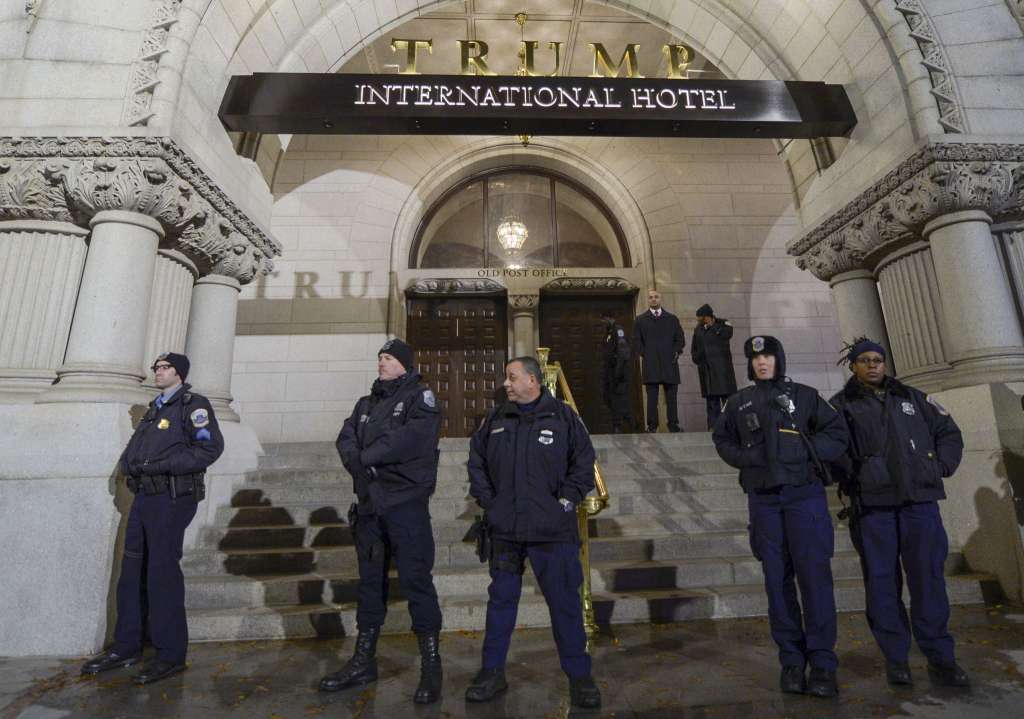
In the past, the Saudis, as well as their Kuwaiti allies, have tended to favor Georgetown's plush Four Seasons Hotel or the downtown Ritz-Carlton. However, this February 26th, the Kuwaitis will hold their National Day celebration at the Trump International Hotel on Pennsylvania Avenue. Last year, not only did the Kuwaitis hold their National Day celebration at the Trump venue but Saudi ally, Bahrain, chose it for their National Day celebration, just following the November 8, 2016 election. 
If the Saudi delegation or part of it choose to stay at the Trump-owned hotel, it will provide further proof for lawsuit plaintiffs that Trump is knowingly violating the Emoluments Clause to line his and his family's pockets. And there is every indication that most of the Saudi delegation will stay at the Trump hotel. Last year, MSL Group Americas, a lobbying firm hired by the Saudis to lobby against the Justice Against Sponsors of Terrorism Act or JASTA -- an act that allows families of 9/11 victims to sue Saudi Arabia and its interests -- spent $270,000 at the Trump International Hotel. 

Trump previously stated that he would turn over to the U.S. Treasury foreign profits from his hotels to the U.S. Treasury. To date, he has failed to do so.

Thursday, January 25, 2018

Opus Dei's and Erik Prince's emerging secret army in the Middle East By The Wayne Madsen Report


Opus Dei's and Erik Prince's emerging secret army in the Middle East By The Wayne Madsen Report


Amid nonsensical claims by congressional Republicans, including Senator Ron Johnson (R-WI) and Representatives Rep. Trey Gowdy (R-SC), Matt Gaetz (R-FL), and John Ratcliffe (R-TX), that the Federal Bureau of Investigation is hosting a "secret society" intent on ousting Donald Trump from the presidency comes word from our Middle East sources that the founder of the infamous Blackwater mercenary firm, Erik Prince, is creating a secret army in the Middle East with strong links to the secret fascist Roman Catholic sect, the Opus Dei. Prince runs a number of private military firms based in the Sheikh Zayed Military City, located outside of Abu Dhabi, the capital of the United Arab Emirates, and in nearby Dubai, the UAE's financial hub. 

Opus Dei was founded in Spain in 1928 by Catholic priest Josemaria Escriva, canonized in 2002 by Pope John Paul II as a saint. This "patron saint" of fascism was a major supporter of Spanish dictator Francisco Franco. Escriva justified countless war crimes committed by Spanish fascist forces in the civil war waged against Spain's Loyalist supporters and international volunteers who came to their assistance. Today, Opus Dei is waging a covert battle against Pope Francis I, the first pontiff from Catholicism's Jesuit order and an opponent of the policies of Trump.

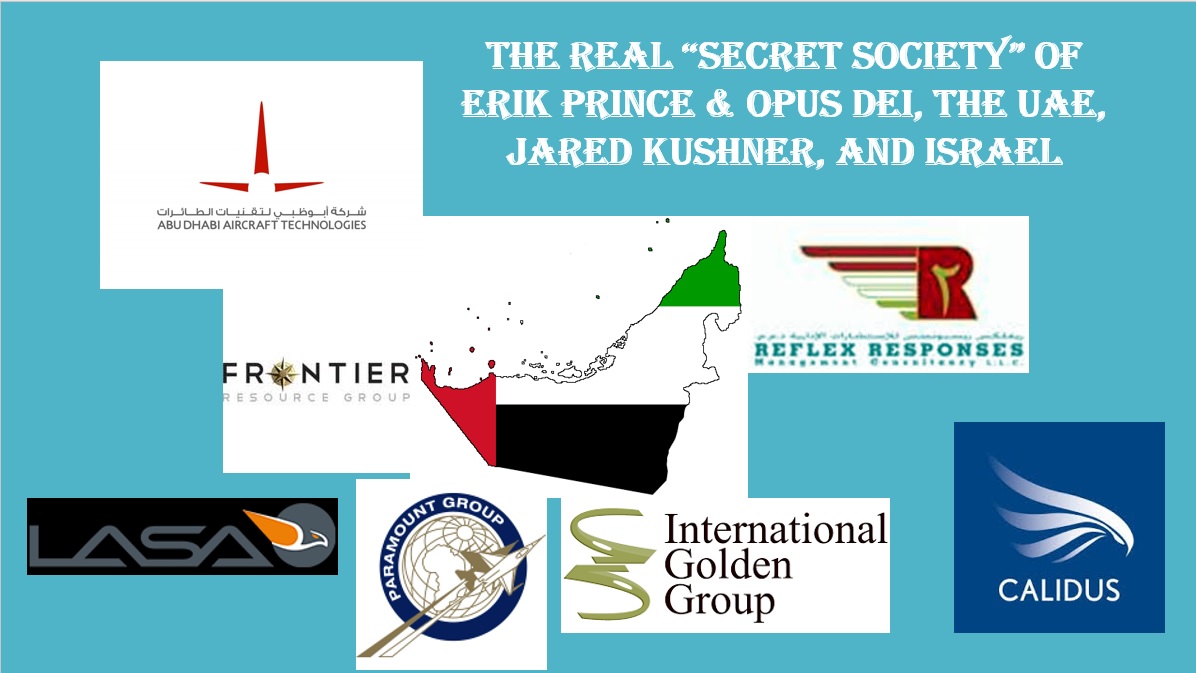
Prince sold Blackwater in 2011 and moved to the UAE where, with the financial backing of Abu Dhabi Crown Prince Mohammed bin Zayed al Nahyan (MBZ), he established a new network of mercenary entities. These include Reflex Responses (R2) and Frontier Resources Group (FRG). FRG, which is based in Hong Kong, is also involved in energy resources and rare earth mineral exploitation and receiving Chinese investments, along with financial largesse from MBZ. Prince's firms have become influential in the UAE and other Middle Eastern countries due to the fact that his major patron, MBZ, is also the deputy Supreme Commander of the UAE Armed Forces, a close friend and ally of Saudi Arabia's emerging strong man, Crown Prince Mohammed bin Salman al Saud (MBS). 
R2 personnel, many recruits from military units in Colombia, Chile, El Salvador, and South Africa with blemished records of committing human rights abuses, are active in supporting UAE and Saudi forces in Yemen's bloody civil war. R2 has also reportedly hired Baathist military personnel in Iraq, who were once loyal to Saddam Hussein.

Prince is also believed to be instrumental in the creation of a domestic UAE armaments industry, which is not bound by international regimes and domestic laws prohibiting the export of war materiel to countries subject to international sanctions. 
Abu Dhabi Aircraft Technologies (ADAT) and Calidus LLC, are reportedly jointly manufacturing UAE versions of the Brazilian B-250 Bader turboprop and the Embraer 312 Tucano, both highly-prized for counter-insurgency operations. Prince's operations in the UAE have also been involved in transforming light aircraft used for agricultural operations into armed surveillance and counter-insurgency aircraft. This has been accomplished by a deal between Prince and LASA Engineering Ltd. of Bulgaria. LASA stands for "Light Armed Surveillance Aircraft." The Trump administration, which has called for the tightening of international sanctions on arms exports to Iran, Syria, Venezuela, Cuba, and North Korea, is turning a blind eye to Prince's and the UAE's sanctions-evading operations in Abu Dhabi.

Another Prince firm, Phoenix Aviation Malta Limited, is believed to be involved in Libya's civil war. Its parent, Phoenix Aviation Ltd., based at Wilson Airport in Nairobi, Kenya, is involved in various African civil wars, including those in Somalia and South Sudan. Prince has forged a cooperative agreement with Ivor Ichkowitz, the chairman of South Africa's Paramount Group, a military equipment manufacturer, to market the firm's armored military vehicles in Abu Dhabi in cooperation with the UAE firm, 
International Golden Group. Ichkowitz is close to the scandal-plagued presidents of South Africa and Kazakhstan, Jacob Zuma and Nursultan Nazarbayev, respectively. Trump recently hosted at the White House Nazarbayev, whose vast interwoven network of offshore companies have funneled suspected embezzled Kazakhstan funds into Trump's own network of shell corporations.

Together with MBZ and MBS, Prince is also helping to carry out the new "strategy" for the Middle East crafted by Trump's son-in-law and Middle East special envoy Jared Kushner and Israeli Prime Minister Binyamin Netanyahu's government. Kushner has personally hammered out the new strategy during all-night sessions with MBS in Riyadh. Prince has added influence with the Trump administration through his sister, Betsy De Vos, Trump's Secretary of Education. De Vos is a covert from the Dutch Reformed Church to Mormonism. She is the wife of Amway co-founder Dick DeVos. Erik Prince converted from Dutch Reformed to Roman Catholicism at the same time he joined Opus Dei. Prince and Betsy De Vos are both heirs to an automobile parts corporate fortune created by their right-wing industrialist father, Edgard Prince.

Prince was a major supporter of Trump's 2016 presidential campaign. On January 11, 2017, a little over a week from Trump's inauguration, Prince and MBZ arranged a clandestine meeting with a Russian government envoy in Seychelles. Prince, representing the Trump transition team, offered Russia a deal that would have seen Russia curtail its support for Syria and Iran in exchange for a lessening of Western sanctions against Russia. The previous month, MBZ met with key Trump transition figures, including Kushner and Stephen Bannon in New York. The Seychelles and Manhattan meetings, as well as the Trump-Kazakhstan connection, are among many issues being investigated by Justice Department Special Counsel Robert Mueller and his team of prosecutors and FBI agents.

Thursday, November 30, 2017

Kushner linked to Madoff Ponzi scheme through Platinum Partners collapse By The Wayne Madsen Report


Kushner linked to Madoff Ponzi scheme through Platinum Partners collapseBy The Wayne Madsen Report

Donald Trump son-in-law and special adviser Jared Kushner is linked to two of the most fraudulent financial schemes in the financial history of Wall Street, the Bernie Madoff securities fraud Ponzi scheme and the financial collapse of the fraudulent hedge fund, Platinum Partners. Kushner's aunt and uncle, Richard and Marisa Stadtmauer were major investors in Platinum Partners, along with Madoff Investment Securities LLC, the company operated by the imprisoned-for-life financial manipulator Bernie Madoff. 

Madoff funds were transferred to Platinum Partners via the Jay Cohen Revocable Trust of New York. $9.271 billion of Madoff funds have already been recovered and distributed to victims of Madoff's fraud. Richard Stadtmauer, who was number two in the Kushner Companies when the firm was being run by Jared's father, Charles Kushner, served a 38-month prison sentence for fraudulent activities associated with Charles Kushner. Charles Kushner received a two-year prison sentence -- serving only 14 months of it -- for illegal campaign contributions, tax evasion, and witness tampering. Charles Kushner's wife Seryl is the sister of Richard Stadtmauer. The Ponzi schemes and interlocking corporations involving the Kushners, Stadtmauers, Trumps, Manaforts, and others are notable for the involvement of entire families. This is especially the case with the Russian and Israeli oligarchs who have been involved in Trump and Kushner businesses.

Platinum Partners and its principals were the subject of a federal criminal indictment for fraud between 2011 and 2016. This included bilking the New York Correction Officers’ Benevolent Association (COBA) out of $20 million from its pension fund. Indicted in the fraud were Platinum's chief investment officer Mark Nordlicht, its founder Murray Huberfeld, Platinum marketing officer Uri Landesman, and COBA president Norman Seabrook. Many of those who invested in Platinum were the same wealthy New York and Florida Jews who were investors in Madoff's securities scheme.

Platinum maintained that it had $1.3 billion in assets but, in reality, had only $68,530 in cash. Some of the Eastern District of New York prosecutors in Brooklyn are now members of Justice Department Special Counsel Robert Mueller's team that is investigating Kushner's and Trump's dubious business ties.

Platinum's insolvency and bankruptcy resulted in a major lender, Parris Investments Ltd. of New Zealand, petitioning a Cayman Islands court to roll up Platinum's Offshore Feeder Fund, which was incorporated in Grand Cayman. One of Platinum's principals, Murray Huberfeld, a friend of Richard Stadtmauer, paid a bribe to COBA's Seabrook, in return for the investment of the pension fund money in Platinum. Huberfeld was major investor in the Livingston, New Jersey-based bank NorCrown, which was owned by Charles Kushner.

WMR previously reported that Madoff would order his employees to "roll the accounts" in the Cayman Islands every business day at 3:00 pm. When it came to manipulating hundreds of millions of dollars using the bank and corporate secrecy laws of the Cayman Islands, the Madoffs, Kushners, and Stadtmauers were experts. And the patriarchs of all three families are serving or have served prison sentences for their fraud schemes. Rather than keep such individuals as far from his administration as possible, Donald Trump has appointed Jared Kushner to several key posts, including special Middle East envoy and China trade interlocutor, to name but a few.

Trump's real estate schemes have also relied heavily on offshore financial contrivances that rely on tax havens and their bank and corporate secrecy laws.

In the federal government's criminal complaint filed against seven Platinum principals on December 14, 2016, the government stated that Nordlicht and an unnamed co-conspirator planned to flee the United States. The indictment reads: "On or about December 13, 2015, Nordlicht, Landesman, and an unnamed coconspirator sent emails 'that contemplated Nordlicht and Co-Conspirator 1 fleeing from the United States and illustrated their knowledge and awareness of the fraudulent scheme perpetrated on Platinum's investors and prospective investors.'" The e-mail from Co-Conspirator 1 stated "Don't forget books. Assume we are not coming back to ny[.] Just to be safe. Depends on Miami[.] We can fly straiggt [sic] to europe from miami on Tuesday[.] Take passport." Nordlicht responded in an email to Co-Conspirator 1: "Am on my way to jfk with kids for their 6 pm flight to Israel. [Co-Conspirator 2] ducking my calls . . .[My wife] is literally making me get on Israel flight if we don't connect and agree what we are doing."

Landesman responded to Nordlicht's email to Co-Conspirator 1, which Nordlicht had forwarded to Landeman: "You should get on the flight if there is no bridge [loan], probably even if there is...We need to go through the mehalech of how we are going to share this with clients and employees, going to be very rough, big shame." Mehalech is a Hebrew word, which means "a way of operating." Some critics of unethical Jewish business practices define mehalech as committing fraud against others while carrying a clean conscience. In any case, Israel has welcomed with open arms Jews who are on the lam from law enforcement in countries as varied as the United States and Russia to Colombia and Romania.

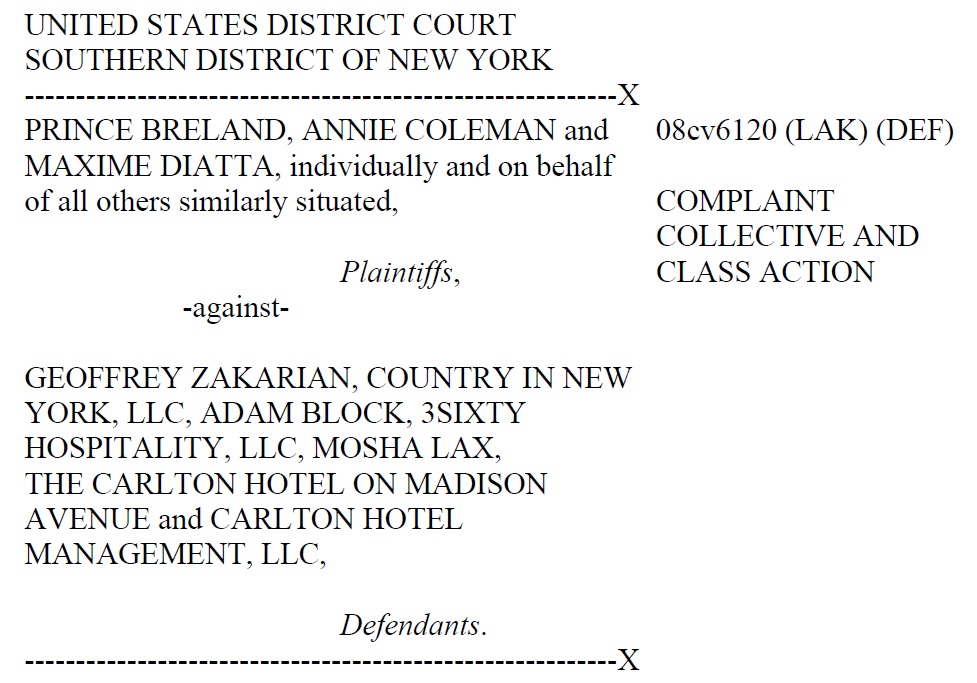
Platinum Partners owned Black Elk Energy, a Houston firm that also declared bankruptcy. Black Elk Energy Offshore Operations' West Delta 32 oil platform, located 17 miles southeast of Grand Isle, Louisiana, suffered an explosion that killed three crewmen on November 16, 2012. [pictured, right]. Black Elk and its sub-contractors were named in 41 citations issued by the Interior Department's 
Bureau of Safety and Environmental Enforcement (BSEE) that later resulted in criminal charges being filed against the firm. A link to those citations, which appeared on BSEE's website, now results in a "404 -- page not found" message.

Black Elk Energy was affiliated with other Houston firms, including Iron Island Technologies, Inc., Iron Island Technologies I, Deepwater Solutions LLC, Freedom HHC Management LLC, and Elk Well Services LLC.

With Kushner-related businesses active in the Texas oil industry, Jared Kushner's recent all-night "strategizing" in Riyadh with Saudi Crown Prince Mohammed bin Salman becomes even more suspicious.

Wednesday, September 20, 2017

Israelis helping North Korea violate (food export) sanctions By The Wayne Madsen Report


 Israelis helping North Korea violate (food export) sanctions
By The Wayne Madsen Report

As Donald Trump harangued North Korea, Iran, and Venezuela during his September 19 neocon-drafted speech to the United Nations, one leader in the audience was beaming and applauding with almost every Trump syllable. Israeli Prime Minister Binyamin Netanyahu and his wife Sara, both facing prison terms in their country for corruption, was encouraged by Trump's tough stand against "rogue regimes."

Trump lambasted the P5+1 nuclear accord with Iran, a move that played right into Netanyahu's hands. Barack Obama and the five members of the UN Security Council plus Germany hammered out an agreement with Iran that saw the Iranians give up any nuclear weapons development in return for the curbing of international sanctions. Israel was never happy with the deal and it used its foreign lobbies, albeit unsuccessfully, to sink the deal.

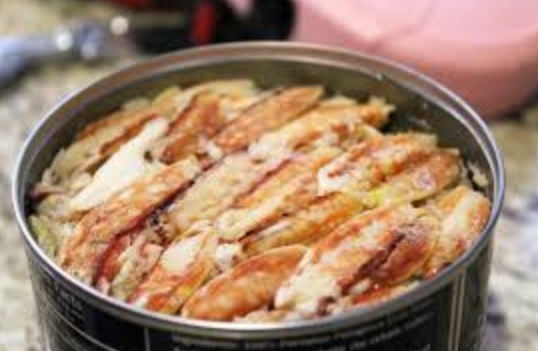
Netanyahu cheered on Trump's verbal attack on North Korea -- one that saw the president call North Korean leader Kim Jong Un "rocket man" and threatening to "destroy" North Korea. Although the UN has imposed severe sanctions on North Korea, Israelis have been in the process of breaking it through its international Chabad network of Hasidic criminal syndicates. Ironically, one of the methods by which Israeli criminals are helping North Korea to evade sanctions is the sale of North Korean-caught Pacific Ocean crabs in cans that label their country-of-origin as either Russia or China.

Kosher dietary laws strictly ban the consumption of shell fish like crabs, lobsters, and scallops. When it comes to making money illicitly, however, the Chabadniks are more than willing to discard their religious tenets. North Korea is well-known for producing and marketing counterfeit goods, including U.S. brand cigarettes and other consumer items. Chabad, which also excels at counterfeiting, has found a natural business partner in North Korea, particularly in Asia, where the Hebrew- and Yiddish-speaking Hasidics are at a disadvantage.

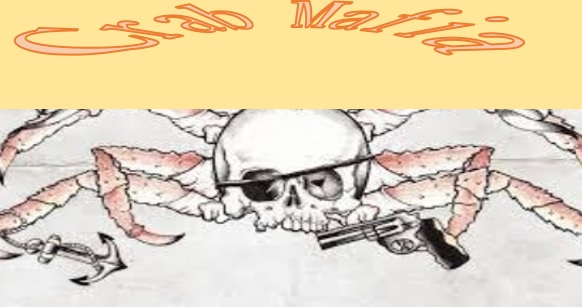
The "Crab Mafia," as it is known in northeast Asia, procures seafood, often poached from restricted Sea of Japan or Bering Sea waters by often unflagged North Korean fishing trawlers, and cans it in China or Russia with Chinese or Russian country-of-origin labeling (COOL). The North Koreans receive hard currency, which is now severely restricted by international sanctions, in return for their catch. Pirated seafood sold under false labels constitute a huge business. In 2013, false country-of-origin crab sold in the United States amounted to some $600 million. Much of that money ended up in the hands of the Crab Mafia and North Korea.

The Chabadniks, who constitute an unofficial virtual arm of the Israeli Mossad, have extended their operations in the Russian Far Eastern city of Vladivostok and the Joseph Stalin-created Jewish Autonomous Republic, which sits along the Trans-Siberian railway on the border with China. Once referred to as the "Soviet Zion," Stalin saw the Far Eastern region as the future homeland of the Jewish people.

  
Netanyahu's Chabadniks helping North Korea re-label Crab Mafia catches as "Chinese" and "Russian" to avoid sanctions. Shellfish is strictly non-Kosher

The Jewish Autonomous Republic and Israel are the world's only two official Jewish state entities. However, Jews only represent 0.2 percent of the Jewish Autonomous Republic's population. Israel and Chabad are trying to change that by urging Israeli and other Jews to take up dual residency in the Jewish republic, something that has been encouraged by Russian President Vladimir Putin. Yiddish is currently taught in Birobidzhan schools and there is a Yiddish newspaper and radio station, as well as a Kosher market. Travel between the Jewish Autonomous Republic and Israel is increasing and a large number of Chabadniks from Israel have taken up part-time residence in the autonomous republic.


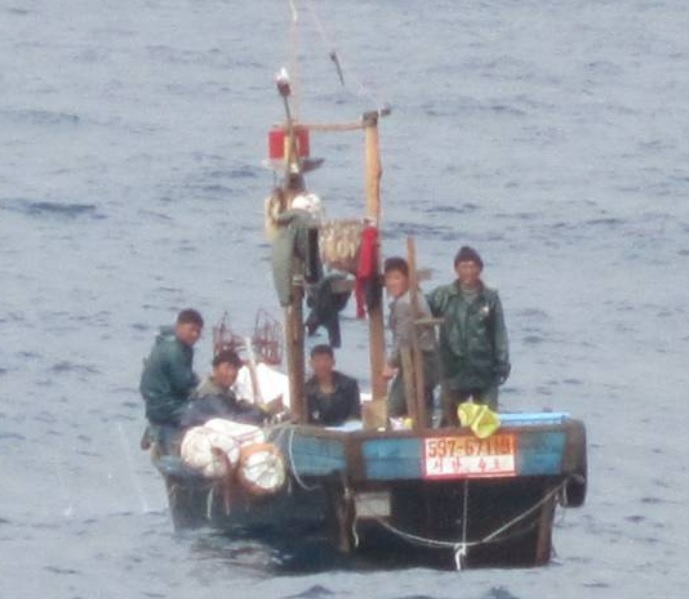
One of many unflagged North Korean fishing boats that ply the Sea of Japan and poach in restricted waters and sell their catch to sanction-busting Jewish criminals operating from Vladivostok and Birobidzhan
Dealing with the northeast Asian Crab Mafia has been lucrative for the Chabad smugglers and counterfeiters of Birobidzhan. Canneries in adjacent Khabarovsk and Primorsky, the latter the location of Vladivostok, are plentiful. Trump, of course, had no idea that his threats against North Korea are meaningless as long as Israel tolerates Israeli nationals working to circumvent UN economic sanctions against North Korea. Nor does it help that Trump's key confidantes, son-in-law Jared Kushner and his wife Ivanka Trump, are active supporters of Chabad.

The re-establishment of Jewish control over Birobidzhan is financed by a foundation called Bereshit. The first word in the Torah is bereshit, which is translated as "in the beginning." Some of the financing network for the Bereshit Foundation comes from Mikhail Fridman, German Khan, and Pyotr Aven, all of whom are linked to Russia's Alfa Bank, Jared Kushner, and the financing of the Trump presidential campaign, and the Wexner Foundation of Les Wexner, the billionaire mentor of Trump friend and convicted child sex offender Jeffrey Epstein. When Trump threatened to "destroy" North Korea with Netanyahu nodding his head approvingly, little did anyone else inside the General Assembly realize that the wealthy allies of Trump and Netanyahu have been helping North Korea to evade economic sanctions from far-flung Chabad outposts in Siberia.


Wednesday, August 30, 2017

"Javanka" threatens to expand blood diamond trade By The Wayne Madsen Report


"Javanka" threatens to expand blood diamond trade
By The Wayne Madsen Report

The Trump White House advisory duo of Ivanka Trump and her husband Jared Kushner, "Javanka" as they are known to their White House detractors, threatens to undo years of international efforts to stem the flow of conflict diamonds, or "blood diamonds" from Africa. Conflict diamonds from Africa pass into the hands of unscrupulous diamond brokers in Europe, the United States, and South Africa. Ms. Trump and Kushner are directly tied to Israeli and U.S. Orthodox Jewish diamond interests in New York that have overseen the flow of conflict diamonds from such nations as the Democratic Republic of Congo, Sierra Leone, Liberia, and Angola.

Part of the reason for the concern of international diplomats about the Trump administration's stand on conflict diamonds arises as a result of key vacancies within the State Department, including diplomats responsible for U.S. Africa policy. President Trump has shown no signs that he is ready to nominate anyone to fill secondary and tertiary level positions within the State Department, which, itself is facing a 30 percent budget cut.

The soon-to-be acting Assistant Secretary of State for African Affairs is Donald Yamamoto, who is currently the vice president of the National Defense University and previously served as U.S. ambassador to Djibouti and Ethiopia. Senator James Inhofe (R-OK) has expressed a desire for former U.S. Representative Jack Kingston (R-GA) to serve as Assistant Secretary for Africa. Kingston, one of Trump's cable news boosters, is known to harbor racist views, hardly an asset for someone who would oversee U.S. policy on Africa.

There are currently acting officials in charge of Africa desks at the National Security Council and Department of Defense. Meanwhile, there are reports that Africa policy for the Trump administration is being conducted by "outsiders" with vested financial and other interests on the continent.

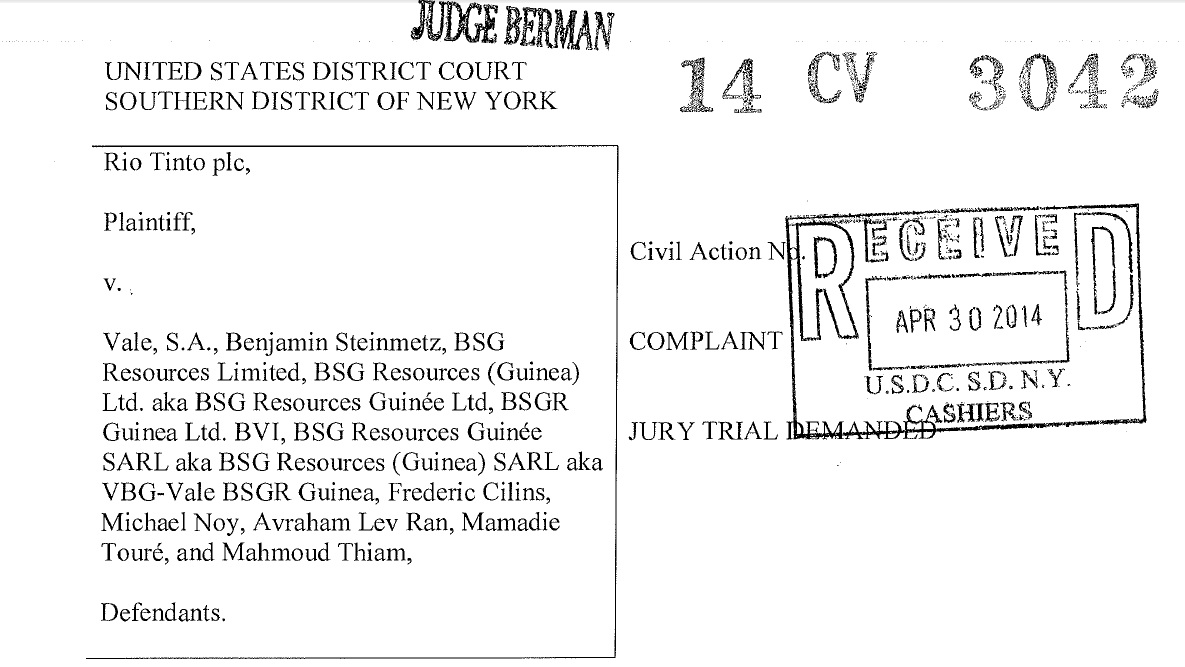
What is of equal concern are the ties of Ivanka Trump and Jared Kushner to unscrupulous Israeli and American Orthodox Jewish diamond merchants. Kushner and members of his family have been involved in real estate deals with members of the family of Israeli mining multi-billionaire Beny Steinmetz, including Raz Steinmetz, Beny's nephew. Steinmetz and his company, Beny Steinmetz Resources Guinea (BSRG), are under investigation in the United States, Israel, United Kingdom, Guernsey, Guinea, and Romania for fraudulent business dealings, including bribery. In the United States, Steinmetz is embroiled in a Foreign Corrupt Practices Act violation involving alleged bribes paid by BSRG to government officials in Guinea, where Steinmetz has diamond and other mining interests. Raz Steinmetz, who has taken over a large part of his uncle's business empire, partnered with Kushner in trying to grab up New York City real estate. Some of the deals were in conjunction with the Trump Organization, including a development project in Manhattan's Soho neighborhood that involved, in addition to Kushner, Steinmetz, and Trump, Bayrock Group LLC, a Trump partner headed by Trump associate Felix Sater and bankrolled by suspected Eurasian organized crime figures.

Steinmetz, one of Israel's wealthiest men and who is believed to carry out special assignments for the Mossad, struck a lucrative deal with Guinea in 2008 to exploit the Simandou iron mine, which contains what is believed to be the largest iron ore deposit in the world. The deal between Steinmetz's BSRG and Guinea's President Alpha Condé saw Steinmetz invest $165 million in the deal. However, when BSRG struck a deal in April 2010 that saw the Brazilian mining firm Vale pick up 51 percent of the Simandou concession for a cool $2.5 billion, the CIA and Steinmetz Group business rival George Soros realized that Steinmetz had profited nicely from the Guinea deal.


Civil complaint brought by Rio Tinto, a major mining group, against Jared Kushner business partner, the Steinmetz family of Israel

The CIA convinced Condé that the Israelis had defrauded him and offered Guinea only a fraction of the actual worth of the Simandou mine. The message was clear: the Israelis swindled Condé. Condé demanded the joint mining firm established between BSRG and Vale, VBG, pay Guinea double the royalties in the venture.

Condé, concerned about BSRG's links to Mossad, barred BSRG's president, Asher Avidan, an Israeli national, from entering Guinea. Guinea cited "national security" concerns as the reason.

Condé agreed to give the green light to the CIA and the Soros operatives, and the latter who operate out of New York City and maintain regular contact with their bosses at the CIA headquarters in Langley, went to work. This past summer, the United Kingdom's Serious Fraud Office (SFO) in London opened an investigation of the BSRG Guinean deal. The SFO also pressured the Financial Investigation Unit of Guernsey, where BSRG had established its headquarters, to open an investigation of the firm. Condé arrested two BSRG employees in Guinea. Meanwhile, the FBI arrested BSRG's representative in the United States. Frederic Cilins was arrested by the FBI in Jacksonville, Florida before he could begin destroying several BSRG documents proving that Steinmetz had paid bribes to Guinean officials in violation of the U.S. Foreign Corrupt Practices Act.

Child soldiers (file photo). Photo: Gabriel Galwak/IRIN
Trump's turning over Africa policy to grifters and corrupt businesses spells doom for Africa's children, many of whom are pressed into service by Israeli mining interests and Mossad

In September 2013, Guinea arrested four Israeli mercenaries for attempting to overthrow Condé's government. In retaliation for Condé cooperating with the CIA and Soros to strip him of his mine concession, Steinmetz, according to our intelligence sources, convinced Mossad and Prime Minister Binyamin Netanyahu's government to authorize a "false flag" operation, a Mossad specialty, against Guinea. Commensurate with the Guinean parliamentary election, Mossad agents planned to pay members of the Guinean opposition and the anti-Condé Fula tribe to commit acts of terrorism. The election violence would force Guinean security and police, where Mossad has its "assets" in place, to launch a bloody crackdown. Mossad believed that in the midst of election violence, its assets in the Guinean military and police could successfully declare a state of national emergency and oust Condé and his government, replacing it with Israeli loyalists. It should be noted that 85 percent of Guineans are Muslims.

It was later discovered that Guinea arrested the Israelis based on tips received from the CIA and the French Direction Generale de la Securite Exterieure (DGSE) foreign intelligence service. The CIA and DGSE intelligence stated that Mossad had hired Israeli, French, and South African mercenaries to launch false flag attacks in preparation for a military coup.

With the Mossad coup unsuccessful, Condé's Rally of the Guinean People (RPG) party won the September election. Soros's NGOs, who served as election monitors, were rather muted in their criticism of the election, which was rife with fraud.


With Steinmetz's New York real estate partner, Kushner and his wife Ivanka, in the cat bird's seat advising Trump, the entire corrupt Israeli and New York, London, and Antwerp Jewish diamond industry sees a chance to grab up more lucrative mining deals in Africa. The links between the Steinmetz Group and Kushner also places U.S. Africa policy firmly in the hands of Israeli interlocutors.

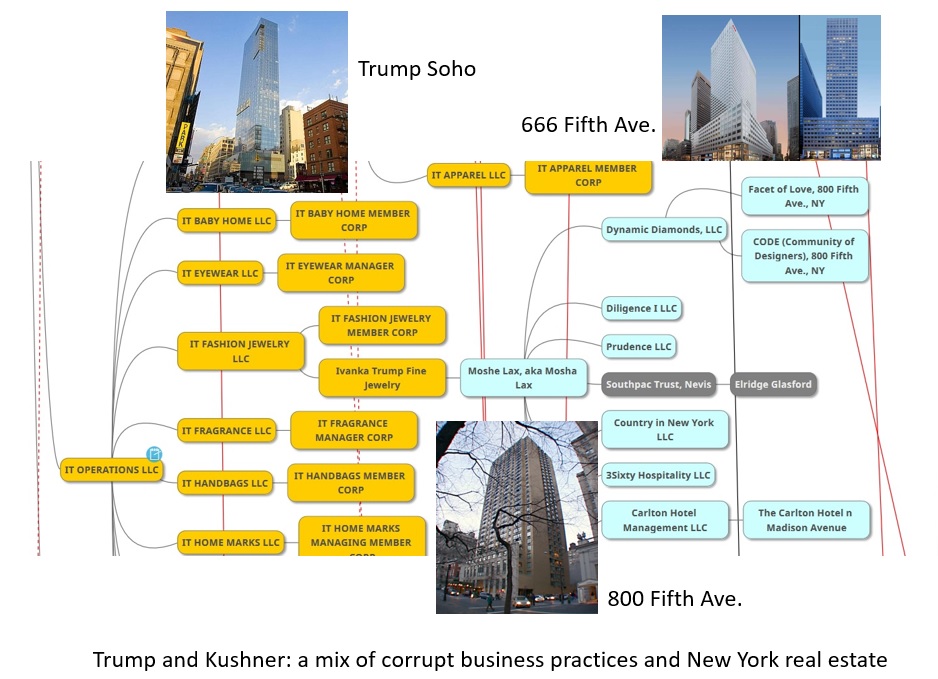
Ms. Trump is no stranger to corruption in the diamond business. Her partner in Ivanka Trump Fine Jewelry and Madison Avenue Diamonds LLC is a noted Orthodox Jewish New York business defendant Moshe, aka Mosha, Lax, who has been involved in lawsuit after lawsuit in New York, mostly for his failure to pay his bills or defraud business partners. Former New York Governor Elliot Spitzer kicked Lax out of rented business property in a building owned by Spitzer, which is located at 800 Fifth Avenue in Manhattan, for failure to pay rent. Ivanka Trump has managed to avoid any repercussions from Lax's activities by merely failing to show up at court hearings in which she or her businesses have been named as defendants.


One of many lawsuits brought against Moshe Lax, Ivanka Trump's diamond business partner
With Ivanka and Jared Kushner in a position to force the State Department to look the other way when it comes to the smuggling of blood diamonds from Africa, the first victims will be African children who are press-ganged into becoming child soldiers, tribes who are forced off their ancestral lands for mining operations, and African governments trying to lift themselves out of rampant corruption brought about by foreign natural resource exploiters.

Thursday, July 06, 2017

Possibility of war between Asian superpowers looms as Jared Kushner puts Rex Tillerson in his place By Wayne Madsen Report

 Possibility of war between Asian superpowers looms as Jared Kushner puts Rex Tillerson in his place By Wayne Madsen Report
U.S. strongman Donald Trump in a nepotistic fashion has granted his son-in-law Jared Kushner special diplomatic envoy portfolios to deal with the Middle East, China, Canada, and Mexico. Kushner, who is 36 and has no international experience, except for acting as a virtual embedded agent for Israel and Binyamin Netanyahu in the United States, recently warned Secretary of State Rex Tillerson to understand his place after the normally soft-spoken Tillerson blew up at a White House meeting with chief of staff Reince Priebus, Kushner, and their aides. Tillerson complained that the White House was vetoing his selections to fill important State Department posts, including ambassadorships and secondary and tertiary positions in the department. Kushner has applied a political litmus test to State Department appointments, rejecting anyone who has ever criticized Trump or those who have contributed to Democratic candidates.

The arrogance and brashness of Kushner is about to explode in his face as the world's most populous nation, China, and the world's most populous democracy, India, face off in the Himalayas over a border dispute that threatens to become a wider regional conflict. If war breaks out between India and China, both nuclear powers, Kushner should be pushed aside by the adults in the Trump administration.

Borders in the Himalayan region have names like "lines of control," "lines of actual control," "un-demarcated boundaries," and "historical sovereign territory." The reason is because many of the borders have been contested since British colonial times. In the rugged and sparsely-populated mountainous range extending from Kashmir in the west to the Indian state of Arunachal Pradesh in the east, it has been nearly impossible to establish recognizable borders and the countries of the region -- India, China, Pakistan, Bhutan, and Nepal -- have been contesting borders since the British withdrew from the subcontinent after World War II. Mapping has been all but impossible and even Google Maps cannot pinpoint some contested areas in the Himalayas.

In 1962, a border war broke out between China and India, a conflict that threatened to blossom into a wider war pitting the United States against China and a Soviet Union that supported India. It was one of the few occasions where the United States and USSR found themselves on the same side. But that was at a time when level-headed decisions by President John F. Kennedy, Soviet leader Nikita Khrushchev, Indian Prime Minister Jawaharlal Nehru, and Chinese Foreign Minister Chou En-lai prevailed. Today, with the likes of Trump, Kushner, and Steve Bannon at the helm of the American ship of state, small border conflicts could explode into wider regional warfare.

It is not known whether Indian Prime Minister Narendra Modi brought up the border dispute with China during his recent White House visit, but the United States foreign policy apparatus is asleep at the wheel as Chinese and Indian troops face off on the border of Indian-occupied Sikkim and Chinese-controlled Tibet. Ominously, China reminded India that it had defeated the Indian army in the 1962 border war. China was also suspicious about Modi's trip to Israel, the first by an Indian prime minister to the Jewish state. China is keenly aware of the influence Israel maintains through the Kushner cell within the White House. China suspects that India may be using Kushner and Israel to its advantage in the border confrontation.

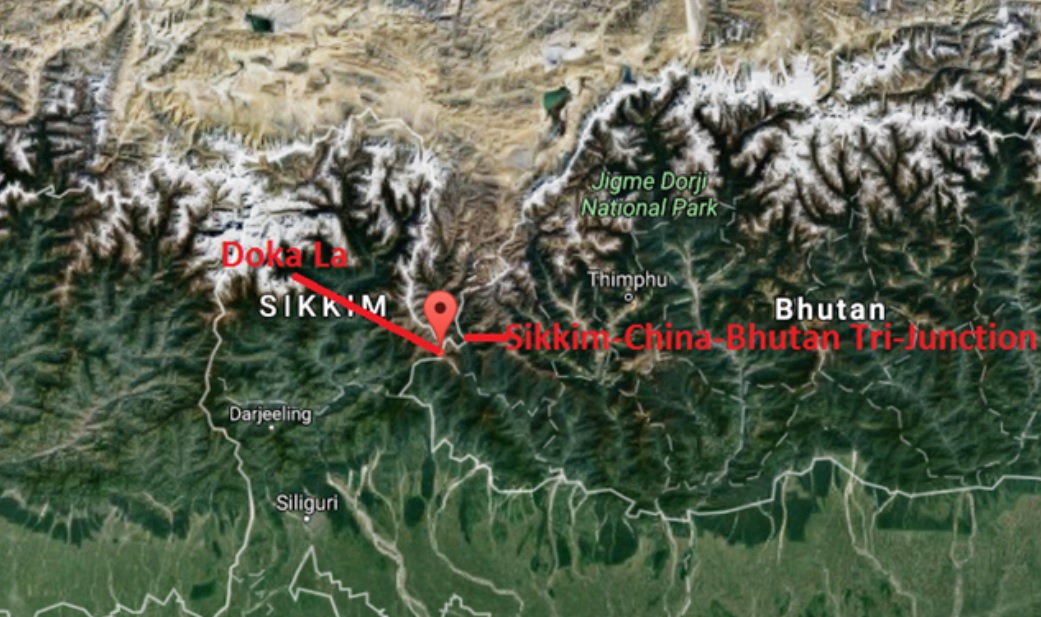
The latest border skirmish between the two Asian powers began when Indian troops blocked the construction by Chinese workers of a road in the tri-border Doka La region of Sikkim, where the borders of India, China, and Bhutan meet. The blocking of the road by the Indian Army resulted in a statement by Beijing that the area, which is claimed by India and Bhutan, was "indisputable sovereign" Chinese territory. China demanded that India withdraw its troops from the Doka La area. Bhutan charged that Beijing violated past agreements between the two countries by building a road that headed toward the Bhutan Army camp at Zompelri.

The Royal Bhutanese Army has been involved in a project demarcating the border between Bhutan and China. It was a Bhutanese Army patrol that first discovered the Chinese construction crew, whereupon the Bhutanese told the Chinese they were violating Bhutanese territory and instructed them to withdraw. When the Chinese refused, the Bhutanese government lodged a formal diplomatic protest with the Chinese embassy in New Delhi, citing Beijing for violating the 1998 "
Agreement for the Maintenance of Peace and Tranquility in the Bhutan-China Border Area" to maintain the status quo regarding their common border. Bhutan and China do not maintain diplomatic relations. China rejected Bhutan's complaint.


Trump's foreign policy envoy to just about everywhere, the insolent and snotty Jared Kushner, is ill-prepared to deal with emerging trouble spots like Doka La. Recently, MSNBC host Chris Matthews likened Kushner to Benito Mussolini's foreign minister and son-in-law Count Galeazzo Ciano. Mussolini later had Ciano executed for treason. Matthews said he was not suggesting the same fate for Kushner. Why the hell not?

China is believed to be illegally occupying 154 square miles of Bhutanese territory in west Bhutan. In return for ceding its claim to western Bhutan, China has offered to exchange with the tiny kingdom, where the economy is based on "gross national happiness," 347 square miles of territory in northern Bhutan. However, the northern Bhutan territory is already Bhutanese, so the Chinese are trying to exchange illegally occupied territory for illegally claimed territory.


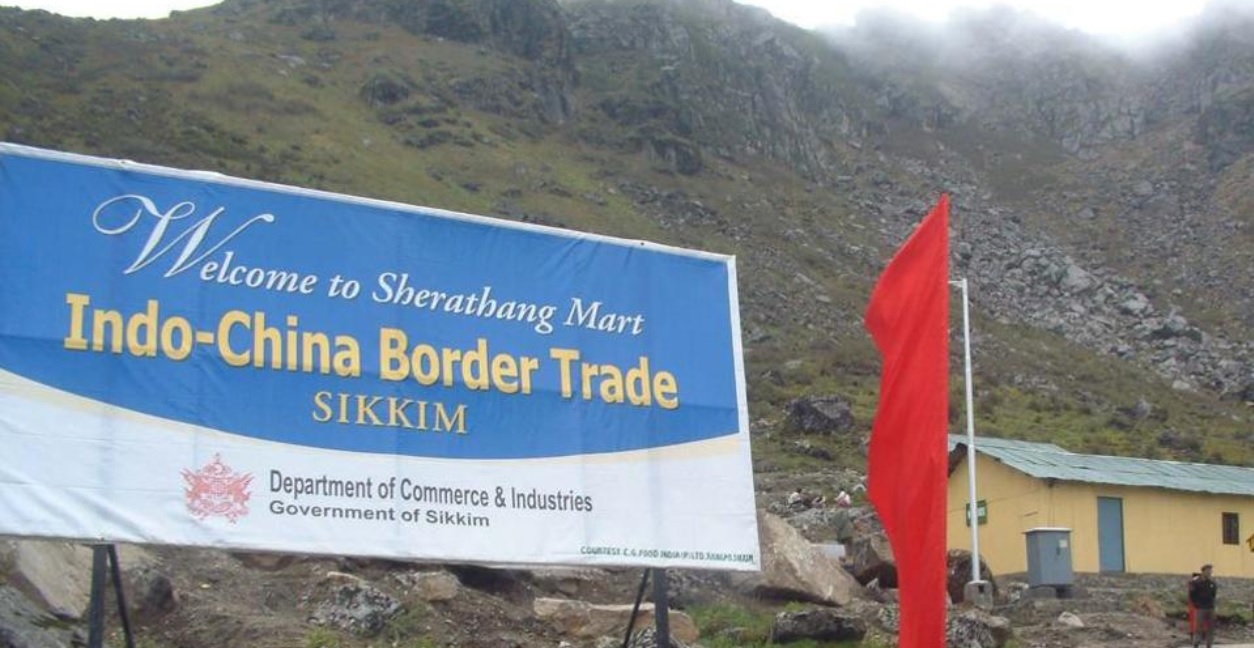
Military skirmishes along the Sikkim-Tibet border threaten cross-border commerce, as well as a wider war

Indian military personnel later joined Bhutanese army units at the Chinese highway oconstruction site and reiterated Bhutan's request to withdraw from the region. 
After the border incidents, Indian Army chief General Bipin Rawat visited Indian garrisons along the Sikkim-Tibet border and warned that India could fight a two-front war against China and Pakistan, while ensuring the stability of restive Indian states in the region. India created the 17 Mountain Strike Corps composed of two mountain divisions in Sikkim to specifically strike at Chinese military units in Tibet in the event of an all-out war. Aiding the Mountain Corps are two battalions of Sikkim Scouts, comprised of native Sikkimese troops, who would launch sabotage missions against Chinese targets in Sikkim and Tibet. Similar units, the Ladakh Scouts and Arunachal Scouts, also made up of local troops, would conduct similar missions against Chinese forces in Tibet.

China, in retaliation for the Indian Army's moves against its road construction crew, blocked access for pilgrims seeking to cross the strategic and heavily-militarized Nathu La pass between Sikkim into Tibet and visit Mount 
Kailash and Lake Mansarovar, which are sacred to Hindus and Buddhists, and even a few Christians who believe a young Jesus once walked in the shadow of Mount Kailash. The blocking of the religious pilgrims on the annual "yatra" excursion sent a message not only to New Delhi, but also to the exiled Tibetan Dalai Lama's government in Dharamsala, India, and the governments of Sikkim and Bhutan that China would exercise its power in the region. India responded to China's road project by stating it represents a "significant change of status quo with security implications for India." In 2006, Nathu La pass has gained even more importance. That year saw the pass being opened to not only commercial traffic but also tourists.

It is believed that the military standoff in Doka La resulted from the Dalai Lama's recent visit to Arunchal Pradesh, which China claims as South Tibet. The Chinese were also unhappy with the Dalai Lama's planned visit to Leh, the capital of Ladakh in Kashmir, where sovereignty over some of the territory is disputed by India, Pakistan, and China. Ladakh has also been the scene of military border incidents between Chinese and Indian troops.

China has indicated that the road construction in Doka La has nothing to do with the Dalai Lama and that it is part of China's "One Belt, One Road" infrastructure project of establishing modern highway and rail links throughout Asia and beyond.

There were special interests in both Tibet and India that never approved of the 2003 Sino-Indian agreement that saw India recognize Tibet as the "Tibet Autonomous Region" of China in return for Beijing recognizing Sikkim as a state of India. Before the 2003 agreement, Chinese maps showed Sikkim as an independent state. The state had been an independent kingdom until 1975, when Indian troops invaded the country and deposed its monarch and his government. In November 2008, Chinese troops demolished Indian bunkers built in the disputed Doka La region. Preceding the standoff over the Chinese road crew incident this month was the bulldozing of at least one fortified Indian bunker in the Doka La region by Chinese forces in early June.

Note: This editor was one of the few Western journalists who managed to gain entry to Sikkim in 2008. Posing as a "cook book" author, I was able to see the massive Indian military presence in the country and also establish personal contact with members of the deposed Sikkimese royal family.

WMR has reported on the situation in Sikkim from its capital of Gangtok. On October 27, 2008, WMR reported the following:

"
Ever since the Indian invasion and annexation of Sikkim in 1975, the now-Indian state of Sikkim has restricted access to pre-screened tourists who must obtain an inland border permit from the Sikkim government and the approval of the Indian Home Office in New Delhi. Journalists, especially Western journalists, are not welcome in modern Sikkim, a state that is the most heavily subsidized of any Indian state and guarded by tens of thousands of Indian troops prepared to repel a Chinese invasion from Tibet through the Nathu La Pass, one of the world's most heavily-fortified borders. Westerners are not permitted to visit the Sikkim side of the Nathu La Pass.
This editor's Sikkim entry document states unequivocally that Sikkim is a "Foreigners Restricted Area" and that access to Sikkim is only permitted via Rangpo on the Sikkim-West Bengal border and that only certain places are authorized to visit for "purposes of tourism" including Gangtok, the capital; Rumtek, the Buddhist monastery where the 17th Karmapa normally resides (the Karmapa is the third highest Tibetan Buddhist leader after the Dalai Lama and Panchen Lama); Gyalshing in west Sikkim; Namchi in south Sikkim; and Mangan in north Sikkim. Foreigners are strictly prohibited from areas close to the Chinese border. The maximum period of stay for a tourist is 15 days.
Rather than being a Shangri La, Sikkim is now more like a "Singapore of the Himalayas," a highly-regimented state that is governed by an autocratic Chief Minister of Nepali descent, Pawan Chamling, whose party, the Sikkim Democratic Front (SDF), maintains an iron-clad control of 31 of 32 seats in the Legislative Assembly. The blue, yellow, and red SDF flag is seen everywhere -- draped across roads and flying from shops and homes.
In April of this year, Chamling tossed out a CNN-IBN reporter from Sikkim and threatened the broadcaster with a law suit after a CNN-IBN report that accused Chamling of corruption. Chamling demanded an apology from CNN and its Indian partner, IBN, or threatened a defamation suit.
However, WMR succeeded in peering into Sikkim where the multi-billion dollar CNN network failed. I successfully traveled without incident to Sikkim not brandishing journalist credentials but traveling as a simple tourist.
As in Singapore, Sikkimese are cautioned by ubiquitous signs that tell them not to pluck flowers from public gardens, to avoid over-confidence in driving, and alternately to honk or not to honk their horns on narrow mountain roads that resemble a roller coaster ride.
Sikkim's people, who still view themselves as living in a distinct entity from India, are kept satisfied through massive subsidies from New Delhi. That means that prices and services in Sikkim are much better than those found in neighboring West Bengal, one of India's poorest states. Sikkim's higher standard of living has also prompted an autonomy movement in the Gorkhaland area of north Bengal, where the Gorkhas, who are ethnic Nepalis, as are 75 percent of Sikkim's population, see their standard of living suppressed by what they view as a corrupt Communist-led government in Kolkata, West Bengal's capital.
There is much sympathy for Gorkhaland in Sikkim. Sikkimese and Gorkhas, especially those in the Gorkhaland capital of Darjeeling, which was once part of the old Kingdom of Sikkim, are linked through family and business ties.
One thing that is not tolerated in Sikkim is any public support for the old Kingdom which was abolished after India's annexation of the country in 1975. That act by Indian Prime Minister Indira Gandhi was carried out with the approval of then-U.S. Secretary of State Henry Kissinger who also cut off aid to Tibetan guerrillas who were operating from Nepal with the support of a Tibetan Buddhist network in Sikkim.
There still appears to be a U.S. intelligence interest in Sikkim. On September 5, 2008, WMR reported: "On July 15, the government of Sikkim announced it would sign a Memorandum of Understanding with Star Universal Resource Company of New York to build a highway and tunnel expressway from Sevoke through Gangtok to the Chinese border at Nathu La Pass. Although the firm claims to a 'leading international engineering, financing, construction and service company,' not much is actually known about the company, other than that it claims to operate in seventeen countries including Iraq, Afghanistan, and South Korea, all locations of U.S. military bases. In fact, a search of the Nexis database turns up Star Universal Resource Company's only project being the Sikkim highway/tunnel project. The American firm's involvement in the project has led a number of Sikkimese to wonder if the firm is not a front for something else. From Nathu La, a highway links Sikkim to Lhasa, the Tibetan capital."
When I spoke to some Sikkimese about the highway project and "Star Universal," no one seemed quite sure about the company or the highway project. However, the letters "CIA" were uttered by some well-positioned Sikkimese in relation to the project. Any such links would make Chamling more than a minor player in international politics in comparison to any other Indian state chief minister.
From Rumtek Monastery can be seen the snow-capped Nathu La Pass on the Sikkim border with Chinese-ruled Tibet. Gangtok, the Sikkim capital, lies below the pass.
The old Royal Palace of Sikkim, where Hope Cooke was married to Chogyal (King) Palden Thondup Namgyal in 1963, is now a mere shell of its past grandeur. The palace itself is closed to the public. However, I arranged to have a tour of the palace grounds. Gone is the old Sikkim flag from the pole in front of the palace. It has been replaced with Buddhist prayer flags. In fact, the only place a Sikkim flag can be found in Sikkim today is in the home of one of the sons of Chogyal Palden Thondup Namgyal, still referred to as "Prince" by official Indian documents. The public display of the flag could earn a Sikkimese a day in court and a fine or prison sentence.
The former Royal Palace of Sikkim. The Sikkim government has allowed the palace and grounds to go to seed. Some loyal former royal groundskeepers do their best to keep the palace and garden in shape but it is a tough task with no actual funding.
WMR did learn from a well-informed source that a Sikkim flag still exists in storage at the United Nations headquarters in New York since it was anticipated that the country would one day achieve full independence and UN membership.
Cooke, who lived in New York for a number of years, now lives in London.
While monarchies in many nations are irrelevant anachronisms, the relatively benevolent Sikkim monarchy was the only thing that kept the small nation from being absorbed by India for many years. Today, in Sikkim, not only do older Sikkimese cherish their old monarchy but younger people, who never knew what is was like to live under the Chogyal, also express a fondness for the old Kingdom. This nostalgia even extends to the ethnic Nepalis. It was the Nepali majority that agitated for political reforms and whose demonstrations in the early 1970s gave India the pretext it needed to invade and occupy the country. However, the few remaining references to the Namgyal monarchy may also end with proposals afoot to strip the Namgyal name from a hospital and a school. The Namgyal Institute of Tibetology in Gangtok is the only museum where one can view photos and the history of the old royal family.
The Namgyals are related by marriage to the royal families of Bhutan and the recently-disestablished Kingdom of Mustang in Nepal. Mustang was another nexus of CIA intrigue during the Cold War, a place where the CIA deployed Khampa guerrillas from Tibet who were trained in Colorado and Wyoming and fought the Chinese army in Tibet. Some Khampa veterans still wear the non-traditional cowboy hats they learned to wear while being trained at the CIA's camps in Colorado and Wyoming.
The Namyal Institute of Tibetology is one of the few places in Sikkim where the name of the old royal family can still be found.
Although Sikkim is a destination for only the heartiest of travelers, a new posh resort still under construction and a helicopter connection from Bagdogra in West Bengal may see more Western tourists opting for a Sikkim holiday. That, in addition to possible U.S. intelligence interest in a fast highway via Sikkim to Lhasa, Tibet, may, once again, place Sikkim back into the geopolitical lexicon.

 
One of the few royal portraits in Sikkim today. The center top portrait is Chogyal Tashi Namgyal, the father of the last Chogyal of Sikkim. Tashi died in 1963. According to an Office of Strategic Services (OSS) source, Tashi Namgyal provided the OSS with valuable support in the U.S. efforts against Japan in South Asia during World War II. His son was thanked when the "mother of all neocons" Henry Kissinger gave Indian Prime Minister Indira Gandhi a wink and a nod to invade and annex Sikkim.

Saturday, July 01, 2017

Possibility of war between Asian superpowers looms as Jared Kushner puts Rex Tillerson in his place By The Wayne Madsen Report


 Possibility of war between Asian superpowers looms as Jared Kushner puts Rex Tillerson in his place By The Wayne Madsen Report
U.S. strongman Donald Trump in a nepotistic fashion has granted his son-in-law Jared Kushner special diplomatic envoy portfolios to deal with the Middle East, China, Canada, and Mexico. Kushner, who is 36 and has no international experience, except for acting as a virtual embedded agent for Israel and Binyamin Netanyahu in the United States, recently warned Secretary of State Rex Tillerson to understand his place after the normally soft-spoken Tillerson blew up at a White House meeting with chief of staff Reince Priebus, Kushner, and their aides. Tillerson complained that the White House was vetoing his selections to fill important State Department posts, including ambassadorships and secondary and tertiary positions in the department. Kushner has applied a political litmus test to State Department appointments, rejecting anyone who has ever criticized Trump or those who have contributed to Democratic candidates.

The arrogance and brashness of Kushner is about to explode in his face as the world's most populous nation, China, and the world's most populous democracy, India, face off in the Himalayas over a border dispute that threatens to become a wider regional conflict. If war breaks out between India and China, both nuclear powers, Kushner should be pushed aside by the adults in the Trump administration.

Borders in the Himalayan region have names like "lines of control," "lines of actual control," "un-demarcated boundaries," and "historical sovereign territory." The reason is because many of the borders have been contested since British colonial times. In the rugged and sparsely-populated mountainous range extending from Kashmir in the west to the Indian state of Arunachal Pradesh in the east, it has been nearly impossible to establish recognizable borders and the countries of the region -- India, China, Pakistan, Bhutan, and Nepal -- have been contesting borders since the British withdrew from the subcontinent after World War II. Mapping has been all but impossible and even Google Maps cannot pinpoint some contested areas in the Himalayas.

In 1962, a border war broke out between China and India, a conflict that threatened to blossom into a wider war pitting the United States against China and a Soviet Union that supported India. It was one of the few occasions where the United States and USSR found themselves on the same side. But that was at a time when level-headed decisions by President John F. Kennedy, Soviet leader Nikita Khrushchev, Indian Prime Minister Jawaharlal Nehru, and Chinese Foreign Minister Chou En-lai prevailed. Today, with the likes of Trump, Kushner, and Steve Bannon at the helm of the American ship of state, small border conflicts could explode into wider regional warfare.

It is not known whether Indian Prime Minister Narendra Modi brought up the border dispute with China during his recent White House visit, but the United States foreign policy apparatus is asleep at the wheel as Chinese and Indian troops face off on the border of Indian-occupied Sikkim and Chinese-controlled Tibet. Ominously, China reminded India that it had defeated the Indian army in the 1962 border war. China was also suspicious about Modi's trip to Israel, the first by an Indian prime minister to the Jewish state. China is keenly aware of the influence Israel maintains through the Kushner cell within the White House. China suspects that India may be using Kushner and Israel to its advantage in the border confrontation.

The latest border skirmish between the two Asian powers began when Indian troops blocked the construction by Chinese workers of a road in the tri-border Doka La region of Sikkim, where the borders of India, China, and Bhutan meet. The blocking of the road by the Indian Army resulted in a statement by Beijing that the area, which is claimed by India and Bhutan, was "indisputable sovereign" Chinese territory. China demanded that India withdraw its troops from the Doka La area. Bhutan charged that Beijing violated past agreements between the two countries by building a road that headed toward the Bhutan Army camp at Zompelri.

The Royal Bhutanese Army has been involved in a project demarcating the border between Bhutan and China. It was a Bhutanese Army patrol that first discovered the Chinese construction crew, whereupon the Bhutanese told the Chinese they were violating Bhutanese territory and instructed them to withdraw. When the Chinese refused, the Bhutanese government lodged a formal diplomatic protest with the Chinese embassy in New Delhi, citing Beijing for violating the 1998 "
Agreement for the Maintenance of Peace and Tranquility in the Bhutan-China Border Area" to maintain the status quo regarding their common border. Bhutan and China do not maintain diplomatic relations. China rejected Bhutan's complaint.


Trump's foreign policy envoy to just about everywhere, the insolent and snotty Jared Kushner, is ill-prepared to deal with emerging trouble spots like Doka La. Recently, MSNBC host Chris Matthews likened Kushner to Benito Mussolini's foreign minister and son-in-law Count Galeazzo Ciano. Mussolini later had Ciano executed for treason. Matthews said he was not suggesting the same fate for Kushner. Why the hell not?

China is believed to be illegally occupying 154 square miles of Bhutanese territory in west Bhutan. In return for ceding its claim to western Bhutan, China has offered to exchange with the tiny kingdom, where the economy is based on "gross national happiness," 347 square miles of territory in northern Bhutan. However, the northern Bhutan territory is already Bhutanese, so the Chinese are trying to exchange illegally occupied territory for illegally claimed territory.


Military skirmishes along the Sikkim-Tibet border threaten cross-border commerce, as well as a wider war

Indian military personnel later joined Bhutanese army units at the Chinese highway oconstruction site and reiterated Bhutan's request to withdraw from the region. 
After the border incidents, Indian Army chief General Bipin Rawat visited Indian garrisons along the Sikkim-Tibet border and warned that India could fight a two-front war against China and Pakistan, while ensuring the stability of restive Indian states in the region. India created the 17 Mountain Strike Corps composed of two mountain divisions in Sikkim to specifically strike at Chinese military units in Tibet in the event of an all-out war. Aiding the Mountain Corps are two battalions of Sikkim Scouts, comprised of native Sikkimese troops, who would launch sabotage missions against Chinese targets in Sikkim and Tibet. Similar units, the Ladakh Scouts and Arunachal Scouts, also made up of local troops, would conduct similar missions against Chinese forces in Tibet.

China, in retaliation for the Indian Army's moves against its road construction crew, blocked access for pilgrims seeking to cross the strategic and heavily-militarized Nathu La pass between Sikkim into Tibet and visit Mount 
Kailash and Lake Mansarovar, which are sacred to Hindus and Buddhists, and even a few Christians who believe a young Jesus once walked in the shadow of Mount Kailash. The blocking of the religious pilgrims on the annual "yatra" excursion sent a message not only to New Delhi, but also to the exiled Tibetan Dalai Lama's government in Dharamsala, India, and the governments of Sikkim and Bhutan that China would exercise its power in the region. India responded to China's road project by stating it represents a "significant change of status quo with security implications for India." In 2006, Nathu La pass has gained even more importance. That year saw the pass being opened to not only commercial traffic but also tourists.

It is believed that the military standoff in Doka La resulted from the Dalai Lama's recent visit to Arunchal Pradesh, which China claims as South Tibet. The Chinese were also unhappy with the Dalai Lama's planned visit to Leh, the capital of Ladakh in Kashmir, where sovereignty over some of the territory is disputed by India, Pakistan, and China. Ladakh has also been the scene of military border incidents between Chinese and Indian troops.

China has indicated that the road construction in Doka La has nothing to do with the Dalai Lama and that it is part of China's "One Belt, One Road" infrastructure project of establishing modern highway and rail links throughout Asia and beyond.

There were special interests in both Tibet and India that never approved of the 2003 Sino-Indian agreement that saw India recognize Tibet as the "Tibet Autonomous Region" of China in return for Beijing recognizing Sikkim as a state of India. Before the 2003 agreement, Chinese maps showed Sikkim as an independent state. The state had been an independent kingdom until 1975, when Indian troops invaded the country and deposed its monarch and his government. In November 2008, Chinese troops demolished Indian bunkers built in the disputed Doka La region. Preceding the standoff over the Chinese road crew incident this month was the bulldozing of at least one fortified Indian bunker in the Doka La region by Chinese forces in early June.

Note: This editor was one of the few Western journalists who managed to gain entry to Sikkim in 2008. Posing as a "cook book" author, I was able to see the massive Indian military presence in the country and also establish personal contact with members of the deposed Sikkimese royal family.

WMR has reported on the situation in Sikkim from its capital of Gangtok. On October 27, 2008, WMR reported the following:

"
Ever since the Indian invasion and annexation of Sikkim in 1975, the now-Indian state of Sikkim has restricted access to pre-screened tourists who must obtain an inland border permit from the Sikkim government and the approval of the Indian Home Office in New Delhi. Journalists, especially Western journalists, are not welcome in modern Sikkim, a state that is the most heavily subsidized of any Indian state and guarded by tens of thousands of Indian troops prepared to repel a Chinese invasion from Tibet through the Nathu La Pass, one of the world's most heavily-fortified borders. Westerners are not permitted to visit the Sikkim side of the Nathu La Pass.
This editor's Sikkim entry document states unequivocally that Sikkim is a "Foreigners Restricted Area" and that access to Sikkim is only permitted via Rangpo on the Sikkim-West Bengal border and that only certain places are authorized to visit for "purposes of tourism" including Gangtok, the capital; Rumtek, the Buddhist monastery where the 17th Karmapa normally resides (the Karmapa is the third highest Tibetan Buddhist leader after the Dalai Lama and Panchen Lama); Gyalshing in west Sikkim; Namchi in south Sikkim; and Mangan in north Sikkim. Foreigners are strictly prohibited from areas close to the Chinese border. The maximum period of stay for a tourist is 15 days.
Rather than being a Shangri La, Sikkim is now more like a "Singapore of the Himalayas," a highly-regimented state that is governed by an autocratic Chief Minister of Nepali descent, Pawan Chamling, whose party, the Sikkim Democratic Front (SDF), maintains an iron-clad control of 31 of 32 seats in the Legislative Assembly. The blue, yellow, and red SDF flag is seen everywhere -- draped across roads and flying from shops and homes.
In April of this year, Chamling tossed out a CNN-IBN reporter from Sikkim and threatened the broadcaster with a law suit after a CNN-IBN report that accused Chamling of corruption. Chamling demanded an apology from CNN and its Indian partner, IBN, or threatened a defamation suit.
However, WMR succeeded in peering into Sikkim where the multi-billion dollar CNN network failed. I successfully traveled without incident to Sikkim not brandishing journalist credentials but traveling as a simple tourist.
As in Singapore, Sikkimese are cautioned by ubiquitous signs that tell them not to pluck flowers from public gardens, to avoid over-confidence in driving, and alternately to honk or not to honk their horns on narrow mountain roads that resemble a roller coaster ride.
Sikkim's people, who still view themselves as living in a distinct entity from India, are kept satisfied through massive subsidies from New Delhi. That means that prices and services in Sikkim are much better than those found in neighboring West Bengal, one of India's poorest states. Sikkim's higher standard of living has also prompted an autonomy movement in the Gorkhaland area of north Bengal, where the Gorkhas, who are ethnic Nepalis, as are 75 percent of Sikkim's population, see their standard of living suppressed by what they view as a corrupt Communist-led government in Kolkata, West Bengal's capital.
There is much sympathy for Gorkhaland in Sikkim. Sikkimese and Gorkhas, especially those in the Gorkhaland capital of Darjeeling, which was once part of the old Kingdom of Sikkim, are linked through family and business ties.
One thing that is not tolerated in Sikkim is any public support for the old Kingdom which was abolished after India's annexation of the country in 1975. That act by Indian Prime Minister Indira Gandhi was carried out with the approval of then-U.S. Secretary of State Henry Kissinger who also cut off aid to Tibetan guerrillas who were operating from Nepal with the support of a Tibetan Buddhist network in Sikkim.
There still appears to be a U.S. intelligence interest in Sikkim. On September 5, 2008, WMR reported: "On July 15, the government of Sikkim announced it would sign a Memorandum of Understanding with Star Universal Resource Company of New York to build a highway and tunnel expressway from Sevoke through Gangtok to the Chinese border at Nathu La Pass. Although the firm claims to a 'leading international engineering, financing, construction and service company,' not much is actually known about the company, other than that it claims to operate in seventeen countries including Iraq, Afghanistan, and South Korea, all locations of U.S. military bases. In fact, a search of the Nexis database turns up Star Universal Resource Company's only project being the Sikkim highway/tunnel project. The American firm's involvement in the project has led a number of Sikkimese to wonder if the firm is not a front for something else. From Nathu La, a highway links Sikkim to Lhasa, the Tibetan capital."
When I spoke to some Sikkimese about the highway project and "Star Universal," no one seemed quite sure about the company or the highway project. However, the letters "CIA" were uttered by some well-positioned Sikkimese in relation to the project. Any such links would make Chamling more than a minor player in international politics in comparison to any other Indian state chief minister.
From Rumtek Monastery can be seen the snow-capped Nathu La Pass on the Sikkim border with Chinese-ruled Tibet. Gangtok, the Sikkim capital, lies below the pass.
The old Royal Palace of Sikkim, where Hope Cooke was married to Chogyal (King) Palden Thondup Namgyal in 1963, is now a mere shell of its past grandeur. The palace itself is closed to the public. However, I arranged to have a tour of the palace grounds. Gone is the old Sikkim flag from the pole in front of the palace. It has been replaced with Buddhist prayer flags. In fact, the only place a Sikkim flag can be found in Sikkim today is in the home of one of the sons of Chogyal Palden Thondup Namgyal, still referred to as "Prince" by official Indian documents. The public display of the flag could earn a Sikkimese a day in court and a fine or prison sentence.
The former Royal Palace of Sikkim. The Sikkim government has allowed the palace and grounds to go to seed. Some loyal former royal groundskeepers do their best to keep the palace and garden in shape but it is a tough task with no actual funding.
WMR did learn from a well-informed source that a Sikkim flag still exists in storage at the United Nations headquarters in New York since it was anticipated that the country would one day achieve full independence and UN membership.
Cooke, who lived in New York for a number of years, now lives in London.
While monarchies in many nations are irrelevant anachronisms, the relatively benevolent Sikkim monarchy was the only thing that kept the small nation from being absorbed by India for many years. Today, in Sikkim, not only do older Sikkimese cherish their old monarchy but younger people, who never knew what is was like to live under the Chogyal, also express a fondness for the old Kingdom. This nostalgia even extends to the ethnic Nepalis. It was the Nepali majority that agitated for political reforms and whose demonstrations in the early 1970s gave India the pretext it needed to invade and occupy the country. However, the few remaining references to the Namgyal monarchy may also end with proposals afoot to strip the Namgyal name from a hospital and a school. The Namgyal Institute of Tibetology in Gangtok is the only museum where one can view photos and the history of the old royal family.
The Namgyals are related by marriage to the royal families of Bhutan and the recently-disestablished Kingdom of Mustang in Nepal. Mustang was another nexus of CIA intrigue during the Cold War, a place where the CIA deployed Khampa guerrillas from Tibet who were trained in Colorado and Wyoming and fought the Chinese army in Tibet. Some Khampa veterans still wear the non-traditional cowboy hats they learned to wear while being trained at the CIA's camps in Colorado and Wyoming.
The Namyal Institute of Tibetology is one of the few places in Sikkim where the name of the old royal family can still be found.
Although Sikkim is a destination for only the heartiest of travelers, a new posh resort still under construction and a helicopter connection from Bagdogra in West Bengal may see more Western tourists opting for a Sikkim holiday. That, in addition to possible U.S. intelligence interest in a fast highway via Sikkim to Lhasa, Tibet, may, once again, place Sikkim back into the geopolitical lexicon.

 
One of the few royal portraits in Sikkim today. The center top portrait is Chogyal Tashi Namgyal, the father of the last Chogyal of Sikkim. Tashi died in 1963. According to an Office of Strategic Services (OSS) source, Tashi Namgyal provided the OSS with valuable support in the U.S. efforts against Japan in South Asia during World War II. His son was thanked when the "mother of all neocons" Henry Kissinger gave Indian Prime Minister Indira Gandhi a wink and a nod to invade and annex Sikkim.