Showing posts with label Swine Flu. Show all posts

Wednesday, July 02, 2014

Swine flu virus which killed half-million modified to 'incurable'


‘Humdinger’: Swine flu virus which killed half-million modified to 'incurable'

Published time: July 02, 2014 10:07
Edited time: July 02, 2014 11:37

http://on.rt.com/o2as5q
AFP Photo / Thomas Lohnes
A controversial flu researcher has modified the flu virus responsible for the 2009 pandemic to allow it evade the human immune system. His lab’s previous works include recreating the Spanish flu and making a deadly bird flu strain highly transmittable.
The yet-to-be-published research by Professor Yoshihiro Kawaoka and his team is meant to give scientists better ways to fight influenza outbreaks, but gives chills to some people in academia, who are fearful that accidental release of the strain would result in a global disaster, according to a report by the Independent.
At his level-3 biosafety lab at Wisconsin University’s Institute for Influenza Virus Research in Madison, Kawaoka experimented with the H1N1 flu strain that was responsible for the pandemic in 2009, dubbed the swine flu pandemic by the media. The work resulted in a mutated strain that is able to evade the human antibodies, effectively rendering humans defenseless against the virus.
“He took the 2009 pandemic flu virus and selected out strains that were not neutralized by human antibodies. He repeated this several times until he got a real humdinger of a virus,” a scientist familiar with Kawaoka’s research told the British newspaper.
“He’s basically got a known pandemic strain that is now resistant to vaccination. Everything he did before was dangerous but this is even madder. This is the virus,” he added.
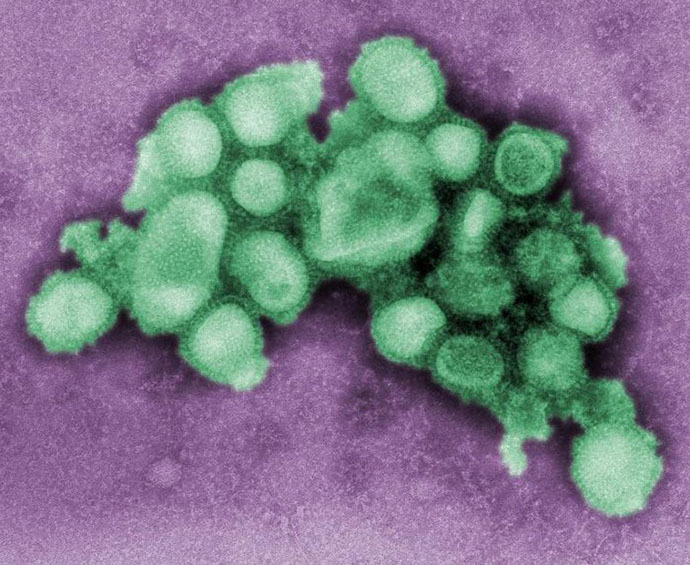
This 2009 Centers For Disease Control and Prevention handout image taken through a microscope, shows a negative-stained image of the swine flu virus H1N1 strain. (AFP Photo)

H1N1 flu had caused serious outbreaks and two recorded pandemics, the first being the notorious Spanish flu of 1918. Kawaoka’s newest work is partially derived from his experience in recreating the deadly strain.
The first H1N1 pandemic left between 50 and 100 million people dead, according to estimates. The 2009 pandemic death toll is debated, with some estimates putting the number as high as 560,000, most of them in Africa and Southeast Asia.
The professor assured the newspaper that the mutant virus is well under control in his lab and that making a strain that can beat human immune system will help epidemiologists be prepared for a contingency of a similar mutation occurring naturally.
“Through selection of immune escape viruses in the laboratory under appropriate containment conditions, we were able to identify the key regions [that] would enable 2009 H1N1 viruses to escape immunity,” he said in an email.
“Viruses in clinical isolates have been identified that have these same changes in the [viral protein]. This shows that escape viruses emerge in nature and laboratory studies like ours have relevance to what occurs in nature,” he added.
A man sprays a disinfectant against the swine flu virus on November 18, 2009 in a classroom of the Georges Brassens school in Baillargues, southern France. (AFP Photo / Pascal Guyot)

The research was approved by Wisconsin’s Institutional Biosafety Committee, although a minority of the 17-member board is critical of Kawaoka’s line of study. One such vocal critic at the committee is Thomas Jeffries, who argues that an accidental release of the virus from the safe lab is possible, citing the recent incident at the Centers for Disease Control and Prevention, which potentially exposed some 80 people to anthrax bacteria.
"I think we can sometimes fool ourselves into thinking we have more control over a situation in a laboratory than we do," he told Wisconsin State Journal last week. "Accidents do happen."
When The Independent approached Jeffries for comments on Kawaoka’s new research, he said he was not made aware of details of the study at the time the approval was given.
“What was present in the research protocols was a very brief outline or abstract of what he was actually doing…there were elements to it that bothered me,” Professor Jeffries said.
Demonstration at the Red Cross Emergency Ambulance Station in Washington, D.C., during the influenza pandemic of 1918. (Image from wikipedia.org)

Rebecca Moritz, who is responsible for overseeing Wisconsin’s work at the institute, said it is needed to create new vaccines.
“The work is designed to identify potential circulating strains to guide the process of selecting strains used for the next vaccine…The committee found the biosafety containment procedures to be appropriate for conducting this research. I have no concerns about the biosafety of these experiments,” she said.
Kawaoka said he presented preliminary results of his research to the World Health Organization and they had been “well received.”
“We are confident our study will contribute to the field, particularly given the number of mutant viruses we generated and the sophisticated analysis applied,” he explained.
“There are risks in all research. However, there are ways to mitigate the risks. As for all the research on influenza viruses in my laboratory, this work is performed by experienced researchers under appropriate containment and with full review and prior approval by the [biosafety committee],” he added.
University Research Park, where Kawaoka conducts flu GOF experiments. (Photo by Jeff Miller/UW-Madison / cidrap.umn.edu)

Flu virus strains are notorious for changing rapidly, with new strains emerging and causing seasonal flu epidemics. Scientists have to try and predict what kind of flu they would have to face each year and have a vaccine ready. When they succeed, an outbreak causes much less damage that it could have otherwise.
Research of ‘gain of function’ by viruses like the works of Kawaoka is focused on exploring how a virus can become deadlier and more transmittable or resistant to existing vaccines. Critics of such studies say they are too dangerous, both due to the risk of accidental or even deliberate release.
For instance some people in the academia called on Kawaoka to withhold parts of his research on H5N1 bird flu. Normally the virus is highly lethal, but does not transmit well, but a series of experiments with ferrets resulted in an easily transmittable strain. The experiments were simple enough for any person with expertise in microbiology to replicate, which critics said some group of would-be bioterrorists would eventually do.

Monday, September 14, 2009

A/H1N1 was re-assorted in a lab

A virologist who has been researching the A/H1N1 virus has concluded after months of research that the "novel" influenza was re-assorted in a laboratory from eight genes consisting of avian, swine and human type influenza A virus.

The scientist does not believe, based on intensive laboratory research of the A/H1N1 virus, that its sudden appearance in Mexico this past Spring was a natural occurrence.

The reassortment of viruses occurs when one or more complete genes are exchanged enabling the virus to adapt to a new host. An example is when the avian virus switches gene with a human virus. In the case of A/H1N1, three genes were exchanged, from avian, swine, and human influenza viruses, resulting in the ressortant virus now expected to launch another deadly wave of infections in early October.

There are also signs that adaptation leading to mutation has occurred in the A/H1N1 strain. Several cases of mutated A/H1N1 have been reported from around the globe rendering treatment with anti-A/H1N1 drugs and A/H1N1 vaccines ineffective.

Adaptation takes place when a small change takes place in the virus and sometimes that can be one amino acid alteration. The adaptation permits the virus to thrive in its new host. A/H1N1 is believed to be a laboratory strain because a specific amino acid was discovered that appears to have made several passage in eggs. The vaccine industry usually amplifies viruses by isolating them in eggs and after several passages, the mutation can be discovered.

The mutation of A/H1N1 has been discovered by our virologist source to have been more rapid than is naturally possible. The following is what was described in scientific terms about the rate of mutation of A/H1N1:

"Mutation takes time to occur, up to the rate of amino acid substitution. For example, for HA gene, or "duck virus," HA has a substitution rate about 3 x 10e-4 per site per year which is slower compare to human and swine HA (about 10e-3 per site per year). If the total nucleotide number in influenza A virus HA is 1,700, then it takes three years for making a single change in the duck virus, or 1.7 year in the case of human and swine virus."

The natural rate of mutation for a complete gene mutation, according to the virologist, takes "thousand of years to be established."

As far as the reassortant A/H1N1 virus is concerned, there is a fear that a human was used as a laboratory "guinea pig" to permit the exchange of genes between humans, pigs, and fowl. The reasoning is that an individual was infected by avian, human and swine virus simultaneously, and the viruses exchanged genes inside the individual's body, creating a new virus having mixed genes and then rapidly spreading to others.

Herein lies the suspicions concerning the purposeful creation of A/H1N1 and its infection of a human host. WMR's virologist source stated:

"The host should have efficient receptor for those three different derived hosts. So far, human virus tends to infect human, because it is suited to a human receptor. Avian virus tends to infect birds, because it is suited to bird receptors. Pigs have both human and avian type receptors, so it is believed that pig serves as the 'mixing vessel'. However, some researchers tried to prove the 'mixing vessel' theory by trying to infect pigs with human and avian viruses to create a reassortant virus."

The test involving the infection of pigs with reassortant human and avian viruses failed.

While it is common for pigs to become infected with human and avian viruses but there are no reports that pigs shed the reassortant A/H1N1 virus and infected new hosts, either human or bird.

What is known is that the first A/H1N1 virus was found in a human. Although some pigs and turkeys were infected with the A/H1N1 virus by farm workers, there is no evidence that the opposite occured.

Reassortant genes also require ancestor viruses. According to the virologist:

"If you check the phylogenetic tree, it shows the NA and M genes derived from avian virus, PB1 from human H3N2; other genes (PB2, PA, HA, NP, NS) from swine triple reassortant, swine H1N2 and Eurasian swine (H1N1/H3N2). The triple reassortant swine actually derived from human H3N2 which infected pigs, and has been circulating in North America for at least 20 years. When people say it is 'swine virus,' it's actually human virus."

It has also been discovered that suspected ancestor viruses are coming from old isolates. The NA gene comes from a 1996-2001 isolate, the M gene from 1990-1993 isolates, and the others even older, somewhere between 1979 to 1980's isolates. The consensus virologist community contends that the A/H1N1 virus has been in existence for over twenty years without ever being detected. WMR's virologist states that it is impossible for a virus existing for twenty years without being detected given the amount of virus medical surveillance that takes place around the world.

The virologist has not detected any evidence of 1918 influenza RNA/DNA in A/H1N1. However, the 1918 flu, like A/H1N1, began in a first wave in the spring and came back with a vengeance in October. The 1918 flu killed an estimated 50 million people around the world. Although no genetic evidence of a link to 1918 flu has been discovered by the virologist, the same scientist who has conducted research into A/H1N1 and may have received DNA samples from the buried corpse of an Inuit woman in Fort Brevig, Alaska who died of the pandemic in 1918 is also financially linked to an A/H1N1 vaccine firm.

The virologist has asked an alarming question about A/H1N1, "How can you mix avian, human and pig virus at one time? The viruses must have come from Europe, America and Asia, without any detection?"

The virologist adds, "the virus emerged suddenly in Mexico. I can't explain how. I wish I could. For me as a virologist, it's impossible . . . on the other hand, technology can create any kind of virus you want."

Sunday, July 26, 2009

Military makes preparations for "significant" flu crisis in October

WMR has learned from a U.S. military source with responsibility for the U.S. military's response to an expected A/H1N1 mutated virus pandemic in October that the threat currently posed by the mutated virus is "significant."

WMR has also learned that Asia and the Pacific are expected to be "ground zero" for the mutated influenza strain and that major U.S. contingency operations to respond to the more virulent form of the current hybrid "swine flu" are now being staged out of Japan.

In addition, the U.S. hospital ships, USNS Mercy and USNS Comfort are being readied to respond to the initial stages of the more deadly virus expected to hit in October. The military response to the expected October surge in cases of mutated flu, for which current vaccines will be ineffective, is being coordinated by the Surgeon General of the United States and the U.S. Navy's Bureau of Medicine and Surgery (BUMED).

The Department of Defense is engaged in high-level counter-influenza contingency planning in Hawaii, Japan, South Korea, the Philippines, Hong Kong, China, Taiwan, Indonesia, Singapore, Thailand, Australia, New Zealand, and Malaysia. The Pentagon's preparations are said to be "huge."

WMR has also learned of highly-classified military programs involving North Korea when the mutated flu strikes that isolated country. However, details of the program could not be obtained from our source.

Currently, the strategy of the Centers for Disease Control in Atlanta and the Department of Health and Human Services is not to raise any alarms by closing schools or restricting travel at airports. The government wants to maintain "a sense of normalcy," according to our well-placed source. However, the source also stated that the "alarm should now be sounded" about the coming catastrophic flu season expected to rear its head worldwide in the autumn.

Special fears have been raised for children and pregnant women when the mutated flu begins to spread, revealed our military source.

U.S. military planners are reportedly planning for the worst case scenario but their ranks are plagued with high-level incompetence, WMR has been told. In addition, some military officials are distressed with the approach taken by Dr. Anthony Fauci, the director of the National Institute of Allergy and Infectious Diseases in putting too much faith in vaccines. Experts warn that vaccines developed to combat the current hybrid A/H1N1 flu may not be effective against the deadlier mutated strain expected to wreak havoc in the autumn months. Current plans are to have 160 million doses of the vaccine to combat the current strain of A/H1N1 in readiness in October, the same month a public health awareness and vaccination program is set to begin.

WMR has also learned from a financial adviser that financial investment strategies are already being tailored in reaction to the expected mutated swine flu pandemic expected around the October time frame. Many Wall Street insiders fear a "perfect storm" of a jittery economy and a deadly flu pandemic will trigger a "financial catastrophe" in October.

Although there are preparations being made by the military and the Federal Emergency Management Agency (FEMA) for quarantines of cities and regions of the country, contingency planners warn that they "cannot be depended on."

Wednesday, May 06, 2009

More evidence emerges that H1N1 was engineered in "Jurassic Park" bio-labs

Informed sources have revealed to WMR that the H1N1 virus, which the World Health Organization (WHO) has warned could become a global pandemic, was reverse engineered from genetic material obtained from the remains of victims of the deadly 1918 "Spanish flu" influenza pandemic that killed 50 million people worldwide.

WMR has obtained information from biological researchers that the 1918 Spanish flu genetic sequences were "manipulated" in order to effect transmission capability. The current H1N1 virus, called "swine flu," is reportedly a combination of two forms of human flu, two forms of swine flu (North American and Eurasian), and avian or bird flu. There are now reports of species hopping from humans to pigs in Canada.

The scientific name for the current H1N1 virus that was manipulated is "Influenza A virus (strain A/Brevig Mission/1/1918 H1N1)." It is called Brevig Mission because, as WMR previously reported, U.S. Army biological warfare specialists recovered the genetic material from the fairly intact corpse of an Inuit woman who died from the 1918 flu in Brevig Mission, Alaska. WMR has learned that work on manipulation of the Brevig Mission flu strain began in 1997.

Two bio-safety laboratories have been associated with the genetic reverse engineering of not only A-H1N1, the current "swine flu" strain, but also the deadly Ebola virus. They are the University of Wisconsin-Madison and the National Microbiology Laboratory in Winnipeg, Canada. The Associated Press reported on September 20, 2007, that the Madison laboratory was cited for safety violations: "University of Wisconsin-Madison research on the deadly Ebola virus was conducted for a year in a less-secure laboratory than required, until the National Institutes of Health alerted the school to the problem. The deadly virus itself was never present in the laboratory, said Jan Klein, UW-Madison biological safety officer. Instead, DNA copies of the virus were being studied to better understand one of the world's most dangerous pathogens."

The report also stated that the Madison research facility was involved with combining "materials": "Klein said no one was ever at risk, though an infectious virus could have been produced if the research material had been combined with other components. But that was not part of any planned experiment and would not be done by accident,' she said."

The National Institutes of Health (NIH) reportedly shut down the Ebola research at Madison but it was reportedly moved to a Level 4 Bio-Safety Laboratory at the National Microbiology Laboratory at the Canadian Science Center for Human and Animal Health in Winnipeg, Manitoba. In 2007, macaque monkeys were infected with the 1981 flu virus at the Canadian laboratory by some of the same researchers who were involved in the risky Ebola research in Madison.

The research in Madison on Ebola had been conducted in a Bio Safety Level 2 laboratory when it should have been conducted in a Bio Safety Level 4 laboratory, the most stringent for pathogens like Ebola and H1N1. At the time of the safety violations, Madison has less stringent Level 3 labs but no Level 4 labs. In early 2008, Madison again conducted work on Ebola, but in a Level 4 lab.

Science Daily reported the following from Madison on October 7, 2004: "Using a gene resurrected from the virus that caused the 1918 Spanish influenza pandemic, recorded history's most lethal outbreak of infectious disease, scientists have found that a single gene may have been responsible for the devastating virulence of the virus."

The Winnipeg laboratory figures into the November 15, 2001 disappearance of noted Harvard University virologist Dr. Don C. Wiley in Memphis, Tennessee after his attendance at a banquet honoring his service as a scientific advisory board member of St. Jude's Hospital. Wiley's body was found one month later in the Mississippi River in Vidalia, Louisiana. The Shelby County medical examiner ruled Wiley's death a "suicide" from jumping into the Mississippi River from the west bound lane of the I-40 Hernando de Soto bridge. Wiley was heading back to his father's residence in Millington, northeast of Memphis at the time of his disappearance.

This editor reported on the Wiley death extensively at the time. And the Canadian facility became involved in the investigation. From "Mystery in Memphis," published in "Abuse Your Illusions, 2003, edited by Russ Kick: "While the Memphis Police and the FBI continued to handle the Wiley case as just another distraught "jumper" hurling himself 135 feet into the Mississippi River, other law enforcement agencies were not as sanguine.

On November30 [2001], [Memphis Police Sergeant Robert 'Bubba' Shemwell received a call from Detective Paul McKemmie of the National Security Investigation Unit of the Royal Canadian Mounted Police (RCMP) in Ottawa. McKemmie advised Shemwell that his unit was responsible for protecting scientists with Level-3 and Level-4 clearance at the Canadian Science Center for Human and Animal Health in Winnipeg, Manitoba.

The Canadian center houses the National Microbiology Laboratory, where scientists deal with the most dangerous and contagious human and animal pathogens and diseases, which are categorized as Level-4. These include hantavirus, hepatitis, influenza, and hemorrhagic fevers such as the Ebola virus, Marburg virus, and Lassa Fever. In another hghly-protected laboratory, scientists work with Level-3 agents, which include bacteria such as anthrax that, although not contagious, can be transmitted through the air and can cause death or serious illness. The center's tight security is overseen by the RCMP and Canadian Security and Intelligence Service.

McKemmie told Shemwell that someone had posted an email suggesting that Dr. Wiley was not the target for a kidnapping to obtain anthrax but that a scientist working at the Winnipeg laboratory was a more likely target for a kidnapping by bioterrorists.

Nevertheless, the RCMP wanted to know if Memphis hadany information that would indicate that Wiley was the target for an abduction by terrorists. Shockingly, Shemwell fed te RCMP the same line he was feeding the Wiley family and the media: There was no evidence to support the theory that Wiley's disappearance was the result of foul play and that suggestions to the contrary were being mentioned only in the media.

Obviously, not buying Shemwell's line, the Mountie indicated that the RCMP, like the FBI, also would continue to monitor Wiley's disappearance and check out any leads from Canada."

The idea that Wiley's body could have been in the fast-raging Mississippi for a month seems fanciful. When his body was discovered in Louisiana, Wiley's clothing was intact. Recovered from Wiley's clothing were his watch, wedding band, belt, wallet, and even a piece of hard candy that managed not have dissolved after an entire month in water.

Wiley co-wrote a paper on the structures of H5 avian flu and H9 swine flu that was published in the Journal of the National Academy of Sciences in September 18, 2001, just some two months before he went missing in Memphis. However, Wiley's expertise on the 1918 influenza was longstanding. In 1981, Wiley co-wrote a paper, titled "X-ray structures of H5 avian and H9 swine influenza virus hemagglutinins bound to avian and human receptor analogs," that defined the crystal structure of the 1918 influenza virus, a step that made it easier to conduct "forensic" analysis on the origin of precursor viruses and their naturally-occurring or man-made genetic off-shoots.

Although virology, not bacteriology, was Wiley's area of expertise, it was revealed during my investigation of Wiley's death that he had become quite concerned about the mailing of anthrax through the postal system. A week before his disappearance, Wiley attended a session on "Bioethics and Research" at a meeting of the Howard Hughes Medical Institute in Chevy Chase, Maryland. At the time of the conference, four people had already been killed from being exposed to anthrax-laden letters sent through the mail. It was later discovered that the anthrax originated from the U.S. Army Medical Research Institute for Infectious Diseases at Fort Detrick, Maryland.

Wiley had also received a letter from a failed PhD student at University College in Dublin, Ireland that sought to warn him about the origins of anthrax. In October 2001, a series of "white powder" samples were discovered at University College. Irish Army specialists transferred all the samples to Britain's Porton Down bio-warfare facility, the UK's equivalent of Fort Detrick.

Based on Dr. Wiley's expertise in tracking down the origins of viruses and, with his speciality in crystallization of samples, bacteria like anthrax, as well, it is clear that whoever is benefiting from the outbreak of a A-H1N1 flu that has been resurrected and genetically "manipulated" in a "Jurassic Park" laboratory had a very good reason to murder Dr. Wiley and make it appear to be a suicide.

Monday, May 04, 2009

Flying Pigs and the WHO - Tamiflu and Factory Farms part II

Flying Pigs and the WHO
Flying Pigs, Tamiflu and Factory Farms Part II:


Global Research, May 4, 2009


StumbleUpon Submit

WHO takes a page from a Michael Crichton Novel

As the late great American poet Yogi Berra might have put it, ‘this just gets absurder and absurder.’ The international agencies supposedly responsible for monitoring worldwide dangers of new pandemic threats, the WHO and CDC are acting like the directors of a Hollywood ‘B’ grade sci-fi movie or the author of a copycat version of Michael Crichton’s Andromeda Strain novel. The global panic over outbreak of a new human-to-human Swine Flu pandemic is increasingly revealed as a likely operation in mass psychological terror whose only beneficiaries are the few global pharmaceutical giants that are in the business of peddling so-called ‘antiviral’ drugs—Roche, SmithKlineGlaxo and Novavax most prominently. The losers are the rest of us normal folks.

The own releases of the WHO in Geneva and the US Centers for Disease Control in Atlanta, the central coordinating agencies in this production, are worth careful study. On April 30 the CDC issued a detailed report with the alarming title, Swine-Origin Influenza A (H1N1) Virus Infections in a School --- New York City. The report described in detail a school in New York City where, ‘As of April 28, approximately half (45) of all U.S. cases of S-OIV infection had been confirmed among students and staff members.’ The CDC called these cases all ‘genetically similar to viruses subsequently isolated from patients in Mexico.’1 We are not told in scientific terms what ‘genetically similar to’ means, but it sure sounds ominous.

At that point, the CDC claimed 109 victims of confirmed Swine Flu in the United States. Forty five of the 109 came from this New York School. The TV news channels were flooded with panic messages of the uncontrolled spread of Swine Flu.

On April 29, the next day, the WHO Director-General, Dr Margaret Chan, upgraded their Swine Flu Pandemic alert status from a Phase 4 event to Phase 5, a step below full global Pandemic Alert.

According to WHO, Phase 5 indicates that there is evidence of the virus being spread from human-to-human in at least two countries in one WHO region. Phase 6, the pandemic phase, is characterised by increased and sustained transmission in the general population. In her announcement of the upgrade, Dr Chan made an unfortunate panic-making added comment that was predictably grabbed onto by CNN and the world media: ‘After all it really is all of humanity that is under threat during a pandemic.’2 Note the WHO Director-General had not declared a Pandemic Phase 6 alert, but in a speech in Geneva in an apparent side comment, merely made the self-evident observation that ‘during a pandemic’ all humanity is under threat.’

A press release by the Atlanta-based CDC stated, ‘On May 3, CDC is scheduled to complete deployment of 25 percent of the supplies in the Strategic National Stockpile (SNS) to all states in the continental United States. These supplies and medicines will help states and US territories respond to the outbreak. In addition, the Federal Government and manufacturers have begun the process of developing a vaccine against the novel H1N1 flu virus.’3 The pandemic response apparatus was going into high gear.

The 45 New York City school children the CDC solemnly reported were ‘confirmed cases of swine-origin influenza A (H1N1) virus (S-OIV) infection,’ ninety-five percent of whom reported to the health authorities symptoms that included ‘fever plus cough and/or sore throat, meeting the CDC definition for influenza-like illness (ILI).’

OK. Better to be cautious when dealing with a new form of Andromeda Strain. But cough? Sore throat? Fever? Aren’t these pretty vague ordinary symptoms? Not for CDC apparently. The 45 kids were immediately added to the growing ‘confirmed cases’ statistics, fuelling emergency responses, statements by the President of the United States, economic catastrophe to the fragile Mexican economy as tourism dried up overnight, and worldwide fears of a new Black Death or at least a new version of the 1918 Spanish Flu plague.

The CDC hastened to add the note, ‘symptoms in these patients appear to be similar to those of seasonal influenza.’ For those bothering to read through three detailed pages of the CDC New York report, they found near the end that, ‘on April 27, 37 patients (84%) reported that their symptoms were stable or improving, three (7%) reported worsening symptoms (two of whom later reported improvement), and four (9%) reported complete resolution of symptoms. Only one reported having been hospitalized for syncope and released after overnight observation.’ The CDC adds, ‘To date, this school-based outbreak is the largest cluster of S-OIV cases reported in the United States.’ 4

In addition to the 109 ‘confirmed cases’ reported in the United States, including one death of a Mexican boy in Texas, the CDC reported as of April 29, ‘a total of 57 confirmed cases had been reported, including seven deaths (in Mexico). By country, the following numbers of cases had been reported: Mexico (26); Canada (13); United Kingdom (five); Spain (four); Germany and New Zealand (three each); Israel (two); and Austria (one).’5 Is this another case of ‘Chicken Little’ crying the sky is falling?

A revealing name change

Now, not only are the alleged victims in New York of the worst plague since the Black Death showing signs of remarkable recovery after only days, but the WHO also announces a name change in the middle of the worldwide events. By May 1 the WHO, the CDC and the National Institutes of Health in Maryland all announced the name Swine Flu was no longer appropriate, that, despite the fact that according to Dr. Raul Rabadan, a professor of computational biology at Columbia University, six of the eight genetic segments are purely swine flu and the other two segments are bird and human, but have lived in swine for the past decade.6

We instead are told to call it Influenza A (H1N1). That’s a catchy name.

The name change came following a heavy lobbying campaign by the US pig industry to drop the Swine Flu label as it was apparently cutting into pork sales. The largest US and world pig producer, Smithfield Foods of Virginia, was most certainly among those lobbying CDC and the WHO for the name change. They won their wish. But name change or not, the swine production process of Smithfield Foods and other industrialized Factory Farms or as they are technically known, CAFOs—Concentrated Animal Feeding Operation—bears closer scrutiny.

As I detailed in Part I, the Mexican Swine Flu deaths and illness first were recorded in La Gloria, Perote Municipality, Veracruz State, Mexico, where local residents had for weeks prior to the official announcement been protesting the dangers of the huge Smithfield Foods pig CAFO in the village. Children and adults alike were reported having a rash of symptoms in the vicinity of the vast pig waste linked to the site. Smithfield Foods is the world’s largest industrialized pig meat producer. It also has one of the most egregious health and safety records.

Pig feces and other niceties

Feces is the Latin term for what most of the world terms shit, the waste product of human or animal digestion. Pigs are world champion waste producers. An average pig produces some three times in weight the amount of fecal matter that an adult person does. As GRAIN, an agricultural organization reports, ‘the rise of large-scale factory farms in North America has created the perfect breeding grounds for the emergence and spread of new highly-virulent strains of influenza.’7 The pig fecal waste product is at the center of the problem, something the CDC name change conveniently tends to obscure.

As the GRAIN study notes, because concentrated animal feeding operations tend to concentrate large numbers of animals close together, they are ideal breeding grounds for toxins and virulent pathogens. In 2003 Science magazine warned that swine flu was ‘on a new evolutionary ‘fast track’ due to the increasing size of factory farms and the widespread use of vaccines in these operations.’8 It’s the same story with bird flu, where huge industrial CAFO Factory Farms with tens of thousands of chickens breed toxic waste galore.

Smithfield Foods, the world’s biggest hog butcher and CAFO owner has an impressive track record of violations of health and safety including water safety laws. In the USA, the world’s largest pig CAFO is in Tar Heel, North Carolina. According to local reports the town could easily be renamed Pig Waste, N.C. given the scale of fecal waste and combined matter Smithfield Foods’ Tar Heel CAFO emits locally.

As Jeff Tietz, in an analysis of the pig waste problem calculated, ‘the best estimates put Smithfield's total waste discharge at 26 million tons a year. That would fill four Yankee Stadiums. Even when divided among the many small pig production units that surround the company's slaughterhouses, that is not a containable amount.’9

Tietz adds, ‘So prodigious is its fecal waste, however, that if the company treated its effluvia as big-city governments do -- even if it came marginally close to that standard -- it would lose money. So many of its contractors allow great volumes of waste to run out of their slope-floored barns and sit blithely in the open, untreated, where the elements break it down and gravity pulls it into groundwater and river systems. Although the company proclaims a culture of environmental responsibility, ostentatious pollution is a linchpin of Smithfield's business model.’10

The problem, he and other critics of CAFO pollutants stress, is not just normal pig waste, but waste combined with staggering volumes of antibiotics and toxic chemicals used by Smithfield Foods and similar industrial CAFO operations to maximize ‘efficiency.’

Tietz notes, ‘A lot of pig shit is one thing; a lot of highly toxic pig shit is another. The excrement of Smithfield hogs is hardly even pig shit: On a continuum of pollutants, it is probably closer to radioactive waste than to organic manure. The reason it is so toxic is Smithfield's efficiency. The company produces 6 billion pounds of packaged pork each year. That's a remarkable achievement, a prolificacy unimagined only two decades ago, and the only way to do it is to raise pigs in astonishing, unprecedented concentrations.’11
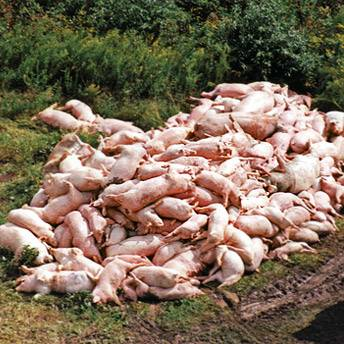


The degrees of concentration in the Smithfield Foods vertically integrated pig meat concentrations have little to do with traditional hog farming. In facilities now spread around the world, Smithfield's pigs live by the hundreds or thousands in warehouse-like barns, in rows of wall-to-wall pens. Sows are artificially inseminated and fed and delivered of their piglets in cages so small they cannot turn around.

As Tietz notes, ‘Forty fully grown 250-pound male hogs often occupy a pen the size of a tiny apartment. They trample each other to death. There is no sunlight, straw, fresh air or earth. The floors are slatted to allow excrement to fall into a catchment pit under the pens, but many things besides excrement can wind up in the pits: afterbirths, piglets accidentally crushed by their mothers, old batteries, broken bottles of insecticide, antibiotic syringes, stillborn pigs -- anything small enough to fit through the foot-wide pipes that drain the pits. The pipes remain closed until enough sewage accumulates in the pits to create good expulsion pressure; then the pipes are opened and everything bursts out into a large holding pond.’12

He continues on the toxic CAFO conditions: ‘They become susceptible to infection, and in such dense quarters microbes or parasites or fungi, once established in one pig, will rush sprite-like through the whole population. Accordingly, factory pigs are infused with a huge range of antibiotics and vaccines, and are doused with insecticides. Without these compounds -- oxytetracycline, draxxin, ceftiofur, tiamulin -- diseases would likely kill them. Thus factory-farm pigs remain in a state of dying until they're slaughtered. When a pig nearly ready to be slaughtered grows ill, workers sometimes shoot it up with as many drugs as necessary to get it to the slaughterhouse under its own power. As long as the pig remains ambulatory, it can be legally killed and sold as meat.’ 13

Jeff Tietz is not the only one who has noticed the gargantuan scale of the Smithfield Foods CAFO pig waste problem. The United States Government Environmental Protection Agency, EPA, has repeatedly fined Smithfield Foods for damage to local water supply with discharge of its pig waste from its CAFOs at Tar Heel and elsewhere across the USA. In Virginia, its home state, Smithfield was fined $12.6 million in 1997 for 6,900 violations of the Clean Water Act -- the third-largest civil penalty ever levied under the act by the EPA, for waste generated during the hog-slaughtering and meat processing operations.14 There was little convincing evidence the fines changed their practice of waste disposal in any significant way.

Smithfield Foods has spread its hog CAFOs to other countries where environmental regulations are presumably less strict, including Romania, Poland, and of course, rural Mexico. Several years ago the Smithfield pig CAFO in Romania was focus of major accusations by local and Government health officials. Smithfield refused to let local authorities enter its pig farms after residents complained of the stench coming from hundreds of dead corpses of pigs left rotting for days at the farms. ‘Our doctors have not had access to the American [company's] farms to effect routine inspections,’ stated Csaba Daroczi, assistant director at the Timisoara Hygiene and Veterinary Authority in Romania. ‘Every time they tried, they were pushed away by the guards. Smithfield proposed that we sign an agreement that would oblige us to warn them three days before each inspection.’ It later emerged that Smithfield had been covering up a major outbreak of classical swine fever on its Romanian CAFO farms.15

The Drug Cartel comes in

Rather than order a full-scale independent investigation into the pathogen-generation in the toxic waste of Smithfield Foods’ Veracruz CAFO pig operations or other similar pig CAFOs around the world for production of deadly toxics and various possible pathogens, the CDC and increasingly the WHO seem to be more concerned with creating a climate for mass distribution of what have been documented to be dangerous, and in some cases deadly, influenza drugs such as Tamiflu.

On April 14, almost two weeks before the panic over Mexico’s cases of Swine Flu or as CDC now prefers, Influenza A H1N1, the US pharmaceutical company, Novavax announced a pre-clinical study allegedly showing, ‘an investigational H1N1 virus-like particle (VLP) vaccine based on the 1918 Spanish influenza strain protected against both the Spanish flu and a highly pathogenic H5N1 avian influenza strain.’ The genetically-manipulated vaccine of Novavax, the company claimed, ‘protected Mice and Ferrets Against the Spanish Flu and Highly Pathogenic H5N1 Bird Flu,’ and also conveniently ‘provided protection against highly pathogenic H1N1 and H5N1 Influenza strains.’16

On April 24, the WHO issued a press release stating that ‘The Swine Influenza A/H1N1 viruses characterized in this outbreak have not been previously detected in pigs or humans. The viruses so far characterized have been sensitive to oseltamivir…’ Osteltamivir is the technical name for Tamiflu, the drug invented by Donald Rumsfeld’s Gilead Sciences and licensed to Roche Inc. The US Food and Drug Administration (FDA) issued a convenient Emergency Authorization on April 27 that allows US health officials and others to administer Tamiflu even to infants under one year of age. The FDA statement added it had decided, ‘to authorize the use of unapproved or uncleared medical products or unapproved or uncleared uses of approved or cleared medical products following a determination and declaration of emergency.’17

That suggests that the US Government has or is about to release experimental drugs on a panicked population such as the VLP-based Influenza vaccine of Novavax, as well as the vast stockpiles of Tamiflu and influenza drugs sold by giants like GlaxoSmithKline’s Relenza (zanamivir).

With the evidence to date of the scale of the ‘confirmed’ cases of Swine Flu H1N1 variety worldwide, 985 cases of influenza A (H1N1) or Swine Flu infection, there is hardly grounds to subject the human population to drugs whose side effects have included death or severe complications and typically flu-like symptoms and, as in the case of Tamiflu, never even claim to ‘prevent or cure’ the influenza. The entire drama of the past weeks is reading more and more like a bad remake of Crichton’s Andromeda Strain.

Adding a note of the bizarre to the entire drama, in November 2004, amid the early days of the then-world panic over alleged Avian Flu, when Tamiflu was first promoted as a wonder drug by Donald Rumsfeld and others, the WHO published an extraordinary fantasy scenario. In a UN agency normally given to issuing dull scientific notices to world health professionals, the 2004 report was extraordinarily ‘prescient’ of the current scenario with Swine Flu panic. In a fantasy section titled ‘Sometime in the future…’ the WHO wrote four years ago,

Rumours of an outbreak of unusually severe respiratory illness in two vil-

lages in a remote province reach the ministry of health in one of the World

Health Organization’s (WHO’s) Member States. A team is dispatched to

the province and learns that the outbreak started about a month earlier.

The team is able to identify at least 50 cases over the previous month. All

age groups have been affected. Twenty patients are currently in the pro-

vincial hospital. Five people have already died of pneumonia and acute

respiratory failure. Surveillance in surrounding areas is increased, and new

cases are identified throughout the province. Respiratory specimens col-

lected from several patients are tested at the national laboratory and are

found to be positive for type A influenza virus, but they cannot be further

subtyped. The isolates are sent to the WHO Reference Centre for Influ-

enza for further characterization, where they are characterized as influ-

enza A(H6N1), a subtype never isolated from humans before. Gene

sequencing studies further indicate that most of the viral genes are from a

bird influenza virus, with the remaining genes derived from a human strain.18

If one changed the name from Influenza A (H6N1) to Influenza A (H1N1) we could be talking about the current situation.

That 2004 WHO fictional scenario reads as if it were the handbook for what has unfolded since late April in the US Mexico and beyond. It leads to serious question whether the world is being submitted to a giant psychological warfare game aimed at inducing them to take massive doses of dangerous drugs to counter a danger that does not actually exist as claimed.

With the reported cases in Mexico clearly dropping off at present and little sign of the feared repeat of the 1918 Spanish Flu or worse as officials were warning only days earlier, it is well beyond time to launch a full-scale worldwide health inquiry into the toxic conditions of CAFO pig and other animal Factory Farm concentrations, and to end the official coverup of what has become a colossal health danger.

F. William Engdahl is author of Seeds of Destruction: The Hidden Agenda of Genetic Manipulation (www.globalresearch.ca), and A Century of War: Anglo-American Oil Politics and the New World Order (Pluto Press). His latest book, Full Spectrum Dominance: Totalitarian Democracy in the New World Order (Third Millennium Press), is due to be released later this month. He may be reached via his website, www.engdahl.oilgeopolitics.net.

Notes:


1 Centers for Disease Control, Swine-Origin Influenza A (H1N1) Virus Infections in a School --- New York City, April 2009, April 30, 2009. Accessed in
http://www.cdc.gov/mmwr/preview/mmwrhtml/mm58d0430a1.htm.

2 Margaret Chan, WHO Director-General, quoted in Murray Wardrop, Swine flu All of humanity under threat WHO warns, Daily Telegraph, London, April 30, 2009.

3 CDC, H1N1 (Swine Flu), accessed in http://www.cdc.gov/h1n1flu/.

4Centers for Disease Control, Swine-Origin Influenza A (H1N1) Virus Infections in a School --- New York City Op. Cit.

5 Ibid.

6 Seth Borenstein, Swine flu name change? Flu genes spell pig, AP, May 1, 2009, accessed in
http://www.physorg.com/news160371024.html.

7 GRAIN, A food system that kills: Swine flu is meat industry’s latest plague, April 2009, accessed in
http://www.grain.org/articles/?id=48.

8 Bernice Wuethrich, Chasing the Fickle Swine Flu, Science, Vol. 299, 2003.

9 Jeff Tietz, Pork’s Dirty Secret: America’s Top Hog Producer is also one of America’s Worst Polluters, Rolling Stone, December 14, 2006.

10 Ibid.

11 Ibid.

12 Ibid.

13 Ibid.

14 EPA, UNITED STATES SUES SMITHFIELD FOODS FOR POLLUTING VIRGINIA WATERWAYS, Press Release, December 16, 1996.

15 Mirel Bran, Swine Plague: Romania Criticizes American Group’s Attitude, Le Monde, 15 August
2007, translated by Leslie Thatcher, cited in GRAIN Op Cit..

16 Tricia J. Richardson, NOVAVAX Announces Publication of a Preclinical Study Demonstrating that a Virus-like Particle Vaccine Provided Protection Against Highly Pathogenic H1N1 and H5N1 Influenza Strains, April 14, 2009, Rockville, Md. Press Release.

17 FDA News, FDA Authorizes Emergency Use of Influenza Medicines, Diagnostic Test in Response to Swine Flu Outbreak in Humans, April 27, 2009.

18 WHO, WHO checklist for influenza pandemic preparedness planning, November 2004, accessed in
http://209.85.129.132/search?q=cache:XuupgF1uNAIJ:www.who.int/csr/resources/publications/influenza/FluCheck6web.pdf+who+influenza+pandemic+preparedness+checklist&cd=1&hl=de&ct=clnk&gl=de&client=firefox-a.


Global Research Articles by F. William Engdahl

Unreported or Underreported Real Pandemics, Not Fake Ones Like Avian and Swine Flu


Global Research, May 4, 2009


StumbleUpon Submit

In his April 29 Global Research.ca article, F. William Engdahl discussed "Flying Pigs, Tamiflu and Factory Farms" and shed light on the current swine flu hysteria - hyped by the same folks who engineered the 2006 (H5N1) Avian Flu scare that had more bark than bite. But it proved hugely profitable for drug makers like Roche and Gilead Sciences, the company Donald Rumsfeld led as chairman from 1997 - 2001 and remains a major shareholder. Although he won't discuss his "private finances," he's likely benefitting handsomely from the current panic.

Earlier Avian Flu reports were like the following:

-- numerous ones from public health journalists saying governments are "thoroughly unprepared" for a pandemic flu outbreak; as a result, it could lead to potential "societal breakdown, chaos, and panic;"

-- Robert Madelin, the EU's health and consumer protection department director-general, cited scientists' predictions of a potential two - seven million death toll worldwide, then saying: "It's when and not if;"

-- the World Bank estimating that an Avian Flu (H5N1) outbreak could kill up to 70 million worldwide and cause $2 trillion in economic losses; and

-- a scary July 2006 consumeraffairs.com report citing information like the above and more, then concluding: "There have so far been no known cases of H5N1 (Avian Flu) in the US."

When all was said and done, the global tempest was no more than a teapot maximum few hundred deaths, but, according to Engdahl, a Pentagon-initiated biowarfare project threatens something far graver. In an August 2008 article titled "The Pentagon's alarming project: Avian Flu Biowar Vaccine," he cited "alarming evidence" of a cooperative pharmaceutical industry-Pentagon effort to genetically weaponize the H5N1 virus, then unleash a "selective pandemic through the process of mandatory vaccination(s) with an alleged vaccine" offered as protection.

If today's Swine Flu scare is for this purpose, indeed it is worrisome, but that remains to be seen. What's known is what Engdahl reported in his April 29 article:

that "In October 2005 the Pentagon ordered vaccination of all US military personnel worldwide against what it called Avian Flu, H5N1 (and) budgeted more than $1 billion to stockpile the drug Oseltamivir, sold under the name Tamiflu. (At the time, George Bush asked) Congress to appropriate another $2 billion for Tamiflu stocks." This drug "is no mild candy to be taken lightly. It has heavy side effects" that potentially can kill.

Nonetheless, during the current panic, its sales have skyrocketed, and that alone worries some enough to wonder what's more dangerous - the flu or the combination of the FDA approving potentially deadly drugs like Tamiflu, the dominant media hyping a non-existant threat, public health organizations terrifying people with heightened alerts, and government officials like Department of Homeland Security secretary Janet Napolitano saying: "We are proceeding as if we are preparatory to a full pandemic" even though:

-- no evidence suggests one;

-- flu epidemics are extremely rare, certainly global ones with the potential to kill millions;

-- influenza (flu) is a common viral illness;

-- it exists in numerous strains;

-- most remain infectious for about a week and produce symptoms including fever, coughing, nausea and at times vomiting - annoying but rarely life-threatening; and

-- simple good health practices are more effective than dangerous drugs, including frequent hand washing, use of disinfectants and detergents, and abstaining from high-risk foods like all GMO ones as well as beef, poultry, and pork - raised under unsanitary conditions on factory farms that "are notorious breeding grounds for toxic pathogens."

That said, major unreported or underreported pandemics abound, real ones. None, however, make headlines or arouse public or media concern. Below are some.

Wars, Massacres, Genocide, and Violence

Wars indeed are reported but not their toll, human or otherwise. In the past century alone, scores of millions died and even greater numbers of survivors suffered horrendously. Currently, and in recent years alone, wars and conflicts continue globally, including in Iraq, Afghanistan, Occupied Palestine, Pakistan, Somalia, the Democratic Republic of Congo, Sudan, Sri Lanka, Uganda, Kashmir, Haiti, Ivory Coast, Southern Nigeria, Colombia, and elsewhere plus the mounting "war on terrorism" toll that's totally blacked out in news reports.

Gideon Polya edits the Body Count web site, and in 2007 published a book titled: "Body Count. Global avoidable mortality since 1950." As a biological scientist, he calls it "a carefully researched (country by country)" estimate totaling about 1.3 billion needless human deaths, including 140,000 under-five American infants in the last seven years alone according to UN demographic data. Globally 16 million avoidable deaths occur annually, including 10 million under age-five ones.

Polya states: "There is no public discussion of the actual human cost of First World policies" that are the chief cause of global carnage in all forms, including wars, other conflicts, massacres and genocide, starvation and famine, disease, as well as preventable poverty and neglect. He adds: "An apocalyptic quartet of violence, deprivation, disease and LYING (including suppressing the truth) is responsible for the continuing carnage.

Polya defines avoidable mortality as "the difference between the actual deaths in a country and the deaths expected for a peaceful, decently governed country with the same demographics." His main source was UN Population Division data for "essentially every country in the world since 1950 - (for) population, death rate, birth rate, population breakdown, (and) under-5 infant mortality rate."

As violent occupiers, offending countries include:

-- Britain responsible for 727 million deaths in dozens of countries, including Korea, Vietnam, Laos, Cambodia, Afghanistan and Iraq;

-- France responsible for 142 million deaths in many countries, including Algeria, Vietnam, Haiti, and Ivory Coast;

-- the US responsible for 82 million deaths in Korea, Vietnam, Cambodia, Laos, Haiti, Afghanistan, Iraq and elsewhere; and

-- Israel responsible for 24 million deaths in Palestine, Jordan, Lebanon and Egypt.

Polya calls the occupations of Palestine, Afghanistan, and Iraq (among others) genocide as defined under Article 2 of the 1948 Convention on the Prevention and Punishment of the Crime of Genocide that states:

"In the present Convention, genocide means any of the following acts committed with intent to destroy, in whole or in part, a national, ethnical, racial or religious group, as such:

(a) Killing members of the group;

(b) Causing serious bodily or mental harm to members of the group;

(c) Deliberately inflicting on the group conditions of life calculated to bring about its physical destruction in whole or in part;

(d) Imposing measures intended to prevent births within the group;

(e) Forcibly transferring children of the group to another group."

Post-1967, Palestine sustained 300,000 avoidable deaths. Post-1990, Iraq had about four million, up to half that number since March 2003, and since 2001, Afghanistan suffered three to seven million. These tolls mount daily, yet are virtually blacked out in news reports.

Numerous other pandemics abound as well, mostly below the radar.

Preventable Deadly Chronic Diseases

They're numerous and include heart disease, cancer, malaria, tuberculosis, diabetes, chronic respiratory diseases, HIV/AIDS, stroke, and many others, the result of major risk factors like obesity, high blood pressure, smoking, poor diet, stress, lack of exercise, poverty, deprivation, and inadequate, unavailable, and/or poor quality public health.

In two October 2005 articles titled "The neglected epidemic of chronic disease" and "Preventing chronic diseases: how may lives can we save," The (UK-based) Lancet (medical journal) stated that many of them often "remain marginal to the mainstream of global action on health," yet they "represent a huge proportion of human illness" and deaths.

In 2005, around 35 million people died from heart disease, cancer, stroke, lower respiratory infections, and numerous other illnesses for lack of prevention, control, or effective effort to treat them.

Annually, over a half million women die unnecessarily in childbirth, and for every death another 20 suffer injury, infection or disease for lack of available, affordable quality care - affecting about 10 million women in total. As a result, one million children are left motherless each year and become 10 times more likely to die within two years of their mothers' death. The great majority of maternal deaths would be preventable if a working health system were available to save lives.

A 2005 World Health Report cited almost 11 million deaths among children under five from largely avoidable causes, including four million babies who don't survive their first month of life. Why aren't world governments addressing this and acting to save lives! Why don't the major media explain it!

Including all chronic diseases, a mere 2% annual death reduction "would avert 36 million deaths by 2015" or the equivalent of about "500 million years of life over the 10" year span from 2006 - 2015, mostly in low and middle income countries, and under half will be for people younger than 70 years.

By 2015, The Lancet projects around 64 million deaths categorized under three major groupings:

-- communicable, maternal, perinatal, and nutritional;

-- chronic, non-communicable; and

-- injuries.

In 2005, chronic diseases accounted for 72% of the global total for the older-30 aged population. The Lancet concluded that "the serious consequences of chronic diseases and their (preventable) risk factors are not recognised by the international health community," at least in terms of financial commitment or concern.

Further, although high-risk behavior (smoking, poor diet, etc.) takes its toll, low-income countries experience a larger problem, especially for the population segment without easy access to good lifestyle choices, including the availability of quality health care.

An "insidious myth" is that these conditions aren't preventable because people bring them on themselves. "The reality could hardly be more different" with numerous factors playing a part, including environmental and economic pressures that take a huge toll on human health.

Differences between high and low income countries are marked and show the successful effects of intervention. From 1970 - 2000, around 14 million heart disease deaths were averted in America alone. Overall, a relatively small number of "modifiable risks" account for more than half of all chronic disease deaths. Reducing them would have a dramatic effect through:

-- individual interventions;

-- population-based ones; and

-- macroeconomic ones with enough desire and fiscal allocations to do it.

The combination of all three are needed for chronic disease prevention and control plus one more - widespread dominant media promotion the same way it spreads fear by hyping scams like Avian and Swine Flu. The Lancet also stated:

"Our vision for the future extends beyond measuring risk behavior and counting the dead, and instead encourages all sectors of society (including the media) to contribute effective ways of reducing health risks and promoting longer, healthier lives." It's for those sectors to get on with the task instead of acting counterproductively, pursuing profits at the expense of human health, and ignoring the global pandemic of preventable illnesses and diseases.

Other global pandemics include:

-- 1.3 billion people live on less than $1 dollar a day, including over 500 million existing in "absolute poverty" according to the World Bank; another three billion survive on about $2 a day; poverty this extreme kills;

-- starvation and famine kill about 15 million children annually;

-- according to the World Health Organization (WHO), one-third of the world population is ill-fed and another one-third is starving; malnutrition affects one in twelve people, including 160 million children under age five; in America, one-sixth of the elderly population is ill-fed, and one out of eight children under 12 endures daily hunger;

-- global hunger, starvation and famine persist in spite of a plentiful world food supply;

-- five million annual smoking-related deaths occur;

-- two million annual alcohol-related deaths;

-- about one million annual suicides;

-- 400,000 annual auto and truck accident deaths;

-- 200,000 annual illicit drug-related deaths; two - three times that number die from legal drugs;

-- about 30,000 annual US gun-related deaths;

-- unknown annual tens of thousands of deaths from pollution, food and water contamination, nuclear radiation exposure, and domestic violence, especially to women, children and the elderly; and

-- according to the World Health Organization: "The world's biggest killer and the greatest cause of ill health and suffering across the globe is listed almost at the end of the International Classification of Diseases (code Z59.5) -- extreme poverty."

These are real preventable pandemics, not fake ones like Swine Flu being hyped for profit, to spread fear, and divert public attention from real problems like the above-listed ones, the deepening global economic holocaust, the systematic looting of national wealth, and the steady path America is on to becoming a militarized banana republic police state.

Stephen Lendman is a Research Associate of the Center for Research on Globalization. He lives in Chicago and can be reached at lendmanstephen@sbcglobal.net.

Also visit his blog site at sjlendman.blogspot.com and listen to The Global Research News Hour on RepublicBroadcasting.org Monday - Friday at 10AM US Central time for cutting-edge discussions with distinguished guests on world and national issues. All programs are archived for easy listening.

http://www.globalresearch.ca/index.php?context=va&aid=13461

Stephen Lendman is a frequent contributor to Global Research. Global Research Articles by Stephen Lendman