Showing posts with label Cuba. Show all posts

Tuesday, December 27, 2016

The Second Venceremos Brigade to Cuba in 1970


The Second Venceremos Brigade to Cuba in 1970


https://www.youtube.com/watch?v=OxEZNBZN8yQ&feature=share

Friday, December 23, 2016

Teachers’ Day in Cuba by Stephen Lendman

Teachers’ Day in Cuba

by Stephen Lendman

Each December 22, Cubans celebrate Teachers’ Day, commemorating Fidel’s Literacy Campaign - begun January 1, 1961, successfully completed less than a year later on December 22, an astonishing achievement.

Fidel called 1961 the “year of education” in a nation afflicted by mass illiteracy, most Cubans unable to read or write.

Literacy brigades deployed nationwide changed things, teaching Cuba’s largely agrarian population what they never before knew.

After less than 12 months, over 700,000 Cubans were literate, the nationwide literacy rate increased to around 96%, a remarkable achievement by any standard, unmatched anywhere in the world.

In America, one-fourth of children grow up illiterate. It’s the only developed country where current generation children, adolescents and youths are less educated than their earlier counterparts.

The overwhelming majority of children facing trial in juvenile courts are functionally illiterate. So are more than 60% of US prison inmates.

Free societies require an educated citizenry. America's founders believed it was insurance against loss of liberty.

Jefferson said “(e)very government degenerates when trusted to the rulers of the people alone. The people themselves, therefore, are its only safe depositories. And to render them safe, their minds must be improved…”

Public education is vital because it serves the public interest - giving meaning to “we the people.” Father of American education Horace Mann called “(t)he common school...the greatest discovery ever made by man.” 

He meant public, not privatized schooling, prioritizing profits over teaching. He believed all students should be educated equally and responsibly.

In America today, they’re intimidated, persecuted and controlled, not taught the way children and youths were when I grew up in inner city Boston long ago. 

Higher education was affordable, extraordinarily cheap by today’s standards. America’s student loan racket didn’t exist - debt-entrapping millions of students repressively, some facing a lifetime of debt bondage.

Standards in those days stressed teaching. Children learned basics, letting them advance to higher education - important preparatory steps for life. Kids today across America have none of the advantages I had. Things today are deplorable by any standard.

US public schools don’t teach. They’re institutions of intimidation and control. They produce uneducated youths, many functionally illiterate, unprepared for the adult world they’re entering - most facing a working lifetime of rotten jobs with poverty wages along with few or no benefits.

No wonder many end up in prison, mostly poor, disadvantaged youths of color. US society is disintegrating and no one gives a damn.

Cuba prioritizes education, free to the highest levels. Fidel stressed its importance, achieving literacy throughout the island state, saying on December 22, 1961:

No moment is more solemn and exciting, no instant full of legitimate pride and glory than this, in which four and a half centuries of ignorance have been defeated.”

“When we said we would eradicate illiteracy in only one year, it seemed a reckless statement. It seemed impossible. Only a country in revolution would have been capable of deploying the effort and energy necessary to carry out such a gigantic mission.”

Literacy for all Cubans was one of his monumental achievements. Genuinely serving his country made him one of the true giants of his era.

He’s irreplaceable in the hearts and minds of his people, Cuba’s eternal comandante, his remarkable legacy to stand the test of time forever.

Stephen Lendman lives in Chicago. He can be reached at lendmanstephen@sbcglobal.net. 

Thursday, February 11, 2016

A tale of two Cubans -- one an American hero, the other not so praiseworthy BY Wayne Madsen


 A tale of two Cubans -- one an American hero, the other not so praiseworthy
BY Wayne Madsen
There are some similarities but many fundamental differences between Cuban immigrants to the United States Otto Macias and Rafael Cruz. Macias, who abandoned Cuba during the throes of the Cuban Revolution, later enlisted in the U.S. Army and was sent to Vietnam. Today, he lives back in Cuba and has seen his veteran's benefits cut-off by the U.S. government. Suffering from post-traumatic stress syndrome since Vietnam, Macias returned to Cuba in 1980 to visit relatives and decided not to return to the United States. Macias is a true American hero. He is richly deserving of retroactive payment of his paltry $60 a month veterans' pension, which was cut off by the Department of Veterans Affairs less than a year after her took up residence in Cuba.

Macias's decision to stay in Cuba after opposing Fidel Castro's revolution and fighting against the Communists in Vietnam stands in stark contrast to another Cuban who departed for American shores. In 1957, Rafael Cruz, a former salesman for the U.S. intelligence-linked RCA Corporation, left Cuba for the United States. Cruz claims he fought with Castro against the fascist government of Fulgencio Batista but soured on the revolution. However, Cruz left Cuba two years before the Castro revolution.

Cruz arrived in Austin where he enrolled in the University of Texas. This is a strange story since he claimed he left Cuba with only $100, which he said was sewn into his underwear. Cruz eventually gained U.S. permanent residency and a degree in mathematics from the University of Texas. In 1959, Cruz married Julia Ann Garza and, after Cruz graduated from the University of Texas in 1961, the couple moved to New Orleans from Dallas after the birth of their second daughter on November 18, 1962.

Cruz was in New Orleans during 1963, the year that New Orleans District Attorney Jim Garrison claimed his city was the focal point for the plot to assassinate President John F. Kennedy. The plot involved a number of Cuban exiles. Accused assassin Lee Harvey Oswald claimed, as part of his "fake defector" persona developed by the Central Intelligence Agency, to be a member of the pro-Castro Fair Play for Cuba Committee. The committee just happened to share an office address with Guy Bannister's private investigation agency.

Guy Banister Associates was located on the ground floor of the Newman Building at 5312 Lafayette Street while Oswald's "pro-Castro" Fair Play for Cuba Committee was located around the corner but on the ground floor of the same building but with an address of 544 Camp Street. Banister was a retired FBI agent who continued to carry out tasks for the bureau and the CIA. The Newman Building housed a number of anti-Castro groups, including the Cuban Revolutionary Council, Crusade to Free Cuba Committee, the Cuban Democratic Revolutionary Front, Anti-Communist League of the Caribbean, and Friends of Democratic Cuba. While living in New Orleans, Cruz was also active with anti-Castro movements and the chances that he did not cross paths with Banister and the other anti-Castro activists, including CIA agent Sergio Arcacha Smith, are highly unlikely for such a close-knit community at the time.
Cuba US Vet.jpg
Otto Macias, disabled US Army Vietnam vet, living almost penniless in Havana

While living in New Orleans with his wife and two young daughters, Cruz claimed residency at two addresses, one a low-rent apartment building off of Jackson Avenue. Cruz worked for an oil company in New Orleans. He has been less than forthcoming about the details of his time in New Orleans and the time line that included his move from Dallas.

Cruz and his wife Julia divorced in New Orleans, allegedly in 1963, but this detail is also clouded in mystery. Cruz apparently registered for the draft in 1967 claiming the New Orleans' Jackson Street address. Draft registration was a requirement for resident aliens like Cruz. Cruz apparently waited until the age of 28 to register for the draft, which, because he waited so long, was a criminal offense at the time. While liable for the draft and possible service in Vietnam, a country where fellow Cuban immigrant Otto Macias gladly volunteered to serve, Cruz took off for Calgary, Canada with his second wife, Eleanor Darragh. Darragh, a native of Delaware who graduated from Rice University in Houston, worked for the same oil company in New Orleans that employed Cruz. Their son, Rafael "Ted" Cruz, Jr., now a candidate for president of the United States, claims that his mother and father worked for the same company in New Orleans but there is actually no record of an Eleanor Darragh Wilson Cruz living in New Orleans at the time.

Eleanor Wilson, married to Fort Worth, Texas native Alan Wilson, lived in London from 1960 to 1966. In 1965, their infant son Michael died from crib death. Alan Wilson, who still lives in London, told McClatchy News Service that Michael was not his son. In his autobiography, Senator Ted Cruz not only claims Michael was the son or his mother and Alan but also claims the baby died in 1965. In fact, Michael, according to London vital statistics records, died in 1966 and well after the Wilsons were divorced. Eleanor Cruz, who lives in Houston, has been mum on her marriage to Wilson and her marriage to Cruz, which lasted from 1969 to 1997. Ted Cruz was born in Calgary in 1970 and there is a major question about his eligibility to serve as president since Cruz maintained Canadian citizenship until 2013.
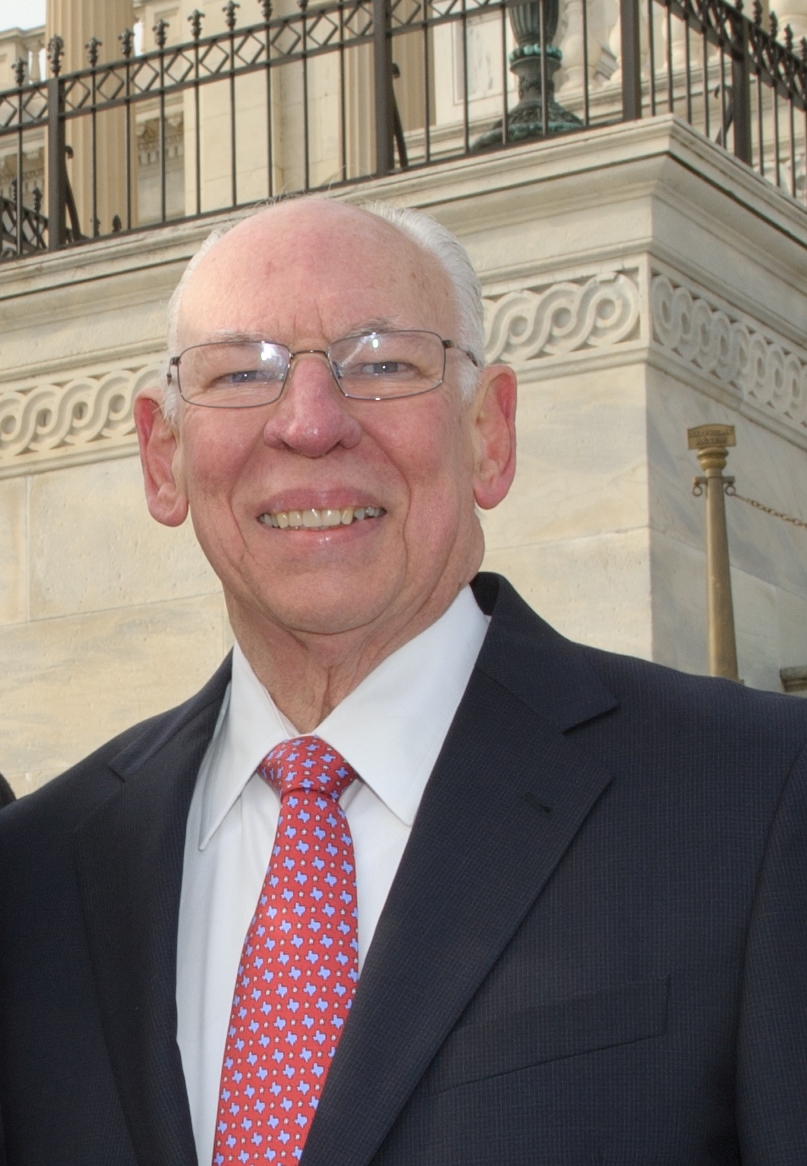
Pastor Cruz

According to experts in Selective Service laws at the time, Cruz fits the description of a draft dodger. He only returned to the United States, with his 4-year old son Ted, Junior, in December 1974. In September 1974, President Gerald Ford offered amnesty for certain classes of draft evaders, including those like Cruz who registered late for the draft.

Cruz later claimed he became an evangelical Christian after returning to Canada from the United States to reunite with his wife and son. Today, Cruz [pictured left] is active with the Christian Dominionist movement that wants the United States transformed into a Christian theocracy.

It turns out that the oil company that Cruz and his wife worked for in Calgary was 
Rafael B. Cruz and Associates Ltd., which he sold to French-based Compagnie Générale de Géophysique (CCG) in 1974. CCG is linked to the large Schlumberger oil conglomerate, which, along with Halliburton, the two largest oilfield drilling companies in the world. Schlumberger had been active with the CIA and Zapata Offshore Company owned by George H. W. Bush. Moreover, Jean de Menil, the son-in-law of Schlumberger founder Conrad Schlumberger, was a key figure in the Permindex, the New Orleans-based CIA front headed up by Clay Shaw that was a key target of Garrison's investigation of the New Orleans connection to JFK's assassination in Dallas. Here, again, the senior Cruz's time line remains murky, an indication that he had some other sort of employment while in Calgary in Canada and New Orleans and Dallas in the United States.

Rafael Cruz, Sr. did not become a U.S. citizen until 2005. His early years remain clouded in mystery with strong suspicions that his later "finding Jesus" was after a long and clandestine career with the CIA, one that saw him cross paths with presidential assassins, oil company brigands, and other unsavory characters. Meanwhile, Otto Macias, a Vietnam War veteran and American hero, lives pensionless in Havana suffering from skin cancer and all-but-forgotten by the military for which he sacrificed so much. 

Monday, August 31, 2015

Will U.S. finally pay reparations for its act of terrorism? by Wayne Madsen


Will U.S. finally pay reparations for its act of terrorism?
by Wayne Madsen
For the people of Cuba, Barbados, Guyana, Trinidad and Tobago, and Venezuela, October 6, 1976 will always be remembered as the day international terrorism paid a deadly call on the Caribbean region. It was on that day that a Cubana airlines DC-8 aircraft was blown out of the sky by a bomb placed on the aircraft by right-wing Cuban exiles. The bombing of the plane, Cubana flight 455, which had just departed from Seawell Airport in Barbados and was en route to Jamaica, killed 73 people, including children. The chief terrorist technician was Luis Posada Carriles, however, the mastermind was the then-director of the Central Intelligence Agency, one George H. W. Bush. Carriles lives today a free man in Miami where he supports a number of right-wing Cubano groups, all of which are closely linked to GOP 2016 presidential hopefuls Marco Rubio and Jeb Bush.

Carriles and three other Cuban exiles, Freddy Lugo, Hernán Ricardo Lozan, and Orlando Bosch, were arrested in Venezuela for bombing the plane. Bosch was acquitted and he moved to Miami where he lived until his death in 2011. Lugo and Lozan received 20 year sentences in Venezuela and Posada Carriles was jailed for eight years prior to his escaping to Florida before his final sentencing hearing. Carriles carried out his acts of terrorism in the Caribbean region from his base in Caracas, where he operated a security company called Investigaciones Comerciales y Industriales C.A. (ICICA). In addition to the CIA, Carriles worked closely with Miami- and Las Vegas-based Jewish mobster Frank "Lefty" Rosenthal.

1976 saw the CIA under then-director George H. W. Bush carry out a number of terrorist acts against Cuba and companies and countries that did business with Havana. Bush's Cuban associates also bombed the offices of British West Indies Airlines in Bridgetown, Barbados, the Guyanese embassy in Port of Spain, Trinidad; the Air Panama office in Colombia, the Iberia office in Costa Rica, and the Venezuelan mission to the UN in New York. They also committed an arson attack on Cuban-supplied fishing equipment in Guyana and assassinated Cuban officials in Mexico and Argentina. Carriles, Bosch, and their associates also planned to bomb Cuban ships in Mexican ports. They actually helped to carry out bombings of a number of hotels in Cuba in 1997, one of which killed an Italian tourist, and were behind the September 21, 1976, car bombing in Washington, DC that killed former Chilean Foreign Minister Orlando Letelier and his American assistant, Ronni Moffitt.

The role of the CIA in the Cubana 455 bombing is detailed in both the confession of Lugo to Dennis Randwar, the Trinidad and Tobago deputy police commissioner, and declassified U.S. Justice Department documents. For years, as governor of Florida and as a "private businessman" linked to CIA drug smuggling and money laundering, Jeb Bush, who arrived in Caracas in a year after the Cubana bombing for a two-year stint as a vice president for the CIA-linked Texas Commerce Bank, protected Posada Carriles and Bosch from answering for their acts of terrorism. During the Iran-contra scandal, Posada Carriles and Bosch assisted Vice President Bush's illegal contra supply operation in Central America.


Just as with the 9/11 attacks, for which there were prior warnings, the U.S. took no action to prevent a terrorist attack on a civilian airliner in 1976. And just as with 9/11, the Bush family was up to their eyeballs in both acts of aviation terrorism.


The above FBI memo indicates that the "IC" (U.S. Intelligence Community") was well aware that Posada Carriles and Bosch, both friends of Jeb Bush, "engineered the bombing of the airplane." Jeb Bush later defended both terrorists after they took up permanent residence in Miami.


FBI admits that it maintained contact with Posada Carriles as late as June 1976, well after he had been involved in carrying out terrorist bombings and began planning the bombing of Cubana 455.


Confession to the Trinidad and Tobago police by Ricardo Lozan, Posada Carriles's associate, that he was a member of the CIA. At the time, George H. W. Bush was CIA director and he would have undoubtedly authorized the bombing of Cubana 455.

As the U.S. continues to normalize its relations with Cuba, Posada Carriles, Jeb Bush, George H. W. Bush, and their murderous associates should be required to make an final accounting for their crimes, especially those of 1976, the year the CIA proved that it was never brought under control after the Watergate scandal. Rubio, the son of right-wing Cuban immigrants, has proven by his close and unapologetic association with the terrorist elements that largely make up Florida's Cuban exile community that he requisite "good citizen" credentials -- respect for the rule of law, the U.S. Constitution, and a traditional appreciation for the popular "commonwealth" -- to serve as President of the United States, let alone a U.S. senator.

Cuba, Barbados, Jamaica, Trinidad and Tobago, Guyana, Colombia, Mexico, Costa Rica, Panama, and Venezuela should also require the U.S. to pay full reparations for its repeated acts of terrorism and the costs involved in conducting official investigations of those heinous acts.

Monday, April 13, 2015

Speech at Summit of the Americas By Raul Castro Ruz


Speech at Summit of the Americas
By Raul Castro Ruz

April 13, 2015 "ICH" -

His Excellency Juan Carlos Varela, President of the Republic of Panama;

Presidents and Prime Ministers;

Distinguished guests; 

I appreciate the solidarity of all Latin American and Caribbean countries that made possible Cuba’s participation in this hemispheric forum on equal footing, andI thank the President of the Republic of Panama for the kind invitation extended to us. I bring a fraternal embrace to the Panamanian people and to the peoples of all nations represented here.

The establishment of the Community of Latin American and Caribbean States (CELAC) on December 2-3, 2011, in Caracas, opened the way to a new era in the history of Our America, which made clear its well-earned right to live in peace and develop as their peoples freely decide, and chart the course to a future of peace, development and integration based on cooperation, solidarity and the common will to preserve their independence, sovereignty and identity.

The ideals of Simón Bolívar on the creation of a “Grand American Homeland” were a source of inspiration to epic campaigns for independence.

In 1800, there was the idea of adding Cuba to the North American Union to mark the southern boundary of the extensive empire. The 19thcentury witnessed the emergence of such doctrines as the Manifest Destiny, with the purpose of dominating the Americas and the world, and the notion of the ‘ripe fruit’, meaning Cuba’s inevitable gravitation to the American Union, which looked down on the rise and evolution of a genuine rationale conducive to emancipation.

Later on, through wars, conquests and interventions that expansionist and dominating force stripped Our America of part of its territory and expanded as far as the Rio Grande.
After long and failing struggles, José Martí organized the “necessary war”, and created the Cuban Revolutionary Party to lead that war and to eventually found a Republic “with all and for the good of all” with the purpose of achieving “the full dignity of man.”

With an accurate and early definition of the features of his times, Martí committed to the duty “of timely preventing the United States from spreading through the Antilles as Cuba gains its independence, and from overpowering with that additional strength our lands of America.”

To him, Our America was that of the Creole and the original peoples, the black and the mulatto, the mixed-race and working America that must join the cause of the oppressed and the destitute. Presently, beyond geography, this ideal is coming to fruition.
One hundred and seventeen years ago, on April 11, 1898, the President of the United States of America requested Congressional consent for military intervention in the independence war already won with rivers of Cuban blood, and that legislative body issued a deceitful Joint Resolution recognizing the independence of the Island “de facto and de jure”. Thus, they entered as allies and seized the country as an occupying force.

Subsequently, an appendix was forcibly added to Cuba’s Constitution, the Platt Amendment that deprived it of sovereignty, authorized the powerful neighbor to interfere in the internal affairs, and gave rise to Guantánamo Naval Base, which still holds part of our territory without legal right. It was in that period that the Northern capital invaded the country, and there were two military interventions and support for cruel dictatorships.

At the time, the prevailing approach to Latin America was the “gunboat policy” followed by the “Good Neighbor” policy. Successive interventions ousted democratic governments and in twenty countries installed terrible dictatorships, twelve of these simultaneously and mostly in South America, where hundreds of thousands were killed. President Salvador Allende left us the legacy of his undying example.

It was precisely 13 years ago that a coup d’état staged against beloved President Hugo Chavez Frías was defeated by his people. Later on, an oil coup would follow.

On January 1st, 1959, sixty years after the U.S. troops entered Havana, the Cuban Revolution triumphed and the Rebel Army commanded by Fidel Castro Ruz arrived in the capital.

On April 6, 1960, barely one year after victory, Assistant Secretary of State Lester Mallory drafted a wicked memorandum, declassified tens of years later, indicating that “The majority of Cubans support Castro […] An effective political opposition does not exist […]; the only foreseeable means of alienating internal support [to the government] is through disenchantment and disaffection based on economic dissatisfaction and hardship […] to weaken the economic life of Cuba […] denying it money and supplies to decrease monetary and real wages, to bring about hunger, desperation and overthrow of government.”

We have endured severe hardships. Actually, 77% of the Cuban people was born under the harshness of the blockade, but our patriotic convictions prevailed. Aggression increased resistance and accelerated the revolutionary process. Now, here we are with our heads up high and our dignity unblemished.

When we had already proclaimed socialism and the people had fought in the Bay of Pigs to defend it, President Kennedy was murdered, at the exact time when Fidel Castro, leader of the Cuban Revolution, was receiving his message seeking to engage Cuba in a dialogue.

After the Alliance for Progress, and having paid our external debt several times over while unable to prevent its constant growth, our countries were subjected to a wild and globalizing neoliberalism, an expression of imperialism at the time that left the region dealing with a lost decade.

Then, the proposal of a “mature hemispheric partnership” resulted in the imposition of the Free Trade Association of the Americas (FTAA), –linked to the emergence of these Summits– that would have brought about the destruction of the economy, sovereignty and common destiny of our nations, if it had not been derailed at Mar del Plata in 2005 under the leadership of Presidents Kirchner, Chavez and Lula. The previous year, Chavez and Fidel had brought to life the Bolivarian Alternative known today as the Bolivarian Alliance for the Peoples of Our America.

Excellencies;
We have expressed to President Barack Obama our disposition to engage in a respectful dialogue and work for a civilized coexistence between our states while respecting our profound differences.
I welcome as a positive step his recent announcement that he will soon decide on Cuba’s designation in a list of countries sponsor of terrorism, a list in which it should have never been included.
Up to this day, the economic, commercial and financial blockade is implemented against the Island with full intensity causing damages and scarcities that affect our people and becoming the main obstacle to the development of our economy. The fact is that it stands in violation of International Law, and its extraterritorial scope disrupts the interests of every State.

We have publicly expressed to President Obama, who was also born under the blockade policy and inherited it from 10 former Presidents when he took office, our appreciation for his brave decision to engage the U.S. Congress in a debate to put an end to such policy.

This and other issues should be resolved in the process toward the future normalization of bilateral relations.
As to us, we shall continue working to update the Cuban economic model with the purpose of improving our socialism and moving ahead toward development and the consolidation of the achievements of a Revolution that has set to itself the goal of “conquering all justice.”

Esteemed colleagues;
Venezuela is not, and it cannot be, a threat to the national security of a superpower like the United States. We consider it a positive development that the U.S. President has admitted it.
I should reaffirm our full, determined and loyal support to the sister Bolivarian Republic of Venezuela, to the legitimate government and civilian-military alliance headed by President Nicolas Maduro, and to the Bolivarian and chavista people of that country struggling to pursue their own path while confronting destabilizing attempts and unilateral sanctions that should be lifted; we demand the repeal of the Executive Order, an action that our Community would welcome as a contribution to dialogue and understanding in the hemisphere.

We shall continue encouraging the efforts of the Republic of Argentina to recover the Falklands, the South Georgia and the South Sandwich Islands, and supporting its legitimate struggle in defense of financial sovereignty.

We shall maintain our support for the actions of the Republic of Ecuador against the transnational companies causing ecological damages to its territory and trying to impose blatantly unfair conditions.

I wish to acknowledge the contribution of Brazil, and of President Dilma Rouseff, to the strengthening of regional integration and the development of social policies that have brought progress and benefits to extensive popular sectors, the same that the thrust against various leftist governments of the region is trying to reverse.

We shall maintain our unwavering support for the Latin American and Caribbean people of Puerto Rico in its determination to achieve self-determination and independence, as the United Nations Decolonization Committee has ruled tens of times.

We shall also keep making our contribution to the peace process in Colombia.

We should all multiply our assistance to Haiti, not only through humanitarian aid but also with resources that help in its development, and, in the same token, support a fair and deferential treatment of the Caribbean countries in their economic relations as well as reparations for damages brought on them by slavery and colonialism.

We are living under threat of huge nuclear arsenals that should be removed, and are running out of time to counteract climate change. Threats to peace keep growing and conflicts spreading out.
As President Fidel Castro has said “[…] the main causes rest with poverty and underdevelopment, and with the unequal distribution of wealth and knowledge prevailing in the world. It cannot be forgotten that current poverty and underdevelopment are the result of conquest, colonization, slavery and plundering by colonial powers in most of the planet, the emergence of imperialism and the bloody wars for a new division of the world. Humanity should be aware of what they have been and should be no more. Today, our species has accumulated sufficient knowledge, ethical values and scientific resources to move forward to a historical era of true justice and humanism. Nothing of what exists today in economic and political terms serves the interests of Humanity. It cannot be sustained. It must be changed,” he concluded.

Cuba shall continue advocating the ideas for which our people have taken on enormous sacrifices and risks, fighting alongside the poor, the unemployed and the sick without healthcare; the children forced to live on their own, to work or be submitted to prostitution; those going hungry or discriminated; the oppressed and the exploited who make up the overwhelming majority of the world population.
Financial speculation, the privileges of Bretton Wood, and the unilateral removal of the gold standard have grown increasingly suffocating. We need a transparent and equitable financial system.
It is unacceptable that less than ten big corporations, mostly American, determine what is read, watched or listened to worldwide. The Internet should be ruled by an international, democratic and participatory governance, particularly concerning its content. The militarization of cyberspace, and the secret and illegal useof computer systems to attack other States are equally unacceptable. We shall not be dazzled or colonized again.

Mister President;
It is my opinion that hemispheric relations need to undergo deep changes, particularly in the areas of politics, economics and culture, so that, on the basis of International Law and the exercise of self-determination and sovereign equality, they can focus on the development of mutually beneficial partnerships and cooperation in the interest of all our nations and the objectives proclaimed.
The adoption in January 2014, during the Second Summit of CELAC in Havana, of the Proclamation of Latin America and the Caribbean as a Peace Zone made a transcendental contribution to that end, marked by Latin American and Caribbean unity in diversity.

This is evident in the progress we are making toward genuinely Latin American and Caribbean integration processes through CELAC, UNASUR, CARICOM, MERCOSUR, ALBA-TCP, SICA and the ACS, which underline our growing awareness of the necessity to work in unison in order to ensure our development.
Through that Proclamation we have committed ourselves “to have differences between nations resolved peacefully, through dialogue and negotiation, and other ways consistent with International Law.”
Living in peace, and engaging in mutual cooperation to tackle challenges and resolve problems that, after all, are affecting and will affect us all, is today a pressing need.

As the Proclamation of Latin America and the Caribbean as a Peace Zone sets forth, “the inalienable right of every State to choose its political, economic, social and cultural system, as an essential condition to secure peaceful coexistence between nations” should be respected.

Under that Proclamation we committed to observe our “obligation to not interfere, directly or indirectly, in the internal affairs of any other State, and to observe the principles of national sovereignty, equality of rights and free determination of the peoples,” and to respect “the principles and standards of International Law […] and the principles and purposes of the United Nations Charter.”
That historical document urges “all member states of the International Community to fully respect this Declaration in its relations with the CELAC member States.”

We now have the opportunity, all of us here, as the Proclamation also states, of learning “to exercise tolerance and coexist in peace as good neighbors.”

There are substantial differences, yes, but also commonalities which enable us to cooperate making it possible to live in this world fraught with threats to peace and to the survival of the human species.

What is it that prevents cooperation at a hemispheric scale in facing climate change?

Why is it that the countries of the two Americas cannot fight together against terrorism, drug-trafficking and organized crime without politically biased positions?

Why can we not seek together the necessary resources to provide the hemisphere with schools, hospitals, employment, and to advance in the eradication of poverty?

Would it not be possible to reduce inequity in the distribution of wealth and infant mortality rates, to eliminate hunger and preventable diseases, and to eradicate illiteracy?

Last year, we established hemispheric cooperation to confront and prevent Ebola, and the countries of the two Americas made a concerted effort. This should stimulate our efforts toward greater achievements.

Cuba, a small country deprived of natural resources, that has performed in an extremely hostile atmosphere, has managed to attain the full participation of its citizens in the nation’s political and social life; with universal and free healthcare and education services; a social security system ensuring that no one is left helpless; significant progress in the creation of equal opportunities and in the struggle against all sorts of discrimination; the full exercise of the rights of children and women; access to sports and culture; and, the right to life and to public safety.

Despite scarcities and challenges, we abide by the principle of sharing what we have. Currently, 65 thousand Cuban collaborators are working in 89 countries, basically in the areas of healthcare and education, while 68 thousand professionals and technicians from 157 countries have graduated in our Island, 30 thousand of them in the area of healthcare.

If Cuba has managed to do this with very little resources, think of how much more the hemisphere could do with the political will to pool its efforts to help the neediest countries.

Thanks to Fidel and the heroic Cuban people, we have come to this Summit to honor Martí’s commitment, after conquering freedom with our own hands “proud of Our America, to serve it and to honor it […] with the determination and the capacity to contribute to see it loved for its merits and respected for its sacrifices.”
Thank you.
Tuesday, February 24, 2015

The Anti-Empire Report #137 By William Blum


The Anti-Empire Report #137

By William Blum – Published February 23rd, 2015

The Greek Tragedy: Some things not to forget, which the new Greek leaders have not.

American historian D.F. Fleming, writing of the post-World War II period in his eminent history of the Cold War, stated that “Greece was the first of the liberated states to be openly and forcibly compelled to accept the political system of the occupying Great Power. It was Churchill who acted first and Stalin who followed his example, in Bulgaria and then in Rumania, though with less bloodshed.”
The British intervened in Greece while World War II was still raging. His Majesty’s Army waged war against ELAS, the left-wing guerrillas who had played a major role in forcing the Nazi occupiers to flee. Shortly after the war ended, the United States joined the Brits in this great anti-communist crusade, intervening in what was now a civil war, taking the side of the neo-fascists against the Greek left. The neo-fascists won and instituted a highly brutal regime, for which the CIA created a suitably repressive internal security agency (KYP in Greek).
In 1964, the liberal George Papandreou came to power, but in April 1967 a military coup took place, just before elections which appeared certain to bring Papandreou back as prime minister. The coup had been a joint effort of the Royal Court, the Greek military, the KYP, the CIA, and the American military stationed in Greece, and was followed immediately by the traditional martial law, censorship, arrests, beatings, and killings, the victims totaling some 8,000 in the first month. This was accompanied by the equally traditional declaration that this was all being done to save the nation from a “communist takeover”. Torture, inflicted in the most gruesome of ways, often with equipment supplied by the United States, became routine.
George Papandreou was not any kind of radical. He was a liberal anti-communist type. But his son Andreas, the heir-apparent, while only a little to the left of his father, had not disguised his wish to take Greece out of the Cold War, and had questioned remaining in NATO, or at least as a satellite of the United States.
Andreas Papandreou was arrested at the time of the coup and held in prison for eight months. Shortly after his release, he and his wife Margaret visited the American ambassador, Phillips Talbot, in Athens. Papandreou later related the following:
I asked Talbot whether America could have intervened the night of the coup, to prevent the death of democracy in Greece. He denied that they could have done anything about it. Then Margaret asked a critical question: What if the coup had been a Communist or a Leftist coup? Talbot answered without hesitation. Then, of course, they would have intervened, and they would have crushed the coup. 
Another charming chapter in US-Greek relations occurred in 2001, when Goldman Sachs, the Wall Street Goliath Lowlife, secretly helped Greece keep billions of dollars of debt off their balance sheet through the use of complex financial instruments like credit default swaps. This allowed Greece to meet the baseline requirements to enter the Eurozone in the first place. But it also helped create a debt bubble that would later explode and bring about the current economic crisis that’s drowning the entire continent. Goldman Sachs, however, using its insider knowledge of its Greek client, protected itself from this debt bubble by betting against Greek bonds, expecting that they would eventually fail.
Will the United States, Germany, the rest of the European Union, the European Central Bank, and the International Monetary Fund – collectively constituting the International Mafia – allow the new Greek leaders of the Syriza party to dictate the conditions of Greece’s rescue and salvation? The answer at the moment is a decided “No”. The fact that Syriza leaders, for some time, have made no secret of their affinity for Russia is reason enough to seal their fate. They should have known how the Cold War works.
I believe Syriza is sincere, and I’m rooting for them, but they may have overestimated their own strength, while forgetting how the Mafia came to occupy its position; it didn’t derive from a lot of compromise with left-wing upstarts. Greece may have no choice, eventually, but to default on its debts and leave the Eurozone. The hunger and unemployment of the Greek people may leave them no alternative.

The Twilight Zone of the US State Department

“You are traveling through another dimension, a dimension not only of sight and sound but of mind. A journey into a wondrous land whose boundaries are that of imagination. Your next stop … the Twilight Zone.” (American Television series, 1959-1965)
State Department Daily Press Briefing, February 13, 2015. Department Spokesperson Jen Psaki, questioned by Matthew Lee of The Associated Press. 
Lee: President Maduro [of Venezuela] last night went on the air and said that they had arrested multiple people who were allegedly behind a coup that was backed by the United States. What is your response?
Psaki: These latest accusations, like all previous such accusations, are ludicrous. As a matter of longstanding policy, the United States does not support political transitions by non-constitutional means. Political transitions must be democratic, constitutional, peaceful, and legal. We have seen many times that the Venezuelan Government tries to distract from its own actions by blaming the United States or other members of the international community for events inside Venezuela. These efforts reflect a lack of seriousness on the part of the Venezuelan Government to deal with the grave situation it faces.
Lee: Sorry. The US has – whoa, whoa, whoa – the US has a longstanding practice of not promoting – What did you say? How longstanding is that? I would – in particular in South and Latin America, that is not a longstanding practice.
Psaki: Well, my point here, Matt, without getting into history –
Lee: Not in this case.
Psaki: – is that we do not support, we have no involvement with, and these are ludicrous accusations.
Lee: In this specific case.
Psaki: Correct.
Lee: But if you go back not that long ago, during your lifetime, even – (laughter)
Psaki: The last 21 years. (Laughter.)
Lee: Well done. Touché. But I mean, does “longstanding” mean 10 years in this case? I mean, what is –
Psaki: Matt, my intention was to speak to the specific reports.
Lee: I understand, but you said it’s a longstanding US practice, and I’m not so sure – it depends on what your definition of “longstanding” is.
Psaki: We will – okay.
Lee: Recently in Kyiv, whatever we say about Ukraine, whatever, the change of government at the beginning of last year was unconstitutional, and you supported it. The constitution was –
Psaki: That is also ludicrous, I would say.
Lee: – not observed.
Psaki: That is not accurate, nor is it with the history of the facts that happened at the time.
Lee: The history of the facts. How was it constitutional?
Psaki: Well, I don’t think I need to go through the history here, but since you gave me the opportunity –- as you know, the former leader of Ukraine left of his own accord.
………………..
Leaving the Twilight Zone … The former Ukrainian leader ran for his life from those who had staged the coup, including a mob of vicious US-supported neo-Nazis.
If you know how to contact Ms. Psaki, tell her to have a look at my list of more than 50 governments the United States has attempted to overthrow since the end of the Second World War. None of the attempts were democratic, constitutional, peaceful, or legal; well, a few were non-violent. 

The ideology of the American media is that it believes that it doesn’t have any ideology

So NBC’s evening news anchor, Brian Williams, has been caught telling untruths about various events in recent years. What could be worse for a reporter? How about not knowing what’s going on in the world? In your own country? At your own employer? As a case in point I give you Williams’ rival, Scott Pelley, evening news anchor at CBS.
In August 2002, Iraqi Deputy Prime Minister Tariq Aziz told American newscaster Dan Rather on CBS: “We do not possess any nuclear or biological or chemical weapons.” 
In December, Aziz stated to Ted Koppel on ABC: “The fact is that we don’t have weapons of mass destruction. We don’t have chemical, biological, or nuclear weaponry.” 
Iraqi leader Saddam Hussein himself told CBS’s Rather in February 2003: “These missiles have been destroyed. There are no missiles that are contrary to the prescription of the United Nations [as to range] in Iraq. They are no longer there.” 
Moreover, Gen. Hussein Kamel, former head of Iraq’s secret weapons program, and a son-in-law of Saddam Hussein, told the UN in 1995 that Iraq had destroyed its banned missiles and chemical and biological weapons soon after the Persian Gulf War of 1991. 
There are yet other examples of Iraqi officials telling the world, before the 2003 American invasion, that the WMD were non-existent.
Enter Scott Pelley. In January 2008, as a CBS reporter, Pelley interviewed FBI agent George Piro, who had interviewed Saddam Hussein before he was executed:
PELLEY: And what did he tell you about how his weapons of mass destruction had been destroyed?
PIRO: He told me that most of the WMD had been destroyed by the U.N. inspectors in the ’90s, and those that hadn’t been destroyed by the inspectors were unilaterally destroyed by Iraq.
PELLEY: He had ordered them destroyed?
PIRO: Yes.
PELLEY: So why keep the secret? Why put your nation at risk? Why put your own life at risk to maintain this charade? 
For a journalist there might actually be something as bad as not knowing what’s going on in his area of news coverage, even on his own station. After Brian Williams’ fall from grace, his former boss at NBC, Bob Wright, defended Williams by pointing to his favorable coverage of the military, saying: “He has been the strongest supporter of the military of any of the news players. He never comes back with negative stories, he wouldn’t question if we’re spending too much.” 
I think it’s safe to say that members of the American mainstream media are not embarrassed by such a “compliment”.
In his acceptance speech for the 2005 Nobel Prize for Literature, Harold Pinter made the following observation:
Everyone knows what happened in the Soviet Union and throughout Eastern Europe during the post-war period: the systematic brutality, the widespread atrocities, the ruthless suppression of independent thought. All this has been fully documented and verified.
But my contention here is that the US crimes in the same period have only been superficially recorded, let alone documented, let alone acknowledged, let alone recognized as crimes at all.
It never happened. Nothing ever happened. Even while it was happening it wasn’t happening. It didn’t matter. It was of no interest. The crimes of the United States have been systematic, constant, vicious, remorseless, but very few people have actually talked about them. You have to hand it to America. It has exercised a quite clinical manipulation of power worldwide while masquerading as a force for universal good. It’s a brilliant, even witty, highly successful act of hypnosis.

Cuba made simple

“The trade embargo can be fully lifted only through legislation – unless Cuba forms a democracy, in which case the president can lift it.” 
Aha! So that’s the problem, according to a Washington Post columnist – Cuba is not a democracy! That would explain why the United States does not maintain an embargo against Saudi Arabia, Honduras, Guatemala, Egypt and other distinguished pillars of freedom. The mainstream media routinely refer to Cuba as a dictatorship. Why is it not uncommon even for people on the left to do the same? I think that many of the latter do so in the belief that to say otherwise runs the risk of not being taken seriously, largely a vestige of the Cold War when Communists all over the world were ridiculed for blindly following Moscow’s party line. But what does Cuba do or lack that makes it a dictatorship?
No “free press”? Apart from the question of how free Western media is, if that’s to be the standard, what would happen if Cuba announced that from now on anyone in the country could own any kind of media? How long would it be before CIA money – secret and unlimited CIA money financing all kinds of fronts in Cuba – would own or control almost all the media worth owning or controlling?
Is it “free elections” that Cuba lacks? They regularly have elections at municipal, regional and national levels. (They do not have direct election of the president, but neither do Germany or the United Kingdom and many other countries). Money plays virtually no role in these elections; neither does party politics, including the Communist Party, since candidates run as individuals. Again, what is the standard by which Cuban elections are to be judged? Is it that they don’t have the Koch Brothers to pour in a billion dollars? Most Americans, if they gave it any thought, might find it difficult to even imagine what a free and democratic election, without great concentrations of corporate money, would look like, or how it would operate. Would Ralph Nader finally be able to get on all 50 state ballots, take part in national television debates, and be able to match the two monopoly parties in media advertising? If that were the case, I think he’d probably win; which is why it’s not the case.
Or perhaps what Cuba lacks is our marvelous “electoral college” system, where the presidential candidate with the most votes is not necessarily the winner. If we really think this system is a good example of democracy why don’t we use it for local and state elections as well?
Is Cuba not a democracy because it arrests dissidents? Many thousands of anti-war and other protesters have been arrested in the United States in recent years, as in every period in American history. During the Occupy Movement two years ago more than 7,000 people were arrested, many beaten by police and mistreated while in custody.  And remember: The United States is to the Cuban government like al Qaeda is to Washington, only much more powerful and much closer; virtually without exception, Cuban dissidents have been financed by and aided in other ways by the United States.
Would Washington ignore a group of Americans receiving funds from al Qaeda and engaging in repeated meetings with known members of that organization? In recent years the United States has arrested a great many people in the US and abroad solely on the basis of alleged ties to al Qaeda, with a lot less evidence to go by than Cuba has had with its dissidents’ ties to the United States. Virtually all of Cuba’s “political prisoners” are such dissidents. While others may call Cuba’s security policies dictatorship, I call it self-defense.

The Ministry of Propaganda has a new Commissar

Last month Andrew Lack became chief executive of the Broadcasting Board of Governors, which oversees US government-supported international news media such as Voice of America, Radio Free Europe/Radio Liberty, the Middle East Broadcasting Networks and Radio Free Asia. In a New York Times interview, Mr. Lack was moved to allow the following to escape his mouth: “We are facing a number of challenges from entities like Russia Today which is out there pushing a point of view, the Islamic State in the Middle East and groups like Boko Haram.” 
So … this former president of NBC News conflates Russia Today (RT) with the two most despicable groups of “human beings” on the planet. Do mainstream media executives sometimes wonder why so many of their audience has drifted to alternative media, like, for example, RT?
Those of you who have not yet discovered RT, I suggest you go to RT.com to see whether it’s available in your city. And there are no commercials.
It should be noted that the Times interviewer, Ron Nixon, expressed no surprise at Lack’s remark.

Notes

  1. William Blum, Killing Hope: U.S. Military and C.I.A. Interventions Since World War II, chapters 3 and 35
  2. Greek Debt Crisis: How Goldman Sachs Helped Greece to Mask its True Debt”, Spiegel Online(Germany), February 8, 2010. Google “Goldman Sachs” Greece for other references.
  3. U.S. Department of State Daily Press Briefing, February 13, 2015
  4. Overthrowing other people’s governments: The Master List
  5. CBS Evening News, August 20, 2002
  6. ABC Nightline, December 4, 2002
  7. “60 Minutes II”, February 26, 2003
  8. Washington Post, March 1, 2003
  9. “60 Minutes”, January 27, 2008
  10. Democracy Now!, February 12, 2015, Wright statement made February 10
  11. Al Kamen, Washington Post, February 18, 2015
  12. Huffington Post, May 3, 2012
  13. New York Times, January 21, 2015
Any part of this report may be disseminated without permission, provided attribution to William Blum as author and a link to this website are given.