Showing posts with label DU. Show all posts

Monday, April 05, 2010

The United States takes the matter of three-headed babies very seriously.


When did it begin, all this "We take your [call/problem/question] very seriously"? With answering-machine hell? As you wait endlessly, the company or government agency assures you that they take seriously whatever reason you're calling. What a kind and thoughtful world we live in.

The BBC reported last month that doctors in the Iraqi city of Fallujah are reporting a high level of birth defects, with some blaming weapons used by the United States during its fierce onslaughts of 2004 and subsequently, which left much of the city in ruins. "It was like an earthquake," a local engineer who was running for a national assembly seat told the Washington Post in 2005. "After Hiroshima and Nagasaki, there was Fallujah." Now, the level of heart defects among newborn babies is said to be 13 times higher than in Europe.

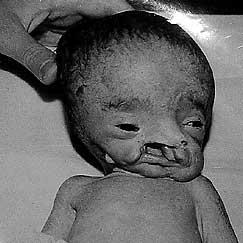
The BBC correspondent also saw children in the city who were suffering from paralysis or brain damage, and a photograph of one baby who was born with three heads. He added that he heard many times that officials in Fallujah had warned women that they should not have children. One doctor in the city had compared data about birth defects from before 2003 — when she saw about one case every two months — with the situation now, when she saw cases every day. "I've seen footage of babies born with an eye in the middle of the forehead, the nose on the forehead," she said.

A spokesman for the US military, Michael Kilpatrick, said it always took public health concerns "very seriously", but that "No studies to date have indicated environmental issues resulting in specific health issues." 1

One could fill many large volumes with the details of the environmental and human horrors the United States has brought to Fallujah and other parts of Iraq during seven years of using white phosphorous shells, depleted uranium, napalm, cluster bombs, neutron bombs, laser weapons, weapons using directed energy, weapons using high-powered microwave technology, and other marvelous inventions in the Pentagon's science-fiction arsenal ... the list of abominations and grotesque ways of dying is long, the wanton cruelty of American policy shocking. In November 2004, the US military targeted a Fallujah hospital "because the American military believed that it was the source of rumors about heavy casualties." 2 That's on a par with the classic line from the equally glorious American war in Vietnam: "We had to destroy the city to save it."

How can the world deal with such inhumane behavior? (And the above of course scarcely scratches the surface of the US international record.) For this the International Criminal Court (ICC) was founded in Rome in 1998 (entering into force July 1, 2002) under the aegis of the United Nations. The Court was established in The Hague, Netherlands to investigate and indict individuals, not states, for "The crime of genocide; Crimes against humanity; War crimes; or The crime of aggression." (Article 5 of the Rome Statute) From the very beginning, the United States was opposed to joining the ICC, and has never ratified it, because of the alleged danger of the Court using its powers to "frivolously" indict Americans.

So concerned about indictments were the American powers-that-be that the US went around the world using threats and bribes against countries to induce them to sign agreements pledging not to transfer to the Court US nationals accused of committing war crimes abroad. Just over 100 governments so far have succumbed to the pressure and signed an agreement. In 2002, Congress, under the Bush administration, passed the "American Service Members Protection Act", which called for "all means necessary and appropriate to bring about the release of any US or allied personnel being detained or imprisoned by ... the International Criminal Court." In the Netherlands it's widely and derisively known as the "Invasion of The Hague Act". 3 The law is still on the books.

Though American officials have often spoken of "frivolous" indictments — politically motivated prosecutions against US soldiers, civilian military contractors, and former officials — it's safe to say that what really worries them are "serious" indictments based on actual events. But they needn't worry. The mystique of "America the Virtuous" is apparently alive and well at the International Criminal Court, as it is, still, in most international organizations; indeed, amongst most people of the world. The ICC, in its first few years, under Chief Prosecutor Luis Moreno-Ocampo, an Argentine, dismissed many hundreds of petitions accusing the United States of war crimes, including 240 concerning the war in Iraq. The cases were turned down for lack of evidence, lack of jurisdiction, or because of the United States' ability to conduct its own investigations and trials. The fact that the US never actually used this ability was apparently not particularly significant to the Court. "Lack of jurisdiction" refers to the fact that the United States has not ratified the accord. On the face of it, this does seem rather odd. Can nations commit war crimes with impunity as long as they don't become part of a treaty banning war crimes? Hmmm. The possibilities are endless. A congressional study released in August, 2006 concluded that the ICC's chief prosecutor demonstrated "a reluctance to launch an investigation against the United States" based on allegations regarding its conduct in Iraq. 4 Sic transit gloria International Criminal Court.

As to the crime of aggression, the Court's statute specifies that the Court "shall exercise jurisdiction over the crime of aggression once a provision is adopted ... defining the crime and setting out the conditions under which the Court shall exercise jurisdiction with respect to this crime." In short, the crime of aggression is exempted from the Court's jurisdiction until "aggression" is defined. Writer Diana Johnstone has observed: "This is a specious argument since aggression has been quite clearly defined by U.N. General Assembly Resolution 3314 in 1974, which declared that: 'Aggression is the use of armed force by a State against the sovereignty, territorial integrity or political independence of another State', and listed seven specific examples," including:

The invasion or attack by the armed forces of a State of the territory of another State, or any military occupation, however temporary, resulting from such invasion or attack, or any annexation by the use of force of the territory of another State or part thereof; and

Bombardment by the armed forces of a State against the territory of another State or the use of any weapons by a State against the territory of another State.

The UN resolution also stated that: "No consideration of whatever nature, whether political, economic, military or otherwise, may serve as a justification for aggression."

The real reason that aggression remains outside the jurisdiction of the ICC is that the United States, which played a strong role in elaborating the Statute before refusing to ratify it, was adamantly opposed to its inclusion. It is not hard to see why. It may be noted that instances of "aggression", which are clearly factual, are much easier to identify than instances of "genocide", whose definition relies on assumptions of intention. 5

There will be a conference of the ICC in May, in Kampala, Uganda, in which the question of specifically defining "aggression" will be discussed. The United States is concerned about this discussion. Here is Stephen J. Rapp, US Ambassador-at-Large for War Crimes Issues, speaking to the ICC member nations (111 have ratified thus far) in The Hague last November 19:

I would be remiss not to share with you my country's concerns about an issue pending before this body to which we attach particular importance: the definition of the crime of aggression, which is to be addressed at the Review Conference in Kampala next year. The United States has well-known views on the crime of aggression, which reflect the specific role and responsibilities entrusted to the Security Council by the UN Charter in responding to aggression or its threat, as well as concerns about the way the draft definition itself has been framed. Our view has been and remains that, should the Rome Statute be amended to include a defined crime of aggression, jurisdiction should follow a Security Council determination that aggression has occurred.

Do you all understand what Mr. Rapp is saying? That the United Nations Security Council should be the body that determines whether aggression has occurred. The same body in which the United States has the power of veto. To prevent the adoption of a definition of aggression that might stigmatize American foreign policy is likely the key reason the US will be attending the upcoming conference.

Nonetheless, the fact that the United States will be attending the conference may well be pointed out by some as another example of how the Obama administration foreign policy is an improvement over that of the Bush administration. But as with almost all such examples, it's a propaganda illusion. Like the cover of Newsweek magazine of March 8, written in very large type: "Victory at last: The emergence of a democratic Iraq". Even before the current Iraqi electoral farce — with winning candidates arrested or fleeing 6— this headline should have made one think of the interminable jokes Americans made during the Cold War about Pravda and Izvestia.


Notes

  1. BBC, March 4, 2010; Washington Post, December 3, 2005 ↩
  2. New York Times, November 8, 2004 ↩
  3. Christian Science Monitor, February 13, 2009 ↩
  4. Washington Post, November 7, 2006 ↩
  5. Diana Johnstone, Counterpunch, January 27/28, 2007 ↩
  6. Washington Post, April 2, 2010 ↩–

William Blum is the author of:

  • Killing Hope: US Military and CIA Interventions Since World War 2
  • Rogue State: A Guide to the World's Only Superpower
  • West-Bloc Dissident: A Cold War Memoir
  • Freeing the World to Death: Essays on the American Empire

Portions of the books can be read, and signed copies purchased, at www.killinghope.org

Tuesday, March 23, 2010

VICTIMS OF URANIUM MUNITIONS USED BY THE US FORCES IN AFGHANISTAN: Warning – Horrific Images


afghan-toxic-1.jpg

Caution: The images presented here are so horrific that it had me in tears just dealing with the ‘technics’ of uploading them. As with the Gaza victims file, I have left them off the Home Page. If you wish to view them click on the Continue Reading link. And I urge folks to do something about this, how can we stand aside? It is after all, being done in OUR name. The Ed

Dear readers and viewers:

These photos of newly-born infants have been taken by Dr. Mohammad Daud Miraki, a well-known Afghan researcher, anthropologist, sociologist and scholar. He visited Afghanistan to find out about the situation after the American invasion of Afghanistan. The deformed infants are the result of the uranium munitions used by American troops and bomber aircrafts all over Afghanistan under the pretext of fighting terrorism. However, the majority of deformed babies cases have been found in Pashtu-speaking areas which are bearing the brunt of the American attacks. American troops use weapons like white phosphorus bombs and depleted uranium which are banned on world level.

For the past eight years when American and Allied invading troops invaded our dear country Afghanistan, more than one hundred thousands Afghans have lost their lives during American aerial bombardment and ground attacks. No night passes without the American special operations force, joined by the CIA and Blackwater operatives launch raids on civilian houses and kill innocent people including children, women and old men.

American intelligence agents equipped with sophisticated arms violate human rights in Afghanistan and kill civilians with impunity.

We call on all anthropologists to come forward and expose the brutalities of the American invading troops committed under the name of war on terror. It is the responsibility of all writers, statesmen, and freedom-loving personalities to save the dignity and humane values from being effaced from the world at the hand of the evil empire of America.

VICTIMS OF URANIUM MUNITIONS USED BY THE US FORCES IN AFGHANISTAN

afghan-toxic-2.jpg

I took this photo on the last day of my journey: one the triplets

Afghanistan has become the disaster words could not describe, hence, I decided to illustrate this disaster via these photos of babies born deformed.

On many occasions, I pointed out that we need funds to build a research institute and the linked monitoring stations. Unfortunately, majority of you simply brushed off my request. I wonder if these photos could make you think.

Again, it is up to you, to do whatever you think is humane; however, it should not be too difficult. The funds for the research institute are very small price you have to pay after all your tax dollars–though you are not in control of– have nonetheless created this disaster. If everyone visiting this web site pays the amount they spend on soft drinks in a month, we would have the funds to build our research facility:

afghan-toxic-3.jpg
AMERICAN DEMOCRACY IN ACTION—’FREEDOM IS ON THE MOVE’ RIGHT? The GOVERNMENT of this COUNTRY IS CRIMINAL. I HOPE YOU ARE NOT INDIFFERENT AND IRRESPONSIBLE!!
afghan-toxic-4.jpg
YOU MIGHT SAY, ‘THAT’S LIFE WHAT COULD I DO’ CONTRIBUTE TO BUILD A RESEARCH FACILITY—
afghan-toxic-5.jpg
PAINFUL REMINDER OF THE GENOCIDE COMMITTED BY THE US GOVERNMENT
afghan-toxic-6.jpg
The Gift that Keeps on giving: Uranium munitions
afghan-toxic-7.jpg
This child’s family also had hopes
afghan-toxic-8.jpg
The painful reminder of Democracy Made in America
afghan-toxic-9.jpg
Imagine what would the parents of this child think about the US and the people here?
afghan-toxic-10.jpg
HOW WOULD YOU FEEL IF YOUR CHILDREN WERE BORN LIKE THIS?
afghan-toxic-11.jpg
Painful, IS IT NOT?
afghan-toxic-12.jpg
AND,
afghan-toxic-13.jpg
HERE YOU GO AGAIN, MORE VICTIMS OF URANIUM MUNITIONS–DEMOCRACY AMERICAN STYLE,
afghan-toxic-14.jpg
AND MORE,
afghan-toxic-15.jpg
afghan-toxic-16.jpg
THIS CHILD DOES NOT LOOK LIKE A CHILD,
afghan-toxic-17.jpg
ANOTHER PAINFUL REMINDER OF ‘DEMOCRACY’ AMERICAN STYLE
afghan-toxic-18.jpg
afghan-toxic-19.jpg
NO ONE WANTS THEIR CHILD TO LOOK LIKE THIS
afghan-toxic-20.jpg
afghan-toxic-21.jpg
LIBERATING WOMEN? SHE STILL WEARS BURQA BUT HER CHILDREN WILL NOT GROW TO SEE THEIR MOTHER AND FATHER
afghan-toxic-22.jpg
BODILY ORGANS OUTSIDE THE BODY
afghan-toxic-23.jpg
DEFORMED GENITALIA
afghan-toxic-24.jpg
A child born with one eye

OUR CHILDREN WOULD BE BORN THIS WAY FOR EVER THANKS TO THE URANIUM MUNITIONS USED BY YOUR ARMED FORCES PAID FOR BY YOUR TAX DOLLARS [AND POUNDS/EUROS].

OH A FEW MINOR DETAILS ABOUT SITUATIONS IN AFGHANISTAN:


URANIUM MUNITIONS

Due to the use of massive amount of uranium munitions used by the US forces in the initial bombing and subsequently, massive amount of congenital deformities occur all over Afghanistan. The rate of various cancers has gone up significantly. Leukemia and esophageal cancers are very high among children. According to doctors at maternity and children hospitals in Kabul, the rate of various congenital deformities have increased by many folds since the US invasion. In fact, the magnitude of man made isotopes was established by the Uranium Medical Research Center after their investigators made to trips to Afghanistan and collected urine and soil samples. They established that the rate of man made isotopes was gone up 2000 times in some subjects located near the bombed areas.

Since uranium used in the weapons have a half-life of 4.5 billion years, the US forces ensured that generations of Afghans suffer from cancers and deformities. This is certainly not development. In fact, it is the biggest crime ever committed by anyone in the history of humanity.

  • Share/Bookmark

Depleted Uranium: A War Crime Within a War Crime By William Bowles

As if destroying a country and its culture ain’t bad enough, how about destroying its future, its children? I want to scream it from the rooftops! We are complicit in crimes of such enormity that I find it difficult to find the words to describe how I feel about this crime committed in my name! In the name of the ‘civilized’ world?

uranium-baby.jpg“Forget about oil, occupation, terrorism or even Al-Qaeda. The real hazard for Iraqis these days is cancer. Cancer is spreading like wildfire in Iraq. Thousands of infants are being born with deformities. Doctors say they are struggling to cope with the rise of cancer and birth defects, especially in cities subjected to heavy American and British bombardment.” — Jalal Ghazi, for New America Media

According to Dahr Jamail,

“The U.S. and British militaries used more than 1,700 tons of depleted uranium in Iraq in the 2003 invasion (Jane’s Defence News, 4/2/04)-on top of 320 tons used in the 1991 Gulf War (Inter Press Service, 3/25/03). Literally every local person I’ve ever spoken with in Iraq during my nine months of reporting there knows someone who either suffers from or has died of cancer.

/../

Ghazi reported that in Fallujah, which bore the brunt of two massive U.S. military operations in 2004, as many as 25 percent of newborn infants have serious physical abnormalities. Cancer rates in Babil, an area south of Baghdad, have risen from 500 cases in 2004 to more than 9,000 in 2009. Dr. Jawad al-Ali, the director of the Oncology Center in Basra, told Al Jazeera English (10/12/09) that there were 1,885 cases of cancer in all of 2005; between 1,250 and 1,500 patients visit his center every month now. — ‘The New ‘Forgotten’ War’ By Dahr Jamail, 15 March, 2010

Even the BBC was forced to acknowledge the reality (Listen: ‘Child deformities ‘increasing’ in Falluja’ 4 March, 2010). True to form I searched the BBC Website in vain for the video clip I watched last week, so you are spared the horrific scenes I witnessed, recorded in Fallujah’s main hospital. Had this been Saddam’s legacy, we would have seen images like the one above endlessly repeated in the mass media, complete with UN resolutions and the like.

The short piece posted on the BBC Website ends thus:

“In a statement, the Pentagon said that “No studies to date have indicated environmental issues resulting in specific health issues. Unexploded ordinance, including improvised explosive devises, are a recognised hazard.””

End of story as far as the BBC is concerned. So how come this isn’t a headline? Even Stop the War Coalition barely mentions it, more concerned it seems with the plight of imperialism’s warriors, Britain’s warriors who have shooting this foul stuff at not only Iraq’s innocents but at the innocents of the former Yugoslavia and Afghanistan. But then we are the citizens of Empire which explains why Stop the War has little or nothing to say on the subject.

“When they said that depleted uranium was the US empire’s weapon of choice, they lied. The word “depleted” is a public relations spin. It makes it sound like the nuclear material is worn out. It’s not. It’s Uranium. Let’s just call it Uranium. In other words, DU is low-level nuclear waste. DU can also contain trace amounts of “neptunium, plutonium, americium, technitium-99 and uranium-236.” — http://tuberose.com/

British and US government statements that Depleted Uranium is a ‘conventional’ weapon are contradicted by the facts:

  • Depleted uranium (DU) weaponry meets the definition of weapon of mass destruction in two out of three categories under U.S. Federal Code Title 50 Chapter 40 Section 2302.
  • Since 1991, the U.S. has released the radioactive atomicity equivalent of at least 400,000 Nagasaki bombs into the global atmosphere. That is 10 times the amount released during atmospheric testing which was the equivalent of 40,000 Hiroshima bombs. The U.S. has permanently contaminated the global atmosphere with radioactive pollution having a half-life of 2.5 billion years.
  • The U.S. has illegally conducted four nuclear wars in Yugoslavia, Afghanistan and twice in Iraq since 1991, calling DU “conventional” weapons when in fact they are nuclear weapons.
  • DU on the battlefield has three effects on living systems: it is a heavy metal “chemical” poison, a “radioactive” poison and has a “particulate” effect due to the very tiny size of the particles that are 0.1 microns and smaller.
  • The blueprint for DU weaponry is a 1943 Manhattan Project memo to Gen. L. Groves that recommended development of radioactive materials as poison gas weapons – dirty bombs, dirty missiles and dirty bullets.
  • DU weapons are very effective kinetic energy penetrators, but even more effective bioweapons since uranium has a strong chemical affinity for phosphate structures concentrated in DNA.
  • DU is the Trojan Horse of nuclear war – it keeps giving and keeps killing. There is no way to clean it up, and no way to turn it off because it continues to decay into other radioactive isotopes in over 20 steps.
  • Terry Jemison at the U.S. Department of Veterans Affairs stated in August 2004 that over 518,000 Gulf-era veterans (14-year period) are now on medical disability, and that 7,039 were wounded on the battlefield in that same period. Over 500,000 U.S. veterans are homeless.
  • In some studies of soldiers who had normal babies before the war, 67 percent of the post-war babies are born with severe birth defects – missing brains, eyes, organs, legs and arms, and blood diseases.
  • In southern Iraq, scientists are reporting five times higher levels of gamma radiation in the air, which increases the radioactive body burden daily of inhabitants. In fact, Iraq, Yugoslavia and Afghanistan are uninhabitable.
  • Cancer starts with one alpha particle under the right conditions. One gram of DU is the size of a period in this sentence and releases 12,000 alpha particles per second. — http://tuberose.com/

So come on all you allegedly civilized people, what are you going to about it?

PS: Oh, I forgot about the DU weapons supplied to Israel by the US, also dropped on the people of Gaza.

Monday, December 07, 2009

Toxic munitions cause of baby deaths and deformities in Fallujah


Global Research, December 7, 2009


In September this year, say campaigners, 170 children were born at Fallujah General Hospital, 24 per cent of whom died within seven days. Three-quarters of these exhibited deformities, including "children born with two heads, no heads, a single eye in their foreheads, or missing limbs". The comparable data for August 2002 -- before the invasion -- records 530 births, of whom six died and only one of whom was deformed.

The data -- contained in a letter sent by a group of British and Iraqi doctors and campaigners to the United Nations last month -- presaged claims made in a report in The Guardian yesterday that there has been a sharp rise in birth defects in the city. The paper quoted Fallujah General's director and senior specialist, Dr Ayman Qais, as saying: "We are seeing a very significant increase in central nervous system anomalies... There is also a very marked increase in the number of cases of brain tumours." Earlier this year Sky News reported a Fallujah grave-digger saying that, of the four or five new-born babies he buries every day, most have deformities. [right: Iraqi boys play with remains of US rocket.]

The campaigners' letter to the UN calls for an independent investigation to be set up, "the cleaning up of toxic materials used by the occupying forces, including depleted uranium and white phosphorus", and an inquiry launched to discover if any war crimes have been committed.

The campaigners believe that either white phosphorus or depleted uranium is a major, if not only, cause of the birth defects. White phosphorus, which US military has admitted firing on insurgents in heavily populated Fallujah, has a long history of military use, dating back to the First World War.

And although no scientific study has ever proved a causal link between depleted uranium and serious medical problems Ð and several studies seem to have proved the opposite -- it is by no means in the clear. Ever since the first Gulf War, its use has been linked to cancers among returning troops.

WHAT IS DEPLETED URANIUM?

Depleted Uranium, or DU, is a waste material left over from the nuclear industry. A vast amount of this waste DU is produced when natural uranium is enriched for use in nuclear reactors and nuclear weapons. Only the uranium isotope U-235 can be used in nuclear processes, such as reactors and weapons. As most of this isotope is removed from naturally occurring uranium, the remaining uranium product comprises U-238 and smaller amounts of the more highly radioactive U-235 and U-234. DU is both chemically toxic and radioactive. It is this latter product, the left over uranium, comprising mainly U-238, which has been used to make 'depleted' uranium weapons. It is used for weapons because this heavy, dense metal is judged by the army to be an excellent penetrator of enemy armour, tanks, and even buildings.

A large amount of DU in the stockpiles held in the United States has been contaminated with recycled spent nuclear fuel from nuclear reactors. For example trace amounts of U-236 and highly radioactive substances such as plutonium, neptunium and technetium were found in a DU anti-tank shell used in Kosovo. Hundreds of thousands of tons of this contaminated stock was exported to the UK, France and other countries in the 1990s. The extent to which this DU has been contaminated with recycled spent fuel is still unknown and undisclosed.

Governments have largely ignored the serious dangers this recycled fuel represents. A common defence used by the British and US governments and their militaries is to claim that depleted uranium is less radioactive than natural uranium and therefore does not constitute a risk to human health. This statement is, however, misleading. In its natural form uranium is present in our environment in very small quantities as an ore, for example in rocks and soil. Conversely, the DU used by the military has been concentrated relative to background amounts, and is therefore many times more radioactive than uranium ore.

In May 2003 Scott Peterson, a writer with the US newspaper CSM, examined radioactivity levels next to DU bullets in Baghdad and found Geiger-counter readings were 1900 times greater than background radiation levels next to DU bullets. When natural uranium is concentrated in a similar form to 'depleted' uranium it emits about 40% more alpha radiation, 15% more gamma radiation and around the same level of beta radiation. The chemical toxicity of uranium does not depend on the isotope, therefore enriched, 'normal', and depleted uranium are equally toxic chemically.

It is extremely difficult and expensive for the nuclear industry to store DU. It is thought that the US currently has 1 billion tonnes of depleted uranium radioactive waste, while the UK has at least 50,000 tonnes. This waste is stored in cylinders at many sites across the US and UK and is vulnerable to corrosion and leaks owing to ageing cylinders and outside storage. It is stored mainly in the form of depleted uranium hexafluoride (DUF6) which can leak if the corroding cylinders are breached. At least 10 cylinders are known to have breached during the past 10 years.

Turning this DU waste into weapons solves some of the problem faced by the Government and nuclear industry, concerning what to do with these large stockpiles. Not only is DU practically free of charge for the arms manufacturers, but it no longer has to be stored and monitored indefinitely.

THE HEALTH EFFECTS OF DEPLETED URANIUM

Depleted uranium is a risk to health both as a toxic heavy metal and as a radioactive substance. The UK and US Governments have long sought to play down these risks. While, as late as 2003, the UK Government was claiming that DU presented no harm to soldiers or civilians, yet accumulating and alarming evidence from scientists, soldiers and activists has forced them to back down and recognise the risks posed.(1) However what is clear from reading all major studies is that more research urgently needs to be done. There exists very little research on the effects of uranium contamination in humans and accurate tests to understand exposure doses from military uses of DU have never been done.

There are three main routes through which DU exposure on the battlefield takes place: inhalation, ingestion and wounding.(2) As a DU penetrator hits its target some of the DU from the weapon reacts with the air in the ensuing fire and becomes a fine dust (often called an 'aerosol') that makes inhalation and ingestion a possibility for those in the area. Even after the dust has settled, the danger remains that it may be resuspended in the future by further activity or the wind, and again pose a threat to civilians and others for many years into the future. DU particles have been reported as travelling twenty-five miles on air currents.(3) Open wounds also allow a gateway for DU into the body and some veterans have also been left with DU fragments in their bodies, remaining after combat.

Inhaled DU dust will settle in the nose, mouth, lung, airways and guts. As a DU penetrator hits its target, the high temperatures caused by the impact ensure the DU dust particles become ceramic and therefore water insoluble. This means that, unlike other more soluble forms of uranium, DU will stay in the body for much longer periods of time. This aspect of uranium toxicology has often been ignored in studies of the health effects of DU, which base their excretion rates on soluble uranium. DU dust can remain in the sticky tissues of the lung and other organs such as the kidneys for many years. It is also deposited in the bones where it can remain for up to 25 years.(4) This helps explain why studies of Gulf War veterans have found that soldiers are still excreting DU in their urine over 12 years after the 1991 conflict (5) . Ingested DU can be incorporated into bone and from there will irradiate the bone marrow, increasing the risk of leukaemia and an impaired immune system. (6)

External exposure to DU entails exposure to alpha, beta and gamma radiation. Although the skin will block alpha particles, beta and gamma radiation can penetrate beyond the dead outer skin layers and damage living tissue. Beta particles can penetrate to a depth of 2 cm, while gamma radiation (through a process called 'the Compton effect') generates beta particle radiation along its trajectory through the body. Neither is all external exposure to alpha radiation harmless. Cataracts, for example, can be caused by exposure to alpha radiation.(7)

Inside the body, DU poses a health risk in a variety of ways to different organs. The kidneys are the first organ to be dfamaged by DU. At a high dose kidney uranium levels can lead to kidney failure within a few days of exposure.8 Lower doses lead to kidney dysfunction, and can lead to an increased risk of kidney disease later in life.

As a radioactive emitter, DU also presents a risk to the lungs. Traditionally, radiation dosimetry measures the extent of harm by calculating the external radiation absorbed by the tissues; the so-called 'absorbed' dose.(9)However because DU dust is inhaled or ingested, it can remain in the body tissues and emit intensive radiation over a longer period. This way it can cause a large amount of damage over a relatively small area, changing a person's genetic codes and causing cancers. For these reasons soldiers and civilians exposed to DU risk developing lung cancers, particularly if they are smokers because their lungs will already have been irritated.

There is much new evidence emerging about the risks from so-called 'low level' radiation and the damage it can do to DNA. Considerable evidence has been accumulated recently about the 'by-stander' effect, which shows that irradiated cells pass on damage to surrounding healthy cells. In this way it is thought low-level radiation can cause much greater damage than would otherwise be expected.(10) Studies have also shown that irradiated cells pass on chromosomal aberrations to their progeny so that non-irradiated cells several generations, or cell divisions later, will exhibit this radiation-induced genomic instability (RIGI).(11)

New evidence is also suggesting that the chemical toxicity of DU and its radioactivity reinforce each other in a so-called 'synergistic effect', which means it 'punches above its own weight' in terms of the damage it can do to cells. Alexandra Miller of the US Armed Forces Radiobiology Research Institute in the USA found in a study in 2003 that when human bone cells are exposed to DU, fragments break away from the chromosomes and form tiny rings of genetic material. This damage was seen in new cells more than a month after removal of the DU, leading to an eight-fold increase in genetic damage relative to that expected.


It's not just in terms of increased risk of cancer that DU DNA damage can affect health. It is also implicated in causing a depressed immune system, reproductive problems, and birth defects. For example, a study of US Gulf War veterans has found that they are up to three times as likely to have children with birth deformities than fathers who had not served; and that pregnancies result in significantly higher rates of miscarriage.(12) A major 2004 Ministry of Defence-funded survey study from the London School of Hygiene and Tropical Medicine has found that babies whose fathers served in the first Gulf War are 50 per cent more likely to have physical abnormalities. They also found a 40 per cent increased risk of miscarriage among women whose partners served in the Gulf.

In Basra, in southern Iraq, there have been striking reports for a number of years about the rise in local childhood cancers and birth deformities seen there. The findings of a leading Iraqi epidemiologist, Dr Alim Yacoub,13 were presented in New York in June 2003 and suggest there has been a more than five fold increase in congenital malformations and a quadrupling of the incidence rates of malignant diseases in Basra.(14)

The Dutch Journal of Medical Science reported the findings of the Flemish eye doctor, Edward De Sutter. He found 20 cases out of 4000 births in Iraq of babies with the phenomenon anophthalmos: babies who have been born with only one eye or who are missing both eyes. The very rare condition usually only affects 1 out of 50 million births.

The damaging effects to health that DU weapons present are of particular concern because of the likelihood of civilians becoming exposed after conflicts have ended. Children especially are at risk because of playing in and ingesting contaminated soil and most of the health risks discussed are of particular danger to younger children.

ENVIRONMENTAL CONTAMINATION FROM DU

The release of DU into the environment can pollute land and water for decades to come. Its danger is not limited to battlefield releases but will expose present and future generations of civilians to contaminated food and water supplies. Environmental releases of this sort can also be expected to have negative effects on plant and animal life although little is known about this.

DU dust in the environment can become resuspended through weather conditions and human activity, such as farming. Of particular worry is that children are especially vulnerable to receiving significant exposures through playing on sites and ingestion of contaminated soil by way of typical hand-to-mouth activity.

DU can also contaminate soil through corrosion from the original penetrator. It is believed that 70-80% of all DU penetrators used in the Gulf and the Balkans remain buried in the soil. A United Nations Environment Programme study in Spring 2002 found that recovered penetrators had decreased in mass by 10-15%. Corrosion can feed uranium into groundwater, where it can travel into local water supplies. DU in soil can also enter the food chain since it is taken up by plants grown in it and by animals used for food. A UNEP post- conflict report on Bosnia and Herzegovina has indeed found that DU had also leached into local groundwater. The same study found that radioactive hotspots persisted at some of the sites studied. Klaus Toepfer, the Executive Director of UNEP, said at the time, "Seven years after the conflict, DU still remains an environmental concern and, therefore, it is vital that we have the scientific facts, based upon which we can give clear recommendations on how to minimise any risk".

The British and US militaries have demonstrated extreme irresponsibility in releasing DU into the environment, using it without proper monitoring or information about the risks it poses even in their own countries. In January 2003, the US Navy admitted routinely firing DU from its Phalanx guns in prime fishing waters off the coast of Washington state since 1977. At the Dundrennan testsite in Scotland around 30 tonnes of DU rounds have been fired into the Solway Firth. Only one has ever been retrieved, when it was found in a fisherman's net.

Both governments have been equally callous in their disregard concerning the long term risk to civilians in countries where they have used DU.

DU AND THE MILITARY

DU is used in a variety of military applications. It is attractive to the military, governments and the nuclear industry for three main reasons. Firstly, as mentioned earlier, it is in cheap and plentiful supply and solves the problem of storage and monitoring. Secondly, it is a very effective battlefield weapon because its high density and self-sharpening qualities enable it to penetrate hard targets with ease. Thirdly, DU is pyrophoric, which means it burns on impact, enhancing its ability to destroy enemy targets. The UK test firing of DU began at the Eskmeals range in Cumbria in the early 1960s. Testing continues today at Dundrennan, in Southern Scotland, most recently before the 2003 attack on Iraq. DU is now used in two types of ammunition in the British armed forces: the 120 mm anti-tank rounds (CHARM 3), which is fired by the Army's Challenger tanks and 20mm rounds used by the Royal Navy's Phalanx Close-In Weapon System (a missile defence system). The Phalanx system was developed by the US Navy and is used by both the Australian and British Navies. In 1993, a leaked Pentagon report revealed how the use of DU could lead to increased cancer risks: this leak caused the US manufacturers to switch to tungsten alternatives. Because of this the Royal Navy has been forced to convert its replacement ammunition to tungsten too, although it still has stockpiles of DU.

The US military uses DU mainly for its Abrahams tanks and A10 warplanes, although it is also used in its Bradley fighting vehicles, AV-8B Harrier aircraft, Super Cobra helicopter and its Navy Phalanx system. It is also used by the US military for a variety of other applications including bombshells, tank armour plating, aircraft ballast and anti-personnel mines. Although the US and UK militaries are the only countries who have been properly documented as using DU weapons, they are known to be held by at least seventeen other countries including: Australia, Bahrain, France, Greece, Israel, Jordan, Kuwait, Pakistan, Russia, Saudi Arabia, South Korea, Taiwan, Thailand, Turkey, and the United Arab Emirates.

The testing of DU weapons has caused considerable contamination at test sites across the world. At Dundrennan, in Scotland, for example, a 2004 Ministry of Defence report revealed how, since 1982 over 90 shells had either been misfired or had malfunctioned and scattered fragments of DU across the ground. Despite searches, some of these fragments have never been recovered. Contamination levels were high in these areas, which have had to be fenced off. At Okinawa in Japan, and Vieques, an island of Puerto Rico, the US military used DU weapons without the appropriate licences and without informing their respective governments or local populations. In the US, the Army is attempting to walk away from its responsibilities to decontaminate former test sites, such as Picatinny Arsenal in New Jersey and Jefferson Proving Ground in Indiana.

It is now clear that the military have known the risks of depleted uranium but failed to provide safety instructions to soldiers in both the 1991 Gulf Wars and the Balkan conflicts. A study prepared for the US Army in July 1990, a month before Iraq invaded Kuwait, says: "The health risks associated with internal & external DU exposure during combat conditions are certainly far less than other combat-related risks. Following combat, however, the condition of the battlefield and the long-term health risks to natives & combat veterans may become issues in the acceptability of the continued use of DU."

Furthermore, a leaked 1993 document from the US Army Surgeon General's office said, "When soldiers inhale or ingest DU dust they incur a potential increase in cancer risk ... that increase can be quantified in terms of projected days of life loss."

DU IN IRAQ

The 1991 Gulf War saw the first verified use of DU weapons. Around 320 tonnes of DU in weapons were used in the war, of which about 1 tonne was used by the UK military. According to data from the US Department of Defense, tens or hundreds of thousands of US military personnel could have been exposed to DU. Both the US and UK Governments refused any responsibility for decontamination and both refused to study the exposure rates or after-effects of this DU use. After a few years, evidence began to emerge from Iraq about the increasing incidence of cancer and birth deformities in the south of the country. After heavy US lobbying in November 2001 the UN General Assembly voted down an Iraqi proposal that the UN study the effects of the DU used there.

In the 2003 attack on Iraq, the US and UK militaries used DU again despite the lack of reliable data on the effects of using it in Iraq 12 years previously. The British Government has admitted using 1.9 tonnes of DU. Even though this is only a tiny proportion of all DU used in Iraq, it is double the amount used in 1991. The US authorities have still not said how much has been used, although an initial Pentagon source revealed 75 tons of DU may remain in Iraq from A-10 planes alone.

The implications for Iraqi civilians are very alarming. Unlike the first Gulf War, which was largely confined to desert areas, much of the DU use has been in built-up, heavily populated areas. The US Government has refused any cleanup of DU in Iraq, clinging to the statement that it has no link with ill health, while the British Government has for the first time admitted it does have a responsibility but says it is low on their list of priorities.

OTHER COUNTRIES CONTAMINATED BY DU

BOSNIA 1994-1995

DU rounds were used in Bosnia by US A-20 warplanes under the auspices of the North Atlantic Treaty Organisation (NATO). Around 10,800 DU rounds, or 3 tonnes, were used in Bosnia. However NATO always denied DU had been used until 2000, 6 years after the attacks, when media reports began to emerge. For all this time no cleanups or public awareness campaigns could be run, leading to unnecessary civilian exposures. The UNEP report,1 mentioned earlier, and released in March 2003, found DU contamination of drinking water and radioactive 'hotspots'. UNEP recommended ongoing monitoring of drinking water, cleanup of DU sites, cleaning of contaminated buildings and the release by NATO of all DU-attack coordinates.

KOSOVO, YUGOSLAVIA - 1999

US A-10 aircraft fired around 31,300 rounds of DU, or 9 tons of DU in areas of Kosovo, Serbia and Montenegro during NATO action there in 1999. Partial information about the use of DU was released a year after the war when UN Secretary General KofiAnnan sent a letter requesting the information to NATO Secretary General Lord George Robertson. An analysis in a UNEP Post-Conflict field study of recovered DU shells, published in March 2001, found that some of the shells were made with recycled uranium (that is, with uranium that had been through a nuclear reactor) and were contaminated with plutonium. The study did not find widespread contamination but did find evidence of airborne movement of DU dust. It also found localised points of concentrated contamination showing U-238 at 10,000 times normal background levels. The study recommended decontamination, removal of penetrators and drinking water monitoring. A separate report published by UNEP on DU contamination in Serbia and Montenegro found "widespread, but low-level DU contamination, airborne DU particles" and that "DU dust was widely dispersed into the environment."

As well as official reports there has been widespread anecdotal evidence of so-called 'Balkans syndrome' among both soldiers deployed in the region and civilian populations. Symptoms are similar sounding to "Gulf War Syndrome" with heightened levels of leukaemia, respiratory and immune system illnesses. By mid-2004 twenty-seven Italian soldiers have died of symptoms thought to be linked to DU exposure. A court in Rome ordered the Italian Ministry of Defence to compensate the family of Stefano Melone, a soldier who died of a malignant vascular tumour. According to the court, Mr Melone's death was "due to exposure to radioactive and carcinogen substances" on missions in the Balkans.

Tension was caused within NATO as member countries were not warned that their soldiers would be entering DU contaminated zones.

AFGHANISTAN 2001- 2004

There is some evidence that DU has been used in Afghanistan, although this has never been confirmed officially. For example, US A-10s and Harrier aircraft, which both use DU ammunition, are known to have been active in the region. Defense Secretary Donald Rumsfeld has said that the US has found radioactivity indicating DU use by the Taliban or Al-Qaeda.


Geneva Convention Rules (to which US and UK are signees)

- The limitation of unnecessary human suffering [Art.35.2]
- The limitation of damage to the environment [Art. 35.3 and 55.1]
- It is prohibited to employ weapons, projectiles and material and methods of warfare of a nature to cause superfluous injury or unnecessary suffering [Art. 35.3]
- It is prohibited to employ methods or means of warfare which are intended, or may be expected, to cause widespread, long-term and severe damage to the natural environment. [Art. 35.2]
- In order to ensure respect for and protection of the civilian population and civilian objects, the Parties to the conflict shall at all times distinguish between the civilian population and combatants and between civilian objects and military objectives and accordingly shall direct their operations only against military objectives. [Art. 48]
- Indiscriminate attacks are prohibited. Indiscriminate attacks are:
(a) those which are not directed at a specific military objective;
(b) those which employ a method or means of combat which cannot be directed at a specific military objective; or
(c) those which employ a method or means of combat the effects of which cannot be limited as required by this Protocol; and consequently, in each such case, are of a nature to strike military objectives and civilians or civilian objects without distinction. [Art.51.4]
- Care shall be taken in warfare to protect the natural environment against widespread, long-term and severe damage. This protection includes a prohibition of the use of methods or means of warfare which are intended or may be expected to cause such damage to the natural environment and thereby to prejudice the health or survival of the population. [Art. 55.1]

Tuesday, October 20, 2009

Depleted Uranium Weapons: Dead Babies in Iraq and Afghanistan Are No Joke


by Dave Lindorff


The horrors of the US Agent Orange defoliation campaign in Vietnam, about which I wrote on Oct. 15, could ultimately be dwarfed by the horrors caused by the depleted uranium weapons which the US began using in the 1991 Gulf War (300 tons), and which it has used much more extensively--and in more urban, populated areas--in the Iraq War and the now intensifying Afghanistan War.

Depleted uranium, despite its rather benign-sounding name, is not depleted of radioactivity or toxicity. The term “depleted” refers only to its being depleted of the U-235 isotope needed for fission reactions in nuclear reactors. The nuclear waste material from nuclear power plants, DU as it is known, is what is removed from the power plants’ spent fuel rods and is essentially composed of the uranium isotope U-238 as well as U-236 (a product of nuclear reactor fission, not found in nature), as well as other trace radioactive elements. Once simply a nuisance for the industry, that still has no permanent way to dispose of the dangerous stuff, it turns out to be an ideal metal for a number of weapons uses, and has been capitalized on by the Pentagon. 1.7 times heavier than lead, and much harder than steel, and with the added property of burning at a super-hot temperature, DU has proven to be an ideal penetrator for warheads that need to pierce thick armor or dense concrete bunkers made of reinforced concrete and steel. Once through the defenses, it burns at a temperature that incinerates anyone inside (which is why we see the carbonized bodies of bodies in the wreckage of Iraqi tanks hit by US fire). Accordingly it has found its way into 30 mm machine gun ammunition, especially that used by the A-10 Warthog ground-attack fighter planes used extensively in Iraq and Afghanistan (as well as Kosovo). It is also the warhead of choice for Abrams tanks and is also reportedly used in GBU-28 and the later GBU-37 bunker buster bombs, each of which can have 1-2 tons of the stuff in its warhead. DU is also used as ballast in cruise missiles, and this burns up when a missile detonates its conventional explosive. Some cruise missiles are also designed to hit hardened targets and reportedly feature DU warheads, as does the AGM-130 air-to-ground missile, which carries a one-ton penetrating warhead. In addition, depleted uranium is used in large quantities in the armor of tanks and other equipment. This material becomes a toxic source of CU pollution when these vehicles are attacked and burned.

While the Pentagon has continued to claim, against all scientific evidence, that there is no hazard posed by depleted uranium, US troops in Iraq have reportedly been instructed to avoid any sites where these weapons have been used—destroyed Iraqi tanks, exploded bunkers, etc.—and to wear masks if they do have to approach. Many torched vehicles have been brought back to the US, where they have been buried in special sites reserved for dangerously contaminated nuclear materials. (Thousands of tons of DU-contaminated sand from Kuwait, polluted with DU during the US destruction of Iraq’s tank forces in the 1991 war, were removed and shipped to a waste site in Idaho last year with little fanfare.) Suspiciously, international health officials have been prevented or obstructed from doing medical studies of DU sites in Iraq and Afghanistan. But an excellent series of articles several years ago by the Christian Science Monitor described how reporters from that newspaper had visited such sites in Iraq with Geiger-counters and had found them to be extremely “hot” with radioactivity.

The big danger with DU is not as a pure metal, but after it has exploded and burned, when the particles of uranium oxide, which are just as radioactive as the pure isotopes, can be inhaled or ingested. Even the smallest particle of uranium in the body is both deadly poisonous as a chemical, and over time can cause cancer—particularly in the lungs, but also the kidneys, testes and ovaries.

There are reports of a dramatic increase in the incidence of deformed babies being born in the city of Fallujah, where DU weapons were in wide use during the November 2004 assault on that city by US Marines. The British TV station SKY UK, in a report last month that has received no mention in any mainstream American news organization, found a marked increase in birth defects at local hospitals. Birth defects have also been high for years in the Basra area in the south of Iraq, where DU was used not just during America’s 2003 “shock and awe” attack on Iraq, but also in the 1991 Gulf War.

Deformed baby born in post-US Invasion Iraq: DU's legacy?

Further, a report sent to the UN General Assembly by Dr Nawal Majeed Al-Sammarai, Iraq’s Minister of Women’s Affairs since 2006, stated that in September 2009, Fallujah General Hospital had 170 babies born, 24% of which died within their first week of life. Worse yet, fully 75% of the babies born that month were deformed. This compares to August 2002, six months before the US invasion, when 530 live births were reported with only six dying in the first week, and only one deformity. Clearly something terrible is happening in Fallujah, and many doctors suspect it’s the depleted uranium dust that is permeating the city.

But the real impact of the first heavy use of depleted uranium weaponry in populous urban environments (DU was used widely especially in 2003 in Baghdad, Samara, Mosul and other big Iraqi cities), will come over the years, as the toxic legacy of this latest American war crime begins to show up in rising numbers of cancers, birth defects and other genetic disorders in Iraq and Afghanistan.

Of course, as in the case of Agent Orange in Vietnam, the toxic effects of this latest battlefield use of toxic materials by the US military will also be felt for years to come by the men and women who were sent over to fight America’s latest wars. As with Agent Orange, the Pentagon and the Veterans Affairs Department have been assiduously denying the problem, and have been just as assiduously denying claims by veterans of the Gulf War and the two current wars in Iraq and Afghanistan who claim their cancers and other diseases have anything to do with their exposure to DU.

The record on Agent Orange should lead us to be suspicious of the government’s claims.
The deformed and dead babies in Iraq should make us demand a cleanup of Iraq and Afghanistan, medical aid for the victims, and a ban on all depleted uranium weapons.