La experimentación y la utilización de la bomba atómica, y luego de municiones y de blindajes de uranio empobrecido, contaminaron los lugares donde se realizaron los experimentos y los sitios donde se desarrollaron las operaciones bélicas. Nuevas enfermedades afectaron tanto a los soldados de la alianza atlántica como a sus enemigos, así como a la población civil. Mucho tiempo después del restablecimiento de la paz, las radiaciones siguen contaminando a todo el que ve expuesto a ellas. Aunque los gobiernos «occidentales» obstaculizado voluntariamente, y durante el mayor tiempo posible, toda investigación médica en ese campo, una abundante documentación ha ido acumulándose durante años. Hoy publicamos una amplia síntesis en la que Asaf Durakovic hace un balance de los conocimientos actuales sobre esta catástrofe humanitaria. En lo adelante, la forma en que los países de la OTAN hacen la guerra puede matar también a sus propios ciudadanos en tiempo de paz.
29 DE SEPTIEMBRE DE 2007
Desde
Nueva York (EEUU)
Herramientas
Imprimir
Enviar
Todas las versiones de este artículo:
français
Países
Organización del Tratado del Atlántico Norte (OTAN)
Temas
Industria Militar
Cuestiones nucleares
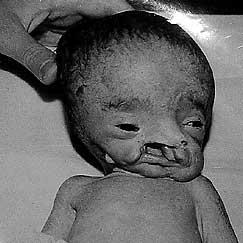
Niños víctimas de mutaciones causadas por el uso militar de uranio empobrecido por las tropas de la OTAN.
____________________________________________________
Una contaminación interna por isótopos de uranio empobrecido se ha visto comprobada entre los ex combatientes británicos, canadienses y estadounidenses de la guerra del Golfo nueve años después de haber estado estos expuestos al polvo radioactivo durante la primera guerra del Golfo. También se observaron isótopos de uranio empobrecido en muestras de autopsias de pulmones, hígado, riñones y huesos provenientes de veteranos canadienses. En muestras de suelo recogidas en Kosovo, se han encontrado centenares de partículas, generalmente de menos de 5 _m, que pesan varios miligramos.
La primera guerra del Golfo dejó en el medio ambiente 350 toneladas de uranio empobrecido y en la atmósfera entre 3 y 6 millones de gramos de aerosoles de uranio empobrecido. Sus consecuencias para la salud humana, conocidas bajo el nombre de síndrome de la guerra del Golfo, consisten la aparición de afecciones complejas multiorgánicas progresivas e invalidantes, dolores musculares, afecciones dolorosas del esqueleto y de las articulaciones, dolores de cabeza, afecciones neurosiquiátricas, cambios bruscos de los estados de ánimo, confusión mental, problemas con la vista, problemas para caminar, pérdida de la memoria, linfoadenopatías, pérdida de la capacidad respiratoria, impotencia y alteraciones morfológicas y funcionales del sistema urinario.
Los conocimientos actuales de las causas son totalmente insuficientes. Después de la Operación Anaconda, realizada en Afganistán en 2002, nuestro equipo examinó a la población en las regiones de Jalalabad, Spin Gar, Tora Bora y Kabul y comprobó que los civiles presentaban síntomas similares a los de la guerra del Golfo. Durante 24 horas se recogieron muestras de orina de 8 sujetos que presentaban síntomas y que fueron seleccionados siguiendo los siguientes parámetros:
1. Los síntomas comenzaron poco después de los bombardeos.
2. Las personas se encontraban en la región bombardeada.
3. Manifestaciones clínicas.
Se recogieron muestras entre un grupo de comprobación compuesto de habitantes que no presentaban síntomas en las regiones no bombardeadas. Todas las muestras fueron examinadas para determinar la concentración y la correlación entre cuatro isótopos U234, U235, U236 et U238. Para ello utilizamos un espectómetro de masa multicolector con fuente de ionización por plasma y acoplamiento inductivo. Los primeros resultados de la provincia de Jalalabad probaron que la eliminación de uranio total en la orina era significativamente más importante entre todas las personas expuestas que entre la población no expuesta. El análisis de las correlaciones isotópicas de uranio reveló la presencia de uranio no empobrecido.
El estudio de las muestras recogidas en 2002 reveló, en los distritos de Tora Bora, Yaka Trot, Lal Mal, Makam Khan Farm, Bibi Mahre, Poli Cherki y el aeropuerto de Kabul, concentraciones de uranio 200 veces más importantes que las del grupo de comprobación [recogidas en zonas no afectadas]. Las tasas de uranio en las muestras de suelo de los lugares bombardeados son dos o tres veces más elevadas que los límites mundiales de concentración de 2 a 3 mg/kg y las concentraciones en el agua son significativamente superiores a las tasas máximas tolerables que establece la OMS. Estas pruebas, cada vez más numerosas, convierten el problema de la prevención y de la respuesta a la contaminación por uranio empobrecido en una necesidad prioritaria.
«Nada protege de esta fuerza fundamental del universo.»
Albert Einstein
La realidad de la guerra termonuclear se resume perfectamente en la afirmación de Albert Einstein que señala que este tipo de energía es suficiente para volar la Tierra [1]. El campo de batalla nuclear no se limita ya a un país o un continente sino que va mucho más allá de las fronteras políticas y geográficas y transforma cada región una gran zona de guerra.
En caso de una guerra nuclear de tipo estratégico que implicara un arsenal de 10 000 megatones, mil millones de personas morirían inmediatamente como consecuencia de las heridas directas combinadas (explosión, calor y radiaciones), otros mil millones de personas sucumbirían por causa de las enfermedades provocadas por la radiación [2] y los sobrevivientes tendrían que vivir en un entorno expuesto a las secuelas radioactivas que tendrían efectos somáticos y genéticos con consecuencias probablemente irreversibles para la biosfera.
La carrera armamentista nuclear
La primera explosión experimental de una bomba atómica, bautizada como Trinity, tuvo lugar el 16 de julio de 1945 en Alamo Gordo, cerca de Los Alamos, en Nuevo México (Estados Unidos). En una millonésima de segundo, la primera bomba atómica produjo un calor de varios millones de grados centígrados al despedir más de 400 isótopos radioactivos y provocar una gran energía de enlace cuya presión era de varios miles de toneladas por centímetro cuadrado. Durante una fracción de segundo, el núcleo de la bomba llegó a estar 11 veces más caliente que la superficie solar.
El tamaño de la bola de fuego alcanzó varios cientos de metros ya que el núcleo de la bomba se mezcló con átomos de oxigeno y de nitrógeno, revelando el núcleo interno brillante de la explosión. En un segundo, la tierra que se había vaporizado se convirtió en un hongo atómico de 3 000 metros de altura. A 150 millas de allí, los viajeros de la Union Pacific Railway pudieron ver la bola de fuego. Los testigos dieron varias interpretaciones del fenómeno. Algunos lo describieron como la caída de un bombardero o la llegada de un meteorito. Testigos que vivían en Gallup, ciudad situada 235 millas al norte del lugar de la explosión, pensaron que estaban viendo la explosión de depósito de municiones del ejército [3]. Veinte días después del ensayo de Trinity, el 6 de agosto de 1945 a las 8h15, tuvo lugar el lanzamiento de la bomba atómica sobre Hiroshima. Esta explotó sobre la ciudad, a 633 metros de altura. La explosión veló el sol, mató a 130 000 personas, dejó inválidas a 80 000 y 90 000 personas más enfermaron a causa de los efectos radioactivos posteriores.
En pocas horas, cayó una lluvia negra, una capa de ceniza blanca cubrió el epicentro causando quemaduras en la piel de las personas. La mayoría de las víctimas primarias murieron por causa de los efectos combinados del calor, de la presión y de una enfermedad aguda provocada por la radiación. Hiroshima fue prácticamente borrada del mapa [4].
Un soldado estadounidense manipula obuses para tanques provistos de cabezas de uranio empobrecido.
____________________________________________________
Dos días más tarde, el 8 de agosto de 1945 a las 11h01, una bomba de plutonio bautizada como Fat Man fue lanzada sobre Nagasaki. Como en Hiroshima, el sol desapareció al levantarse el hongo atómico. La población de la ciudad borrada del mapa murió de las mismas heridas combinadas que en Hiroshima. El hecho puso fin a la Segunda Guerra Mundial, dejando ventajas territoriales para la Unión Soviética. La carrera de los ensayos nucleares arrancó en el otoño de 1948, cuando un equipo de investigaciones sobre armamentos de Jruschov comenzó a desarrollar una bomba rusa. Los ensayos continuaron paralelamente en Estados Unidos y la Unión Soviética. Después de la muerte de Stalin, en 1953, la Unión Soviética hizo estallar, el 12 de agosto, la primera bomba móvil de hidrogeno. Se trataba de su segunda bomba termonuclear. Dándose cuenta de que los soviéticos estaban ganando la carrera en el sector de las armas nucleares, Estados Unidos empezó a acelerar sus programas de ensayos.
En 1955 se hizo evidente que los ensayos perjudicaban irremediablemente la biosfera [5]. Más de 400 isótopos radioactivos liberados por cada ensayo fueron identificados como la causa de la contaminación. Cuarenta de esos isótopos representan un peligro para la salud humana. Cada mil toneladas liberadas generan varios gramos de radioisótopos con propiedades tóxicas para el organismo.
Debido a su larga vida, a su desintegración beta y sus propiedades específicas para los huesos, el estroncio 90 constituye el principal riesgo. Además, los ensayos de armas nucleares han provocado accidentes. En 1958, un B-57 de la fuerza aérea estadounidense dejó caer la primera bomba atómica en los alrededores de Florence, Carolina del Sur. La bomba, que no estaba activada, no explotó no explotó, pero dispersó material radioactivo por todo el país. Ese mismo año, un B-52 dejó caer una bomba atómica de dos megatones en los alrededores de Goldsboro, en Carolina del Norte. La aviación estadounidense registró ulteriormente otros accidentes, específicamente en Tula, en Groenlandia y en Palomares (España). En Palomares, dos bombas de plutonio contaminaron gran parte del territorio y de la costa atlántica.
En 1958, luego de la catástrofe de Cheliabinsk-40, la Unión Soviética suspendió sus ensayos nucleares. Pero rápidamente retomó sus ensayos con bombas de varios megatones en la región ártica de Novaya Zembla y lanzó, el 9 de septiembre de 1961, una bomba de 50 megatones. Mientras tanto, en Estados Unidos se acumulaban los indicios reveladores de una contaminación del medio ambiente, al igual que los de un aumento de la incidencia de casos de cáncer, de leucemia y de otros problemas de salud entre las personas que habían trabajado en el sector nuclear. Junto a los problemas de seguridad radiológica que se planteaban, estos hechos incitaron al desmantelamiento del enorme e incompetente aparato burocrático que era la Atomic Energy Commission. Esta fue substituida, en 1974, por la Energy and Research Administration and Nuclear Regulatory Agency (NRC).
En 1955, Bertrand Russell, Albert Einstein y otros nueve reputados científicos fundaron el Movimiento Pugwash, destinado a vigilar la proliferación y evitar la guerra nuclear. Mediante la organización de encuentros anuales, a partir de 1957, Pugwash comenzó toda una labor que desembocó en la firma de un tratado que prohibía los ensayos de armas atómicas y la producción de nuevos arsenales y vectores nucleares [6].
En 1969, Pugwash contribuyó a la realización de las negociaciones sur la Limitación de las Armas Estratégicas (SALT). Esta iniciativa contó con el apoyo de la campaña que Linus Pauling organizó contra las armas atómicas y la contaminación del medio ambiente. Luego de la crisis de Cuba, la amenaza de un conflicto nuclear incitó a Kennedy y Jruschov a firmar, en 1963, un tratado de prohibición de los ensayos nucleares. Pero los ensayos nucleares subterráneos se mantuvieron, lo cual hizo fracasar el tratado de prohibición total de los ensayos nucleares. El asesinato de Kennedy, la caída de Jruschov y la guerra de Vietnam pusieron fin a la distensión nuclear.
La posibilidad, realista, de que la Unión Soviética tomara la delantera a Estados Unidos en los ensayos y el desarrollo de las armas nucleares condujo finalmente, en 1972, al tratado SALT I, que prohibía parcialmente el despliegue de sistemas de defensa antimisiles. La Unión Soviética disponía ya de un sistema de ese tipo alrededor de Moscú y Estados Unidos tenía uno en Dakota del Norte. Ocho años más tarde, la administración Reagan emprendió las negociaciones SALT II, que desembocaron en una reducción de armas (START), pero no condujeron a una limitación.
El presidente del Comité Ejecutivo de la Conferencia Pugwash, Bernard Field, calificó aquella situación de «repetitious stupidity of this futile charade.» [7] Paul Warnke, principal negociador del tratado SALT II, declaró: «La triste historia del control de armamentos puede convertirse en el último capítulo de la historia de la humanidad.» [8] Desde la firma del Tratado de Prohibición Parcial de los Ensayos Nucleares, en 1963, unos 50 ensayos tuvieron lugar cada año, el 55% por parte de Estados Unidos, el 30% por parte de Rusia y el resto, un 15%, en Francia, por parte de Francia, Inglaterra, China, la India y Pakistán.
Como la tecnología de las comunicaciones por satélite se desarrolla muy rápidamente, la proliferación de las armas nucleares implica que más del 90% de la superficie del planeta constituye un blanco potencial. El número de armas atómicas no representa ya una garantía para la seguridad de las naciones. Incluso después del derrumbe de la Unión Soviética, las armas nucleares siguen siendo un problema esencial de seguridad, exceptuando las iniciativas de colaboración entre Washington y Moscú. Los escenarios políticos internacionales comprenden nuevos riesgos de conflictos nucleares. Entre esos riesgos figuran la retirada a corto plazo de Estados Unidos del Tratado sobre los Sistemas de Defensa antimisiles, la nueva doctrina del «primer golpe» y la reciente aparición de nuevos países dotados de armas nucleares [9]. La amenaza nuclear subsiste debido a la proliferación nuclear, con su lista, cada día más larga, de escenarios que incluyen el uso de la fuerza, de actividades terroristas, de catástrofes nucleares y ecológicas y de doctrinas de la «destrucción mutua asegurada».
Terrorismo nuclear y radiológico
Después del 11 de septiembre de 2001, la posibilidad de ataques terroristas nucleares y radiológicos suscitó más atención. Antes de la catástrofe de Nueva York no se concedía mucha atención a ese tipo de posibilidades. El entrenamiento en materia de cuidados a las victimas de posibles catástrofes nucleares o radiológicas era inexistente o se efectuaba sólo muy esporádicamente, incluso en las instituciones gubernamentales encargadas de mantener cierta capacidad de reacción.
El mejoramiento de la preparación de los países con vista a enfrentar los efectos agudos y crónicos de las radiaciones, la contaminación del medio ambiente, el impacto psicológico y social y las consecuencias financieras de un ataque terrorista nuclear aparecen de nuevo como una prioridad de las naciones industrializadas [10]. Algunos se pronuncian por la doctrina de Clausewitz según la cual es conveniente encargar a las fuerzas armadas de prevenir los ataques de enemigos externos o de rechazarlos y atacar a otros países si se estima que [tal acción] puede ser en interés internacional [11].
Los daños crónicos provocados por las radiaciones han sido reevaluados a la luz de las posibles consecuencias del terrorismo nuclear para multitudes de víctimas. La preparación para accidentes y ataques nucleares y radiológicos debe contemplar también las consecuencias sicológicas debido al hecho, ya comprobado, de que, ante una situación de terrorismo nuclear, por cada víctima directa habría 500 personas que podrían sufrir trastornos sicológicos y sicosomáticos difíciles de diferenciar de las victimas realmente contaminadas [12].
Aunque se han analizado intervenciones con uso de medicamentos como protección contra las radiaciones, los profesionales de la salud deberían estar concientes de los lamentables fracasos anteriores en lo tocante a los medios de protección contra las radiaciones. Actualmente se estudia el hecho de que las células vasculares y parénquimas se regeneran, en vez de morir bajo los efectos de la radiación, con vista a desarrollar mecanismos para modificar la respuesta del organismo, paralelamente a otras estrategias terapéuticas como los corticoesteroides, los inhibidores de la enzima de conversión, la pentoxifilina y la dismutasia superoxídea [13].
En el manejo de los daños nucleares y patológicos, se ha pasado de las consecuencias imposibles de manejar de un conflicto nuclear estratégico a medios que puedan permitir hacer frente a un gran número de víctimas. Esta respuesta debe partir de esfuerzos interdisciplinarios. Resulta necesaria la realización inmediata de grandes esfuerzos tendientes a desarrollar conceptos de manejo clínico de las víctimas de las radiaciones [14]. Simultáneamente, los investigadores deben esforzándose por comprender y manejar la contaminación por radionucleidos, los efectos radiotóxicos, la destrucción de los enlaces químicos, los radicales libres, los daños al ADN celular y a las enzimas [15].
Los esfuerzos multidisciplinarios deben incluir la planificación, la clasificación de los heridos, la descontaminación, la disociación, la terapia de quelatación y el manejo tradicional de los síntomas de los pacientes.
Debido a las limitaciones financieras y la falta casi total de formación, de conocimientos técnicos, un posible ataque terrorista constituye un serio desafío [16]. No se han sacado aún, de la primera guerra del Golfo y del conflicto de los Balcanes, las lecciones apropiadas para estar preparados para atender a las víctimas de radiaciones [17].
Un ataque terrorista exige una respuesta eficaz por parte del sistema sanitario. Pero la mayoría de los países que podrían ser blancos de un ataque terrorista no disponen en lo más mínimo de la logística necesaria, sobre todo en las grandes ciudades donde la asignación de los medios financieros exigiría una reestructuración de las prioridades para poder responder a las consecuencias para la sociedad. Ante un caso de terrorismo nuclear resulta particularmente importante estar conciente de los terroristas podrían recurrir al uso de actínidos, utilizando sobre todo el plutonio, agente de contaminación masiva.
Las tropas de la OTAN disponen de municiones de uranio empobrecido, y las utilizan, en todos los teatros de operaciones.
____________________________________________________
El plutonio está considerado como la sustancia más peligrosa que exista para el ser humano [18]. Si lo dispersamos en forma de polvo radioactivo o si llega a las redes de agua potable, unos pocos gramos bastan para contaminar una gran ciudad. El plutonio se ha vendido ilegalmente en mercados clandestinos, en particular en la ex Unión Soviética. Gracias a un tráfico ilegal, ha llegado a diversas partes del mundo. La dispersión de plutonio está considerada como la peor modalidad de terrorismo [19]. De presentarse este caso, los profesionales de la salud tendrían que trabajar sobre todo en el aspecto preventivo más que en el manejo terapéutico de grandes cantidades de víctimas del terrorismo nuclear.
Recientemente, médicos de todo el mundo se sumaron a una agrupación de más de mil organizaciones para cooperar, apoyar la eliminación de las armas nucleares y reducir los riesgos de las espantosas consecuencias del terrorismo nuclear y radiológico [20].
Guerra radiológica
Fue en mayo de 1991, en el Golfo Pérsico, que se recurrió por primera vez al uso de armas radiológicas. Estas inauguraron una nueva modalidad de guerra CBRN (química, biológica, radiológica y nuclear). El uso de armas que afectan tanto a soldados como a civiles no es nuevo. Al final de la Segunda Guerra Mundial, Estados Unidos temía seriamente que los japoneses lanzaran sobre territorio estadounidense miles de globos llenos de uranio para contaminar sus grandes ciudades [21].
Durante la primera guerra del Golfo, las municiones de uranio empobrecido dispersaron en la atmósfera millones de gramos de polvo radioactivo [22]. Sus consecuencias para la salud y el medio ambiente siguen siendo controvertidas y la discusión va mucho más allá del marco de la comunidad científica. Sin embargo, numerosos estudios recientes han confirmado dos siglos de pruebas científicas de la toxicidad somática t genética del uranio [23] [24] [25].
El costo de la descontaminación de los lugares afectados por armas de uranio utilizadas por ejércitos o por terroristas sigue siendo un grave tema de inquietud. La experiencia sueco-canadiense de descontaminación radiológica recientemente efectuada en Urnea, Suecia, mostró que dos métodos corrientes de descontaminación de blindados ligeros contaminadas por fuera con Na eran en realidad ineficaces: el vapor de agua a altas presiones y los chorros de agua a altas presiones [26].
Esto demuestra claramente la necesidad de mejorar la capacidad de reacción de las estructuras sanitarias públicas ante un caso de guerra radiológica o de ataque terrorista [27]. La actual ausencia de estrategia de conjunto para enfrentar una amenaza de uso terrorista de sistemas de dispersión de materias radioactivas (RDD) (o «bombas sucias») subraya la necesidad de una mejor coordinación de la capacidad de reacción ante los peligros químicos, biológicos, radiológicos y nucleares en la actual situación de combinación de armas clásicas y armas inéditas [28].
En el caso muy particular de un ataque radiológico, el marco del enfrentamiento de la guerra y del terrorismo radiológicos se extiende no sólo más allá del sector de la salud pública sino también del de la reserva de las fuerzas armadas [29] [30].
La defensa médica contra la guerra radiológica sigue siendo uno de los aspectos que más descuidados están en la enseñanza médica actual [31]. El terrorismo radiológico y nuclear constituye la mayor amenaza de la sociedad moderna ya que la proliferación nuclear ha permitido que las organizaciones subversivas puedan conseguir fácilmente material nuclear [32].
Sólo durante el año 2000, Estados Unidos gastó 10 000 millones de dólares en la lucha contra la utilización terrorista de armas de destrucción masiva, y los gastos aumentaron considerablemente después del 11 de septiembre de 2001. Estudios actuales revelan la vulnerabilidad de las sociedades occidentales ante el terrorismo nuclear y subrayan que organizaciones terroristas poseedoras de armas de destrucción masiva podrían provocar más destrucción mediante el uso de los dispositivos nucleares y radiológicos que con cualquier otro tipo de armas.
La capacidad de Estados Unidos para enfrentar un ataque radiológico o nuclear depende supuestamente de cuatro sectores de acción: mejorar el trabajo de inteligencia sobre las organizaciones terroristas, mejorar la seguridad de las instalaciones nucleares en la ex Unión Soviética, la posibilidad de neutralizar los efectos nucleares y radiológicos y mejorar la capacidad de reacción ante las organizaciones clandestinas que ya poseen armas nucleares y radiológicas [33].
El riesgo de un ataque nuclear y radiológico contra Estados Unidos se acentúa debido a la tecnología, al acceso a las materias nucleares y radiológicas, a la inestabilidad económica de Rusia y el descontento que suscita en numerosos países la política exterior estadounidense. Medidas de seguridad inadecuadas en la antigua Unión Soviética, combinadas con una creciente determinación de los terroristas y el carácter cada vez más mortífero de sus ataques refuerzan considerablemente la probabilidad del uso de las RDD en un futuro próximo [34].
La cuestión de los efectos sobre el medio ambiente y la salud debe llevar a abordar el problema de la descontaminación y la asignación de presupuestos tendientes a salvar vidas, a reducir los riesgos sanitarios y a preservar la cultura, la biodiversidad y la integridad de los lugares contaminados [35].
Los esfuerzos en esos sectores han dejado que desear en el pasado. Se descuidó sobre todo la entrega de indemnizaciones justas a las víctimas de los efectos radioactivos en Utah y Nevada. Una búsqueda ineficaz y un sistema insuficiente de indemnización de las víctimas de cánceres provocados por la exposición a las radiaciones y la persistente controversia sobre la interpretación que hace el gobierno de las radiaciones de bajo nivel provocaron el descontento de las poblaciones contaminadas durante los ensayos nucleares [36].
Un reciente informe británico resulta igualmente sospechoso en cuanto al análisis que hace de la mortalidad y de la incidencia de cánceres entre quienes participaron en los ensayos atmosféricos de armas nucleares y en los programas experimentales. El informe contiene una conclusión provocadora: la mortalidad general entre los sobrevivientes de los ensayos nucleares británicos sería inferior a la de la población en general [37] .
De la comparecencia de Galileo ante la Inquisición a las investigaciones sobre el uranio
Actualmente, la libertad de la ciencia independiente no es nada diferente de lo que fue en el pasado. Lo que están viviendo los científicos de hoy recuerda el juicio de Galileo ante la Inquisición, en 1610. La controversia sobre los resultados de los estudios del Dr. Ernest Sternglass sobre los índices de mortalidad infantil y juvenil en el Estado de Nueva York influenciados por los ensayos nucleares y las consecuencias radioactivas acabó con la carrera de este, como universitario y como científico.
Cuando su artículo clásico [38] sobre la muerte de niños como consecuencia de las radiaciones apareció en 1969 en el Bulletin of Atomic Scientists, el redactor jefe de la publicación le confió que Washington lo había presionado para que no lo publicara. El eminente físico Freeman Dyson escribió, en una carta enviada como lector a la misma revista: «Si las cifras que presenta Sternglass son correctas, y creo que lo son, se trata de un buen argumento contra la defensa antimisiles.» Sternglass consideraba que la muerte que la muerte de niños se debía al estroncio de la lluvia radioactiva. Cuando su estimado de cerca de 400 000 muertos fue presentado al Dr. John Gofman, director médico del Lawrence Livermore National Laboratory, éste reevaluó su informe.
Luego de corregir ciertas cifras, concluyó que incluso utilizando un modelo estocástico, las directivas ligadas al riesgo por unidad de radiación eran 20 veces demasiado elevadas para resultar confiables. Concluía también que el riesgo era más importante en casos de dosis bajas de radiaciones que en casos de dosis elevadas. Agregaba que las muertes por cáncer provocados por los ensayos nucleares y las lluvias radioactivas eran más de 30 000 al año. Su informe fue entregado al Committee on Underground Nuclear Testing presidido por el senador E. Muskie. Este lo transmitió al presidente del Joint Committee on Atomic Energy, el senador C. Holifield. Este último citó a Gofman en Washington y lo amenazó abiertamente: «Los desgraciamos a ellos y lo desgraciaremos a usted.» En 1973, víctima de su propia integridad, Gofman perdió su empleo en su laboratorio. La Atomic Energy Commission fue disuelta en 1974 [39].
Niños víctimas del uranio empobrecido.
_________________________________________________
Reexamen de la toxicidad del uranio
El riesgo fatal que presentan los isótopos de uranio para el medio ambiente y la salud humano fue especificado durante dos siglos de investigaciones. Sin embargo, los especialistas de la salud han recibido una formación incorrecta en lo tocante a la radiotoxicidad de base y la toxicología química de los isótopos de uranio [40]. Los análisis recientes de los efectos potenciales de las RDD sobre la salud se basan esencialmente en los datos de los sobrevivientes japoneses de los bombardeos atómicos, los ensayos nucleares y las investigaciones de laboratorio.
En la literatura especializada, sobre todo la que tiene que ver con las investigaciones de los últimos cinco años, abundan los balances de trabajos interdisciplinarios sobre los efectos de los actínidos y los isótopos de uranio. La confirmación de los casos de cáncer de la tiroides [41], de carcinoma hepatocelular [42], de leucemia [43] y de los riesgos que representa la exposición aguda o crónica al uranio [44] reveló la importancia de las consecuencias somáticas y genéticas de la contaminación provocada por los isótopos de uranio. Su correlación con los ensayos atmosféricos de armas nucleares fue confirmada nuevamente en informes recientes sobre los índices de actínidos en los mamíferos marinos del Pacífico norte, netamente asociados a años de ensayos nucleares y de lluvias radioactivas [45].
El reexamen de los estudios sobre los sobrevivientes de Hiroshima y Nagasaki muestra no sólo el impacto físico sino también el efecto psicológico que ejercen las armas atómicas en las personas presentes en dichas ciudades en el momento de la explosión: trastornos siquiátricas, ansiedad, somatización de síntomas [46]. Este reexamen indica claramente que existen efectos sicológicos a largo plazo que deben ser tomados en consideración durante la preparación para futuros conflictos.
Otro informe reciente sobre los sobrevivientes de Nagasaki indica que los efectos de las radiaciones en los sobrevivientes deben representar un aspecto esencial del manejo de los cuidados médicos durante los futuros conflictos [47]. Los datos actuales sobre los ensayos nucleares muestran que la mortalidad infantil, los nacimientos prematuros y las muertes fetales están ligados, en Estados Unidos, a la exposición a las radiaciones [48].
Las consecuencias de la contaminación radioactiva sobre la salud y el medio ambiente han sido reevaluadas en numerosos lugares de ensayos nucleares, como el de Krasnoyarsk, en Siberia [49], en Kazajstán [50], en los montes Altai [51], el de Semipalatinsk, en Kazajstán [52], el del Techa, en el Ural [53], entre el personal del complejo nuclear de Mayak [54], en la República de Sakha (Yakutia) [55], en la isla de Amchitka, en Alaska [56], en Finlandia y en Noruega [57].
Estas informaciones permiten evaluar correctamente los riesgos cuando se trata de prepararse para enfrentar una crisis sanitaria extrema provocada por el uso de armas nucleares y radiológicas en caso de guerra o de ataque terrorista [58]. El conocimiento actual de la dispersión de los radionucleidos [59] liberados en la biosfera, en el mundo entero, sobrepasa ampliamente el marco de la investigación experimental y de los cuidados a las víctimas de las radiaciones. Esta tiene implicaciones sobre el futuro del planeta [60] .
Investigaciones actuales sobre las consecuencias sanitarias de las armas de uranio
La más importante contaminación por radionucleidos tuvo lugar en 1991, durante la primera guerra del Golfo. El uranio empobrecido utilizado en las armas antitanques contaminó el territorio de Irak exponiendo de forma crónica, a la población y a los soldados, al polvo, a los vapores y a los aerosoles del uranio empobrecido. Unos pocos soldados de las tropas de la coalición fueron heridos por pedazos de obuses de uranio empobrecido.
La aleación de las armas de uranio empobrecido contiene un 99,8% de U238 que emite el 60% de radiaciones alfa, beta y gamma del uranio natural. El uranio empobrecido es un metal pesado, 1,6 veces más denso que el plomo. Es organótropo, o sea que se fija sobre los órganos, como los tejidos esqueléticos y se mantiene allí por largo tiempo. Al disolverse poco a poco, los isótopos de uranio son eliminados. Estos han sido detectados en la orina de ex combatientes de la guerra del Golfo, 10 años después de que estos los absorbieran por inhalación o mediante heridas provocadas por pedazos de obuses.
Estudios sobre su repartición en los tejidos demuestran la acumulación de uranio empobrecido en los huesos, los riñones, el sistema reproductor, el cerebro y los pulmones, lo cual provoca efectos genotóxicos, mutaciones y efectos cancerígenos, así como alteraciones de la reproducción y trastornos teratógenos [61].
Se ha detectado una contaminación interna provocada por los isótopos de uranio empobrecido en ex combatientes británicos, canadienses y estadounidenses de la primera guerra del Golfo 9 años después de la exposición de estos al polvo radioactivo. También se han identificado isótopos de uranio empobrecido en los pulmones, el hígado, los riñones y los huesos de un ex combatiente canadiense durante su autopsia. Estos órganos contenían fuertes concentraciones de uranio y los coeficientes isotópicos revelaban la presencia de uranio empobrecido. Estudios efectuados en 1992, año de la primera guerra del Golfo, a partir de conteos de cuerpo entero sugieren la presencia de uranio en el organismo y la orina de ex combatientes contaminados [62].
Dificultades logísticas así como la controversia sobre el uranio empobrecido retrasaron la realización de estudios más profundos hasta 1998, año en que los veteranos de la primera guerra del Golfo fueron sometidos a un análisis por activación neutrónica. Aunque este método está destinado a la detección de pequeñas cantidades de uranio, su uso precoz permitió comprobar una contaminación importante. Estos estudios fueron presentados durante el congreso internacional de la Radiation Research Society , celebrado en Dublín, en 1998.
Las investigaciones experimentales prosiguieron gracias a la utilización del método más moderno, la espectografía de masa, en la Memorial University of Newfoundland (St John’s, en Terranova, Canadá) y, posteriormente, en el British Geological Survey (Nottingham, Inglaterra). Ambas series de estudios confirmaron la presencia de concentraciones y correlaciones de isótopos de uranio empobrecido en el 67% de las muestras. La primera presentación, basada en los datos de la espectrometría de masa, tuvo lugar durante el Congreso Europeo de Medicina Nuclear celebrado en París, en el año 2000.
Las investigaciones han seguido avanzando, desde que se detectaron y se midieron cantidades de uranio empobrecido en el organismo de los ex combatientes hasta la actual evaluación de los efectos clínicos de la contaminación por uranio entre los veteranos de la primera guerra del Golfo, civiles iraquíes, soldados y civiles de los Balcanes, civiles afganos y, más recientemente, entre las poblaciones de la franja de Gaza y de Cisjordania.
El uranio empobrecido, desecho poco radioactivo del enriquecimiento isotópico del uranio natural, ha sido identificado sin lugar a dudas como un elemento contaminante presente en las zonas de conflicto militar ya mencionadas. Su papel etiológico en la aparición del síndrome de la guerra del Golfo ha sido objeto de constantes controversias desde esa guerra. Las pruebas, bien documentadas, de la toxicidad química y radiológica de los isótopos de uranio han sido objeto recientemente de un gran número de investigaciones y de informes científicos sobre sus efectos organotóxicos capaces de provocar mutaciones y sus efectos teratógenos y cancerígenos [63].
Estudios recientes de biodistribución efectuados en animales de laboratorio en cuyos cuerpos se implantaron pequeños fragmentos de uranio empobrecido confirmaron que los resultados de estudios de biodistribución anteriores según los cuales los riñones y los huesos sirven de blanco a los isótopos de uranio, al igual que otros punto de los sistemas linfático, respiratorio, reproductor y del sistema nervioso central [64].
Hace casi dos siglos que son conocidos los efectos tóxicos del uranio en materia de quimiotoxicidad renal, efectos que han sido confirmados mediante estudios recientes efectuados sobre células renales in vitro. Los estudios que tienen que ver con los efectos del uranio empobrecido sobre el sistema nervioso central han confirmado su retención en varias zonas del hipocampo. También se han observado modificaciones electrofisiológicas del sistema nervioso de las ratas a las que se implantaron pequeños fragmentos de uranio empobrecido [65].
La posibilidad de efectos capaces de provocar mutaciones debido a la contaminación interna con uranio empobrecido ha sido sugerida recientemente por la correlación temporal entre el uranio implantado y la expresión oncógena de los tejidos [66], así como por una inestabilidad genómica [67]. La transformación neoplástica de los osteoblastos humanos en un cultivo celular que contiene uranio empobrecido confirma el riesgo de cáncer provocado por el uranio empobrecido [68].
Eso corresponde a lo que ya se sabe de los riesgos cancerígenos que implica el uranio empobrecido para las células endobronquiales, al igual que en las evaluaciones cuantitativas recientes –determinadas por la carga pulmonar en las inhalaciones de aerosoles [69]– de los riesgos cancerígenos que han sufrido los pulmones de los ex combatientes de la primera guerra del Golfo. El riesgo se había evaluado mediante el método de Battelle de simulación de liquido pulmonar intersticial y el análisis de muestras de orina recogidas durante 24 horas de un veterano que contenía 0,150 mg de uranio empobrecido 9 años después de haberse visto expuesto por inhalación [70]. Resultó que la carga pulmonar correspondía a 1,54 mg de uranio empobrecido en el momento de la exposición, con una dosis de radiación alfa de 4,4 milisieverts (mSv) durante el primer año y de 2,2 mSv 10 años después de la exposición.
Estos valores sobrepasan las dosis máximas tolerables de inhalación de uranio empobrecido y justifican nuevas investigaciones sobre la posibilidad de modificaciones malignas de los pulmones.
Estos datos recogidos en seres humanos son muy importantes cuando se analizan a la luz de las pruebas recientes de los efectos mutágenos de las partículas alfa sobre las células madre y las inestabilidades cromosómicas de las células de la médula ósea que causan las radiaciones alfa [71] [72].
La inestabilidad cromosómica provocada por las partículas alfa explica claramente los efectos mutágenos observados en los veteranos británicos de la guerra del Golfo en cuyo organismo se detectó la presencia de uranio empobrecido, como lo mostró recientemente el estudio de los linfocitos periféricos presentado en la universidad de Bremen [73]. Este resultado corresponde al de estudios anteriores sobre las inestabilidades cromosomáticas provocadas por una pequeña dosis de partículas alfa comparadas con los efectos idénticos de las radiaciones de fotones [74].
Los estudios sobre los efectos de las partículas alfa y los recientes progresos de la irradiación por microhaces de células provenientes de mamíferos permiten de evaluar con precisión el recorrido de una partícula única a través del núcleo celular y de medir su efecto cancerígeno [75].
Aunque los mecanismos de mutagénesis y de los efectos cancerígenos de las partículas alfa inhaladas siguen siendo oscuros, se ha observado que pequeñas dosis de partículas alfa pueden provocar modificaciones de las cromátidas hermanas en células humanas normales [76].
Las implicaciones prácticas de esos estudios son importantes, teniendo en cuenta el hecho que más del 10% de todas las muertes por cáncer en Estados Unidos se deben a un depósito pulmonar de partículas alfa [77]. También resultan igualmente importantes debido a la inestabilidad genómica de las células bronquiales humana que provocan las partículas alfa, lo cual está bien documentado [78]. Las células pulmonares humanas han resultado ser más sensibles a los efectos nocivos de las partículas alfa que las de la mayoría de los animales de laboratorio. La evaluación cuantitativa del radiológico que representa la inhalación de aerosoles de uranio empobrecido debe tener en cuenta a la vez los mecanismos de depósito de partículas y su eliminación por translocación en los ganglios linfáticos pulmonares y tráqueobronquiales a través de la barrera alveolo-capilar o por expectoración y translocación en el sistema rinofaríngeo o gastrointestinal.
El modelo de eliminación de las partículas (ICRP-66) permite la más moderna evaluación del depósito de partículas de uranio y de su eliminación así como la evaluación de los aerosoles de uranio inhalados y su dosimetría interna. El estudio sitúa la inseguridad máxima en un tamaño de partícula de 0,5-0,6 _m [79].
Los pulmones siguen siendo la principal puerta de entrada de los isótopos de uranio al organismo, mientras que el blanco final son los tejidos esqueléticos. Estudios muy recientes sobre la exposición crónica al uranio en su estado mineral natural aportan argumentos de carácter probatorio a favor de los riesgos de tumores pulmonares, tanto benignos como malignos [80]. Estudios actuales indican igualmente que el uranio empobrecido puede causar daños oxidativos al ADN al catalizar el peróxido de hidrógeno y provocar reacciones de ácido ascórbico [81].
La muerte celular provocada por las radiaciones, las alteraciones cromosómicas, las transformaciones celulares, las mutaciones y la carcinogénesis son esencialmente consecuencia de las radiaciones depositadas en el núcleo celular. Las radiaciones de bajo nivel podrían provocar una inestabilidad genómica sin efectos evidentes de movimiento de dosis, lo cual imposibilita una extrapolación a los efectos de dosis elevadas y acentúa la importancia de los efectos de proximidad en las radiaciones de partículas alfa de bajo nivel [82] [83]. Intercambios de segmentos de cromosomas homólogos en dosis variables pueden provocar modificaciones del núcleo que se traducen en mutaciones génicas interactuando con el citoplasma celular. Estos efectos nocivos contradicen la idea según la cual pequeñas dosis serían incapaces de provocar alteraciones génicas.
Tous les calibres de munitions à l’uranium appauvri sont disponibles et couramment utilisés par les forces de l’OTAN sur les théâtres d’opération
Síndromes de las guerras del Golfo y de los Balcanes
Durante la primera guerra del Golfo, por lo menos 350 toneladas métricas de uranio empobrecido se depositaron en el medio ambiente y entre 3 y 6 millones de gramos de aerosoles de uranio empobrecido fueron liberados en la atmósfera. El resultado, que fue la aparición del síndrome de la guerra de Golfo, es un trastorno multiorgánico invalidante de tipo complejo. Al principió, se creyó que era provocado por la inhalación de arena del desierto (enfermedad de Al-Eskan). Desde aquel entonces, ya ha sido objeto de diferentes descripciones y denominaciones, cuyo número parece ser inversamente proporcional a los conocimientos reales que tenemos de dicha enfermedad.
Los síntomas de esta enfermedad progresiva son tan numerosos como sus denominaciones: fatiga invalidante, dolores músculo-esqueléticos y articulares, dolores de cabeza, trastornos neurosiquiátricos, cambios bruscos del estado de ánimo, confusión mental, trastornos de la visión, trastornos en la locomoción, pérdida de la memoria, linfoadenopatías, deficiencia respiratoria, impotencia, alteraciones morfológicas y funcionales del sistema urinario. Este síndrome fue primeramente subestimado y, posteriormente, fue reconocido como un síndrome progresivo. Tratado a veces como una enfermedad imaginaria, ha sido calificado sucesivamente de variante crónica del síndrome de fatiga crónica y de stress post-traumático, para ser finalmente reconocido como una entidad diferente, en algunos países no siendo así en otros.
Se ha tratado de evitar la realización de investigaciones objetivas en materia de etiología y de patogenia sobre el síndrome de la guerra del Golfo retrasando los estudios clínicos, orientándolos mal e incluso oponiéndose a su realización, lo cual ha tenido efectos nefastos en las carreras de ciertos científicos cuyos sus estudios clínicos no respondían a los intereses industriales o políticos. Nuestra actual comprensión de su etiología está lejos de ser satisfactoria. Algunos autores suponen que las causas incluyen a las mareas negras y los incendios de pozos de petróleo, otros acusan a las vacunas preventivas y un tercer grupo se encaminan hacia agentes biológicos o químicos, así como hacia modificaciones multifactoriales y no específicas del sistema inmunológico y la exposición a los aerosoles de uranio empobrecido [84].
La falta de coordinación de los esfuerzos de investigaciones interdisciplinarias hace que ese síndrome complejo, provisionalmente llamado «síndrome de los Balcanes» esté entrando en su segunda década de confusión. La cuestión de los criterios que permiten clasificarlo sigue sin ser resuelta [85]. El mejor ejemplo de la diversidad de clasificaciones es la diversidad de sus denominaciones. El análisis factorial de Haley llega a 6 categorías predominantes que comprenden 3 síndromes menores [86].
Otros intentos de clasificación comprenden denominaciones tales como, entre otras muchas, síndrome neuro-inmunitario, síndrome mucocutáneo-intestinal-reumatismal del desierto, síndrome de stress postraumático, etc. [87]. Algunas de las supuestas causas, como las mareas negras, los incendios de pozos de petróleo y el polvo de arena que podrían corresponder a la primera guerra del Golfo, no pueden ser consideradas como factores etiológicos en el conflicto de los Balcanes.
Sin embargo, las armas antitanque sí fueron utilizadas en ambos conflictos. Las pruebas, cada vez más numerosas en la literatura reciente, de una contaminación interna con uranio empobrecido entre los veteranos de la primera guerra del Golfo contradicen en ambos casos continuos intentos de minimizar su existencia. La eliminación de isótopos de uranio empobrecido entre los soldados contaminados y enfermos se mantiene más de 10 años después de la exposición, en el caso de la guerra del Golfo, y más de 7 años después del conflicto de los Balcanes. La mayoría de los otros factores sugeridos deberían ser reexaminados en el marco de un estimado de la semi-vida biológica del uranio empobrecido y de los posibles impactos sanitarios progresivos sobre el organismo [88].
Estos factores comprenden sobre todo agentes químicos de baja intensidad, los incendios de pozos de petróleo, la inmunización, el botulismo, las aflaxtoxinas y los micoplasmas. La larga media-vida física y biológica, la desintegración de las partículas alfa y la prueba bien comprobada de la toxicidad radiológica somática y genética hacen suponer que el uranio empobrecido desempeña un papel importante en génesis de los síndromes de la guerra del Golfo y de los Balcanes.
Resulta deplorable la ausencia flagrante de investigaciones serias y exhaustivas sobre la correlación entre estos síndromes y la contaminación por uranio empobrecido. La mayoría de los estudios que sugieren la ausencia de efectos somáticos del uranio empobrecido en las zonas de conflicto de Bosnia Herzegovina [89] no muestran índices reales de isótopos de uranio en muestras provenientes del medio ambiente o de seres humanos. Sus conclusiones no pueden por tanto ser evaluadas de manera objetiva al no existir una cuantificación de la concentración y de la correlación de isótopos de uranio.
Al mismo tiempo, no existe explicación creíble para el fuerte aumento de los índices de cáncer entre los veteranos de la primera guerra del Golfo [90]. Y no existen programas de investigación objetivos e independientes sobre estas interrogantes, exceptuando las investigaciones del Uranium Medical Research Center (UMRC). El UMRC es la única institución que ha efectuado continuamente investigaciones sobre la contaminación interna por uranio empobrecido, investigaciones que siempre ha comunicado son espíritu científico y profesional. Este centro ha recurrido a los métodos ultramodernos de ionización térmica y de espectografía de masa plasma. Estos métodos han permitido identificar del 0,2 al 0,33% de U235 entre veteranos de la primera guerra del Golfo, lo cual indica una concentración de uranio en la orina de 150 ng/l en el momento de la exposición, mientras que la población no expuesta del Golfo registraba índices situados entre el 0,7 y el 1,0% de U235, lo cual indica una concentración de uranio en la orina de 14 ng/l solamente 70.
Estudios realizados en Afganistán
Aunque los estudios del UMRC sobre el análisis de la orina de los ex combatientes de la primera guerra del Golfo hayan sido efectuados varios años después de la exposición, las investigaciones más recientes basadas en el examen de muestras biológicas y medio ambientales han coincidido con la Operación Libertad Inmutable (OEF) realizada en Afganistán desde 2001.
Este país representaba una posibilidad de llevar a cabo un estudio en un momento cercano al del conflicto. La operación Anaconda terminó en el preciso momento en que el primer equipo del UMRC entraba en el este de Afganistán (fig. 1). Este tuvo acceso a las instalaciones estacionarias ya que el equipamiento militar móvil no había sido desplazado ni llevado a lugar seguro.
Los estudios del UMRC sobre la población de las zonas de Jalalabad, Spin Gar, Tora Bora y el aeropuerto de Kabul identificaron a civiles que presentaban los mismos síntomas multiorgánicos non específicos observados durante la primera guerra del Golfo y la de los Balcanes: debilitamiento físico, dolores de cabeza, dolores musculares y óseos, trastornos respiratorios, tos seca y persistente, dolores toráxicos, trastornos gastrointestinales, síntomas neurológicos, perdida de la memoria, ansiedad y depresión. Muestras de orina de 24 horas de sujetos sintomáticos y de sujetos asintomáticos fueron recogidas siguiendo los siguientes criterios:
1) Aparición de síntomas coincidente con los bombardeos,
2) Sujetos presentes en la zona de bombardeos;
3) Manifestaciones clínicas.
Los sujetos miembros del grupo de comprobación fueron escogidos entre los residentes asintomáticos de zonas bombardeadas. Un estimado de la contaminación medioambiental había sido efectuado gracias a un análisis de muestras de suelo, de polvo [91], de escombros y de agua potable [92] según criterios establecidos para la evaluación de la dispersión, de los peligros de actínidos y la recolección de muestras del medio ambiente después de los impactos (fig. 2 et 3).
Todos los sujetos, incluyendo a los del grupo de comprobación, fueron informados en las lenguas locales, dari y el pashto, sobre el protocolo y la recogida de muestras y firmaron una planilla de consentimiento. Todas las muestras fueron objeto de un análisis de la concentración y de la correlación de cuatro isótopos de uranio: U234, U235, U236 Y U238 mediante un espectómetro multicolector de masa con fuente de ionización por plasma con cuplaje inductivo, en los laboratorios del British Geological Survey de Nottingham (Inglaterra).
Los primeros resultados sobre la provincia de Nangarhar mostraron un significativo aumento de eliminación urinaria de uranio en todos los sujetos, en una proporción media superior en más de 20 veces a la de las personas no expuestas. El análisis de las correlaciones isotópicas reveló la presencia de uranio empobrecido [93]. Análisis de muestras realizados durante un segundo viaje científico, en 2002, revelaron concentraciones de uranio hasta 200 veces más elevadas que entre los miembros del grupo de comprobación. Esos índices elevados de eliminación de uranio total fueron comprobados en los distritos de Tora Bora, de Yaka Toot, de Lal Mal, de Makam Khan Farm, de Arda Farm, de Bibi Mahro, de Poli Cherki y en el aeropuerto de Kabul.
Los dos viajes permitieron descubrir idénticas presencias de uranio no empobrecido en todas las zonas estudiadas del este de Afganistán (tablas 2 y 3, figura 4). Las índices de uranio registrados en las muestras de suelo recogidas en lugares bombardeados durante la Operación Libertad Inmutable eran de 2 a 3 veces más elevados que los índices de concentración de 2-3 mg/kg observados en el mundo. Las concentraciones en el agua eran significativamente más elevadas que los índices máximos que tolera la OMS (cf. Nuestros documentos no publicados). Las investigaciones del UMRC abarcan el centro, el oeste y el norte de Afganistán. Además, de la continuación de los estudios sobre los análisis de orina para medir los isótopos de uranio se ha iniciado una colaboración interdisciplinaria dedicada al examen clínico profundo de las funciones renales y pulmonares, así como estudios citogénicos de las aberraciones cromosómicas en la sangre periférica de los sujetos contaminados y estudios con microscopio electrónico y nanopatológicos de muestras de tejidos provenientes de biopsias y de autopsias.
Se mantendrán estudios longitudinales de ex combatientes de la primera guerra del Golfo y de la población del este de Afganistán, al igual que la realización de investigaciones sobre las enfermedades no explicadas aún entre los veteranos de la segunda guerra del Golfo. Estudios clínicos organizados en centros médicos universitarios internacionales e instituciones de investigación evaluarán los efectos del uranio empobrecido y del uranio no empobrecido en los sistemas renal y respiratorio mediante métodos modernos de morfología funcional y de imagen informática.
Las investigaciones estudiarán específicamente la transformación neoplástica [94] la apoptosis celular, la mutagenesis [95] y el riesgo cancerígeno [96]. Estudios de contaminación del medio ambiente y biodistribución abordarán los graves y crónicos efectos de compuestos de isótopos de uranio y evaluarán las dosis acumuladas de radiaciones y sus efectos biológicos desde la introducción de la guerra radioactiva. Los estudios en el terreno se están extiendo actualmente a las poblaciones civiles de Irak, de la franja de Gaza, de los Balcanes y de nuevas regiones de Afganistán.
Nuestros estudios confirman el descubrimiento de U236 en muestras de suelo de lugares bombardeados en Kosovo y la presencia de partículas de uranio empobrecido. Estas muestras contenían cientos de partículas por cada miligramo de suelo contaminado. El 50% de dichas partículas tenían un diámetro inferior a 1,5 _m y la mayoría eran de diámetro inferior a 5 _m [97]. Nosotros tratamos de evaluar estos resultados durante nuestros viajes científicos a las zonas en las que hubo combates.
Conclusión
La guerra CBRN moderna y la posibilidad que terroristas utilicen clandestinamente dispositivos para la dispersión de materias radioactivas recientes en una nueva dimensión al manejo de grandes masas de víctimas. El papel de la medina en la guerra nuclear y radiológica se ve limitado por causa de la universal falta de capacidades que permitirían enfrentar las complejas consecuencias del síndrome radiológico agudo, de las heridas combinadas o de la contaminación de la biosfera y de la población humana.
Enfermedades recientes, cuya etiología no ha sido explicada aún, la patogénesis y las manifestaciones clínicas obligan a los médicos a intervenir en momentos en que las modalidades de tratamiento plantean problemas no resueltos aún. Los efectos nocivos de los radionucléidos que han ido depositándose en el organismo como consecuencia de los conflictos militares de las últimas décadas, en particular los efectos de los isótopos de uranio, son abundatemente abordados en la literatura reciente.
Suscitando los inevitables progresos de una investigación objetiva y no sesgada tendiente a aclarar las enfermedades inexplicadas que se han producido después de los conflictos, la necesidad de análisis interdisciplinarios bien preparados y coordinados sobre las consecuencias medioambientales y médicas de la guerra CBRN generará conocimientos profundos en ese exigente capítulo de la ciencia médica.
____________________________________________
Ver también los artículos siguientes:
«Estados Unidos sabe matar, pero mata mejor con bombas de uranio» de nuestro colega Ernesto Carmona.
y
«La dioxina fue lanzada extensamente por los EEUU durante la guerra de Vietnam» de Hang Long.
Asaf Durakovic
Uranium Medical Research Center (Washington D.C., États-Unis)
Los artículos de esta autora o autor
Enviar un mensaje
Traducido al español a partir de la traducción al francés proveniente de Horizons et débats
Una versión anterior de este estudio fue publicada en el Croatian Medical Journal, 44, 5:520-532, 2003.
[1] Einstein «A. Energy, enough to cleave the Earth». Bioscience 1947; 35:584–5.
[2] Ehrlich PR, Harte J, Harwell MA, Raven PH, Sagan C, Woodwell GM y otros.. «Long term biological consequences of nuclear war». Science 1983; 222:1293–300.
[3] Lawrence WL. Men and atoms. New York (NY): Simon and Shuster; 1959.
[4] Miller RL. Under the cloud: the decades of nuclear testing. New York (NY): Free Press (Division of McMillan Inc.); 1986.
[5] Ervin FR, Glazier JB, Aronow S, Nathan D, Coleman R, Nicholas y otros. «Human and ecological effects in Massachusetts of an assumed thermonuclear attack on the United States». New England Journal of Medecine 1962; 266:1127–37.
[6] York HF. Race for oblivion: a participant’s view of the arms race. New York (NY): Simon and Shuster; 1970.
[7] Field BT. «The sorry history of arms control». En: Dennis J, Faculty M, editores. The nuclear almanac. Lecture (MA): Pearson and Addison-Wesley Publishing Company Inc; 1984. p. 319–29.
[8] Warnke PC. «Prospects for international arms control». En: Dennis J, Faculty M, editores. The nuclear almanac. Lecture (MA):Pearson and Addison-Wesley Publishing Company Inc; 1984. p. 331–43.
[9] Lichtenstein WL. «Nuclear security and cooperation». Parameters 2002; 32:133–5.
[10] Lubenau JO, Strom DJ. «Safety and security of radiation sources in the aftermath of 11 September 2001». Health Phys 2002; 83:155–64.
[11] Bredow MW, Kuemmel G. The military and the challenges of global security. Strausberg: Sozialwissenschaftliches Institut der Bundeswehr; 1999.
[12] Salter CA. «Psychological effects of nuclear and radiological warfare». Mil Med 2001; 166 (12 Suppl): 17–8.
[13] Moulder JE. «Pharmacological intervention to prevent or ameliorate chronic radiation injuries». Semin Radiat Oncol 2003; 13:73–84.
[14] Hogan DE, Kellison T. «Nuclear terrorism». Am J Med Sci 2002; 323:341–9.
[15] Hyams KC, Murphy FM, Wessely S. «Responding to chemical, biological, or nuclear terrorism: the indirect and long-term health effects may present the greatest challenge». J Health Polit Policy Law 2002; 27:273–91.
[16] Pierard GE. «La guerre et la médecine d’une culture de paix. 4. Synopsis des armes nucléaires». Rev Méd Lieja 2002; 57:107–12.
[17] Ponce de León-Rosales S, Lazcano-Ponce E, Rangel-Frausto MS, Sosa-Lozano LA, Huerta-Jiménez MA. «Bioterrorism: notes for an agenda in case of the unexpected» [publicado en español]. Salud Pública Mex 2001; 43:589–603.
[18] Durakovic A. «Mechanisms and management of internal contamination with medically significant radionuclides». Editado por Conklin JJ y Walker RI. Military radiobiology Orlando (FL): Academic Press; 1987. p. 241-64.
[19] Barnaby F. «The plutonium problem: the Royal Society sits on the fence». Med Confl Surviv 1998; 14:197–207.
[20] Forrow L, Sidel VW. «Medicine and nuclear war: from Hiroshima to mutual assured destruction to abolition» 2000. JAMA 1998; 280:456–61.
[21] Durakovic A. «On depleted uranium: Gulf War and Balkan syndrome». Croat Med J 2001; 42:130–4.
[22] Ford JL. «Radiological dispersal devices. Assess ing the transnational threat». Springfield (VA): US National Defense University, Institute for National Strategic Studies; 1998 March. Occasional paper Nr. 136.
[23] Arfsten DP, Still KR, Ritchie GD. «A review of the effects of uranium and depleted uranium exposure on reproduction and fetal development». Toxicol Ind Health 2001; 17:180–91.
[24] L’Azou B, Henge-Napoli MH, Minaro L, Mirto H, Barrouillet MP, Cambar J. «Effects of cadmium and uranium on some in vitro renal targets». Cell Biol Toxicol 2002; 18:329–40.
[25] Kalinich JF, Ramakrishnan N, Villa V, McClain DE. «Depleted uranium-uranyl chloride induces apoptosis in mouse J774 macrophages». Toxicology 2002; 179:105–14.
[26] Haslip DS, Estan D, Jones TA, Walter EJ, Sandstrom B. Contamination and decontamination of light armour vehicle. Ottawa: Defence Research and Development Canada; 2002.
[27] Reichart JF. «Adversary use of NBC weapons: a neglected challenge». Strategic Forum December 2001; Nr. 187:1–4.
[28] Cilluffo FJ, Cardash SL, Ledorman GN. Combat ing chemical, biological radiological and nuclear terrorism: a comprehensive strategy. Washington (DC): Center for Strategic and International Studies; 2001. Report No. ISN-0-89206-389.
[29] Anderson DP. Army’s commitment to supporting the homeland security chemical, biological, radiological, nuclear and high-yield explosive weapons terrorist treaty: can the reserve component meet the requirement by themselves? Springfield (VA): National Technical Information Service; 2002.
[30] Differentiation among Chemical, Biological, and Radiological Casualties [CD-ROM No. AVA21047C DRMCGL]. Springfield (VA): National Technical Information Service; 2001. Available from: www. ntis.gov/nac.
[31] Jarrett DG. Medical management of radiological casualties. Bethesda (MD): Armed Forces Radiobiology Research Institute; 1999.
[32] Anet B. «And what about nuclear and radiological terrorism?» Applied Science and Analysis, ASA, Inc [serial online] 2001 April 18; 01-2(83): [10 screens]. Available from: www.asanltr.com.
[33] Fogarty JJ. Evaluating strategies for countering nucleararmed terrorist groups [master’s thesis]. Monterey (CA): Naval Postgraduate School; 2000.
[34] Nichelson SM, Medlin DD. Radiological weapons of terror. Maxwell (AL): Maxwell Air Force Base; 1999.
[35] Burger J, Leschine TM, Greenberg M, Karr JR, Gochfeld M, Powers CW. «Shifting priorities at the Department of Energy’s bomb factories: protecting human and ecological Health». Environ Manage 2003; 31:157–67.
[36] Parascandola M. «Uncertain science and a failure of trust. The NIH radioepidemiologic tables and compensation for radiation-induced cancer». Isis 2002; 93:559–84.
[37] Muirhead CR, Bingham D, Haylock RG, O’Hagan JA, Goodill AA, Berridge GL, y otros. «Follow up of mortality and incidence of cancer 1952-98 in men from the UK who participated in the UK’s atmospheric nuclear weapon tests and experimental programmes». Occup Environ Med 2003; 60:165–72.
[38] Sternglass EJ. «Infant mortality and nuclear tests». Bull At Sci 1969; 25:26–8.
[39] Durakovic «A. Medical effects of internal contamination with uranium». Croat Med J 1999; 40:49–66.
[40] Skorga P, Persell DJ, Arangie P, Gilbert-Palmer D, Winters R, Stokes EN, y otros. «Caring for victims of nuclear and radiological terrorism». Nurse Pract 2003; 28:24–41.
[41] Little MP. «The proportion of thyroid cancers in the Japanese atomic bomb survivors associated with natural background radiation». J Radiol Prot 2002; 22:279–91.
[42] Sharp GB, Mizuno T, Cologne JB, Fukuhara T, Fujiwara S, Tokuoka S, y otros. «Hepatocellular carcinoma among atomic bomb survivors: significant interaction of radiation with hepatitis C virus infections». Int J Cancer 2003; 103:531–7.
[43] Leenhouts HP, Brugmans MJ, Bijwaard H. «The implications of re-analysing radiation-induced leukaemia in atomic bomb survivors: risks for acute and chronic exposures are different». J Radiol Prot 2002; 22:A163–7.
[44] Fujikawa Y, Shizuma K, Endo S, Fukui M. «Anomalous 235U/238U ratios and metal elements detected in the black rain from the Hiroshima A-bomb». Health Phys 2003; 84:155–62.
[45] Baskaran M, Hong GH, Dayton S, Bodkin JL, Kelley JJ. «Temporal variations of natural and anthropogenic radionuclides in sea otter skull tissue in the North Pacific Ocean». J Environ Radioact 2003; 64:1–18.
[46] Yamada M, Izumi S. «Psychiatric sequelae in atomic bomb survivors in Hiroshima and Nagasaki two decades after the explosions. Soc Psychiatry Psychiatr Epidemiol 2002; 37:409–15.
[47] Honda S, Shibata Y, Mine M, Imamura Y, Tagawa M, Nakane Y, y otros. «Mental health conditions among atomic bomb survivors in Nagasaki». Psychiatry Clin Neurosci 2002; 56:575–83.
[48] Tatham LM, Bove FJ, Kaye WE, Spengler RF «Population exposures to I-131 releases from Hanford Nuclear Reservation and preterm birth, infant mortality, and fetal Deaths». Int J Hyg Environ Health 2002; 205:41–8.
[49] Kisselev M, Kellerer AM. «The potential for studies in other nuclear installations. On the possibility of creating medico-dosimetry registries of workers at the Siberian Chemical Industrial Complex (SCIC) and the Mountain Chemical Industrial Complex (MCIC) in Tomsk, Krasnoyarsk». Radiat Environ Biophys 2002; 41:81–3.
[50] Grosche B, Land C, Bauer S, Pivina LM, Abylkassimova ZN, Gusev BI. «Fallout from nuclear tests: health effects in Kazakhstan». Radiat Environ Biophys 2002; 41:75–80.
[51] Shoikhet YN, Kiselev VI, Algazin AI, Kolyado IB, Bauer S, Grosche B. «Fallout from nuclear tests: health effects in the Altai region». Radiat Environ Biophys 2002; 41:69–73.
[52] Grosche B. «Semipalatinsk test site: introduction». Radiat Environ Biophys 2002; 41:53–5.
[53] Kossenko MM, Ostrumova E, Granath F, Hall S. «Studies on the Techa river offspring cohort: health effects». Radiat Environ Biophys 2002; 41:49–52.
[54] Romanov SA, Vasilenko EK, Khokhryakov VF, Jacob S. «Studies on the Mayak nuclear workers: dosimetry». Radiat Environ Biophys 2002; 41:23–8.
[55] Gedeonov AD, Petrov ER, Alexeev IN, Kuleshova VG, Savopulo ML, Burtsev IS, y otros. «Resid ual radioactive contamination at the peaceful underground nuclear explosion sites “Craton-3” and “Crystal” in the Republic of Sakha (Yakutia)». J Environ Radioact 2002; 60:221–34.
[56] Dasher D, Hanson W, Read S, Faller S, Farmer D, Efurd W, y otros. «An assessment of the reported leakage of anthropogenic radionuclides from the underground nuclear test sites at Amchitka Island, Alaska, USA to the surface environment». J Environ Radioact 2002; 60:165– 87.
[57] Cross MA, Smith JT, Saxen R, Timms D. «An analysis of the environmental mobility of radiostrontium from weapons testing and Chernobyl in Finn ish river catchments». J Environ Radioact 2002; 60:149–63.
[58] Masella R. «Nuclear terrorism to cause ultimate health crisis. Todays» FDA 2002; 14:8–9.
[59] Bennett BG. «Worldwide dispersion and deposition of radionuclides produced in atmospheric tests». Health Phys 2002; 82:644–55.
[60] Hoffman FO, Apostoaei AI, Thomas BA. «A perspective on public concerns about exposure to fallout from the production and testing of nuclear weapons». Health Phys 2002; 82:736–48.
[61] Horan P, Dietz L, Durakovic A. «The quantitative analysis of depleted uranium isotopes in British, Canadian, and U.S. Gulf War veterans» [published erratum appears in Mil Med 2003; 168:474]. Mil Med 2002; 167:620–7.
[62] Uranium Medical Research Centre. UMRC and research activities. Available from: www.umrc.net/umrcResearch. asp. Accessed: September 8, 2003.
[63] McDiarmid MA, Keogh JP, Hooper FJ, McPhaul K, Squibb K, Kane R, y otros. «Health effects of depleted uranium on exposed Gulf War veterans ». Environ Res 2000; 82:168–80.
[64] Gu G, Zhu S, Wang L, Yang S. «Irradiation of 235 uranium on the growth, behavior and some biochemical changes of brain in neonatal rats» [in Chinese]. Wei Sheng Yan Jiu 2001; 30:257–9.
[65] Pellmar TC, Keyser DO, Emery C, Hogan JB. «Electrophysiological changes in hippocampal slices isolated from rats embedded with depleted uranium fragments». Neurotoxicology 1999; 20:785–92.
[66] Miller AC, Fuciarelli AF, Jackson WE, Ejnik EJ, Emond C, Strocko S, y otros. «Urinary and serum mutagenicity studies with rats implanted with depleted uranium or tantalum pellets». Mutagenesis 1998; 13:643–8.
[67] Miller AC, Brooks K, Stewart M, Anderson B, Shi L, McClain D, y otros. «Genomic instability in human osteoblast cells after exposure to depleted uranium: delayed lethality and micronuclei formation». J Environ Radioact 2003; 64:247–59.
[68] Miller AC, Blakely WF, Livengood D, Whittaker T, Xu J, Ejnik JW, et al: «Transformation of human osteoblast cells to the tumorigenic phenotype by depleted uranium-uranyl chloride». Environ Health Perspect 1998; 106:465–71.
[69] Durakovic A, Dietz L, Zimmerman I. «Evaluation of the carcinogenic risk of depleted uranium in the lungs of Gulf War veterans». In: Hansen HH, Demer B, editors. Proceedings of the 10th World Congress on Lung Cancer; 2003 Aug 10-14; Vancouver, Canada. London: Elselvier; 2003. S. S252 P-634.
[70] Durakovic A, Horan P, Dietz LA, Zimmerman I. «Estimate of the time zero lung burden of depleted uranium in Persian Gulf War veterans by the 24-hour urinary excretion and exponential decay analysis». Mil Med 2003; 168:600–5.
[71] Kadhim MA, Macdonald DA, Goodhead DT, Lorimore SA, Marsden SJ, Wright EG. «Transmission of chromosomal instability after plutonium alpha-particle irradiation». Nature 1992; 355:738–40.
[72] Kadhim MA, Lorimore SA, Hepburn MD, Goodhead DT, Buckle VJ, Wright EG. «Alpha-particle-induced chromosomal instability in human bone marrow cells». Lancet 1994; 344:987–8.
[73] Schroder H, Heimers A, Frentzel-Beyme R, Schott A, Hoffmann W. «Chromosome aberration analysis in peripheral lymphocytes of Gulf War and Balkans War veterans». Radiat Prot Dosimetry 2003; 103:211–9.
[74] Nagasawa H, Little JB. «Induction of sister chromatid exchanges by extremely low doses of alpha-particles». Cancer Res 1992; 52:6394–6.
[75] Miller RC, Randers-Pehrson G, Geard CR, Hall EJ, Brenner DJ. «The oncogenic transforming potential of the passage of single alpha particles through mammalian cell nuclei». Proc Natl Acad Sci USA 1999; 96:19–22.
[76] Lehnert BE, Goodwin EH, Deshpande A. «Extracellular factor(s) following exposure to alpha particles can cause sister chromatid exchanges in normal human cells». Cancer Res 1997; 57:2164–71.
[77] Kennedy CH, Mitchell CE, Fukushima NH, Neft RE, Lechner JF. «Induction of genomic instability in normal human bronchial epithelial cells by 238Pu alpha-particles». Carcinogenesis 1996; 17:1671–6.
[78] Yang ZH, Fan BX, Lu Y, Cao ZS, Yu S, Fan FY, y otros. «Malignant transformation of human bronchial epithelial cell (BEAS-2B) induced by depleted uranium» [in Chinese]. Ai Zheng 2002; 21:944–8.
[79] Farfan EB, Huston TE, Bolch WE, Vernetson WG, Bolch WE. «Influences of parameter uncertainties within the ICRP-66 respiratory tract model: regional tissue doses for 239 PuO2 and 238 UO2/238 U3O8». Health Phys 2003; 84:436–50.
[80] Simmons JA, Cohn P, Min T. «Survival and yields of chromosome aberrations in hamster and human lung cells irradiated by alpha particles ». Radiat Res 1996; 145:174–80.
[81] Miller AC, Stewart M, Brooks K, Shi L, Page N «Depleted uranium-catalyzed oxidative DNA damage: absence of significant alpha particle decay». J Inorg Biochem 2002; 91:246–-52.
[82] Busby C. Science on trial: on the biological effects and health risks following exposure to aerosols produced by the use of depleted uranium weapons. Available from: www.llrc.org/du/duframes.htm. Accessed: September 5, 2003.
[83] Morgan WF. «Genomic instability and bystander effects: a paradigm shift in radiation biology?» Mil Med 2002; 167 (2 Suppl):44–5.
[84] Sartin JS. «Gulf War illnesses: causes and controversies». Mayo Clin Proc 2000; 75:811–9.
[85] Jamal GA. «Gulf War syndrome – a model for the complexity of biological and environmental interaction with human health». Adverse Drug React Toxicol Rev 1998; 17:1–17.
[86] Haley RW, Kurt TL, Hom J. «Is there a Gulf War Syndrome? Searching for syndromes by factor analysis of Symptoms» [published erratum appears in JAMA 1997; 278:388]. JAMA 1997; 277:215–22.
[87] Murray-Leisure K, Daniels MO, Sees J, Suguitan E, Zangwill B, Bagheri S, y otros. «Mucocutaneous-intestinalrheumatic desert syndrome (MIRDS). Definition, histopathology, incubation period and clinical course and association with desert sand exposure». The International Journal of Medicine 1977; 1:47–72.
[88] Durakovic A, Dietz L, Zimmerman I. «Estimate of the pulmonary neoplastic hazard of inhaled depleted uranium in Gulf War veterans». Proceedings of ECCO12, The European Cancer Conference; 2003 Sept 21-25; Copenhagen, Denmark. Forthcoming 2003.
[89] Sumanovic-Glamuzina D, Saraga-Karacic V, Roncevic, Milanov A, Bozic T, Boranic M. «Incidence of major congenital malformations in a region of Bosnia and Herzegovina allegedly polluted with depleted uranium». Croat Med J 2003; 44:579–84.
[90] Aitken M. «Gulf war leaves legacy of cancer». BMJ 1999; 319:401.
[91] Schmidt LJ. When the dust settles. Available from: http://earthobservatory.nasa.gov/Study/Dust/. Accessed: September 5, 2003.
[92] Hakonson-Hayes AC, Fresquez PR, Whicker FW. «Assessing potential risks from exposure to natural uranium in well water». J Environ Radioact 2002; 59:29–40.
[93] Durakovic A, Parrish R, Gerdes A, Zimmerman I. «The quantitative analysis of uranium iso topes in the urine of civilians after Operation Enduring Freedom in Jalalabad, Afghanistan» [abstract]. Health Phys 2003; 84 June Suppl: S. 198–9.
[94] Miller AC, Xu J, Stewart M, Prasanna PG, Page N. «Potential late health effects of depleted uranium and tungsten used in armor-piercing munitions: comparison of neoplastic transformation and genotoxicity with the known carcinogen nickel». Mil Med 2002; 167 (2 Suppl):120–2.
[95] Miller AC, Xu J, Stewart M, McClain D. «Suppression of depleted uranium-induced neoplastic transformation of human cells by the phenyl fatty acid, phenyl acetate: chemoprevention by targeting the p21RAS protein pathway». Radiat Res 2001; 155 (1 Pt 2):163–170.
[96] Durakovic A, Dietz L, Zimmerman I. «Differential decay analysis of the alpha dose of depleted uranium and the neoplastic risk in the lungs of Gulf War veterans» [abstract]. J Nucl Med 2003; 44 (suppl):326P.
[97] Danesi PR, Markowicz A, Chinea-Cano E, Burkart W, Salbu B, Donohue D, y otros. «Depleted uranium particles in selected Kosovo samples». J Environ Radioact 2993; 64:143–54.