Showing posts with label Jimmy Carter. Show all posts

Saturday, November 04, 2017

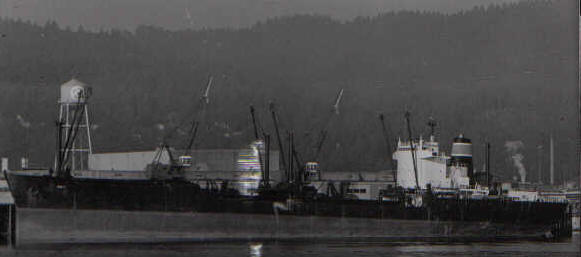
Wayne Madsen Report on the story on the fate of the SS Poet set to ballad


WMR story on the fate of the SS Poet set to ballad

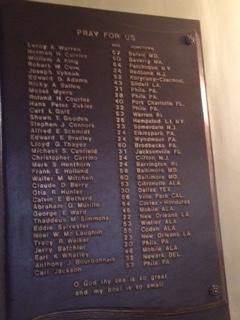
WMR's series of articles and book on the ill-fated last voyage of the SS Poet in 1980 has been set to song in a ballad written and performed by Massachusetts song and screenplay writer Timothy Sawyer. WMR's editor recently attended the 37th anniversary of the disappearance of the SS Poet at Old Swede's Gloria Dei Episcopal Church in Philadelphia and met family members of some of the 34 lost crewmen who served on board the doomed merchant ship.

The foreign intrigue of the Donald Trump presidential campaign was not the first to engage in disloyal behavior. In 1980, the Reagan-Bush campaign negotiated an "arms-for-no hostages" agreement with the Ayatollah Khomeni's government that saw Iran refuse to release the U.S. embassy hostages to Jimmy Carter, thus sealing his election defeat in November 1980. The hostages were released at the very moment Ronald Reagan was sworn into office on January 20, 1981. The Reagan pre-election deal with Iran in 1980 would haunt him throughout his presidency with the Iranians successfully receiving U.S. weapons in return for U.S. hostages held by pro-Iranian militias in Lebanon. The diversion of money from Iran to the Nicaraguan contras resulted in a scandal that almost resulted in Reagan's impeachment.


And now, "The Skeleton Crew," with a hat-tip to Timothy Sawyer and his wife:


Tuesday, August 25, 2015

CIA archives: Langley had its hands heavily involved in treason against President Carter


CIA archives: Langley had its hands heavily involved in treason against President Carter by Wayne Madsen

Declassified Central Intelligence Agency archives indicate that the top brass at Langley was concerned about press reports in 1980 that not only did the Ronald Reagan-George Bush-William Casey campaign team engineer an "arms-for-no-hostages" deal with Ayatollah Khomeini's government in Iran -- thus ensuring the U.S. embassy hostages would remain in Tehran until after the November presidential election -- but also tipped off Iran about President Jimmy Carter's planned attempt to rescue the hostages using military force.

According to documents held in the CIA archives until they were declassified in 2012,      officials of the Carter White House suspected that the Reagan-Casey team had a mole inside the National Security Council. Moreover, this mole was believed to be directly passing classified information on the military operation to rescue the hostages, Operation Eagle Claw, planned for April 24, 1980. The operation was complex and dangerous. Delta Force commandos were to land at an initial staging area in Khorasan province, code named Desert One. They would then fly 260 miles to a second staging area in the Tehran suburbs, code named Desert Two, where they would link up with CIA agents on the ground in Iran and local Iranian support personnel. The U.S. and Iranian team were to drive to the U.S. embassy compound in trucks and then engage the student hostage takers, and, if the plan worked, free the hostages and exfiltrate them to Deserts One and Two and eventual freedom when they reached Saudi Arabia.    

The CIA's director of security, Robert Gambino, the George H. W. Bush loyalist, retired from the CIA in early 1980 to join the Bush presidential campaign. He then switched to the Reagan-Bush campaign after Reagan selected Bush at the July nominating convention in Detroit. Gambino is mentioned in the documents as a liaison between William Casey and disloyal elements within the CIA. Gambino also gave Jeb Bush his CIA indoctrination in 1977 prior to Jeb leaving for a two year assignment as vice president for Texas Commerce Bank, owned by James Baker, in Caracas. Jeb Bush and Gambino initially worked together on George H. W. Bush's campaign in 1980. They both joined the Reagan-Bush campaign in July after Reagan was nominated by the Republican convention in Detroit with Bush as his running mate. Initially, it appears that the CIA group working against Carter was dealing with both the Reagan and Bush presidential campaigns in early 1980. Although Bush beat Reagan in the Iowa caucus and the New Hampshire primary, Reagan went on to win most of the later primaries.

The classified information on Eagle Claw and negotiations with Iran were passed to Casey, Richard Allen, Ed Meese, and Judge William Clark. Essentially, these four men were operating a spy operation targeting the Carter White House using one or more moles within the National Security Council. Bush agents within the National Security Council were also active. These included Stefan Halper whose father-in-law was Dr. Ray Cline, former deputy director of the CIA. Cline's network of agents, including Ted Shackley, forced to retire from the CIA in 1979, extended to the Carter National Security Council and CIA officers who were thought to be loyal to its director Admiral Stansfield Turner. However, these old Bush loyalists were loyal not to Turner but to Bush and Casey. Halper, Cline, and Jeb Bush's pal Gambino worked together to ensure as much intelligence as possible was passed from the White House to Allen, Casey, Meese, and Clark. Many CIA officers recalled how Carter's first choice to head the agency was Ted Sorensen, the aide to and speechwriter for President John F. Kennedy. Many CIA old timers, who were called "cowboys" by President Carter, feared that Sorensen would unlock the secrets of Langley's involvement in the assassination of his old boss, JFK. They strenuously blocked Sorensen's nomination.

Although a dry dust storm, known as a haboob, resulted in one of the helicopters from theUSS Nimitz having to abort its rendezvous at Desert One and return to the ship, the series of errors and accidents that doomed the rescue mission were not what ultimately resulted in its failure.


Delta Force attacked an Iranian oil tanker truck at the Desert One location to prevent it from revealing the operation. One of the passengers in the tanker truck survived and he escaped in a pickup truck. The resulting nighttime explosion also gave away the U.S. presence to a passing Iranian passenger bus that was taken captive by the U.S. assault team. Eagle Claw was aborted by Carter's order. As the U.S. force was withdrawing from Desert One and amid the swirling sand from the haboob, one of the Marine helicopters collided with an Air Force EC-130, resulting in yet a second explosion that killed eight U.S. servicemen.

The debacle at Desert One merely added fuel to the Reagan and Bush campaigns' charges that Carter was an ineffectual president. However, it did not matter whether the haboob caused Eagle Claw's failure or not. The treason committed by both campaigns had already resulted in the Iranians knowing beforehand about the covert operation.

On April 20, 1980, just four days before the commencement of Eagle Claw, The Washington Star ran a piece by longtime CIA Middle East officer Miles Copeland, a man who participated in the CIA's Operation Ajax that overthrew Iranian Prime Minister Mohamed Mosadeq and placed the Shah of Iran in firm power, that provided details of the involvement of Oman, Egypt, and U.S. Navy ships in the Gulf of Oman in a planned hostage rescue mission. The Carter White House went into damage control mode over the obvious leak. Radio Iran broadcast the Star's story the same day that it ran in Washington, April 20.

The White House response was that U.S. military planes in Oman were there to supply the Afghan "freedom fighters." However, Carter was forced to reveal the true nature of the planes to both British Prime Minister Margaret Thatcher, who was even then close to candidate Reagan, and her Foreign Secretary, Lord Carrington. British MI-6 officers in Oman were, in turn, informed about the hostage rescue mission and they were duty bound to inform Oman's Sultan, Qabus bin Said, what actual mission the U.S. planes on Masirah island were about to embark upon. Soon, the secret plans to rescue the hostages were known in the Persian Gulf city that was the center of all political gossip in the region: Dubai, where Iranian agents were in great abundance. Explanations through diplomatic channels also had to be provided by President Carter to the governments of Egypt and Saudi Arabia, both of which were revealed to be part of the covert operation. The supposed highly-classified plan to rescue the U.S. hostages was leaking like a sieve.

Retired Rear Admiral Robert Garrick had actually organized a group of retired military officers to conduct surveillance of U.S. air and naval bases and report to him, who would, in turn, inform the Reagan campaign, any sudden and large movements of planes, ships, or military personnel from the United States to the Middle East. Garrick's job for the campaign was titled "director of research and policy development of the Reagan-Bush Campaign Committee." After Reagan's inauguration, Garrick became deputy counselor to the president under Meese. 
Max Hugel, Casey's campaign assistant, ensured that intelligence assistance for Reagan was supplied by Israel's many agents inside the White House and Pentagon. Hugel became Casey's CIA director of operations in 1981 but soon resigned after it was discovered that Hugel was loose with his lips in passing secrets to Israeli government officials. Hugel resigned, officially for Wall Street securities fraud.

The identity of the mole or moles inside the Carter White House have long been the subject of intense speculation. Robert Gates, a Bush loyalist in the National Security Council and a future CIA director, was one major suspect. Another was Donald Gregg, who started with the National Security Council in 1979 upon transferring from the CIA headquarters where he reported to Shackley. He later became national security adviser to Vice President Bush. The fact that Allen received the same copies of daily CIA intelligence reports that were received by National Security Adviser Zbigniew Brzezinski made the likely source of the reports the NSC. Brzezinski had briefed H. Ross Perot, who had already freed from an Iranian prison two of his Electronic Data Systems (EDS) employees, on the operation. Perot contracted with former Green Berets to successfully free his employees and Brzezinski was eager for Perot's experience in carrying out the rescue mission. However, Perot was also close to top Republicans, including fellow Texan oil man Bush, as well as Reagan.

Two enterprising Washington, DC newswomen smelled the Reagan/Bush rat with regard to treason against Carter. They were Elizabeth Drew of The New Yorker and Mary McGrory ofThe Washington Post. The theft of CIA intelligence reports and presidential debate briefing materials from the Carter White House was enough to convince Drew and McGrory, two veteran reporters who covered Watergate, that something was amiss with the Reagan/Bush campaigns. Later, The New Republic's Daniel Schorr joined Drew and McGrory in their suspicions about high-level treason in the Reagan/Bush ranks. However, the two women were facing charges of acting as "conspiracy theorists" from Reagan's willing media accomplices, including George Will, William Buckley, Rowland Evans, Robert Novak, and even muckraking columnist Jack Anderson.

Vice President Walter Mondale was among those who believed that the White House suffered from those who were leaking highly-classified information to the Reagan-Bush campaigns.

Some members of the press were enlisted in the Reagan/Bush treason against Carter. In September 1980, Washington Post Pentagon correspondent George Wilson received in the mail a document titled "OPLAN EAGLE CLAW Loss Estimate." The document claimed that the hostage rescue mission, had it not been aborted, would have resulted in 60 percent of the hostages killed or wounded during the operation. The document, however, turned out to be a clever forgery. It was not the only forgery crafted by the Reagan-Bush-Casey team that was designed to make Carter look bad.

The mole or moles inside the Carter White House would plague him until October 1980, when Carter's sensitive debate "briefing book" was stolen from the Carter team and ended up in the hands of Reagan and his cronies.

The Reagan-Bush treason also resulted in some 100 CIA agents operating in Iran being compromised after the rescue mission failed. Among the CIA assets were several moles placed among the Iranian students who were holding the embassy. Many agents were actually pulled out of Tehran prior to the Desert One catastrophe, fearing the Copeland article had compromised the operation.

One of the CIA assets compromised by the Reagan-Bush treason was Iranian foreign minister Sadegh Ghotbzadeh, who had, in September 1980, told Agence France-Presse that the Reagan-Bush campaign was trying to forestall a negotiated release of the hostages. The AFPreport quoted Ghotbzadeh as saying that the Reagan people were "'trying to block a solution' to the hostage crisis . . . Two friends of Ghotbzadeh who spoke to him frequently during this period said that he insisted repeatedly that the Republicans were in contact with elements in Iran to try to block a hostage release."

It was later discovered that Ghotbzadeh and his loyalists were part of the Eagle Claw operation. Two days after the November 5th U.S. election, Ghotbzadeh was arrested in Tehran for treason. Although he was released, he became a chief suspect among the Iranian radicals as a Western agent-of-influence. In 1982, he was re-arrested and charged with plotting against the government. Ghotbzadeh was executed by firing squad on September 15, 1982. Ghotzbzadeh was not the only American asset executed. Thanks to the treason of Reagan, Bush, and their teams, a number of other U.S. intelligence assets were caught and executed in Iran.
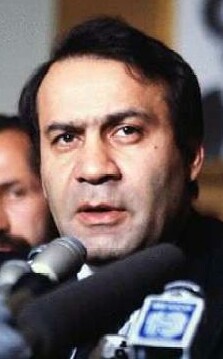

Sadegh Ghotbzadeh, compromised by Reagan-Bush treason against Jimmy Carter.

As Jeb Bush condemns President Obama for the P5+1 nuclear deal with Iran, it should be recalled that he, like his father, committed treason against a sitting president in 1980. Ironically, the treason concerned Iran. Jeb Bush's opposition to Obama and the Iran nuclear deal should be seen in light of his treasonous past rather than in a mere policy difference with the current president. As President Carter begins treatment for cancer, the country owes it to him to fully explain the treason of the Bush family, Ronald Reagan, and their cohorts and cronies in 1980. It does not matter how many continuing classified documents need to be leaked to give Jimmy Carter a sense of satisfaction that it was high treason, not political ineptness, that sank his presidency.
Tuesday, November 04, 2014

Electing more vermin for a rotten carcass by Wayne Madsen


Electing more vermin for a rotten carcass
As Americans go to the polls today to elect, or re-elect, members of Congress, governors, and other officials, WMR is relating some anecdotal information from a top Republican aide to Ronald Reagan. In late 1972, according to the Reagan friend who had known the actor-turned-California governor since his run for the state house in 1966, New York Governor Nelson Rockefeller requested that Governor Reagan meet with his representatives in Los Angeles.

Reagan, no fan of Rockefeller or his family who he considered "too liberal" and who represented the "eastern establishment," demanded that Rockefeller's people meet with him at his Simi Valley ranch home. Reagan was increasingly wary of Rockefeller after David Rockefeller announced at the April 1972 Bilderberg Conference in Belgium the planned formation the following year of the Trilateral Commission, which would include Japan in an elitist political-financial group representing North America and Western Europe. WMR learned from another informed source that Reagan learned of the evils of the Trilateral Commission from then-Democratic Party renegade and political activist Lyndon LaRouche while both were attending a political seminar in California. Reagan told LaRouche that he had been an avid consumer of information in LaRouche's newsletters, whereupon the quasi-Marxist economics professor arranged with Reagan to have future copies sent directly to Reagan's ranch home.

Richard Nixon had just been re-elected in a landslide in 1972 and Rockefeller was planning on claiming his political "legacy" by running for the White House in 1976. Rockefeller was aware that Reagan had inherited the support of the conservative supporters of Arizona Senator Barry Goldwater who was roundly trounced by President Lyndon Johnson in the 1964 presidential election. Reagan was also preparing to run for the presidency in 1976 after his gubernatorial term expired in 1974.

Our source, a senior executive for the Walt Disney Company, as well as Trans America Corporation president John R. Beckett, attended the meeting between Reagan and Rockefeller's people. The Rockefeller team was confident that Nixon's 1972 campaign, called the Committee to Re-Elect the President (CREEP), could be transformed into a permanent fundraising and political team that would eventually ensure that the Republican Party would become the only meaningful political party in the United States and herald America becoming a one-party state.

Reagan was told that CREEP's new incarnation would be used to elect Nelson Rockefeller as president in 1976, thus providing the nation with the prize of the presidency long sought by the Rockefeller family. Reagan would have to agree not to run for the GOP nomination in 1976, paving the way for Rockefeller to easily wrest the nomination and serve as president for 8 years. Reagan would then receive Rockefeller and his team's support for a run for the presidency in 1984.

However, by 1973, it was clear that CREEP was very much a part of the Watergate scandal. Eventually, all the top CREEP officials, including its director, former Attorney General John Mitchell; Treasurer Maurice Stans, the former Commerce Secretary; deputy director Jeb Stuart Magruder; Deputy Treasurer Herbert Kalmbach; and Watergate burglars James McCord, G. Gordon Liddy, and E. Howard Hunt, as well as dirty tricks operative Donald Segretti and White House special counsel Charles Colson, all ended up in prison for their respective criminal roles in the Watergate operation.

Reagan had been warned by his aides that the meeting was nothing more than a Rockefeller "ambush." Rockefeller had no intention of allowing Reagan to succeed him. One of Reagan's aides tipped off the news media that a meeting was taking place with Rockefeller's people at his ranch. After the Rockefeller team departed, Reagan told reporters, "I will not be a kingmaker." Reagan was telling Rockefeller publicly that there would never be a deal and that the Republican Party could expect a Reagan candidacy for the White House in 1976.

Reagan saw Rockefeller; Gerald Ford, who would succeed Nixon as president and name Rockefeller as his vice president; and the man who would be forced on to Reagan's 1980 ticket, George H. W. Bush, as embodiments of the "eastern establishment," which Reagan detested. Even Arizona Senator Barry Goldwater, who Reagan lauded in his famous speech at the 1964 GOP convention in San Francisco, did not escape Reagan's distaste for moneyed oligarchs. Reagan told our source that although he appreciated Goldwater's supporters and Goldwater's policies, Reagan felt that the GOP's so-called "Mr. Conservative" was influenced primarily by money, which dictated the policies of "all Jews like Goldwater." When it was pointed out to Reagan that Goldwater, whose father's Jewish family owned Goldwater's department store in Phoenix, was an Episcopalian, Reagan replied that it didn't matter because when Jews like Goldwater "gather in synagogues on Saturdays, all they discuss is business and money." As president, Reagan never visited Israel, a distinction he shared with Harry Truman, Dwight Eisenhower, John F. Kennedy, Lyndon Johnson, and George H. W. Bush.

Reagan's distaste for Jews arose during his anti-communist activism during the Senator Joseph McCarthy Red-baiting era in Hollywood. Reagan also served as an informant for FBI director J. Edgar Hoover. Hollywood's anti-communist stars were members of the Motion Picture Alliance for the Preservation of American Ideals (MPAPAI), which identified a number of alleged communists in Hollywood and sent their names to the FBI. Since a number of the identified communists also happened to be Jewish, the zeal of MPAPAI earned it the appellation of "anti-Semitic" by the Anti-Defamation League of B'nai B'rith and other Jewish organizations. One of MPAPAI's most active members was Reagan. Others included John Wayne, Walt Disney, Cecille B. DeMille, Gary Cooper, Ginger Rogers, Robert Taylor, Barbara Stanwyck, Irene Dunne, Adolphe Menjou (who was about as right wing as the late führer with the same first name), George Murphy (a future U.S. senator from California), columnist Hedda Hopper, Ward Bond, King Vidor, and Victor Fleming. The group also included Ayn Rand and Morrie Ryskind, both of whom were Jewish.

Many of these Hollywood notables were members of MPAPAI in order to placate Hoover, who had extensive dossiers on many of the actors that included details of homosexual liaisons. According to Hollywood biographer Darwin Porter, Nixon once told Reagan during the red scare era: "Isn't it ironic that Hoover and McCarthy are chasing after Reds and faggots . . . and both of them, the senator and director, have sucked more cocks than your secret girlfriend, this Marilyn Monroe thing." Nixon was also letting the increasingly politically-active Reagan know that he and Hoover had interesting dossiers on the Democrat-turned-Republican actor.

After Nixon was consumed by Watergate in 1973, Rockefeller's team arranged to have House Minority Leader Ford installed as vice president to replace Spiro Agnew, who resigned in October of that year amid a bribery scandal. After Nixon resigned the presidency in 1974, Ford, in a deal worked out in the eleventh hour of the Nixon administration, agreed to nominate Rockefeller to be his vice president. The deal also included a full pardon for Nixon and keeping Henry Kissinger, a longtime Rockefeller operative, as Secretary of State.

Reagan, knowing full well that the Ford-Rockefeller seizure of the White House was a prelude to Rockefeller's one-party state plan, decided to challenge Ford for the GOP nomination in 1976. Realizing that both he and Ford were unelected, Rockefeller decided not to seek the vice presidential nomination in 1976. Ford chose Kansas Senator Bob Dole to be his running mate. Dole had received Rockefeller's blessing. In the primaries, Ford barely eked out victories over Reagan in Iowa and New Hampshire but eventually Ford amassed enough delegates to win the nomination. In the general election, the peanut farmer governor of Georgia, Jimmy Carter, defeated Ford for the presidency.

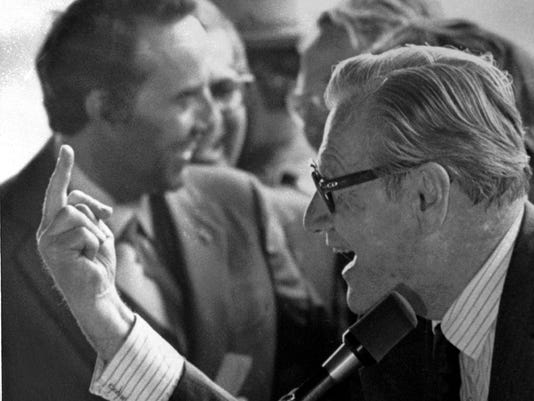
AP GESTURING CANDIDATES_001
Vice President Nelson Rockefeller, responding to a group of pro-Reagan hecklers at a 1976 campaign event in Binghamton, New York. Vice presidential nominee Bob Dole laughs. 

On January 26, 1979, Rockefeller, age 70, died of a heart attack at a Manhattan townhouse while reportedly engaged in sexual intercourse with his 25-year old aide, Megan Marshack. When medical personnel arrived at the home they discovered Rockefeller had been propped up on a chair with his shoes on the wrong feet, holding The Wall Street Journal upside down, along with a clearly visible penis rod protruding from under his trousers. No autopsy was performed on Rockefeller to determine the actual cause of death.

When our source met with Reagan after Rockefeller's death was announced, he asked the prospective Republican presidential candidate what he thought. Reagan replied, "many leaders have been known for their final words on their death beds." Then, Reagan, clutching his chest and wheezing and groaning profusely, laughed and said, "that's what Rockefeller's last words were while he was screwing a god-damned hooker!"

A number of Americans practically worship GOP icons like Rockefeller, Goldwater, Ford, and Reagan. The unblemished history, however, suggests that the current lot of political candidates are merely the heirs of unsavory political forebears.

Tuesday, November 05, 2013

EXCLUSIVE: NSA routinely intercepted Jimmy Carter's and Hillary Clinton's phone calls


EXCLUSIVE: NSA routinely intercepted Jimmy Carter's and Hillary Clinton's phone calls

The National Security Agency intercepted so many of the phone calls and other communications of former President Jimmy Carter and then-First Lady Hillary Rodham Clinton, special internal procedures were established within NSA to handle the intercepts. According to declassified formerly CONFIDENTIAL HANDLE VIA COMINT CHANNELS ONLY memos issued by the NSA General Counsel's office, Mrs. Clinton was to be treated as any other U.S. government employee owing to her being the Chairperson of the President's Task Force on National Health Care Reform.

An NSA memo dated December 15, 1994 states that intercepts of President Carter's phone calls pertaining to his efforts to bring about a peace agreement with Bosnian Serb President Radovan Karadzic were to identify Carter as a "U.S. person" and not as a "former President."Transcripts of Carter's calls were only to refer to him as a "former U.S. President" if his status changed from private peace envoy to official U.S. government representative.

If Carter's status had become official in 1994 or 1995, there were only four living "former U.S. Presidents -- Carter, Ford, Reagan, and Bush -- but only Carter was involved in Balkan peace talks. It would not have been difficult for anyone reading a "minimized" transcript omitting Carter's name to determine the intercepted communications involved Carter. Even being referred to as a "U.S. person" would not have done much to mask Carter's identity since he would have been one of but a few involved in peace talks with Karadzic, who was considered an international pariah and a number one target for NSA surveillance.

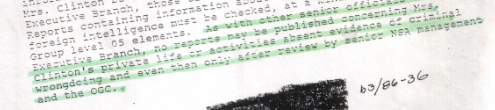
However, the memo on Carter does not mention his private life or potential criminal wrongdoing as does the July 8, 1993 memo dealing with intercepts of Mrs. Clinton's communications by NSA. NSA sources have told WMR that every government employee or contractor who uses a U.S. government telephone or e-mail account is subject to NSA monitoring of their domestic and international communications. Domestic monitoring is done for the purpose of ensuring communications security or "COMSEC." NSA sources have also revealed that on more than one occasion, Mrs. Clinton's conversations while she was First Lady revealed some potentially embarrassing sexual content to NSA eavesdroppers. The 1993 memo states that "no reports may be published concerning Mrs. Clinton's private life."


A June 6, 1996 NSA memo reveals that special procedures were put in place for NSA interception of the communications of U.S. presidential and Senate candidates, as well as U.S. political parties. The memo also states that NSA intercepts were not merely confined to a "U.S. political party" or a "U.S. Senate candidate," but other office seekers as well. The 1996 presidential campaign pitted Democratic President Bill Clinton and Vice President Al Gore against the Republican ticket of Senator Bob Dole and former Representative and HUD Secretary Jack Kemp.

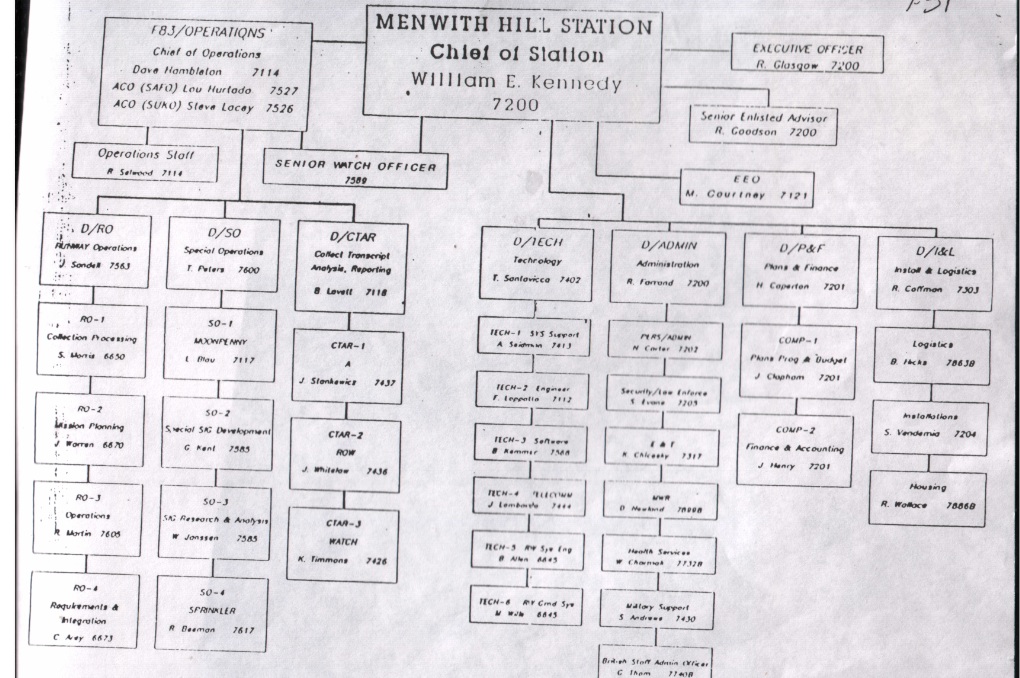
Several newspapers have refrained from publishing the names of NSA or British Government Communications Headquarters (GCHQ) personnel. The NSA and GCHQ claim that these names are sensitive. WMR has obtained a circa early 1990s UNCLASSIFIED organization chart, complete with names of NSA and GCHQ, from the NSA station (F83) in Menwith Hill, England.If the identities of NSA and GCHQ personnel are so sensitive, the UNCLASSIFIED chart does not indicate so. WMR is publishing the organizational chart in full, without redactions. We can only hope that newspapers like The New York TimesThe GuardianThe Washington Post, and Le Monde, will see the foolishness of their past redactions of names.


F83 (Menwith Hill) org chart. Click image to enlarge.

The Washington Post
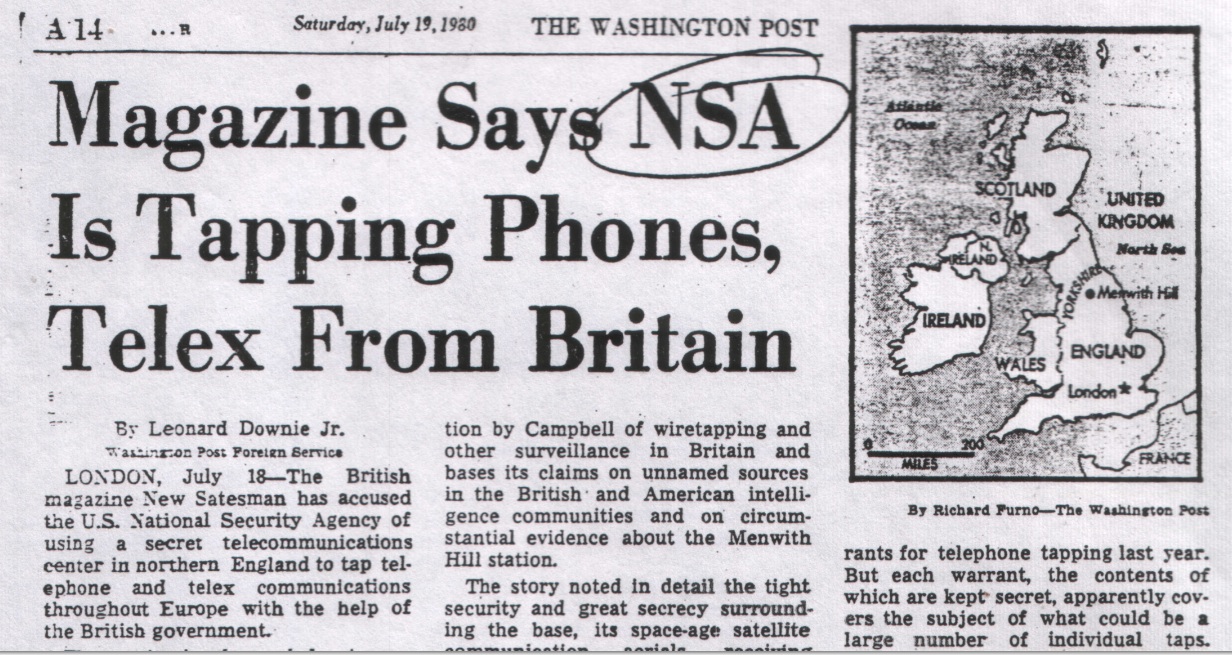
, in particular, has treated its cache of classified NSA documents as if they were in possession of the keys to the gold vaults at Fort Knox. However, the Post was not always so reticent over publishing details about NSA surveillance. For example, on July 19, 1980, the Post ran a story titled "Magazine Says NSA Is Tapping Phones, Telex from Britain." The original article about the tapping, which involved Menwith Hill and British Post Office microwave towers, appeared in the New Statesman in the UK. The Post reporter in London who covered the surveillance story was none other than Leonard Downie, Jr., who would later become the managing editor of The Washington Post.


Once upon a time, when The Washington Post had just a little intestinal fortitude.

The Guardian
 had no problem in skirting Britain's infamous "D-Notice" press censorship regulations when, on February 7, 1981, it ran a story titled "US agency 'bugged Labour MPs.'" The paper was reporting on a BBC "Panorama" television story that revealed that the NSA was bugging the telephones of Labor Party Members of Parliament. It has always been assumed that NSA does not spy on the British government in keeping with the UK-USA signals intelligence agreement, originally the BRUSA (British-US Agreement of 1946, that prohibits reciprocal surveillance of each government by NSA or GCHQ.

Former MI6 agent James Rusbridger revealed that NSA was authorized by GCHQ to spy on Labor MPs because the Margaret Thatcher government believed they were in contact with Communist agents or were, themselves, Communists. NSA spying resumed on British MPs after Prime Minister Harold Wilson put a stop to the practice, according to Rusbridger.
http://upload.wikimedia.org/wikipedia/commons/f/fd/Michael_Foot_%281981%29.jpg
NSA did spy on the British government. The Labor Leader of the Opposition in 1981 was Michael Foot, believed by Margaret Thatcher, GCHQ, and NSA to be a Communist sympathizer. Leader of the Opposition in Britain is an official position.

Rusbridger said the surveillance of Labour MPs by NSA was carried out by the NSA's "Special Projects Division." Rusbridger said his job w at MI6 was to smuggle large amounts of cash overseas through front companies like "J. A. Goldschmidt" of London. Rusbridger wrote a number of books on espionage, including his 1989 book, The Intelligence Game: The Illusions and Delusions of International Espionage."In February 1994, Rusbridger's body was found hanging from a ceiling beam in his Cornwall home. His death was ruled as a case of auto-asphyxiation. Rusbridger was wearing a black raincoat and a gas mask and pornographic photos of black women in bondage scenes were strewn on the floor. A pulley connected his neck and ankle to a rope. Such "accidental" deaths with pornographic and bizarre sexual practices are a favorite method of MI6 to silence critics and whistleblowers. The embarrassment of the scenes of death are so great, family members decide not to investigate the deaths of their loved ones any further. James Rusbridger should not be confused with Alan Rusbridger, the editor of The Guardian who had the final call on pulling the June 30, 2013 Guardian web article quoting the WMR editor on NSA surveillance and Europe's hypocrisy over the NSA revelations.