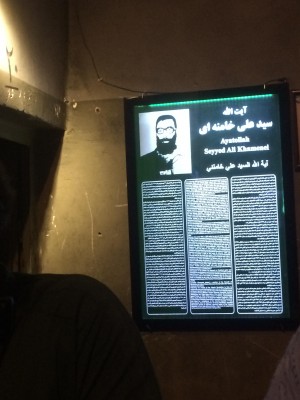
Showing posts with label holocaust industry. Show all posts

Tuesday, October 07, 2014

Meet the U.S.-Israeli-Iranian "Beast of Ebrat" by Wayne Madsen


            Update 1x. Meet the U.S.-Israeli-Iranian "Beast of Ebrat"
The Jewish Holocaust industry is fond of sounding their shofars every time an aging German or Eastern European low-level concentration camp guard is discovered in South America or a small German or Austrian village. However, these self-appointed genocide avengers remain hypocritically silent when a Jewish prison commander and torturer is discovered, not hiding out in Argentina, but in the swank environs of Orlando, Florida.

Meet Parviz Sabeti, aka Peter Sabeti, a one-time director of Department III of the feared Iranian secret service, known as the Sazeman-e Attela'at Va Amniat-e Keshvar (Organization for the information and protection of the country) or simply, SAVAK. Acting as the Shah of Iran's eyes and ears in Iran, SAVAK agents received training from Central Intelligence Agency, British MI-6, and Israel's Mossad in all forms of intelligence tradecraft, including electronic snooping, counter-intelligence, and Sabeti's chief specialty, torture.

As can be seen from his last name, Sabeti is an Iranian Jew ("Sabeti" is derived from the Sabbatean crypto Jews of the Ottoman Empire who are also known by the Turkish name "Dönmeh") who not only served as the chief interrogator for the Shah in Tehran's infamous circular Ebrat prison, built by Germany's Nazi government in 1937, but was also on the payroll of the Mossad and CIA.
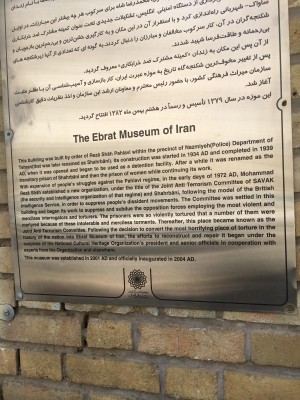
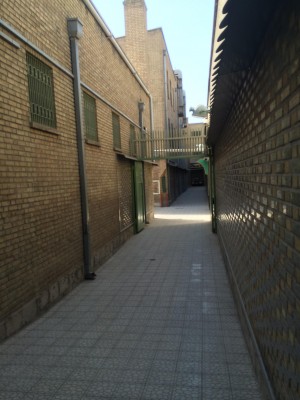
  
Plaque at the entrance of 6000 square meter Ebrat [left] where America's now resident torturer Sabeti plied his sadistic trade. Detainees sent to Ebrat, including current Iranian Supreme Leader Ali Khamenei, had black hoods placed over their heads so they never saw, but felt, this descending ramp alleyway to the torture chambers [right]. The use of black hoods was commonplace in the CIA's rendition program. Photos: WMR

After a career of arresting and torturing loyalists of former Prime Minister Mohammad Mossadeq, ousted in the CIA's 1953 Operation Ajax coup, in 1978 Sabeti turned his attention to a restive group of Shi'a Muslim clerics who were rising in opposition to the Shah's increasingly dictatorial regime. The Shah ordered Sabeti to arrest and bring into Ebrat for "questioning" several hundred followers of the Ayatollah Ruhollah Khomeini, himself exiled in Paris. Among those arrested were Ali Hosseini Khamenei, the present Supreme Ayatollah of Iran. Although Khamenei was imprisoned at Ebrat and not tortured, according to officials of the current Ebrat museum, the same cannot be said for hundreds of others brought to Ebrat by Sabeti's men. Many detainees were beaten on their feet, faces, and torsos, subjected to pins being forced into the quick of their fingernails and having their nails pulled out, repeatedly dunked into the prison's central water fountain, hanged upside down and beaten, forced into often heart attack-inducing stress positions, subjected to cigarette and lighter burns, and subjected to electric shocks to their fingers, toes, nipples, and testicles. The machine used for the electric shocks was the "Apollo," a black metal chair with a black metal hood used for head shocks that was manufactured in and exported to Iran by Israel.
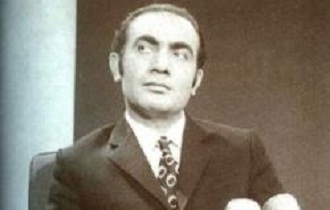

Parviz Sabeti, the chief torturer under the Iranian Shah. He now lives in Orlando as a triple Iranian-Israeli-U.S. citizen. Sabeti is much worse than any low-level Nazi concentration camp guard ever deported from the United States. So, why is Sabeti still in the United States and not in Iran to stand trial for crimes against humanity?
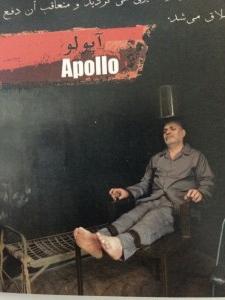
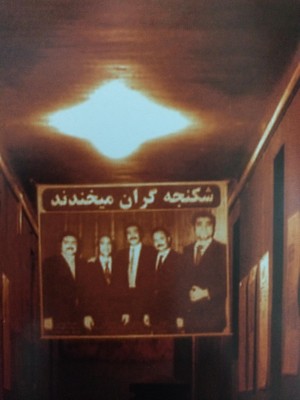
  
SAVAK's infamous Israeli-made Apollo electric shock chair supplied to Sabeti's torturers by his Mossad friends [left].  Sabeti [second from left] with other SAVAK officials [right]. Photos: WMR.
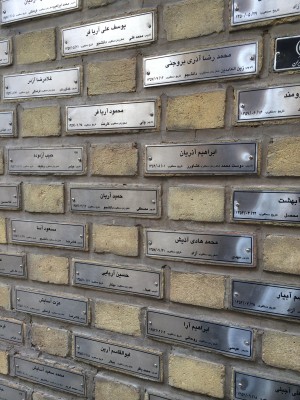
 
Plaques honoring the victims of SAVAK's and Sabeti's torture are placed on bricks in the alleyway entrance of Ebra [left]. The prison cell where current Iranian Supreme Leader Khamenei was held and questioned by the interrogators of Sabeti [right]. Photos: WMR.


Sabeti fled Iran after the Islamic revolution in 1979 and found sanctuary first in Israel where he became an officer of Mossad, and eventually, in Florida. Today, Sabeti lives in Orlando where he owns a building and development company called Paris Enterprises, Inc., which operates out of Post Office Box 536401 in Orlando with a principal address of 401 East Robinson Street, Unit 505, Orlando. According to Florida Secretary of State records, the registered agent for Paris Enterprises is Frank M. Townsend, Esq. of 520 W. Emmett Street, Kissimmee, FL 32741.

Among Paris Enterprises's officers is Pardis Sabeti, Parviz's daughter who is also an evolutionary geneticist at Harvard University specializing in the human genome, specifically, the migration of the Ebola virus from an animal genetic reservoir into humans. Another daughter, Parisa Sabeti has served as a director of the William J. Clinton Foundation. According to The New York Times, in 2009, Parisa married Ted Zagat, the vice president for franchise development and strategic partnerships at the Spanish-language Univision Communications and the son of the founders of Zagat's Survey of restaurants and hotels. The Boca Raton Resort and Club wedding was officiated by Cantor Debbi Ballard. Parisa is also listed as a principal contact, along with her Ebola virus specialist sister, of Paris Enterprises.Nasrin Ghaffarpour, who is also president of Paradise Eighty, Inc. and vice president of Florida Renaissance Corporation is listed as the Vice President of Paris Enterprises with an address of 5391 Vineland Road, Orlando. We will not hold our breath for the Simon Wiesenthal Center or the war criminal trackers of the Department of Justice to pay visits to these addresses.

Update 1x. However, WMR did pay a visit to both corporate addresses and discovered they were private residences.

  
Parvez Sabeti's address at the unnumbered 401 East Robinson address in Orlando. It is a residential condominium unit [left]. Ghaffarpour's address at 4391 Vineland is also a private residence [right].

Parviz Sabeti is a frequent guest on the Voice of America's Persian television service's "Ofogh" program.
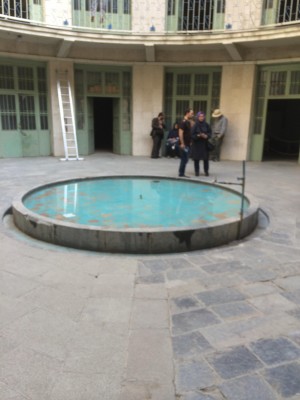
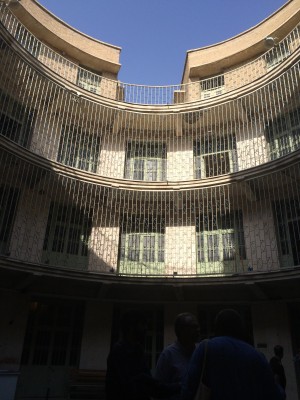
 
The water pool at the center of the circular Ebrat prison where detainees were dunked into the water in order to give them the sense of drowning to get them to talk [left]. Detainees were shackled to the prison's iron grating where they were beaten; their screams were amplified by the amphitheater structure for all the other prisoners to hear [right]. Photos: WMR.
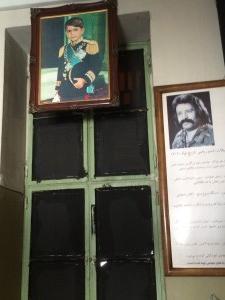

 
Photograph of Ebrat's mustachioed most vicious torturer, to the right in photo [left]. To his upper left is the Shah's son, a resident of California and Maryland, who has proclaimed himself the new Shah of Iran and is supported by the neocons and the CIA to one day return to Iran's Peacock Throne. If "Mr. Mustache" wasn't satisfied with a detainee's answers, he would be shackled to the iron grating [as depicted by the manikin at right] and beaten with truncheons or worse. Many detainees never made it out of Ebrat alive.  After the revolution, Mr. Mustache reportedly escaped to Britain with the assistance of MI-6 but he is said to have committed suicide in London. Photos: WMR.


The case of Sabeti was just one of the items discussed as the recent New Horizons conference in Tehran, at which this editor participated. Neo-con and Zionist organizations and press condemned the conference as a gathering of "anti-Semitic conspiracy theorists" and "holocaust deniers." It would be interesting to hear whether the Anti-Defamation League and its subservient media have ever called for the U.S. to deport Sabeti to Iran to stand trial for crimes against humanity. Or are such deportations by the United States only reserved for those who commit human rights crimes against Jews? Those shofar calls from the Jewish Holocaust industry every time a 90-something Nazi guard commander is discovered somewhere sound like the shrill blaring of hypocrisy.

Thursday, May 14, 2009

Jewish Victimology


Being a victim does not entitle any group to be insensitive to the suffering of others!

Hebrew original: http://www.ynet.co.il/articles/0,7340,L-3703925,00.html


As victims, we’re allowed


Ariana Melamed


Mistakenly, we continue to believe that being historical victims completely frees us of the need to develop solidarity with humanity and of the duty to consecrate the living, not only the dead.


From one Holocaust Day to the next, one registers a worrisome rise in Israeli racism. Between one compulsory mourning siren and another, the official Israel flatly denies other holocausts and sells arms to countries that use them against civilians. The official daily command to remember those murdered during the Second World War will not prevent the soldier at the checkpoint from then abusing those who aren’t our citizens,. All the tours in Yad Vashem, even now that it is revamped and renovated, have evidently failed to have an impact on our society. We have apparently not learned that being children and relatives of victims does not justify our own injustices. Maybe it is too late for learning.


For too many years now we’ve been living within a false ethos of victimhood. In the name of those victims – those whose opinions were never sought – youths enshroud themselves in blue and white flags in Auschwitz and most of them immediately understand that a strong military is the key to our continued existence, but too few understand or question the benefit of such an army when our conscience is faltering.

For too many years we compelled the world to look at the horrors committed against the Jews. We made a visit to Yad Vashem obligatory for visiting dignitaries. We employed a sophisticated rhetoric that makes a connection between the Nazi and Iranian threats, between the Khmelnytsky-led pogroms and the Intifada, as though all these events – the actuality of which must never be underestimated – granted us a sweeping, almost automatic permit to mimic those nations we accuse of ignoring our victims; as though the Holocaust endowed us with exclusivity over suffering for all time.


As far as official Israel and most of its citizens are concerned, there are no other holocausts, and the arguments are always beautifully constructed: no regime in the history of humanity has made its aim to annihilate a whole people, nor has this ever been done with such monstrous efficiency. Therefore, when the Argentinean military regime wiped out tens of thousands of dissenters, official Israel said nothing; when villains in Cambodia slaughtered millions of their own people, this surely was no holocaust but an internal matter, and what’s happening in Darfur is something between Muslims anyway, while Rwanda – there are no Israelis in Rwanda. So there’s nothing to worry about. If they have an earthquake, we’ll send over crews with blankets.


The Armenian holocaust was not as sophisticated as the Nazi assembly-line of death, hence it is not worthy of attention either, particularly since our relationship with Turkey is more important than our clear conscience. Regarding the Tibetans, we really have nothing to say; this Dalai Lama is nice enough – but our amazing trade with China is much more advantageous than a denunciation, however weak and polite, of what was clearly genocide and the ongoing dispossession of millions of their land.


In the name of the dead


We are victims, so we are allowed: this is the immoral defiant assertion uttered in the Israeli discourse between one Holocaust Day and the next. We are victims of Arabs wherever they may be, so we shall also apply dollops of disgust and fear to Arab citizens of Israel as well. Why not? Such a manoeuvre is worth 15 electoral seats and an honoured place at the Israel government’s table.


We are victims, so when someone speaks of racism within, the horror is never real and is always placed in a totally foolish juxtaposition to the actions of the Nazis. No one remembers that those actions started with words. When no one is punished for calling an Ethiopian a “dirty nigger”; when soldiers can abuse Palestinians uninterrupted, knowing full well that their punishment will be, at worst, a rebuke; when a Jew massacres Arabs and his tombstone is consecrated with no one even contemplating removing the temple blockading his house. When the IDF showers Gazan civilians with molten lead, questions must not be asked in wartime and mistakes must not be admitted to. It is as if we are permitted to do so, because we were killed first.


On 9 May, sixty-four years will have passed since the Allies defeated the Nazis and freed the world. There were those who believed then that it was the last battle against murderous ideologies, but they were wrong. We continue to believe this mistake, and the even worse error, that our historical victimhood completely rids us of the need for human solidarity, of the duty to consecrate the living and not only the dead, and of the lesson that is as important as sovereignty and power: the duty to create a moral society that is sensitive to injustice.


For too many years we told ourselves that we do all this in the name and memory of the dead. This was too easy a lie. Would the dead and the survivors have rejected a more moral stance towards the world and the Other among us? Does the annual siren exempt us of the need to care for the Holocaust survivors, which is surely a more difficult matter than state-sponsored mourning, but no less important? Is the only thing the State can promise its citizens, as a real lesson from the Holocaust, is limitless military power – but not the knowledge that power alone will not be enough on a real day of reckoning?


A few years ago in a CNN broadcast dedicated to one of the periodic holocausts in Africa, a Baptist American priest stood before the camera holding a dead baby’s carrier. He said, “People ask where was God during Auschwitz and I want to know where was man.” And I want to know that this man, the man who possesses sufficient compassion to see the horror of others and know they are just like him, that this man is still among us. Perhaps.


[Translated from Hebrew by Keren Rubinstein.]

כקורבנות מותר לנו

אנחנו ממשיכים להחזיק בטעות בתפיסה שהיותנו קורבנות היסטוריים משחררת אותנו לגמרי מהצורך לפתח סולידריות אנושית, מהחובה לקדש את האדם החי ולא רק את הקורבן המת

פורסם: 20.04.09, 18:27

בין יום שואה למשנהו, נרשמת בישראל עליה מדאיגה בגזענות. בין צפירת אבל הכרחית לעוד צפירה, ישראל הרשמית מכחישה בפנים אטומות שואות של אחרים ומוכרת נשק למדינות שבהן מכוונים אותו נגד אזרחים. פקודת היום הרשמית לזכרם של הנרצחים במלחמת העולם השניה לא תמנע מן החייל במחסום את ההתעמרות הבאה במי שאינו אזרח, וכל הסיורים במוזיאון "יד ושם", אפילו המחודש והמשופץ, כנראה לא הועילו לנו כחברה: כנראה עדיין לא למדנו שהיותנו בנים וקרובים של קורבנות אינה מצדיקה את עוולותינו שלנו. אולי כבר מאוחר מדי ללמוד.

שנים רבות מדי אנחנו חיים בתוך אתוס מזויף של קורבנות. בשמם של הקורבנות הללו – שלא נשאלו מעולם לדעתם – בני נוער מתעטפים בדגל כחול לבן באושוויץ ורובם מבינים מיד שצבא חזק הוא סוד קיומנו, אבל מעטים מדי מבינים או נשאלים, מה התועלת בצבא כזה כשהמצפון רופף.

שנים רבות מדי הכרחנו את העולם להביט בזוועה שנעשתה ליהודים, אם בביקורי החובה של מנהיגים ביד ושם ואם ברטוריקה משוכללת שמחברת בין האיום הנאצי לאיראני, בין פרעות ת"ח ות"ט לאינתיפאדה, וכאילו כל אלה – שלעולם אין להקל ראש בממשיותם – נתנו לנו הכשר גורף, אוטומטי כמעט לנהוג כפי שנהגו האומות שהאשמנו אותן בהתעלמות מן הקורבנות שלנו: כאילו השואה העניקה לנו בלבדיות על הסבל, מאז ולתמיד.

אין שואות אחרות, עד כמה שזה נוגע לישראל הרשמית ולרוב אזרחיה, והטיעונים תמיד מסודרים יפה: מעולם בהיסטוריה האנושית לא קם משטר ששם לעצמו מטרה לחסל את בניו של עם שלם, ומעולם לא נעשה הדבר ביעילות כה מפלצתית. לכן, כשמשטר הגנרלים בארגנטינה חיסל עשרות אלפי מתנגדים – ישראל הרשמית לא השמיעה קול, וכשנבלות בקמבודיה טבחו במליונים מבני עמם זו ודאי לא היתה שואה אלא ענין פנימי שכזה, ומה שקורה בדרפור זה ממילא ענין בין מוסלמים לבין עצמם, ורואנדה – אין ישראלים ברואנדה. אין מה לדאוג. אם תהיה להם רעידת אדמה, נשלח להם צוותים עם שמיכות.

השואה הארמנית לא היתה פס ייצור משוכלל של הרג כמו זו של הנאצים, ולכן גם היא לא ראויה להתיחסות, מה גם שיחסינו עם תורכיה ודאי חשובים יותר מאשר מצפוננו. בענין הטיבטים, באמת אין לנו מה לומר, נחמד הדלאי למה הזה – אבל יחסי המסחר המדהימים שלנו עם סין מועילים הרבה יותר מגינוי, אפילו רפה ומנומס, של מה שהיה בעליל רציחת-עם ומה שעודנו נישול של מליונים מאדמתם.

בשם המתים

אנחנו קורבנות, ולכן מותר לנו: זו ההתרסה הלא-מוסרית איתה אנחנו מסתובבים בפרהסיה הישראלית בין יום שואה למשנהו. קורבנות של הערבים באשר הם, ולפיכך נחיל את אמות המידה של התיעוב והפחד גם על אזרחי ישראל הערבים. למה לא, המהלך הזה שווה 15 מנדטים בחירות ומקום של כבוד בממשלת ישראל.

אנחנו קורבנות, ולכן כשמדברים על גזענות בתוכנו, החרדה לעולם אינה אמיתית ותמיד מועמדת בהשוואה מטומטמת לגמרי למעשי הנאצים. אף אחד אינו זוכר שהמעשים התחילו במלים. כשאיש אינו מעניש על הקריאה "כושי מלוכלך" כלפי אתיופי, כשחיילים יכולים להתעמר באין מפריע פלסטינים בידיעה ברורה שעונשם יהי נזיפה במקרה הגרוע, כשיהודי מבצע טבח בערבים מקדדים את מצבת הזכרון שלו ואיש לא עקר אותה או אטם את ביתו, כשצה"ל ממטיר עופרת יצוקה על אזרחים בעזה אין להעלות שאלות בזמן הקרב ואין להודות בטעויות. לנו כאילו כבר מותר, כי בנו הרגו קודם.

64 שנים ימלאו ב-9 במאי לניצחון של בעלות הברית על הנאצים ולשחרור העולם. היו מי שהאמינו אז כי זה הקרב האחרון נגד אידאלוגיות של רצח, והם טעו. אנחנו ממשיכים להחזיק בטעות הזאת ובטעות החמורה ממנה, שהיותנו קורבנות היסטוריים משחררת אותנו לגמרי מן הצורך לפתח סולידריות אנושית, מן החובה לקדש את האדם החי ולא רק את הקורבן המת, ומן הלקח החשוב בדיוק כמו ריבונות ועוצמה: החובה לבנות חברה מוסרית ורגישה לעוולות.

אמרנו לעצמנו, שנים ארוכות מדי, שאת כל זה אנחנו עושים בשמם של מתים ולזכרם. השקר הזה היה קל מדי. האם המתים והשורדים כאחד היו בוחלים בעמדה מוסרית יותר שלנו כלפי העולם וכלפי האחר שבתוכנו? האם הצפירה החד שנתית משחררת אותנו מן הצורך לדאוג לניצולי השואה, שהוא ודאי עניין קשה יותר מסתם אבל ממלכתי, אבל חשוב לא פחות? האם כל מה שהמדינה יכולה להבטיח לאזרחיה, כלקח אמיתי מן השואה, הוא עוצמה צבאית חסרת גבולות – אבל לא ידיעה שהעוצמה לבדה לא תספיק, ביום פקודה אמיתי?

חסרת גבולות – אבל לא ידיעה שהעוצמה לבדה לא תספיק, ביום פקודה אמיתי?

לפני שנים אחדות, בשידור של סי.אן.אן שהוקדש לאחת מן השואות התקופתיות באפריקה, התייצב כומר בפטסטי אמריקני מול המצלמה ובידיו ערסל תינוק מת. הוא אמר, "אנשים שאולים איפה היה אלוהים באושוויץ, ואני רוצה לדעת איפה היה האדם". ואני רוצה לדעת כי האדם הזה, האדם שיש בו די חמלה לראות בזוועתם של אחרים ולדעת שהם בדיוק כמוהו – האדם הזה עודנו מצוי בינינו. אולי.

Wednesday, March 12, 2008

The first time I was called a self-hating Jew


It was America in the 1960s, and his parents were civil rights activists who encouraged their children to speak their minds. Until, aged 14, Mike Marqusee criticised Israel. In this extract from his new book, he recalls his father's fury
Mike Marqusee


Mike Marqusee, author of If I Am Not For Myself: a Journey of an Anti-Zionist Jew. Photograph: Felix Clay

The first person to call me a self-hating Jew was my father. It was in the autumn of 1967. Dad was 39, a successful businessman who was also, along with my mother, active in the US civil rights and anti-war movements. I was the oldest of his five children and had already, at age 14, intoxicated by the ideals of justice and equality, begun my career as a footsoldier of the left. It was not only the first time I had been called a self-hating Jew, it was the first time the phrase, the idea, entered my consciousness, and it was a shock.

As a young man, against the family grain, my father had taken an interest in social and especially racial justice and at college was drawn to the Communist party, which is how he met my mother, who was the product of a very different strand of the New York Jewish tapestry. This was in the heyday of anti-communist hysteria, of which my parents were first victims, then accomplices. After giving a speech against the Korean war at a student conference in Prague in 1950, dad was denounced as a traitor. His passport was seized. His father told the press that if his son had said such things, he was no son of his. It was in this period, I think, that he came to rely implicitly on my mother, the girlfriend who stood by his side when his life seemed most precarious.

They were married in 1952 and a year later I was born. Shortly after that, the FBI came knocking on the door. After months of pressure, from his own family as much as from the repressive organs of the state, my father, with my mother by his side, just as before, agreed to name names. "To this day we regret the mutual decision we made," my mother wrote. "It has been a source of incredible pain and shame." When my father, 45 years after the event, lay dying, sapped by chronic pain and humiliating dependence, he went over it yet again, as he had with me many times. "I fucked it up," he moaned. There was no absolution anyone could give him. All the other contributions he had made seemed outweighed by this ineradicable betrayal.

In the early 60s, having a wife and five kids, a big suburban home and a blossoming career as a real estate developer, was not enough, and he and my mother threw themselves into the struggle in the American south, raising money, organising meetings, sheltering young activists, supporting boycotts and pickets. In 1964, my dad went to Mississippi to deliver supplies to the beleaguered grassroots movement. It was a frightening time: they were now killing whites as well as blacks. Years later I learned that my mother was furious with my father over this adventure. She told him he was trying to compensate for his earlier sin, that he had no right to put his life at risk, to put this need for redemption above his obligation to his children. But in my eyes, the Mississippi visit, followed by his participation in the Selma march for voting rights in Alabama a year later, made my father a hero, along with the other heroes of the movement, which for me in those days included everyone from Martin Luther King to Stokely Carmichael.

All of which partly - but only partly - explains why, when he lowered the boom on me in the autumn of 1967 by suggesting I was a self-hating Jew, it came as an uncushioned blow, an attack out of nowhere, or out of a place of which I was previously unaware.

Initially, I was anxious about going to a new synagogue. I didn't know what to expect as we turned down the driveway. The building was purpose-built and sleekly modern, the parking lot crammed with station wagons. Dad escorted me to my classroom, where, at once, I felt relief. The room was filled with kids I knew from school. There was the one who played quarterback, the one who made funny noises, the one who had all the Batman comic books. So they were Jewish too. I hadn't known that. There was a map of Israel alongside a map of the US, but apart from that it looked like the classrooms I knew from school, with colourful posters and a big blackboard.

I felt at home. We all did. We were the most comfortable Jews that had ever walked the planet. Not for us the longing of exile, the pain of dispersal. We were Americans in America. And we were, in particular, suburban American Jewish kids in the early 1960s, blithely self-confident about our privileges and our position in the world. Sublimely safe. That was the beginning of my eight years of Reform Jewish education, which sputtered to an end when I was 15 and declared, in my confirmation speech, that God was dead and man was condemned to be free.

From an early age I conceived of myself as a rationalist and though I made spasmodic efforts at belief, I never felt a divine presence. During "prayer", I was acutely aware of the gap between what I was supposed to be thinking and what was actually going through my head. But in the end what alienated me from the synagogue was not the make-believe of the afterlife or the all-seeing omnipotence of an invisible God. Not in this synagogue. Here the absolutes were kept in the background. God was there, mentioned in the prayers, but he had been discreetly updated and denatured. No one seemed overconcerned about his judgment.

So what was the creed we were taught in Sunday school? It was not about God. It was about the Jews. A singular people who had given wonderful gifts to the world and whom the world had treated cruelly. A people who were persecuted. A people who survived. A people who triumphed. Despite the Holocaust, we were not a nation of losers, of victims. There was a redemptive denouement. There was Israel, a modern Jewish homeland, a beacon to the world. A shiny new state with up-to-date, Coke-drinking people like us. Liberals, like us. Bearers of democracy and civilisation, making the desert bloom. A little America in the Middle East.

Israel was both our own cause, a Jewish cause, and a moral cause, a universal cause. Like America. A land without people for a people without land. Like America. That was the gift we received in Sunday school - an extra country. For us there were two nations and, best of all, we didn't have to choose between them. As Jews and Americans, we enjoyed a double birthright and a double privilege. The coming home of the Jews to the land of our forefathers completed the epic saga stretching back to Genesis and ensured it ended with a huge upswing in mood. From near-annihilation in the Holocaust to the pride of statehood in a few short years. We took this less as a sign of the divine inspiration of the ancient prophets than as another manifestation of the order and justice that generally prevailed in our world. A testament to progress and the Jewish mastery of progress.

Thanks to America and Israel, the Jews were safe at last. We could visit Israel and work on a kibbutz, like a grown-up summer camp. We were taught to revere Ben Gurion and his heir, the Jewish-American farm girl Golda Meir. In our Sunday school textbooks the Israelis looked like us. And the country they were building looked familiar, with modern buildings and girls in jeans. These were Jews who read books but also drove tractors and tanks.

As always, the Jews had enemies. Israel was menaced by Arabs (not Palestinians, a word never uttered in our synagogue). They were exotically attired bedouin - people who did not have or want a home. In our Sunday school texts, they appeared swarthy, coarse, ignorant, duplicitous. These descendants of Pharaoh and the Philistines seemed curiously ungrateful and irrational. For no reason at all, they hated us.

I was intrigued by the Jewish holidays. Simchas Torah, a year marked out in chapters of a book. Succoth, the Jewish Thanksgiving, a harvest festival, a deeply exotic idea to kids who knew food only from supermarkets. Purim, the revenge of integrity. Yom Kippur disturbed me (I knew I should atone for something but wasn't sure what), but Pesach was special. The matzoh balls and latkes my grandmother brought. Elijah's cup. Most of all, it was the story that pulled me in - that epic of liberation, with the oppressed triumphing over their oppressors, right over might. An intoxicating narrative, as exciting and satisfying as the food. People should be careful when they teach this stuff to kids. It sinks in deeper than they realise. It can even turn someone against the land promised them in the Pesach story.

For several years I took twice-weekly Hebrew lessons in preparation for my barmitzvah. Then came a year of lavish celebrations, services, dinners, dances, in marquees on suburban lawns and ballrooms in midtown hotels. Mountains of gifts. Cheques or bonds or little stakes in IBM or ITT. Compared to some, my barmitzvah was a low-key affair; my mother disapproved of the conspicuous display made by our neighbours. I got the cheques, I got a set of left-handed golf clubs, but better yet I got elegant illustrated editions of Thomas Paine's Rights of Man and Thoreau's Walden.

Within weeks of my barmitzvah, every word of Hebrew vanished from my head. The language had been learned solely to complete a public performance, a rite, that had little meaning for me. I certainly did not feel that I had become a man, an adult, a member of a congregation, that I was enfranchised. Instead, I began to look for and find some of that sense of growth, of emergence as an autonomous human being, in politics, in the world of the left, in battles against racism and for civil liberties. Soon I just could not stop talking about the Vietnam war and how it was wrong on every count. This, in 1966, did not make me popular. So why was I so determined to pursue the course? Was I just showing off, calling attention to myself? Yes, I was. But there were other ways to do that and I did not choose them.

In Sunday school, Israel's victory in the 1967 six-day war was a great moment of Jewish pride. I don't remember much thanking of God, and no mourning for the victims on either side, just a sustained note of elated triumph. To cap all our other Jewish achievements, to confirm our eminence, we had proved ourselves masters in war. Six days to defeat Arab armies attacking from all sides, to sweep across the Sinai, unite Jerusalem, drive the enemy back across the Jordan. No one spoke then, not in my hearing, of the beginning of an occupation. We had redrawn the lines on the map. That was our prerogative. That was justice. We were unbeatable and we were righteous. Israel married moral virtue and military strength - another sign that we lived in an age of order and progress. When a friend who liked to tease me about my anti-Vietnam war views suggested I might not support Israel against the Arabs, I was outraged and offended.

I'm not sure exactly when or how I began to doubt. But I remember what happened the first time I expressed that doubt. It was a few months after the '67 war. A special visitor came to our Sunday school class. He was in his early 20s, with thick fair hair falling over his forehead, a snappy sports jacket and polished loafers. Some of the girls whispered that he was cute. He had an accent but it was nothing like our grandparents' accents. He looked and dressed like us but he had been a soldier in a war and that made him an alien being. Smiling, he perched himself casually on the front of the teacher's desk and told us about the remarkable achievements of the Israeli army. He told us that the Arabs had planned a sneak attack but had met with more than they bargained for. They were bad fighters, undisciplined soldiers. And they were better off now, under Israeli rule. "You have to understand these are ignorant people. They go to the toilet in the street."

Now something akin to this I had heard before. I had heard it from the white southerners I'd been taught to look down upon. I had heard it from people my parents and my teachers described as prejudiced and bigoted. So I raised my hand and when called upon I expressed my opinion, as I'd been taught to do. It seemed to me that what our visitor had said was, well, racist.

I felt the eyes of the teacher and the other kids turn on me. They were used to me spouting radical opinions but this time I had gone too far. Angrily, the teacher told me I didn't have any idea what I was saying and that there would be no discourtesy to guests in his classroom. The young Israeli ranted bitterly about Arab propaganda and how the Israelis treated the Arabs better than any of the Arab rulers did.

I can't remember how long it was after that that I decided to share this experience and my thoughts on it with my family. This was something I was usually encouraged to do. We were sitting around the dinner table - all seven of us. I launched into my story about the Israeli in Sunday school and how what he said was racist. I had been thinking about the matter and now added, for my family's benefit, a further opinion. It was wrong for one country to take over another, or part of another, by military force. If the US was wrong in Vietnam - and that was a given around our dinner table - then Israel was wrong in taking over all that Arab land. I was reasoning by analogy, and nobody had yet told me that some analogies were off limits.

For some time I remained unaware that my father was listening to me not with approval but with rising fury. When he barked, "Enough already!" the shift was disturbingly abrupt. Like my Sunday school teacher, he made me feel that I had said something obscene. Then he drew a breath and seemed to soften. "I think you need to look at why you're saying what you're saying," he said, and then the softness vanished. "There's some Jewish self-hatred there."

I felt then - and still feel now, when I look back - deeply and frustratingly misunderstood. My motives had nothing to do with self-hatred or any feeling about being Jewish. Nor did they have anything to do with compassion for a people - the Palestinians - about whom I knew nothing. I was merely following, as best I could, and in typical 14-year-old fashion, what seemed to be the dictates of logic. If in following them, the results appeared to defy assumptions, then that just made them more curious and compelling. Judging people by their colour or religion was wrong. Racism - making a generalisation about a whole people, stereotyping a whole people - was wrong. Taking over other countries was wrong, even if they attacked you (it was years before I learned that it was Israel that had launched this war, justified at the time by Abba Eban, American liberal Jewry's favourite Israeli, as a "pre-emptive" strike). Among the shibboleths I was brought up on was the belief that "my country right or wrong" was wrong. No one liked to insist more than my dad that if you really loved your country you criticised its flaws. Surely that also applied to religion, and "my religion right or wrong" must also be wrong. I was only trying to apply general principles to a particular case. An exercise in logic. An exercise in teenage stubbornness. But I was unprepared for the response, with its implication that I did not know myself, coming from my father's lips. An attack on my selfhood.

I was startled and bewildered by the phrase "Jewish self-hatred". I didn't know what it meant. I hadn't imagined that Jews would hate themselves, or that anyone would think that I hated myself. The charge seemed so far-fetched, yet so personal. And so bitterly unfair. Burning from head to toe, I threw down knife and fork and left the table in a huff, pounding up the stairs to my room, where I hurled myself on my bed and wrestled with my frustration.

Some might by now have concluded that the roots of my anti-Zionism lie in oedipal trauma. For sure, this was a deeply distressing incident. Later, I looked back on it as my first political disagreement with my father. Later still, as one of a number of raw episodes in our relationship, most of which had nothing to do with politics. Now, looking again at the history behind this incident, I see more clearly why the opinions I was expressing would have infuriated nearly everyone in my father's milieu in those days. To me, they were a logical development from the agreed shared ground of democratic liberalism, but to liberals of my father's generation they were an insolent abrogation of that shared ground. Without in the least intending to, I had breached a taboo.

Today, as cracks show in the presumed monolith of Jewish backing for Israel, increasing numbers of Jews are interrogating and rejecting Zionism. Nonetheless, the existence of anti-Zionist Jews strikes many people - Jews and non-Jews - as an anomaly, a perversity, a violation of the first clause in the ethical aphorism of Hillel, the first-century rabbi and doyenne of Jewish teachings: "If I am not for myself, who will be for me?"

Zionism is an ideology and a political movement. As such it is open to rational dispute. Jews, like others, might view the Jewish claim to Palestine as irrational, anachronistic, and intrinsically unjust. They might consider the Jewish state to be discriminatory or racist or might object - on political, philosophical, or even specifically Jewish grounds - to any state based on the supremacy of a particular religious or ethnic group. As Jews, they might reject the idea that Jewish people constitute a "nation", or at least a "nation" of the type that can or should become a territorial nation-state. Or they might have concluded on the basis of an examination of Israel's treatment of the Palestinians that the underlying cause of the conflict was the ideology of the Israeli state.

Any or all of the above should be sufficient to explain why some Jews would become anti-Zionists. But that doesn't stop critics from placing us firmly in the realm of the irredeemably neurotic. Whenever Jews speak out against Israel, their motives, their representativeness, their authenticity as Jews are questioned. We are pathologised. For only a psychological aberration, a neurotic malaise, could account for our defection from Israel's cause, which is presumed to be our own cause.

Anti-Zionist Jews are not and do not claim to be any more authentic or representative than any other Jews, nor is their protest against Israel any more valid than a non-Jew's. But "If I am not for myself", then the Zionists will claim to be for me, will usurp my voice and my Jewishness. Since each Israeli atrocity is justified by the exigencies of Jewish survival, each calls forth a particular witness from anti-Zionist Jews, whose very existence contradicts the Zionist claim to speak for all Jews everywhere.

· This is an edited extract from If I Am Not for Myself: Journey of an Anti-Zionist Jew, by Mike Marqusee, published by Verso at £15.99. To order a copy for £14.99 with free UK p&p go to guardian.co.uk/bookshop or call 0870 836 0875.

Monday, October 29, 2007

Holocaust survivor versus holocaust industry

jews sans frontieres
AN ANTI-ZIONIST BLOG - BROWSING THE MEDIA

Here's an email I got from an angry person I know to be a Jewish holocaust survivor and a supporter of the Palestinian cause. It came after I posted something on the Finkelstein at Oxford (or not) business. I'm posting it as I found it except for personal bits which I've deleted.

This hysteria about Finkelstein's "anti Zionism" is totally misplaced and a con, because what originally infuriated the powers that be was Finkelstein's taking on the Zionists' updated raison d'etre, it's biggest political asset, the Holocaust, by attacking the huge industry that their existence has created, but from which others benefit.

Even as recently as a few weeks ago, Gideon Taylor of the Claims Conference admonished Holocaust survivors testifying before a US committee on poverty among survivors for "washing dirty linen in public". And I heard that when that didn't deter them, he got really nasty. So one can imagine the rage - and panic - when the son of Holocaust survivors wrote a book accusing them of misappropriation of funds that were meant for the very people whom they use as a moral shield.

He not only wrote the book with support from respected Holocaust historian Raul Hilberg, but he dared, had the chutzpah, the audacity, the Un- Americanism, to have the book translated into German, where it flew off the shelves and opened many an eye.

Not that it stopped them from continuing to milk that cash cow, and recent events - in Israel - would have totally vindicated Norman Finkelstein in public, were it not for the hysteria of media starved Martha's Vineyard Zionist zealots like Dershowitz and Foxman.

Even ignoring Israel Singer's forced resignation from both World Jewish Congress and the Claims Conference under a cloud of money in a Swiss bank account, there has been news of major mismanagement of Holocaust survivors's funds - or of outright theft. Such news is mostly buried or treaded on softly by the Jewish media, ignored by blogs, and taboo for those, who, like Pavlovian dogs, know by now what to expect if they touch this topic with anything but kid gloves.

Just a few weeks - when, and only because, Holocaust survivors were protesting against their poverty in the streets of Jerusalem wearing yellow stars, Israeli Knesset Speaker Dalia Itzik made this statement: "The State of Israel demanded the reparation money that was transferred from Germany , but wasn't wise enough to channel the funds correctly for the benefit of those who needed and deserved it," Itzik said at the discussion. The subject of refunding this money never came up. Gone is gone. The Israeli government promised to rectify the situation, and.... it went right back to the source. On Sept. 19th, HaAretz published an article entitled "Israel asks Germany to fund Holocaust survivors' stipends"

In April, Abraham Hirchson, Israel's finance minister, who created the March of the Living, which had received many millions of dollars from the Claims Conference, was caught up in a scandal when a friend of his and Singer's was discovered to have earned $700,000 from this project, and he couldn't remember what it was for. Hirschson was in deeper trouble in Israel, he" resigned in disgrace after a series of scandals that included allegations that he took funds from the Claims Conference and March of the Living. Some of this money was allegedly used to fund the Likud Party." Last week the Jerusalem Post reported that Hirchson and 10 others are being indicted for embezzling millions.

And this was one of the headlines on the front page of the Jewish Telegraphic Agency's web news today, October 25, 2007: " An Israeli lawyer was convicted of bilking Holocaust survivors out of hundreds of millions of dollars' worth of reparations."

All this is just the tip of the iceberg, which we now know can melt very rapidly. Those persons who launched and continue the witch hunt of Norman Finkelsein - which began in the year 2000 and continues - use lies, fear and intimidation, in order to suppress the truth, some out of a totally perverted sense of loyalty. To whom? To what? To the Holocaust survivors who live under the poverty line everywhere in the world? Hardly. To the Israeli right wing that is on a campaign to free Yitzchak Rabin's murderer? To those who oppress the Palestinians and steal the land and their dignity?

Not in MY name.

Not in your name? But you're a holocaust survivor and a Jew. Everything zionists do is in our name and for our benefit.