Tuesday, May 19, 2009

Why We Can't See the Trees or the Forest The Torture Memos and Historical Amnesia By Noam Chomsky

Murder, torture, abuse… and photos of the same. We've seen some of them, of course. Now, evidently under pressure from his top generals, President Obama has decided to fight the release of other grim photos from the dark side of the Bush years of offshore injustice -- on the grounds that their publication might inflame opinion in the Middle East and our various war zones (as if fighting to suppress their publication won't). In this way, just as the president is in the process of making Bush's wars his own, so he seems to be making much of the nightmare legacy of those years of crime, torture, and cover-up his, too.

The photos his Justice Department will fight to suppress (for how long or how successfully we don't yet know) are now officially "his"; next, assumedly, come those military commissions, suspended as Obama took office, which are evidently about to be reborn as Obama era tools of injustice. (This brings to mind, in grimmer form, the old saw about how military justice is to justice as military music is to music.) And with those commissions comes that wonderfully un-Constitutional idea of detaining chosen prisoners indefinitely either entirely without trial or with trials that will be mockeries. And with that, evidently, goes the idea of possibly setting up some sort of new "national security court" to try some detainees. (Keep in mind that the Obama administration is already hanging on tightly to Dick Cheney's "state secrets" privilege to block various lawsuits by those wronged in all sorts of ways in the Bush years.)

In other words, if you can't go to court and get the punishments you want, the solution is simply to create courts jiggered in such a way (and surrounded by enough secrecy) that you'll get the decisions you desire. If that isn't a striking definition of American justice, I don't know what is.

Obama's national security world is now coming into view -- and it's not a pretty picture, but then, as Noam Chomsky points out, in a tour de force piece below, it hasn't been a pretty picture for a long, long time. Tom

Why We Can't See the Trees or the Forest

The Torture Memos and Historical Amnesia
By Noam Chomsky

The torture memos released by the White House elicited shock, indignation, and surprise. The shock and indignation are understandable. The surprise, less so.

For one thing, even without inquiry, it was reasonable to suppose that Guantanamo was a torture chamber. Why else send prisoners where they would be beyond the reach of the law -- a place, incidentally, that Washington is using in violation of a treaty forced on Cuba at the point of a gun? Security reasons were, of course, alleged, but they remain hard to take seriously. The same expectations held for the Bush administration's "black sites," or secret prisons, and for extraordinary rendition, and they were fulfilled.

More importantly, torture has been routinely practiced from the early days of the conquest of the national territory, and continued to be used as the imperial ventures of the "infant empire" -- as George Washington called the new republic -- extended to the Philippines, Haiti, and elsewhere. Keep in mind as well that torture was the least of the many crimes of aggression, terror, subversion, and economic strangulation that have darkened U.S. history, much as in the case of other great powers.

Accordingly, what's surprising is to see the reactions to the release of those Justice Department memos, even by some of the most eloquent and forthright critics of Bush malfeasance: Paul Krugman, for example, writing that we used to be "a nation of moral ideals" and never before Bush "have our leaders so utterly betrayed everything our nation stands for." To say the least, that common view reflects a rather slanted version of American history.

Occasionally the conflict between "what we stand for" and "what we do" has been forthrightly addressed. One distinguished scholar who undertook the task at hand was Hans Morgenthau, a founder of realist international relations theory. In a classic study published in 1964 in the glow of Camelot, Morgenthau developed the standard view that the U.S. has a "transcendent purpose": establishing peace and freedom at home and indeed everywhere, since "the arena within which the United States must defend and promote its purpose has become world-wide." But as a scrupulous scholar, he also recognized that the historical record was radically inconsistent with that "transcendent purpose."

We should not be misled by that discrepancy, advised Morgenthau; we should not "confound the abuse of reality with reality itself." Reality is the unachieved "national purpose" revealed by "the evidence of history as our minds reflect it." What actually happened was merely the "abuse of reality."

The release of the torture memos led others to recognize the problem. In the New York Times, columnist Roger Cohen reviewed a new book, The Myth of American Exceptionalism, by British journalist Geoffrey Hodgson, who concludes that the U.S. is "just one great, but imperfect, country among others." Cohen agrees that the evidence supports Hodgson's judgment, but nonetheless regards as fundamentally mistaken Hodgson's failure to understand that "America was born as an idea, and so it has to carry that idea forward." The American idea is revealed in the country's birth as a "city on a hill," an "inspirational notion" that resides "deep in the American psyche," and by "the distinctive spirit of American individualism and enterprise" demonstrated in the Western expansion. Hodgson's error, it seems, is that he is keeping to "the distortions of the American idea," "the abuse of reality."

Let us then turn to "reality itself": the "idea" of America from its earliest days.

"Come Over and Help Us"

The inspirational phrase "city on a hill" was coined by John Winthrop in 1630, borrowing from the Gospels, and outlining the glorious future of a new nation "ordained by God." One year earlier his Massachusetts Bay Colony created its Great Seal. It depicted an Indian with a scroll coming out of his mouth. On that scroll are the words "Come over and help us." The British colonists were thus pictured as benevolent humanists, responding to the pleas of the miserable natives to be rescued from their bitter pagan fate.

The Great Seal is, in fact, a graphic representation of "the idea of America," from its birth. It should be exhumed from the depths of the psyche and displayed on the walls of every classroom. It should certainly appear in the background of all of the Kim Il-Sung-style worship of that savage murderer and torturer Ronald Reagan, who blissfully described himself as the leader of a "shining city on the hill," while orchestrating some of the more ghastly crimes of his years in office, notoriously in Central America but elsewhere as well.

The Great Seal was an early proclamation of "humanitarian intervention," to use the currently fashionable phrase. As has commonly been the case since, the "humanitarian intervention" led to a catastrophe for the alleged beneficiaries. The first Secretary of War, General Henry Knox, described "the utter extirpation of all the Indians in most populous parts of the Union" by means "more destructive to the Indian natives than the conduct of the conquerors of Mexico and Peru."

Long after his own significant contributions to the process were past, John Quincy Adams deplored the fate of "that hapless race of native Americans, which we are exterminating with such merciless and perfidious cruelty… among the heinous sins of this nation, for which I believe God will one day bring [it] to judgement." The "merciless and perfidious cruelty" continued until "the West was won." Instead of God's judgment, the heinous sins today bring only praise for the fulfillment of the American "idea."

The conquest and settling of the West indeed showed that "individualism and enterprise," so praised by Roger Cohen. Settler-colonialist enterprises, the cruelest form of imperialism, commonly do. The results were hailed by the respected and influential Senator Henry Cabot Lodge in 1898. Calling for intervention in Cuba, Lodge lauded our record "of conquest, colonization, and territorial expansion unequalled by any people in the 19th century," and urged that it is "not to be curbed now," as the Cubans too were pleading, in the Great Seal's words, "come over and help us."

Their plea was answered. The U.S. sent troops, thereby preventing Cuba's liberation from Spain and turning it into a virtual colony, as it remained until 1959.

The "American idea" was illustrated further by the remarkable campaign, initiated by the Eisenhower administration virtually at once to restore Cuba to its proper place, after Fidel Castro entered Havana in January 1959, finally liberating the island from foreign domination, with enormous popular support, as Washington ruefully conceded. What followed was economic warfare with the clearly articulated aim of punishing the Cuban population so that they would overthrow the disobedient Castro government, invasion, the dedication of the Kennedy brothers to bringing "the terrors of the earth" to Cuba (the phrase of historian Arthur Schlesinger in his biography of Robert Kennedy, who considered that task one of his highest priorities), and other crimes continuing to the present, in defiance of virtually unanimous world opinion.

American imperialism is often traced to the takeover of Cuba, Puerto Rico, and Hawaii in 1898. But that is to succumb to what historian of imperialism Bernard Porter calls "the saltwater fallacy," the idea that conquest only becomes imperialism when it crosses saltwater. Thus, if the Mississippi had resembled the Irish Sea, Western expansion would have been imperialism. From George Washington to Henry Cabot Lodge, those engaged in the enterprise had a clearer grasp of just what they were doing.

After the success of humanitarian intervention in Cuba in 1898, the next step in the mission assigned by Providence was to confer "the blessings of liberty and civilization upon all the rescued peoples" of the Philippines (in the words of the platform of Lodge's Republican party) -- at least those who survived the murderous onslaught and widespread use of torture and other atrocities that accompanied it. These fortunate souls were left to the mercies of the U.S.-established Philippine constabulary within a newly devised model of colonial domination, relying on security forces trained and equipped for sophisticated modes of surveillance, intimidation, and violence. Similar models would be adopted in many other areas where the U.S. imposed brutal National Guards and other client forces.

The Torture Paradigm

Over the past 60 years, victims worldwide have endured the CIA's "torture paradigm," developed at a cost that reached $1 billion annually, according to historian Alfred McCoy in his book A Question of Torture. He shows how torture methods the CIA developed from the 1950s surfaced with little change in the infamous photos at Iraq's Abu Ghraib prison. There is no hyperbole in the title of Jennifer Harbury's penetrating study of the U.S. torture record: Truth, Torture, and the American Way. So it is highly misleading, to say the least, when investigators of the Bush gang's descent into the global sewers lament that "in waging the war against terrorism, America had lost its way."

None of this is to say that Bush-Cheney-Rumsfeld et al. did not introduce important innovations. In ordinary American practice, torture was largely farmed out to subsidiaries, not carried out by Americans directly in their own government-established torture chambers. As Allan Nairn, who has carried out some of the most revealing and courageous investigations of torture, points out: "What the Obama [ban on torture] ostensibly knocks off is that small percentage of torture now done by Americans while retaining the overwhelming bulk of the system's torture, which is done by foreigners under U.S. patronage. Obama could stop backing foreign forces that torture, but he has chosen not to do so."

Obama did not shut down the practice of torture, Nairn observes, but "merely repositioned it," restoring it to the American norm, a matter of indifference to the victims. "[H]is is a return to the status quo ante," writes Nairn, "the torture regime of Ford through Clinton, which, year by year, often produced more U.S.-backed strapped-down agony than was produced during the Bush/Cheney years."

Sometimes the American engagement in torture was even more indirect. In a 1980 study, Latin Americanist Lars Schoultz found that U.S. aid "has tended to flow disproportionately to Latin American governments which torture their citizens,... to the hemisphere's relatively egregious violators of fundamental human rights." Broader studies by Edward Herman found the same correlation, and also suggested an explanation. Not surprisingly, U.S. aid tends to correlate with a favorable climate for business operations, commonly improved by the murder of labor and peasant organizers and human rights activists and other such actions, yielding a secondary correlation between aid and egregious violation of human rights.

These studies took place before the Reagan years, when the topic was not worth studying because the correlations were so clear.

Small wonder that President Obama advises us to look forward, not backward -- a convenient doctrine for those who hold the clubs. Those who are beaten by them tend to see the world differently, much to our annoyance.

Adopting Bush's Positions

An argument can be made that implementation of the CIA's "torture paradigm" never violated the 1984 Torture Convention, at least as Washington interpreted it. McCoy points out that the highly sophisticated CIA paradigm developed at enormous cost in the 1950s and 1960s, based on the "KGB's most devastating torture technique," kept primarily to mental torture, not crude physical torture, which was considered less effective in turning people into pliant vegetables.

McCoy writes that the Reagan administration then carefully revised the International Torture Convention "with four detailed diplomatic 'reservations' focused on just one word in the convention's 26-printed pages," the word "mental." He continues: "These intricately-constructed diplomatic reservations re-defined torture, as interpreted by the United States, to exclude sensory deprivation and self-inflicted pain -- the very techniques the CIA had refined at such great cost."

When Clinton sent the UN Convention to Congress for ratification in 1994, he included the Reagan reservations. The president and Congress therefore exempted the core of the CIA torture paradigm from the U.S. interpretation of the Torture Convention; and those reservations, McCoy observes, were "reproduced verbatim in domestic legislation enacted to give legal force to the UN Convention." That is the "political land mine" that "detonated with such phenomenal force" in the Abu Ghraib scandal and in the shameful Military Commissions Act that was passed with bipartisan support in 2006.

Bush, of course, went beyond his predecessors in authorizing prima facie violations of international law, and several of his extremist innovations were struck down by the Courts. While Obama, like Bush, eloquently affirms our unwavering commitment to international law, he seems intent on substantially reinstating the extremist Bush measures. In the important case of Boumediene v. Bush in June 2008, the Supreme Court rejected as unconstitutional the Bush administration claim that prisoners in Guantanamo are not entitled to the right of habeas corpus.

Salon.com columnist Glenn Greenwald reviews the aftermath. Seeking to "preserve the power to abduct people from around the world" and imprison them without due process, the Bush administration decided to ship them to the U.S. prison at Bagram Air Base in Afghanistan, treating "the Boumediene ruling, grounded in our most basic constitutional guarantees, as though it was some sort of a silly game -- fly your abducted prisoners to Guantanamo and they have constitutional rights, but fly them instead to Bagram and you can disappear them forever with no judicial process."

Obama adopted the Bush position, "filing a brief in federal court that, in two sentences, declared that it embraced the most extremist Bush theory on this issue," arguing that prisoners flown to Bagram from anywhere in the world (in the case in question, Yemenis and Tunisians captured in Thailand and the United Arab Emirates) "can be imprisoned indefinitely with no rights of any kind -- as long as they are kept in Bagram rather than Guantanamo."

In March, however, a Bush-appointed federal judge "rejected the Bush/Obama position and held that the rationale of Boumediene applies every bit as much to Bagram as it does to Guantanamo." The Obama administration announced that it would appeal the ruling, thus placing Obama's Department of Justice, Greenwald concludes, "squarely to the Right of an extremely conservative, pro-executive-power, Bush 43-appointed judge on issues of executive power and due-process-less detentions," in radical violation of Obama's campaign promises and earlier stands.

The case of Rasul v. Rumsfeld appears to be following a similar trajectory. The plaintiffs charged that Rumsfeld and other high officials were responsible for their torture in Guantanamo, where they were sent after being captured by Uzbeki warlord Rashid Dostum. The plaintiffs claimed that they had traveled to Afghanistan to offer humanitarian relief. Dostum, a notorious thug, was then a leader of the Northern Alliance, the Afghan faction supported by Russia, Iran, India, Turkey, and the Central Asian states, and the U.S. as it attacked Afghanistan in October 2001.

Dostum turned them over to U.S. custody, allegedly for bounty money. The Bush administration sought to have the case dismissed. Recently, Obama's Department of Justice filed a brief supporting the Bush position that government officials are not liable for torture and other violations of due process, on the grounds that the Courts had not yet clearly established the rights that prisoners enjoy.

It is also reported that the Obama administration intends to revive military commissions, one of the more severe violations of the rule of law during the Bush years. There is a reason, according to William Glaberson of the New York Times: "Officials who work on the Guantanamo issue say administration lawyers have become concerned that they would face significant obstacles to trying some terrorism suspects in federal courts. Judges might make it difficult to prosecute detainees who were subjected to brutal treatment or for prosecutors to use hearsay evidence gathered by intelligence agencies." A serious flaw in the criminal justice system, it appears.

Creating Terrorists

There is still much debate about whether torture has been effective in eliciting information -- the assumption being, apparently, that if it is effective, then it may be justified. By the same argument, when Nicaragua captured U.S. pilot Eugene Hasenfuss in 1986, after shooting down his plane delivering aid to U.S.-supported Contra forces, they should not have tried him, found him guilty, and then sent him back to the U.S., as they did. Instead, they should have applied the CIA torture paradigm to try to extract information about other terrorist atrocities being planned and implemented in Washington, no small matter for a tiny, impoverished country under terrorist attack by the global superpower.

By the same standards, if the Nicaraguans had been able to capture the chief terrorism coordinator, John Negroponte, then U.S. ambassador in Honduras (later appointed as the first Director of National Intelligence, essentially counterterrorism czar, without eliciting a murmur), they should have done the same. Cuba would have been justified in acting similarly, had the Castro government been able to lay hands on the Kennedy brothers. There is no need to bring up what their victims should have done to Henry Kissinger, Ronald Reagan, and other leading terrorist commanders, whose exploits leave al-Qaeda in the dust, and who doubtless had ample information that could have prevented further "ticking bomb" attacks.

Such considerations never seem to arise in public discussion.

There is, to be sure, a response: our terrorism, even if surely terrorism, is benign, deriving as it does from the city on the hill.

Perhaps culpability would be greater, by prevailing moral standards, if it were discovered that Bush administration torture had cost American lives. That is, in fact, the conclusion drawn by Major Matthew Alexander [a pseudonym], one of the most seasoned U.S. interrogators in Iraq, who elicited "the information that led to the US military being able to locate Abu Musab al-Zarqawi, the head of al-Qa'ida in Iraq," correspondent Patrick Cockburn reports.

Alexander expresses only contempt for the Bush administration's harsh interrogation methods: "The use of torture by the U.S.," he believes, not only elicits no useful information but "has proved so counter-productive that it may have led to the death of as many U.S. soldiers as civilians killed in 9/11." From hundreds of interrogations, Alexander discovered that foreign fighters came to Iraq in reaction to the abuses at Guantanamo and Abu Ghraib, and that they and their domestic allies turned to suicide bombing and other terrorist acts for the same reasons.

There is also mounting evidence that the torture methods Dick Cheney and Donald Rumsfeld encouraged created terrorists. One carefully studied case is that of Abdallah al-Ajmi, who was locked up in Guantanamo on the charge of "engaging in two or three fire fights with the Northern Alliance." He ended up in Afghanistan after having failed to reach Chechnya to fight against the Russians.

After four years of brutal treatment in Guantanamo, he was returned to Kuwait. He later found his way to Iraq and, in March 2008, drove a bomb-laden truck into an Iraqi military compound, killing himself and 13 soldiers -- "the single most heinous act of violence committed by a former Guantanamo detainee," according to the Washington Post, and according to his lawyer, the direct result of his abusive imprisonment.

All much as a reasonable person would expect.

Unexceptional Americans

Another standard pretext for torture is the context: the "war on terror" that Bush declared after 9/11. A crime that rendered traditional international law "quaint" and "obsolete" -- so George W. Bush was advised by his legal counsel Alberto Gonzales, later appointed Attorney General. The doctrine has been widely reiterated in one form or another in commentary and analysis.

The 9/11 attack was doubtless unique in many respects. One is where the guns were pointing: typically it is in the opposite direction. In fact, it was the first attack of any consequence on the national territory of the United States since the British burned down Washington in 1814.

Another unique feature was the scale of terror perpetrated by a non-state actor.

Horrifying as it was, however, it could have been worse. Suppose that the perpetrators had bombed the White House, killed the president, and established a vicious military dictatorship that killed 50,000 to 100,000 people and tortured 700,000, set up a huge international terror center that carried out assassinations and helped impose comparable military dictatorships elsewhere, and implemented economic doctrines that so radically dismantled the economy that the state had to virtually take it over a few years later.

That would indeed have been far worse than September 11, 2001. And it happened in Salvador Allende's Chile in what Latin Americans often call "the first 9/11" in 1973. (The numbers above were changed to per-capita U.S. equivalents, a realistic way of measuring crimes.) Responsibility for the military coup against Allende can be traced straight back to Washington. Accordingly, the otherwise quite appropriate analogy is out of consciousness here in the U.S., while the facts are consigned to the "abuse of reality" that the naïve call "history."

It should also be recalled that Bush did not declare the "war on terror," he re-declared it. Twenty years earlier, President Reagan's administration came into office declaring that a centerpiece of its foreign policy would be a war on terror, "the plague of the modern age" and "a return to barbarism in our time" -- to sample the fevered rhetoric of the day.

That first U.S. war on terror has also been deleted from historical consciousness, because the outcome cannot readily be incorporated into the canon: hundreds of thousands slaughtered in the ruined countries of Central America and many more elsewhere, among them an estimated 1.5 million dead in the terrorist wars sponsored in neighboring countries by Reagan's favored ally, apartheid South Africa, which had to defend itself from Nelson Mandela's African National Congress (ANC), one of the world's "more notorious terrorist groups," as Washington determined in 1988. In fairness, it should be added that, 20 years later, Congress voted to remove the ANC from the list of terrorist organizations, so that Mandela is now, at last, able to enter the U.S. without obtaining a waiver from the government.

The reigning doctrine of the country is sometimes called "American exceptionalism." It is nothing of the sort. It is probably close to a universal habit among imperial powers. France was hailing its "civilizing mission" in its colonies, while the French Minister of War called for "exterminating the indigenous population" of Algeria. Britain's nobility was a "novelty in the world," John Stuart Mill declared, while urging that this angelic power delay no longer in completing its liberation of India.

Similarly, there is no reason to doubt the sincerity of Japanese militarists in the 1930s, who were bringing an "earthly paradise" to China under benign Japanese tutelage, as they carried out the rape of Nanking and their "burn all, loot all, kill all" campaigns in rural North China. History is replete with similar glorious episodes.

As long as such "exceptionalist" theses remain firmly implanted, however, the occasional revelations of the "abuse of history" often backfire, serving only to efface terrible crimes. The My Lai massacre was a mere footnote to the vastly greater atrocities of the post-Tet pacification programs, ignored while indignation in this country was largely focused on this single crime.

Watergate was doubtless criminal, but the furor over it displaced incomparably worse crimes at home and abroad, including the FBI-organized assassination of black organizer Fred Hampton as part of the infamous COINTELPRO repression, or the bombing of Cambodia, to mention just two egregious examples. Torture is hideous enough; the invasion of Iraq was a far worse crime. Quite commonly, selective atrocities have this function.

Historical amnesia is a dangerous phenomenon, not only because it undermines moral and intellectual integrity, but also because it lays the groundwork for crimes that still lie ahead.

Noam Chomsky is Institute Professor (retired) at MIT. He is the author of many books and articles on international affairs and social-political issues, and a long-time participant in activist movements.

[Note: A slightly longer version of this piece, fully footnoted, will be posted at Chomsky.info within 48 hours.]

Copyright 2009 Noam Chomsky

Monday, May 18, 2009

H1N1 synthetic flu may be test run for H5N1 avian flu

H1N1 synthetic flu may be test run for H5N1 avian flu

On May 13, 2009, WMR reported the following regarding the synthetic A/H1N1 influenza pandemic:

"WMR has learned from an A/H1N1 researcher that the current "novel" flu strain is mutating rapidly in humans but no animals have contracted the virus. The enzyme in A/H1N1, as with all influenza A viruses, is called a polymerase. Scientists have calculated the molecular clock of A/H1N1 form the virus's polymerase rate. Because of the rapid mutation of the virus and the fact that, unlike 1918, rapid global transportation is now the norm, scientists are predicting that the molecular clock of the A/H1N1 virus, coupled with modern transportation, means that almost all the countries of the world will experience an A/H1N1 outbreak within the next few months."

The World Health Organization (WHO), after indicating it was prepared to raise the AH1N1 pandemic flu alert to Level 6, the agency's highest alert level,. has now succumbed to political pressure from Britain, Japan, China, and other nations led by corporate-beholden governments to keep the alert level at Level 5. The nations opposed to a Level 6 level argue that H1N1 should not be considered by the rate at which it is spreading but by deadly it is. WMR has also learned that New York's Public Health Commissioner, Dr. Thomas Frieden, has been downplaying the threat from H1N1, even though the flu has claimed the life of an assistant principal of a public school in Queens. Ominously, the Obama administration has named Frieden to be the administrator of the Centers for Disease Control (CDC) in Atlanta.

Political considerations by the White House, Gracie Mansion, and WHO headquarters in Geneva are overshadowing what could be a more deadly follow-on pandemic, according to an influenza research scientist who has been in contact with WMR.

The AH1N1 virus has infected some 100 students in Kobe, Japan. Many of the students have no history of traveling abroad. There are plans underway to begin a mass vaccination against AH1N1. However, there are misgivings in the international research community about administering an AH1N1 vaccine.

The fear is that once a vaccination against AH1N1 is started, the virus will re-assort itself into a hybrid H1N1/H5N1 strain or mutate into a new H5N1 strain. The current AH1N1 strain, as previously reported by WMR, contains synthetically gene spliced strains of two forms of human flu viruses, two forms of swine flu viruses, and a single form of avian flu virus.

What researchers have told us is that as long as the current AH1N1 can infect humans, it will not try to mutate. Even though there have been deaths from AH1N1, most of those infected are sick for up to four days, take Tamiflu or similar drugs, and recover with immunity from the hybrid or "novel" virus. The vaccination program will be a profit maker for such Big Pharma firms as Sanofi-Aventis, GlaxoSmithKline and Baxter International.

However, with vaccinations, the AH1N1 virus will, of course, be rejected by human hosts and cases around the world will decrease. However, then, the virus will begin to mutate in order to successfully infect human hosts. And when that happens, the new, newly-mutated virus will become much more transmissible and more pathogenic.

The nightmare scenario is that the new, mutated virus may take on the characteristics of H5N1 or the avian flu. The vaccines administered for AH1N1 will be ineffective against the new strain of H5N1 and the world may face a more deadlier pandemic then the current AH1N1 outbreak. There are scientists at WHO who are aware of this scenario but their alarm has been suppressed by political and economic considerations.

Our May 13 item stated: "scientists are predicting that the molecular clock of the A/H1N1 virus, coupled with modern transportation, means that almost all the countries of the world will experience an A/H1N1 outbreak within the next few months."

That prediction appears to be correct. Since May 13, AH1N1 cases have spread to Japan, India, Chile, Turkey, Cuba, Ecuador, Ireland, and Thailand. The flu has also spread from southern China to Beijing.


Major conflict-of-interest in Stanford case at SEC

WMR has learned from a source who was involved in the Enron scandal, offshore Panamanian brass plate operations that operated with te support of five banks -- Banco Nacional de Panama, TotalBank Panama, Banco Continental Panama, Global Bank Panama, and ABN-AMRO Bank -- and covert CIA Clinton era operations in Peru that supported Peruvian intelligence chief Vladimiro Montesinos -- code-named "The Doctor" by his CIA interlocutors, and Peruvian President Alberto Fujimori, both now imprisoned for human rights crimes, that the receiver appointed by the Securities and Exchange Commission (SEC) to handle the distribution of the assets of Sir Allen Stanford's collapsed financial empire has, himself, been under an SEC investigation.

Ralph Janvey, the Dallas attorney appointed on February 17, 2009, by U.S. Judge David Godbey to act as the receiver for Stanford's assets, is a former assistant director of securities for the U.S. Comptroller of the Currency. Janvey told the Houston Chronicle that he is on the side of the investors in Stanford's failed enterprises, some of which were previously reported by WMR to be involved in laundering drug money for the CIA in Panama and Antigua. Interestingly, Janvey is being assisted in his receivership functions by the Houston-based law firm of Baker Botts, for which former Secretary of State James Baker is a major partner.

WMR has learned that Janvey has been under an investigation by the SEC's Inspector General and, as of January 15 of this year was still under investigation. Nevertheless, he was appointed as the receiver for Stanford a little over a month later. Janvey was also involved in a fraud case that centered on suspicious Panamanian financial operations that were being conducted during the Clinton administration under the watchful eye of then-U.S. ambassador to Panama Simon Ferro, who acted as a more-than-diplomatic liaison to then-Panamanian President Ernesto Perez Balladares, one of the co-founders of the Democratic Revolutionary Party (PRD) and the inheritor of the private fortine of President Omar Torrijos, killed in a 1981 helicopter crash that ushered into power General Manuel Noriega and was blamed on the CIA. After leaving office, Balladares was accused of involvement in a scheme to smuggle Chinese illegal aliens into the United States and his U.S. visa was revoked.

To say that there is a troubling Panamanian link between the current investigation by the SEC and the Justice Department of Stanford, including his Panamanian operations, would be an understatement. Stanford was a major donor to the Democrats and Republicans and he was a guest at the Democratic National Convention in Denver that nominated Obama.

In July 1992, Pedro Miguel Gonzalez, the son of a PRD leader, was charged by Panamanian and U.S. authorities with the shooting death of U.S. Army Sergeant Zak Hernandez. The shooting took place on the eve of a visit by President George H. W. Bush to Panama to celebrate his invasion of the nation that saw the toppling of Noriega from power. Gonzalez was later acquitted of the charges by a Panamanian court. From 2007 to 2008, Gonzalez served as the President of the Panamanian National Assembly. The man who both Gonzalez turned to to get U.S. criminal charges drooped against him was none other than super-lawyer with the CIA-linked Williams & Connolly law firm, Greg Craig, the lawyer who represented Bill Clinton in the Monica Lewinsky scandal. Craig is now Chief Counsel to President Barack Obama. Balladares also turned to a Washington lawyer to have his U.S. visa restored. The lawyer was also Craig. These connections were cited by Eric Jackson in The Panama News last year.

It is clear that under the Balladeres presidency and that of his successor, Mireya Moscoso, Stanford's operations flourished in Panama. Ferro went on to work for the law firm Greenberg Traurig, the same law firm where jailed GOP lobbyist Jack Abramoff, an interlocutor for the Russian-Israeli Mafia, also worked. Stanford's home base of Antigua was also a known center of operations for the Russian-Israeli mob. Stanford was involved in private banking in Israel. WMR previously reported that Stanford Group served as a feeder fund for Madoff Securities and that much of Madoff's money was being siphoned off to Israeli bank accounts. In September 2006, Stanford committe to invest in Israel's Catalyst II fund, which invests primarily in bio/pharma, telecommunications, and computer software. Senior Stanford executives visited Israel in 2006 to hammer out the deal.

Ferro, a friend of Hillary Clinton's brother Hugh Rodham, also helped represent Luis Posada Carriles, the Cuban exile involved in the 1976 terrorist bombing of a Cubana airliner off of Barbados.

WMR has learned that Janvey represented a Texas oil businessman accused of running a Stanford-like Ponzi scheme. The businessman claims Janvey's law firm insisted that the attorney fees be paid by untraceable money orders. The businessman also claims that Janvey was representing him in an SEC case at the same time the lawyer was also working for the SEC. The word from Texas is that the SEC office in Fort Worth is "out of control."

Florida Senator Bill Nelson brought the matter to the attention of the SEC's Inspector General Stanley Kotz. WMR has been told that the SEC, now under the direction of Obama's SEC chairman, Mary Schapiro, former CEO of the securities industries self-regulator, the Financial Industry Regulatory Authority (FIRA), is now backtracking in its investigation of Janvey's previous conflict-of-interest with the agency. Schapiro was originally appointed to the SEC by Ronald Reagan, re-appointed by George H. W. Bush, and named acting chairman by Clinton.

Note: It was this editor's meeting with a source in Alexandria on March 17 concerning Stanford's money laundering activities in Panama that ultimately led to my arrest after questioning Alexandria police why my source on Panamanian activities was being arrested. My trial is scheduled for 9:30 am, May 20, 2009, in the Alexandria General Court. It would now appear, based on the information received from Texas, that the Stanford case has a high-profile, one that reaches into the Obama White House and the office of chief counsel Greg Craig.

There is also a link to the lawsuit brought by Ecuadorian Amazonian Indians against Chevron Texaco for Texaco's pollution of their native lands. If Chevron Texaco is found liable, it will be forced to pay some $27 billion to the Indians. However, that will put a crimp in Chevron Texaco's plans to build a Meso-American natural gas and oil pipeline that will connect Colombian reserves to Central America and southern Mexico, with a possible extension to Texas. Chevron Texaco has lined up a group of Panamanian officials to facilitate the project, part of which may have been funded, according to our Latin American sources, by Stanford's banking operations in Panama and Colombia. Pending the outcome of the Ecuadorian lawsuit, the Meso-American pipeline project is currently on hold. Some of the information this editor was gathering in Alexandria on March 17 involved the Meso-America project and the Ecuadorian lawsuit against Chevron Texaco. Chevron Texaco's Panamanian political and financial operations are not only linked to White House Counsel Craig but the firm also has former Bill Clinton U.S. Trade Representative Mickey Kantor and Chief of Staff Mack McLarty and George H. W. Bush U.S. Trade Representative Carla Hills working on behalf of its interests.

Russian-Israeli Mafia elements in Israeli government and the Palestinian Authority

WMR's European sources have provided some details of Israeli Foreign Minister's Avigdor Lieberman's organized crime-related activities. Lieberman's racist and organized crime links have a number of world leaders not anxious to be seen in public with him. In fact, after a recent meeting in Berlin between Lieberman and German Foreign Minister Frank-Walter Steinmeier, the German insisted that there would be no joint press conference held after their talks.

Although Lieberman's racist attitudes toward Arabs and Muslims in general are problematic for a number of government leaders, it is the fact that Lieberman, a former night club bouncer, is enmeshed in a number of criminal investigations that may end up in his conviction and imprisonment. WMR has learned from German sources that while Transport Minister in Ariel Sharon's government from 2001 to 2002, Lieberman controlled a Cyprus-based firm, Trasimeno Trading Ltd.," that funneled money from Austrian gambling tycoon Martin Schlaff, owner of a firm called Placzek, and Russian-Israeli mob kingpin Michael Chernoy to the coffers of Lieberman's Yisrael Beiteinu, which represents the interests of Israel's Russian and Soviet expatriate community, a group that is highly-infused with criminal elements that help form the nexus for a global criminal enterprise.

The Israeli law enforcement investigation of Lieberman also involves a company controlled by his daughter, Michal Lieberman Galon, "M.L. 1 Ltd.," which is being investigated for laundering over US$3 million for her father's political party.

On January 12, 2006, WMR reported on the Schlaff connection to Ariel Sharon's Likud government:

"According to law enforcement sources, investigators are looking at Abramoff's possible connections to the defunct Oasis Casino in Jericho in the West Bank. The casino, which began operations in 1998, was partly-owned by CAP, a company registered in Liechtenstein in which the Palestinian Authority under Yasir Arafat was a 23 percent shareholder. Another owner was a Vienna, Austria-based casino company, Casinos Austria International, in which Martin Schlaff, a close friend of Sharon, was a major investor. Schlaff's brother, James, is also under investigation. Last week, Israeli police seized computers, cell phones, documents, and a PDA from the home of Schlaff's parents in Israel while he was visiting from Austria. Police also investigated money transfers to Gilad Sharon, Ariel Sharon's son, from South African businessman Cyril Kern and other transfers via BAWAG Bank in Austria. Sharon's other son, Omri, was also financially involved in the Oasis casino.

Although Netanyahu criticized the Oasis casino as providing funding for Palestinian terrorists, investigators are looking at Netanyahu's involvement in helping to steer $140,000 in tribal casino money away from Abramoff's Capitol Athletic Foundation (CAF) charity in Washington, DC to right-wing West Bank settlers in Beitar Illit on the West Bank so they could buy 'security equipment' and sniper lessons. Records indicate a flow of money from CAF to Kollel Ohel Tiferet, a virtually unknown group in Israel. Netanyahu, as Finance Minister in Sharon's former Likud government, would have been aware of money transfers from Abramoff to various Israeli interests, including the settlers and casino interests."

Schlaff is also said to have laundered money for the former security service, the "Stasi," of the ex-German Democratic Republic in eastern Germany. Schlaff also became a major shareholder in Austria's RHI AG, Austria's largest privately-owned industrial group.

WMR has also learned from German sources that the BAWAG Bank was also used to launder money that was involved in illegal nuclear proliferation involving a Liechtenstein-based firm, Galonia Etablissement." The "BAWAG affair" was exposed in 2006 and some US $90 million went missing. It is believed that some of the money ended up in Lieberman's party's coffers in Israel. The scandal and money laundering also places Israel's Foreign Minister in a smuggling network that was under active investigation by CIA counter-proliferation non-official cover agent Valerie Plame Wilson, exposed to the media by a neocon cabal that included I. Lewis "Scooter" Libby and John Hannah, both Likud loyalists who served in Vice President Dick Cheney's office.

Schlaff reportedly wants to establish his own bank in Liechtenstein. Which brings up Schlaff's relationship with companies owned by the sons of Palestinian Authority President Mahmoud Abbas, whose Fatah movement has been accused of massive corruption by the Hamas opposition. Two companies owned by Abbas' sons were recently awarded a more than US$2 million contract by the CIA-linked U.S. Agency for International Development (USAID) for road construction in West Bank territory controlled by Abbas.

Yasser Abbas, a Canadian-Palestinian businessman, is the owner of Falcon Electro Mechnical Contracting Company, Falcon Trading Group, and Falcon Tobacco. The latter has a monopoly on the sale of American Lucky Strike and Kent cigarettes in the West Bank and Gaza. Falcon Electro Mechanical was one of the beneficiaries of the USAID construction contract. The other USAID contract recipient was Sky Advertising, headed by Tarek Abbas, the Palestinian leader's other son. Yassir Abbas also has his hands in the coffers of the Palestine Investment Fund (PIF), originally set up by wealthy Gulf Arabs to fund poor Palestinian farmers and shopkeepers. Instead, the fund, which is flush with some US$1.3 billion, is used to financially back large enterprises, including Wataniya Palestine, a Palestinian telecommunications company that is backed by U.S. and Gulf Arab investments.

With Sharon, Arafat, Abbas, and Sharon's two sons and Abbas's two sons all being part of a contrivance of fraud that is overseen by Israel's Russian- and Eastern European-born Mafia dons, it is easier to understand the outrage of Hamas in Palestine and Israel's shrinking left-wing parties of the nation's socialist-leaning Jewish and Arab population. As far as Israel's Haaretz is concerned, the burgeoning scandal among Israelis and Palestinians is the Russian-Israeli mob having "a finger in every pie."

As President Barack Obama meets this week with Binyamin Netanyahu in Washington, he should know that supporting the current so-called representatives of the Palestinian people, Fatah and the Palestine Authority in any U.S. "showdown" with Netanyahu's Likud coalition with the Russian-Israeli Mafia is a fool's errand.

Nuevos documentos desclasificados La USAID y los proyectos separatistas en Bolivia - Eva Golinger


www.aporrea.org


Documentos recientemente desclasificados y obtenidos por los investigadores Eva Golinger y Jeremy Bigwood revelan que la Agencia del Desarrollo Internacional de Estados Unidos (USAID) ha invertido más de 97 millones de dólares en la “descentralización”, la “autonomía” y los partidos políticos de la oposición desde el año 2002. Los documentos, solicitados por los investigadores bajo la Ley de Acceso a la Información de Estados Unidos (Freedom of Information Act “FOIA”), destacan que la USAID en Bolivia fue el “primer donante que apoyaba a los gobiernos departamentales” y “los programas de descentralización” en el país, lo cual prueba que la agencia estadounidense ha sido uno de los principales financistas y promotores de los proyectos separatistas promovidos por los gobiernos departamentales en el oriente boliviano.

Descentralización y separatismo

En total, los documentos afirman que la USAID ha manejado aproximadamente 85 millones de dólares anuales en Bolivia, repartidos entre sus programas de seguridad, democracia, crecimiento económico e inversión social. El programa de Democracia se ha dedicado durante los últimos años a una seria de “prioridades”, la primera denominada “Gobernabilidad democrática descentralizada: Gobiernos Departamentales y Municipales”. Según uno de los documentos, clasificado como “sensible”, este trabajo de la descentralización comenzó cuando la USAID estableció en Bolivia una Oficina para las Iniciativas hacia una Transición (OTI) durante el año 2004. Las OTI son oficinas de respuesta rápida a una crisis política en un país considerado “estratégicamente importante” para los intereses estadounidenses. Las OTI sólo se ocupan de asuntos políticos y en general manejan fondos muy importantes en metálico. Las OTI operan como agencias de inteligencia, dada su manera de contratar empresas estadounidenses que luego abren sedes locales en los países donde buscan direccionar altas cantidades de financiamiento a partidos políticos y organizaciones de la sociedad civil (ONG) que promueven la agenda de Washington. Tras el fracaso del golpe de Estado contra el presidente Chávez en abril de 2002, la USAID abrió una OTI en Venezuela dos meses después, en junio de 2002, con un presupuesto de más de 10 millones de dólares, que desde entonces ha filtrado alrededor de 50 millones a través de cinco instituciones estadounidenses a más de 450 ONG, programas y grupos políticos de la oposición.

En el caso de Bolivia, la OTI contrató a la empresa estadounidense Casals & Associates para coordinar un programa de descentralización y autonomía en las zonas de la media luna boliviana, sobre todo en el departamento de Santa Cruz, y para realizar talleres de capacitación con el fin de fortalecer los partidos políticos de oposición contra la entonces candidatura de Evo Morales. Luego de la elección de Evo Morales a la presidencia en 2005, la OTI direccionó todo su trabajo a los proyectos separatistas y los referendos autonómicos en la Bolivia oriental. A partir del año 2007, el trabajo de la OTI, que contaba con un presupuesto adicional de 13,3 millones, fue absorbido por el Programa de Democracia de la USAID/Bolivia,que ha venido reforzando este proyecto separatista desde entonces.

El trabajo de la USAID en Bolivia cubre casi todos los sectores de la vida política, se introduce en la sociedad boliviana y trata de promover un modelo político e ideológico estadounidense. La inversión en la “descentralización” incluye todo el apoyo y la asesoría necesarias para conformar regiones “autónomas”, desde la planificación departamental, la gestión financiera, la estrategia comunicacional, la estructura presupuestaria departamental, el desarrollo económico regional y la organización territorial - todo ello preparado y puesto a punto por los representantes de la USAID y sus contrapartes bolivianas. Como parte del programa denominado “Fortaleciendo las Instituciones Democráticas” (SDI), la USAID destaca su trabajo de “enriquecer el diálogo sobre la descentralización; mejorar el manejo de los recursos presupuestarios departamentales y promover el desarrollo económico regional”. Incluso han creado “laboratorios de organización territorial” para ayudar a los gobiernos departamentales a implementar su autonomía.

Según un documento confecha del 30 de noviembre de 2007, pocos meses antes de los procesos referendarios separatistas en Santa Cruz, Beni, Pando y Tarija, el programa de “Iniciativas Democráticas” de la OTI/USAID trabajó de manera muy estrecha con los prefectos en esas regiones para “desarrollar modelos de gobiernos ‘subnacionales, desconcentrados’”. En esas regiones han anunciado que su objetivo es lograr una división política y económica del gobierno nacional para que puedan manejar y beneficiarse de manera autonómica los recursos estratégicos que se encuentran en sus regiones. No es nada casual que tales iniciativas separatistas se concentren en las zonas más ricas en gas, agua y poder económico. Esta financiación multimillonaria de la USAID a los proyectos separatistas en la zona oriental de Bolivia ha alimentado su acciones desestabilizadoras durante los últimos años, a saber, la violencia contra las comunidades indígenas, actos de terrorismo y planes de magnicidio contra el presidente Morales.


Fortalecer los partidos políticos de oposición

Otra prioridad principal del trabajo de la USAID en Bolivia, puesta en evidencia en los documentos desclasificados, ha sido su amplia financiación y capacitación de los partidos políticos de oposición. A través de las instituciones estadounidenses Instituto Republicano Internacional (IRI) y Instituto Demócrata Nacional (NDI), dos entidades consideradas brazos internacionales de los partidos políticos de USA que reciben su financiación del Departamento de Estado y del congreso estadounidense a través de la National Endowment for Democracy (NED), la USAID ha venido alimentando grupos políticos y dirigentes sociales de oposición en Bolivia. Durante el año 2007, dedicaron 1.250.000.00 dólares a la “formación para los miembros de partidos políticos sobre los procesos políticos actuales, incluyendo la Asamblea Constituyente y el Referéndum Autonómico”. Los principales beneficiarios han sido de los partidos Podemos, MNR, MIR y más de 100 ONG bolivianas.


Intervención en procesos electorales

También gran parte del trabajo de la USAID en Bolivia ha consistido en intervenir en los procesos electorales durante los últimos años. Esto ha incluido la formación de una red de 3 mil “observadores” capacitados por la organización Partners of the Americas, entidad estadounidense financiada por la USAID. La creación de “redes” en la sociedad civil para supervisar los procesos electorales ha sido una estrategia utilizada por las agencias de Washington en países como Venezuela, Ecuador y Nicaragua, para luego intentar desacreditar los procesos electorales y denunciar fraude cuando los resultados no favorecen la agenda estadounidense. En el caso de Venezuela, el grupo que ha liderado este trabajo es Súmate, una ONG venezolana, creada con financiación de la NED y la USAID, que ha intentado presentarse como un actor “apolítico”, pero que en realidad ha sido promotora del referéndum revocatorio contra el presidente Chávez y ha denunciado fraude en todos los procesos electorales durante los últimos años, a pesar de que instituciones internacionales, como la OEA, la Unión Europea y el Centro Carter los certificaron como legítimos. Estas “redes” funcionan como núcleos de la oposición durante los procesos electorales para reforzar su posicionamiento y tener una presencia y opinión en los medios.


Penetración en las comunidades indígenas

El trabajo de la USAID en Bolivia no está únicamente orientado al fortalecimiento de la oposición tradicional al gobierno de Evo Morales, sino también a penetrar e infiltrarse en las comunidades indígenas, a la búsqueda de nuevos actores que promuevan la agenda de Washington pero con un rostro más representativo del pueblo boliviano. En un documento desclasificado, los representantes de la USAID hablan de la necesidad de dar “más apoyo a los pasantes indígenas que trabajan en la USAID y la Embajada [de Estados Unidos en La Paz] para construir y consolidar una red de graduados que abogan por el gobierno estadounidense en áreas claves”. También destacan su trabajo de “fortalecer la ciudadanía democrática y el desarrollo económico local para los grupos más vulnerables de los indígenas en Bolivia”. Según la USAID, “este programa muestra que ningún país o gobierno tiene un monopolio sobre la ayuda a los indígenas […] este programa demuestra que Estados Unidos es amigo de Bolivia y de los indígenas…”


Los documentos desclasificados en su formato original y con traducción al español están disponibles en: www.jeremybigwood.net/BO/2008-USAID

PRINCIPALES EMPRESAS CONTRATADOS POR EL PROGRAMA DE DEMOCRACIA DE LA USAID EN BOLIVIA

Nombre del Contratado: Chemonics International, Inc

Valor del Contrato: 9.266.911,00 dólares

Nombre del Proyecto: Actividad unilateral titulada: Fortaleciendo las Instituciones Democráticas

Principales Actividades: A. Apoyando la consolidación de la descentralización en Bolivia B. Fortaleciendo la sociedad civil: i. educación cívica ii. fortaleciendo la capacidad del lobby iii. fortaleciendo los medios profesionales C. Apoyando la legislatura i. Estableciendo una unidad de servicios legislativos dentro del Congreso ii. Codificación legal

Nombre del Contratado: Vanderbilt University

Valor del Contrato: 678.497,00 dólares

Nombre del Proyecto: Actividad unilateral titulada: Encuesta de valores democráticos Principales Actividades: encuestas bi-anuales sobre la cultura democrática

Nombre del Contratado: Consortium para Procesos Electorales y Políticos (CEPPS), implementado por el Instituto Demócrata Nacional (NDI) y el Instituto Republicano Internacional (IRI)

Valor del Contrato: 1.250.000,00 dólares

Nombre del Proyecto: Actividad unilateral titulada: Apoyo Electoral

Principales Actividades: A. Educación ciudadana sobre la Asamblea Constitucional y el proceso del referéndum autonómico. B. Formación para los miembros de partidos políticos sobre los procesos políticos actuales (asamblea constituyente y referéndum autonómico)

Nombre del Contratado: Checchi & Compañía Consultores, Inc

Valor del Contrato: 14.484.220,00 dólares (incluye un año opcional)

Nombre del Proyecto: Actividad Bilateral titulada: Administración de Justicia en Bolivia

Principales Actividades: A. Dar asistencia técnica para adelantar y consolidar reformas legales e institucionales para lograr un mejoramiento en el sistema penal en el país. B. Dar asistencia técnica para facilitar acceso a la justicia a través de Centros Integrales de Justicia (IJC) en zonas de conflicto en el país. C. Proveer asistencia técnica para adelantar reformas institucionales y legales dirigidas a fortalecer la seguridad legal en Bolivia, y atraer inversiones y promover el desarrollo.

Nombre del Contratado: Partners of the Americas (POA)

Valor del Contrato: 7.386.697,00 dólares

Nombre del Proyecto: Actividad unilateral titulada: Administración de Justicia en Bolivia – Sociedad Civil

Principales Actividades: A. Suministrar asistencia técnica a organizaciones de la sociedad civil para comprender, promover y abogar con los ciudadanos las reformas en el sistema judicial que están tomando lugar en el país. B. Promover en las organizaciones de la sociedad civil una capacidad doméstica para lograr observaciones electorales en el país.

Nombre del Contratado: Federación de Asociaciones Municipales de Bolivia – FAM

Valor del Contrato: 215.000,00 dólares

Nombre del Proyecto: Apoyando y promoviendo municipios y la descentralización

Principales Actividades: A. Optimar la postura de la FAM sobre temas relacionadas con la descentralización, el municipalismo, la autonomía y sujetos relacionados como discutidos en la asamblea constituyente y otros lugares públicos y democráticos

http://www.aporrea.org/tiburon/a77671.html

Bolivia terror plot: A new ringleader fingered, plus more members come to light

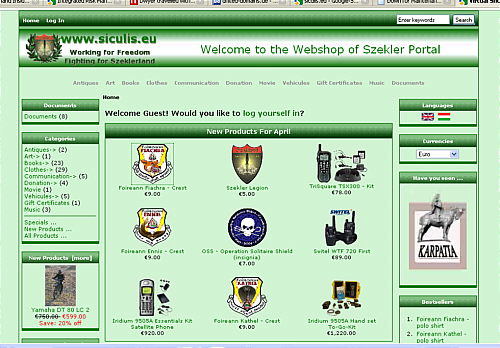
szekler-legion.jpg

Just like a bad penny, some nasties (like the Szekler Legion, screengrabbed above) keep coming back...and yes, there are Irish and Corrib project crests on that page. Hmm, whatever could it mean?

I've been meaning to translate this item for a few days, and just now got around to it:

A Hungarian, Tibor Revesz, has been fingered as head of the suspected terrorist cell broken up last month in Santa Cruz, Bolivia. Revesz is believed to have had more power than the Bolivian-Croatian-Hungarian Eduardo Rózsa Flores, according to revelations by an opposition deputy, Bernardo Montenegro, of the Podemos party.

"According to the information we have, Tibor Revesz was the head and organizer of this group. Not only here, but in his own country, he had knowledge of the organization of irregular groups," Montenegro told the Special Commission of the Chamber of Deputies, which is investigating the case.

Montenegro revealed that this new element came from the declarations of the Bolivian, Mario Tadic, and the Hungarian, Elöd Tóásó, survivors of the police operation that killed three other assassins last April 16 in the Hotel Las Américas in Santa Cruz. The two prisoners are currently incarcerated in La Paz.

The congressman said that Revesz had been in Bolivia throughout the first stage of the formation of the irregular group, and that for some as yet unknown reason he left the country and left behind five persons, three of them later killed: Eduardo Rózsa, Michael Martin Dwyer (of Ireland), and Arpád Magyarosi (of Hungary), as well as the two detainees, Tadic and Tóásó.

"There definitely were not only these five persons in this irregular group. There were other persons who came to Bolivia, such as the Hungarians Revesz, Gabor Dudog, and a man named [Daniel] Gaspar. Tadic said that at one time, he heard someone say to Mr. Rózsa that it was cheaper to buy two bullets than to pay for travel tickets," said Montenegro.

According to Montenegro, Revesz is in Hungary, for which reason Tóásó fears for his family. Revesz has an extensive criminal record when it comes to forming irregular (i.e. terrorist) groups.

"He is a person very much connected to irregular groups. He is believed to have been the mentor to various irregular movements and apparently came to Bolivia and began to form this group. One of the hypotheses is that he was in charge of this cell, above Rózsa," Montenegro said.

I've done the Googly Moogly on Tibor Revesz, and here's what I found:

  • He was with Mike Dwyer in Ireland, and is suspected of having recruited him when both worked as security goons for I-RMS, the private-security contractor for Shell Oil. They worked together on the controversial Corrib gas line project. He is now suspected of having been the unnamed "mutual friend" who hooked Dwyer up with Rózsa and travelled with Dwyer from Ireland to Bolivia, only to return later on.
  • Revesz is also known as "Photosniper" and is believed to be a member of the infamous Szekler Legion. His résumé is chock-a-block with "security" activities that would also be of benefit to a would-be mercenary...or terrorist. His profile definitely matches that of the unnamed "32-year-old Hungarian" who travelled with Dwyer to Bolivia.
  • This Hungarian blogger has heard reports that Revesz was arrested. So far, I haven't found further details. I would welcome more, if anyone knows.

The other "new" Hungarian name on this blog's radar, Gabor Dudog, also worked "since January" for a security company in Ireland. Hmmm, also for Shell? His mother, predictably, claims he "didn't do anything wrong". Now, where have we heard that before? BTW, Indymedia Ireland is doing terrific research on this case, check it out.

According to the Hungarian ambassador to Bolivia, Dudog and Daniel Gaspar (the other "new" name) have already left the country. No explanation, but if they have ties to this unsavory bunch, none is really needed. They are wanted for questioning (at the very least) by Bolivian authorities, so I foresee an extradition hearing. Play nice, Hungary!

Meanwhile, there's a real effort to paint Elöd Tóásó as a poor suffering innocent, here. There's also a "defense fund" and petition, which I hope won't find many contributors. I don't buy any of this "oh, but he's innocent and a hero" crap--I've blogged the cellphone video indicating him as being involved in the conspiracy up to his eyeballs. Not to mention I have the pic of him with the big fat sniper rifle. Innocent, my ass--and if he's suffering now, GOOD. He ought to, for what he tried to do. Foreign intrigue is not fun and games, people. If he's co-operating with the authorities and singing like a canary, fine--but he does not deserve freedom. He knew what he was involved in, and his moral sense didn't dissuade him. I hereby remind anyone coming here to troll on his behalf that he faces charges of terrorism and attempted multiple murder, and that this is not some set-up on the part of the Bolivian government, as some people appear to think.

Now, on to the next piece of translation, in which more names are named:

According to today's edition of the state newspaper Cambio, three names were found in the pocket of the Bolivian-Croat cell leader, Eduardo Rózsa Flores, who died resisting arrest.

One of the implicated is Juan Líder Paz, an engineer by profession, who, according to the inquiry, financed the extremists. Paz is a fugitive from justice as of Thursday, but yesterday his attorney presented a request establishing legal residence on his behalf before the prosecutor in charge of the case, Marcelo Sosa.

The other implicated man is Héctor Renato Laguna, also an engineer, in charge of recruiting youths to the so-called Bolivian Socialist Falange ['Bina's note: a known fascist organization] in order to commit separatist and seditious acts.

According to Cambio, the third man is Enrique Vaca, member of the directorate of Fexpocruz, the agricultural fair of Santa Cruz. He is believed to have supplied [fake] credentials to Rózsa. At the present time, Vaca is also a fugitive from justice.

The commission also took statements yesterday from the Bolivian citizen Ignacio Villa Paz, nicknamed "El Viejo" (the Old Man), who is considered a key witness for the prosecution. Villa was one of the closest persons to Rózsa, for which reason his statements are of relevance to the clarification of the international network's activities.

In the statements of "El Viejo", several names of opposition authorities and members of the business sector of Santa Cruz recur. According to Villa, departmental prefect Rubén Costas and businessmen Branko Marinkovic, Mauricio Roca and Guido Nayar also aided the extremist group.

According to the information obtained so far, the group intended to perpetrate separatist actions and had plans to assassinate president Evo Morales and various members of his cabinet.

More on these new guys later, I'm sure. Meanwhile, enjoy this pic I found of Mike Dwyer and Eduardo Rózsa Flores in shorts...

terroristas-pantaloncillos.jpg

Somehow, neither looked quite as good in them as Evo, eh?

Maracaibo goes to hell, in true paramilitary style

paramilitaries-zulia.jpg

Ever since Manuel Rosales fucked off to Peru, falsely claiming he was being "persecuted", the city of Maracaibo, Venezuela, has been effectively without a mayor. But even when Burusas was still in the city, he was apparently either grossly incompetent or flat-out criminal, if this story is any indication:

"Commando-type men arrived, armed to the teeth, and shoved us against the wall. They told us that if they saw us talking on the corner again, they would fuck us."

So says Francisco (name altered to protect the privacy of the 17-year-old), who was threatened with death along with six other young people by a suspected "death squad" in the Lomitas del Zulia sector of the Francisco Eugenio Bustamante parish, population 93,967, on April 24 at 8:00 pm.

A total of 11 sectors are alarmed at the presence of a violent group that is trying to take the law into its own hands.

Francisco says that days before the men came to the neighborhood, the residents of Calle 60B-1 in Lomitas del Zulia were shocked to find a leaflet stuck in the doors of their houses, warning of a "social cleansing" due to the rise in juvenile delinquency in Maracaibo.

Panic took hold in the zone as people recalled the threats of the "death pamphlets" which circulated in the city and other muncipalities over the last two months.

Francisco recalls that the six armed men got out of a grey Ford Fiesta Power and corralled him when he was conversing with a group of other boys. "One of them wanted to leave on his bicycle, but they pointed a pistol at him and frisked him to see if he was armed."

A neighbor intervened, and assured that the boys were all right and asked that they be left alone. "Then they went away. But if we see them again in the street, we won't respond," said one of the boys, in a hoarse voice.

From then on, the residents changed their routine. They live in fear of the men who threatened them with death.

The same thing happened a week before, in the Libertador neighborhood of the same parish, when several hooded men shouted at passersby that they would kill "delinquents and drug traffickers", according to Adolfo Jacobo, a Maracaibo taxi driver.

"20 days ago, a friend showed me a flyer that some guys were throwing around in the streets, saying they would kill criminals, never mind if it took the lives of any innocent people," said a resident of Avenida 95 in the same neighborhood, who declined to be identified. He added that as of that moment, the neighbors all locked themselves indoors after 7:00 pm, for fear of "being caught in a shooting."

"We are worried about the lack of (police) patrols. Now we can't even stand in front of our houses because of the insecurity and the threatening pamphlets," said Eduardo Rincón, an electrician from Lomitas del Zulia in eastern Maracaibo.

His version coincides with that of Commissioner Jotny Márquez, chief of the CICPC-Maracaibo, who questions the crime-prevention work of the regional police because crime rates have risen.

In the José Antonio Páez neighborhood, near Lomitas del Zulia, people are also alarmed by the appearance of the pamphlets.

Aura Medina, a 47-year-old housewife, said that after the leaflets were distributed, several suspicious cars were seen passing through the neighborhood during the night. "We're afraid that they will do what they did to those young guys, and take people from their houses and kill them," said Medina, referring to a case of some young people who were taken from the La Chinita neighborhood, in the southern part of the city, last April 18.

Families of the victims have joined the CICPC and the Ombudsman's office in calling for justice for their loved ones. "Right now, we know that they called several municipal police officers to testify who were involved, and we hope they will clarify what happened," said Aída Rodríguez, mother of Jender Soto, who was killed by gunfire.

A spokesman for the CICPC informed that five members of the Maracaibo police were called to give statements about the occurrences. However, a tribunal source denied, for the time being, that the officials were directly involved in the murders.

The pamphlets found in Maracaibo were of the same content as those which circulated in Colombia in 2008.

Translation mine.

It seems pretty clear what's going on. Colombian paramilitaries have been a problem in western Venezuela for years, because that region borders on Colombia. And right-wing politicians, too, have been western Venezuela's bane for the same amount of time. It seems only logical to suspect that the two are somehow connected; the paras "provide security" to the rich, corrupt right-wingers, and do so by menacing the poor. They also seem to have had some collaborators among the Maracaibo police, and this even when Giancarlo Di Martino, a member of the PSUV (Chavecito's party) was mayor of Maracaibo and trying to get a handle on the situation. Do the PoliMaracaibo respect no authority unless it's that of a fascist enabler? Sure smells that way.

It doesn't hurt, either, to recall that Colombian paramilitaries have been found to be involved in several failed coup plots against Chavecito--always hired at the behest of those same right-wing political figures who pose as heads of "civil society" and NGOs, and who are constantly screeching about political persecution when the law starts catching up to them.

So, when will the Dissociated Press, the Old Grey Whore and the WaHoPo write about the truly persecuted in Venezuela--the residents of neighborhoods terrorized by these right-wing commandos, operating illegally at the behest of poor, persecuted Manuel Rosales? Don't hold your breath, kiddies, they're still busy painting Chavecito as the villain on whose shoulders all of this somehow must fall.

A estratégica eleição no Líbano

A estratégica eleição no Líbano


por Lejeune Mirhan*

Esta semana poderíamos tratar de dois assuntos, ambos importantes: o cancelamento da visita do presidente do Irã ao Brasil, bem como as repercussões que ainda reverberam de suas declarações na Conferência anti-racista, vinda, inclusive de setores de esquerda e o giro que o fascista Avigdor Liebermann, chanceler de Israel faz pela Europa para falar contra o Estado palestino, mas, em função da data que a coluna vai ao ar – 7 de maio – estamos a um mês das estratégicas eleições libanesas. E sobre isso quero dar algumas opiniões.


Nasralláh, liderança emergente no Líbano

A democracia libanesa

Se analisarmos a política brasileira nem sempre conseguimos produzir documentos com a profundidade que desejamos, imagina tecermos uma análise da política interna libanesa. Estudamos o Oriente Médio há tempos, mas vivendo muito distante dessa realidade. Mas, apesar da complexidade, vamos nos arriscar.

O Líbano é um dos mais antigos e prósperos países árabes existentes no Oriente Médio. Viveu uma guerra civil que quase leva o país a uma divisão territorial e religiosa, a uma cantonização e que durou 15 longos anos. Inicia-se em 1975 e praticamente só é encerrada em 1990.

Não vamos aqui detalhar os atores e o processo que levou a essa guerra civil. Mas ela tem origem, por assim dizer, na imensa imigração e deslocamentos humanos palestinos na região do Sul do país, iniciados com a diáspora palestina desde 1948. Após a fundação da OLP, os grupos mais revolucionários e de esquerda, acabaram por se transferir para o Líbano, alterando de certa forma o já frágil equilíbrio que vinha sendo mantido entre as forças políticas e as correntes religiosas desde 1943.

Nessa guerra estiveram envolvidos membros de milícias cristãs, drusas, islâmicas (xiitas e sunitas), grupos que posteriormente dividiram-se e formaram novos agrupamentos políticos. Muitos desses ainda hoje possuem forte presença no cenário político-partidário libanês.

A paz começa a se desenhar a partir de uma reunião histórica na cidade de Taif na Arábia Saudita, ocorrida em setembro de 1989. Nessa cidade, reuniram-se 62 deputados libaneses, membro do Parlamento Libanês (cujas passagens, inclusive, foram financiadas pelo riquíssimo empresário Hafic Hariri, participante desse evento e desse acordo, posteriormente primeiro ministro e assassinado em 2005).

A proposta de estabelecer os acordos de paz entre as facções libanesas, entre as correntes políticas e religiosas, acabou sendo votada por 58 votos a quatro e o referido acordo foi assinado em 21 de outubro do mesmo ano na referida cidade. Ficou conhecido como os “Acordos de Taif”. Nele manteve-se a tradição de entregar a presidência do país a um cristão maronita (mais moderado) e houve um esvaziamento do poder da presidência. O primeiro ministro ficaria sempre com um muçulmano sunita e a presidência do parlamento ficaria sempre com um muçulmano xiita (este cargo foi ocupado por muitos anos por Nabi Berry). Com isso manteve-se uma tradição que veio do chamado Pacto Nacional Libanês de 1943.

No entanto, os grupos políticos que se digladiaram na guerra civil por 15 anos, mantiveram muitas das suas divergências após esse período. A presença da Síria, tanto na forma da influência política, como a presença militar com tropas, a pedido do governo libanês que se instaurou a partir de 1990, sempre gerou problemas políticos internos, sendo que algumas facções nunca aceitaram essa presença militar. Na verdade o centro da questão não era a presença da Síria ou não, mas sim o alinhamento e a influência do Líbano sob a órbita dos Estados Unidos. Nem se tratava mais de alinhamento com a União Soviética, pois no ano seguinte ao acordo, em 1991, esta desabaria completamente.

Assim, o centro da questão era ser um satélite dos EUA e consequentemente de Israel ou manter-se alinhado com os povos árabes, pela soberania e independência do Líbano. Em fevereiro de 2005, o líder de correntes sunitas e ex-ministro Hafic Hariri foi assassinado. Os oportunistas de plantão apontaram de imediato o dedo acusador para o governo da Síria, o que menos tinha interesses em que isso ocorresse. Isso, mais uma vez, rompe certo equilíbrio político existente. No entanto, esse episódio acabou por precipitar a saída das tropas sírias do Líbano. Movimentos de massa acabaram ocorrendo, protestos e no processo eleitoral, as forças mais conservadoras venceram as eleições. O Movimento “14 de Março”, liderado pelo filho do ex-primeiro ministro assassinado, Saad Hariri, acabou constituindo maioria no parlamento e a oposição ficou sendo liderada pelo Partido de Deus, chamado Hezbolláh, cujo líder é o xiita Hasan Nasralláh. Esse é o período que se chama de Revolução dos Cedros.

Bem ou mal, nos últimos anos, se contarmos de 1990 em diante, podemos dizer que o Líbano vive uma democracia estável, ainda que cheio de problemas. A liberdade partidária é ampla. Estima-se a existência de cem partidos políticos legalizados e aptos a concorrerem a um cargo eletivo. Apenas três partidos políticos são proscritos no Líbano (Guardiões dos Cedros; Partido Isolacionista Regressivo e Movimento Islâmico Amal, todos de extrema direita) (1).

Não quero aqui fornecer dados sobre as eleições de outros países árabes, como o Egito, Síria, Líbia, Tunísia, Argélia e mesmo Iraque (na época de Saddam), que são Repúblicas, mas cujas eleições seus presidentes sempre venceram as eleições com índices que chegam a 99% dos votos válidos. No Líbano isso jamais ocorreria, pela pluralidade política e ideológica que o país vive e mesmo pelas diferenças de correntes de opinião e religiosas existentes (é também uma república parlamentarista e o presidente é eleito indiretamente pelo parlamento). Por isso mesmo que o Hezbolláh não defende a instauração de uma República Islâmica no Líbano, porque isso nunca seria viável.

O quadro político atual

Apesar da profusão de partidos políticos (e há quem acha que nós no Brasil temos muitos partidos... apenas 27 para um parlamento com 594 cadeiras, sendo 513 na Câmara e 81 no Senado; no Líbano são 128 vagas na Câmara, não possuem senado e têm cem partidos!), formaram-se duas grandes coligações partidárias que concorrerão ás eleições.

São várias as correntes que participam do pleito e podem ser assim definidas: sunitas (pró-imperialistas e antiimperialistas); socialistas (conservadores, só no nome ou mais de esquerda); nacionalistas libaneses (direita) e nacionalistas sírios (de centro-esquerda); liberais (de direita) e social-liberais (direita); reformistas (de direita); federalistas; centristas; xiitas (antiimperialistas); nacionalistas árabes e nasseristas (patrióticos, de centro-esquerda); social-democratas (de direita); comunistas (todas as correntes existem vários que se proclamam comunistas, sendo que o maior de todos é o PC Libanês).

Sobre essas correntes, queremos tecer alguns comentários dentro dos blocos que a compõem.

1. Coligação “Aliança 14 de Março”

O nome deriva da data da chamada “Revolução dos Cedros”, no período que compreende o assassinato de Hariri em 14 de fevereiro e 14 de março de 2005, data de um mega comício feito em resposta ao também mega comício realizado em 8 de março pelo Hezbolláh. É o campo da direita e extrema direita. Possuem entre eles falangistas, drusos, maronitas entre outros.

Esta coligação possui hoje 64 deputados e tem o primeiro ministro Fouad Siniora (sunita). O líder é Saad Hariri, filho de Hafic. O Partido principal que encabeça a coligação é o Movimento Futuro e possui hoje sozinho 34 deputados. São seculares, mas majoritariamente sunitas e pró-imperialistas. Dessa coligação/aliança participam outros partidos importantes: Partido Socialista Progressista, cujo líder é Walid Jumblat, filho de Kamal Jumblat que, no passado, jogou papel importante, mas hoje se alinhou ao campo conservador; Forças Libanesas (extrema direita, cujo líder é Samir Geagea); Bloco de Trípoli e Democracia Radical. Ao todos, esse bloco possui 20 partidos e/ou movimentos.

Regra geral, esse campo, apesar de possuir a maioria no parlamento, é do campo conservador. Pode-se dizer que se alinham ideologicamente à direita. Ao todo a aliança possui 20 partidos e movimentos registrados. Eles pretendem manter o controle do governo, com a indicação do futuro primeiro Ministro, que deve ser sempre um sunita.

Na sua recente passagem pelo Líbano, a (desastrosa) Secretária de Estado dos Estados Unidos, cujas declarações tem sido muito ruins e que destoam do que o próprio presidente Obama tem falado, ela acabou por apoiar, de certa forma essa Aliança, ainda que não possa dar uma declaração de apoio total, pois além de ser ingerência interna na política de outro país soberano (ou que luta pela sua soberania), isso poderia tirar ainda mais votos dessa coligação.

Não temos acesso a pesquisas eleitorais, mas há indicadores de muito desgaste nessa aliança, na forma como o desastroso governo vem conduzindo o país. No bombardeio que Israel fez ao Líbano entre julho e agosto de 2006, esse agrupamento pouco fez para defender a soberania libanesa. A resistência foi encabeçada pelos militantes do Hezbolláh, que angariaram amplo prestígio na sociedade.

2. Coligação “8 de Março”

O nome deriva de um imenso comício realizado em 8 de março de 2005, quando mais de um milhão de pessoas foram às ruas de Beirute para agradecer a presença da Síria no Líbano, que acabava de se retirar. Aqui cabe o registro que o general cristão Michel Aoun, ainda que tenha integrado o campo mais conservador num primeiro momento, e que sempre foi anti-Síria quando esteve exilado na França por 15 anos, mas em 2006 muda de posição e integra esse campo oposicionista.

Assim, os principais líderes desse bloco, dessa Aliança são: Movimento Patriótico Livre, do general Aoun (cristão, mas oficialmente secular); Hezbolláh (xiita), cujo líder é Hassan Nasralláh; Movimento Amal (xiitas, mais moderados), cujo líder é Nabih Bérri. Há ainda a presença de cristão maronitas, armênios, seculares entre outros. Destaca-se aqui o Partido Comunista Libanês, cujo líder é Khaled Hadadi; a Liga dos Trabalhadores que se proclama comunista e nacionalista árabe União da Juventude Democrática Libanesa ligada ao PC Libanês. Esses agrupamentos não possuem deputados. Ao todo essa aliança tem hoje 56 deputados no parlamento e luta para fazer a maioria e governar o país. Ao todo, são 39 partidos e/ou movimentos e grupos que integram essa aliança. Registre-se a presença ainda do pequeno, mas com dois deputados Partido Socialista Árabe Baath e do Partido Nacional Social Sírio, com dois deputados e cujo líder é Assad Hardan.

Análise e perspectivas

Por esses dados, vemos que os dois maiores blocos que disputam as eleições, são integrados por 59 partidos políticos e/ou movimento e agrupamentos. Outras organizações político-partidárias perfazem mais 41 partidos, que possuem um deputado apenas e praticamente não tem chances de eleger parlamentares (a conta não fecha em 128 porque alguns deputados e partidos não concorrem às eleições).

A complexidade das eleições se explicam pelos acordos, tanto de Taif de 1989, incorporados à constituição de 1990, como pelos acordos assinados no ano passado, da qual todas as forças políticas dele participaram. Ficou conhecido como Acordos de Doha, assinado em 21 de maio de 2008, por iniciativa do Emir do Qatar, Hamad Bin Khalifa Al Thani. Por esse acordo, ocorre praticamente uma divisão de vagas no parlamento libanês entre as correntes religiosas. Foi a partir desse acordo é que foi possível eleger o general Michel Suleiman, presidente do Líbano.

Como dissemos, não temos acesso às pesquisas de opinião sobre os blocos em disputa. Mas além do desgaste de ser governo da Aliança “14 de Março”, houve um fato semana passada que chamou a atenção tanto do povo libanês como da comunidade internacional que acompanha essas estratégicas eleições. A libertação de quatro generais ligados à inteligência libanesa, que ficaram presos por quatro longos anos sob a acusação – falsa – de terem conspirado para matar Hafic Hariri. O tribunal da ONU especialmente formado para apurar os episódios – que comentamos no mesmo ano de 2005 sobre esse assunto, que violou a soberania libanesa – determinou a libertação destes generais por absoluta falta de provas. Isso fortalece imensamente o campo oposicionista.

A grande mídia vai falar que o bloco “8 de Março” é ligado á Síria e ao Irã. Vão querer confundir os eleitores. A mudança de agenda – sinalizada inclusive pelo governo fascista de Israel – de querer discutir o Irã e seu programa nuclear (pacífico) ao invés de discutir a questão palestina, não dará certo. Não vai colar, pelo menos entre os libaneses. Estes estão vendo que é muito mais benéfico ser amigo e aliado da Síria e do Irã do que dos Estados Unidos e de Israel!

O que estará em jogo nestas eleições será a soberania do Líbano, defendida hoje com firmeza pelos xiitas do Hezbolláh de Nasralláh, pelo PC Libanês de Hadadi, pelos cristãos ligados ao Movimento Patriótico Livre do general Aoun e pelos xiitas do Amal, de Bérri. Não há mais do que dois campos em disputa. O outro lado, o outro campo é do imperialismo, ainda que possa ter siglas que se digam “socialistas” ou “democracia radical” ou ainda “democracia de esquerda”. Pura fraseologia de fachada dita progressista, mas que escondem interesses dos mais escusos e reacionários possíveis.

Um governo progressista a ser eleito em 7 de junho reconhecerá de imediato a legitimidade do Hezbolláh como movimento armado de libertação e de luta pela soberania e independência do Líbano. Espera-se que nunca mais o país possa estar sujeito às invasões perpetradas por Israel em sua fronteira Sul, ainda parcialmente ocupada pelo exército israelense. A Síria será tratada como sempre deveria ter sido tratada: como país irmão do Líbano, país árabe milenar, soberano e que defende a unidade árabe, contra as políticas imperiais, coloniais e sionistas na região. Guerrilheiros e lutadores libaneses da resistência não mais serão tratados como “terroristas”, mas como deveriam ter sido sempre tratados: como lutadores pela independência nacional, como patriotas e defensores da nação árabe e libanesa. São amigos do povo libanês e não inimigos, como grande parte da mídia os trata.

Tratar o Irã como inimigo é o maior erro que o governo libanês e seus aliados fazem no momento, como o governo de Israel. Esse país já cansou de propor que todo o Oriente Médio seja desnuclearizado. Isso afetaria profundamente Israel, que é uma das nove nações do mundo a ter bombas nucleares e isso as potências ocidentais nada falam a respeito.

Não adianta – e não colará na propaganda interna do Líbano – a tentativa de demonização que Israel vem fazendo do Irã, como diz o professor Franklin Lamb (2). Este estudioso das questões libanesas menciona uma recente pesquisa onde apenas 46% declararam que a “religião é extremamente importante para mim”, apesar de toda a divisão religiosa estabelecida. Na mesma pesquisa, 90% dos muçulmanos disseram respeitar as ideias dos cristãos libaneses. Ou seja, fica claro uma elevação da consciência política do povo e dos eleitores libaneses e que colocá-los contra o Hezbolláh, vinculando esse grupo ao Irã não irá influenciar o seu voto nas eleições. O libaneses sempre souberam conviver com as diferenças e as diversidades. Os muçulmanos em sua história também. Como sempre disse, o problema não é e nunca foi religioso, mas sim político, tanto no Líbano como na palestina.

No discurso de posse de Netanyahu ele disse algo mais ou menos assim, como sinalização de mudança clara de agenda, escondendo que a questão central é a criação do Estado Palestino: “o maior de todos os perigos para Israel e para toda a humanidade esta na possibilidade de surgir um governo radical armado com bombas atômicas”. Ora, é sabido que o arsenal israelense possui entre 250 e 400 ogivas nucleares e o atual governo é o mais fascista e direitista de toda a história de 61 anos de Israel (a completar em 14 de maio próximo). Terá sido uma confissão que Bibi fazia de seu próprio governo? Que libanês vai acreditar que o Irã é inimigo do Líbano na conjuntura atual?

Não tenho bola de cristal para prever resultados eleitorais. Mas, suspeito seriamente que a coligação “8 de Março”, de centro-esquerda, patriótica e nacionalista, progressista, sagrar-se-á vencedora. A Aliança “14 de Março” deve sair derrotada nas urnas. O que precisa ficar claro de uma vez por todas é que o Irã só é inimigo do sionismo, do racismo do governo de Israel, que discrimina os palestinos e os muçulmano em seu estado de caráter judeu. Acho que os libaneses devem estar atentos, mais do que nunca, à eventuais provocações, criação de factóides políticos que podem embotar as eleições. A seguir o rumo atual, a direita deve perder as eleições.

Não me cabe fazer escolhas nestas eleições, pois sou brasileiro. Isso é uma atribuição exclusiva do povo e dos eleitores libaneses. Apenas me cabe “torcer” por assim dizer. Espero, sinceramente, que nestas estratégicas eleições – que a mídia brasileira ainda ignora completamente – vençam os que defendem um Líbano progressista, soberano, verdadeiramente independente, dono de seus destinos, que reforce a sua vocação árabe e que esteja sempre unido e irmanado com todos os países e com o povo árabe no Oriente Médio. Esse é meu desejo sincero neste momento.

Até junho voltaremos mais a este tema.

Notas

(1) Não confundir Movimento Islâmico Amal, com o Movimento Amal, que tem 15 deputados e é de linha antiimperialista e contra Israel.

(2) Atualmente pesquisador sobre o Líbano e o seu artigo pode ser lido em http://www.counterpunch.org/lamb04172009.html cujo título é Iran Offers More Than Just Cash (O Irã oferece mais do que apenas dinheiro). Aqui se comenta que pode ajudar mais o Líbano, se Estados Unidos ou o próprio Irã.


*Lejeune Mirhan, Presidente do Sindicato dos Sociólogos do Estado de São Paulo, Escritor, Arabista e Professor Membro da Academia de Altos Estudos Ibero-Árabe de Lisboa, Membro da International Sociological


* Opiniões aqui expressas não refletem, necessariamente, a opinião do site.


The Real Culprits behind Sri Lankan War

Birds have now stopped singing in a land called Vanni. Sun, moon and the stars in the sky have hidden their faces. Angel of death flew over the skies of Vanni and took the lives of more than twenty five thousand innocent Tamil men, women and children in a single day.

Thousands of wounded are still crying out for help. They are bleeding to death on the streets. They have touched neither water nor food for days. Nobody has come to rescue them. Those who fight for the rights of the animals and those who preach about Buddha and Mahatma have no compassion for the dying Tamils.

Chinese weapons, Indian intelligence, Sinhala Armed personals and racist Sri Lankan leaders came together to perform one of the most cruel war that has cost the lives of many thousands innocents.

While thousands of innocent children and women are facing painful and slow death, Sinhala Buddhist extremists are celebrating victory with flags and fire crackers in the south of the country.

War that was started with hidden agendas of local and international forces, went on for months not just with the strength of the weapons but with well organised false propaganda done by the Sri Lankan officials.

This war was orchestrated and staged with lies and deceptions from the beginning till the end.

Sri Lankan leaders are still vomiting out worms of lies

Rulers of Sri Lanka are continuing to vomit out worms of lies to justify their atrocities against innocent lives. They started with “War on Terror” but changed the buzz word to “Humanitarian Operation” in order to deceive the international community. “War on Terror” was an accepted norm during the Bush era but lost it's validity now. Therefore they had changed the name of the game to “Humanitarian operation”

Why do they lie?

Because they have many hidden agendas behind this dirty war. They want to hide the atrocities that are being committed against innocent civilians. They themselves know, what they are doing is wrong and not acceptable in a civilised world.

Above everything they want to protect India who are orchestrating the war in Sri Lanka. Indian intelligent agents and military experts are working closely with the Sri Lankan forces in the war zone.

How do they manage to lie?

They simply hide the truth. When the truth is hidden what comes out is lie.

Foreign journalists and aid workers are barred from the war zone and IDP camps. Those who try to enter and report about the war, are kicked out of the country if they are critical of the government.

Local journalists are intimidated, tortured and sometime killed. Telling the truth is considered a crime in Sri Lanka.

Phone lines are tapped. Web sites are blocked. Anybody who talk against the government is considered as Terrorist or Terrorist supporter.

In the war front, dead bodies of the civilians are burned to ashes using powerful chemicals. This is to hide the number of innocent civilians that have perished in the war.

Sri Lankan government officials very often organise staged visits to the IDP camps and force the refugees to lie to the foreign diplomats.

What did they lie about?

They lied about the objective of the war, weapons used, number of civilian causalities and military operations.

Although they initially claimed that the objective of the war was to defeat the LTTE, they have in fact killed and wounded several thousands of innocent Tamil civilians with heavy weapons. They used chemical weapons and cluster bombs on innocents, but they continue to deny the usage of such weapons.

Sri Lankan forces have destroyed Schools, hospitals and farm lands and made the whole place into a graveyard for the Tamils. This is also regularly denied by the Sri Lankan authorities.

This war has claimed more than fifty thousands lives just within the last few months but the Sri Lankan government is not going to open their mouth and tell this truth to the world.

Why didn't the UN intervene?

United Nations, who is supposed to be a guardian for the oppressed people in the world turned out to be a silent spectator of a man made disaster that has taken the lives of many thousands.

There is a conspiracy behind this whole war game. China was initially blocking every attempt that was made by UK and France to discuss the Sri Lankan issue in the Security Council.

Ban Ki-moon's chief of staff Vijay Nambiar was sent to Sri Lanka to organise a cease fire. He failed to secure a ceasefire and returned back after meeting the Sri Lankan and Indian officials.

Interestingly Vijay Nambiar couldn't achieve anything constructive in his visit and he had also refused to meet the reporters.

This `unbiased` negotiator, who appears to actually be on the payroll of the Sri Lankan government, though indirectly, something that is obviously known to the United Nations. Vijay Nambiar`s brother (Satish Nambiar) is a paid consultant for the Sri Lankan army, and has been since 2002. Is there any link between the UN and the Sri Lankan army`s paid consultant?

UN has once again proved to the world that it is no longer a trust worthy international body that can protect the vulnerable.

They have all achieved what they wanted

What we are witnessing in Sri Lanka is neither “war on terror” nor a Humanitarian operation. This is simply a racist war against the Tamils conducted with the help of India and China. You wouldn't shoot at the passengers and bomb the whole bus, if you had to rescue the hostages.

Sinhala extremists are already celebrating and they have also started to intimidate Tamils in the South of the country.

India and China have started to work on their hidden agendas in Sri Lanka.

Tamils all over the world are mourning the death of their loved ones back home.

What Next?

When the rocket scientists designed highly complex derivatives and greedy traders traded these new emperors cloths, many investment banks collapsed. Pension funds lost money. Bankers committed suicide.

The whole financial disaster was caused by greedy and selfish individuals who had short term hidden agendas.

We took action. Greedy bankers and traders were taken to courts. New rules and regulations are now in place to prevent this happening again.

In the same way, the masters of this war in Sri Lanka should be brought to justice.

Sinhala government with racist agendas , China and India with their strategic interests and UN with corrupt officers are the evil ingredients of this dirty war that has cost the lives of many thousands innocent Tamils.

Leaders of Sri Lanka and some responsible officers in the UN, should be questioned in international courts in order to find out if they were responsible for the deaths of innocent Tamils.

If we didn't, we would end up seeing more of such evil games repeated over and over again.

Richard Dixon

Sunday, May 17, 2009

Obama’s Animal Farm: Bigger, Bloodier Wars Equal Peace and Justice


Global Research, May 17, 2009


“The Deltas are psychos…You have to be a certified psychopath to
join the Delta Force…”, a US Army colonel from Fort Bragg once told me back in the 1980’s. Now President Obama has elevated the most notorious of the psychopaths, General Stanley McChrystal, to head the US and NATO military command in Afghanistan. McChrystal’s rise to leadership is marked by his central role in directing special operations teams engaged in extrajudicial assassinations, systematic torture, bombing of civilian communities and search and destroy missions. He is the very embodiment of the brutality and gore that accompanies military-driven empire building. Between September 2003 and August 2008, McChrystal directed the Pentagon’s Joint Special Operations (JSO) Command which operates special teams in overseas assassinations.

The point of the ‘Special Operations’ teams (SOT) is that they do not distinguish between civilian and military oppositions, between activists and their sympathizers and the armed resistance. The SOT specialize in establishing death squads and recruiting and training paramilitary forces to terrorize communities, neighborhoods and social movements opposing US client regimes. The SOT’s ‘counter-terrorism’ is terrorism in reverse, focusing on socio-political groups between US proxies and the armed resistance. McChrystal’s SOT targeted local and national insurgent leaders in Iraq, Afghanistan and Pakistan through commando raids and air strikes. During the last 5 years of the Bush-Cheney-Rumsfeld period the SOT were deeply implicated in the torture of political prisoners and suspects. McChrystal was a special favorite of Rumsfeld and Cheney because he was in charge of the ‘direct action’ forces of the ‘Special Missions Units. ‘Direct Action’ operative are the death-squads and torturers and their only engagement with the local population is to terrorize, and not to propagandize. They engage in ‘propaganda of the dead’, assassinating local leaders to ‘teach’ the locals to obey and submit to the occupation. Obama’s appointment of McChrystal as head reflects a grave new military escalation of his Afghanistan war in the face of the advance of the resistance throughout the country.

The deteriorating position of the US is manifest in the tightening circle around all the roads leading in and out of Afghanistan’s capital, Kabul as well as the expansion of Taliban control and influence throughout the Pakistan-Afghanistan border. Obama’s inability to recruit new NATO reinforcements means that the White House’s only chance to advance its military driven empire is to escalate the number of US troops and to increase the kill ratio among any and all suspected civilians in territories controlled by the Afghan armed resistance.

The White House and the Pentagon claim that the appointment of McChrystal was due to the ‘complexities’ of the situation on the ground and the need for a ‘change in strategy’. ‘Complexity’ is a euphemism for the increased mass opposition to the US, complicating traditional carpet ‘bombing and military sweep’ operations. The new strategy practiced by McChrystal involves large scale, long term ‘special operations’ to devastate and kill the local social networks and community leaders, which provide the support system for the armed resistance.

Obama’s decision to prevent the release of scores of photographs documenting the torture of prisoners by US troops and ‘interrogators’ (especially under command of the ‘Special Forces’), is directly related to his appointment of McChrystal whose ‘SOT’ forces were highly implicated in widespread torture in Iraq. Equally important, under McChrystal’s command the DELTA, SEAL and Special Operations Teams will have a bigger role in the new ‘counter-insurgency strategy’. Obama’s claim that the publication of these photographs will adversely affect the ‘troops’ has a particular meaning: The graphic exposure of McChrystal’s modus operendi for the past 5 years under President Bush will undermine his effectiveness in carrying out the same operations under Obama.

Obama’s decision to re-start the secret ‘military tribunals’ of foreign political prisoners, held at the Guantanamo prison camp, is not merely a replay of the Bush-Cheney policies, which Obama had condemned and vowed to eliminate during his presidential campaign, but part of his larger policy of militarization and coincides with his approval of the major secret police surveillance operations conducted against US citizens.

Putting McChrystal in charge of the expanded Afghanistan-Pakistan military operations means putting a notorious practitioner of military terrorism – the torture and assassination of opponents to US policy – at the center of US foreign policy. Obama’s quantitative and qualitative expansion of the US war in South Asia means massive numbers of refugees fleeing the destruction of their farms, homes and villages; tens of thousands of civilian deaths, and eradication of entire communities. All of this will be committed by the Obama Administraton in the quest to ‘empty the lake (displace entire populations) to catch the fish (armed insurgents and activists)’.\

Obama’s restoration of all of the most notorious Bush Era policies and the appointment of Bush’s most brutal commander is based on his total embrace of the ideology of military-driven empire building. Once one believes (as Obama does) that US power and expansion are based on military conquests and counter-insurgency, all other ideological, diplomatic, moral and economic considerations will be subordinated to militarism. By focusing all resources on successful military conquest, scant attention is paid to the costs borne by the people targeted for conquest or to the US treasury and domestic American economy. This has been clear from the start: In the midst of a major recession/depression with millions of Americans losing their employment and homes, President Obama increased the military budget by 4% - taking it beyond $800 billion dollars.

Obama’s embrace of militarism is obvious from his decision to expand the Afghan war despite NATO’s refusal to commit any more combat troops. It is obvious in his appointment of the most hard-line and notorious Special Forces General from the Bush-Cheney era to head the military command in subduing Afghanistan and the frontier areas of Pakistan.

It is just as George Orwell described in Animal Farm: The Democratic Pigs are now pursuing the same brutal, military policies of their predecessors, the Republican Porkers, only now it is in the name of the people and peace. Orwell might paraphrase the policy of President Barack Obama, as ‘Bigger and bloodier wars equal peace and justice’.


James Petras is a frequent contributor to Global Research. Global Research Articles by James Petras

Murió el escritor uruguayo Mario Benedetti - La poesía se tiñe de negro

La poesía se tiñe de negro

Tenía 88 años y había estado internado por un problema intestinal crónico. Murió en su casa de Montevideo. El mundo perdió a un gran poeta, de inexplicable hermosura y a un hombre comprometido integralmente con la realidad.


El escritor uruguayo Mario Benedetti murió este domingo en Montevideo a la edad de 88 años, según confirmaron fuentes próximas a su familia. Benedetti, que padecía un delicado estado de salud, estaba en su domicilio de la capital uruguaya al momento de morir.

A fines del mes pasado había sido internado en el Hospital Impassa de Montevideo "estado delicado". Según informaron los médicos, debido al empeoramiento de una enfermedad intestinal crónica que padece desde hace mucho tiempo. Tras 12 días fue trasladado a su casa.

La inflamación intestinal también lo obligó a internarse el año pasado. En total fueron cuatro internaciones en menos de un año y medio.

"Este nuevo episodio se instala en un paciente con un territorio comprometido por su edad y porque es portador de una enfermedad respiratoria crónica de años de evolución", aseveró la doctora María Brotos.

Benedetti estuvo internado tres veces el año pasado en el mismo sanatorio. La primera vez, entre enero y febrero, fue al sufrir una enterocolitis que le causó deshidratación; la segunda, en marzo, por problemas respiratorios; y por último, en mayo, a causa de una descompensación.

Autor de unos 80 libros de poemas, novelas, relatos y ensayos, así como de guiones de cine, Benedetti obtuvo varios reconocimientos internacionales, como el Premio Reina Sofía de Poesía Iberoamericana (1999), el Premio Iberoamericano José Martí (2001) y el Premio Internacional Menéndez Pelayo (2005).

El poeta nació en Paso de los Toros en 1920. Es con Juan Carlos Onetti e Idea Vilariño uno de los referentes de la literatura uruguaya de la segunda mitad del siglo XX e integró con ellos la denominada Generación del 45, un movimiento cultural de gran influencia en Latinoamérica. Entre sus obras están "La tregua"; "Gracias por el fuego" y "La borra del café".

El diario argentino Clarín le hizo un homenaje hace unos años que lo retratan impecablemente: Fotos, audios, y una excelente entrevista., para conocer mejor a este gran poeta.
benedetti1.jpg

(FOTO: Archivo) Bien uruguayo, aquí con la infusión característica del Río de la Plata.
benedetti3.jpg

(FOTO: Eduardo Longoni)
bene.jpg

(Foto: Eduardo Longoni) Mirada de artista. Autor de unos 80 libros de poemas, novelas, relatos y ensayos, así como de guiones de cine, obtuvo varios reconocimientos internacionales.