

Why was a Sunday Times report on US government ties to al-Qaeda chief spiked?
FBI whistle-blower Sibel Edmonds was described as "the most gagged person in the history of the United States" by the American Civil Liberties Union. Was the Sunday Times pressured to drop its investigation into her revelations?


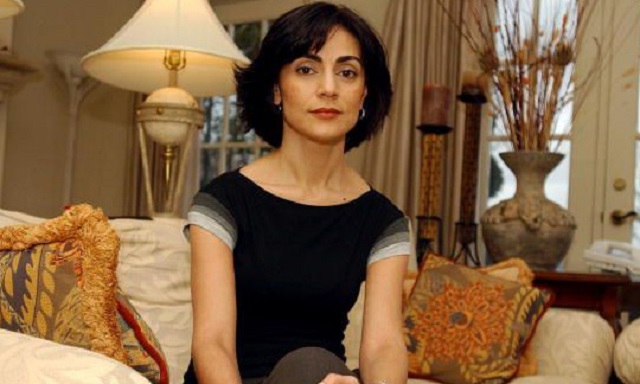
A whistleblower has revealed extraordinary information on the U.S. government’s support for international terrorist networks and organised crime. The government has denied the allegations yet gone to extraordinary lengths to silence her. Her critics have derided her as a fabulist and fabricator. But now comes word that some of her most serious allegations were confirmed by a major European newspaper only to be squashed at the request of the U.S. government.
In a recent book Classified Woman, Sibel Edmonds, a former translator for the FBI, describes how the Pentagon, CIA and State Department maintained intimate ties to al-Qaeda militants as late as 2001. Her memoir, Classified Woman: The Sibel Edmonds Story, published last year, charged senior government officials with negligence, corruption and collaboration with al Qaeda in illegal arms smuggling and drugs trafficking in Central Asia.
In interviews with this author in early March, Edmonds claimed that Ayman al-Zawahiri, current head of al Qaeda and Osama bin Laden’s deputy at the time, had innumerable, regular meetings at the U.S. embassy in Baku, Azerbaijan, with U.S. military and intelligence officials between 1997 and 2001, as part of an operation known as ‘Gladio B’. Al-Zawahiri, she charged, as well as various members of the bin Laden family and other mujahideen, were transported on NATO planes to various parts of Central Asia and the Balkans to participate in Pentagon-backed destabilisation operations.
According to two Sunday Times journalists speaking on condition of anonymity, this and related revelations had been confirmed by senior Pentagon and MI6 officials as part of a four-part investigative series that were supposed to run in 2008. The Sunday Times journalists described how the story was inexplicably dropped under the pressure of undisclosed “interest groups”, which, they suggest, were associated with the U.S. State Department.
Shooting the Messenger
Described by the American Civil Liberties Union as the “most gagged person in the history of the United States of America,” Edmonds studied criminal justice, psychology and public policy at George Washington and George Mason universities. Two weeks after the 9/11 terrorist attacks, her fluency in Turkish, Farsi and Azerbaijani earned her an FBI contract at the Washington DC field office. She was tasked with translating highly classified intelligence from operations against terrorism suspects in and outside the U.S..
In the course of her work, Edmonds became privy to evidence that U.S. military and intelligence agencies were collaborating with Islamist militants affiliated with al-Qaeda, the very forces blamed for the 9/11 attacks – and that officials in the FBI were covering up the evidence. When Edmonds complained to her superiors, her family was threatened by one of the subjects of her complaint, and she was fired. Her accusations of espionage against her FBI colleagues were eventually investigated by theJustice Department’s Office of the Inspector General, which did not give details about the allegations as they remained classified.
Although no final conclusions about the espionage allegations were reached, the Justice Departmentconcluded that many of Edmonds’ accusations “were supported, that the FBI did not take them seriously enough and that her allegations were, in fact, the most significant factor in the FBI’s decision to terminate her services.”
When she attempted to go public with her story in 2002, and again in 2004, the U.S. government silenced Edmonds by invoking a legal precedent known as “state secrets privilege” – a near limitless power to quash a lawsuit based solely on the government’s claim that evidence or testimony could divulge information that might undermine “national security.” Under this doctrine, the government sought to retroactively classify basic information concerning Edmonds’s case already in the public record, including, according to the New York Times, “what languages Ms. Edmonds translated, what types of cases she handled, and what employees she worked with, officials said. Even routine and widely disseminated information — like where she worked — is now classified.”
Although certainly not the first invocation of “state secrets privilege”, since the Edmonds case the precedent has been used repeatedly in the post-9/11 era under both the Bush and Obama administrations to shield the U.S. government from court scrutiny of rendition, torture, warrantless wiretapping, as well as the President’s claimed war powers.
Other intelligence experts agree that Edmonds had stumbled upon a criminal conspiracy at the heart of the American judicial system. In her memoirs, she recounts that FBI Special Agent Gilbert Graham, who also worked in the Washington field office on counter-intelligence operations, told her over a coffee how he “ran background checks on federal judges” in the “early nineties for the bureau… If we came up with shit – skeletons in their closets – the Justice Department kept it in their pantry to be used against them in the future or to get them to do what they want in certain cases – cases like yours.”A redacted version of Graham’s classified protected disclosure to the Justice Department regarding these allegations, released in 2007, refers to the FBI’s “abuse of authority” by conducting illegal wiretapping to obtain information on U.S. public officials.
Incubating Terror
Five years ago, Edmonds revealed to the Sunday Times that an unidentified senior U.S. State Department official was on the payroll of Turkish agents in Washington, passing on nuclear and military secrets. “He was aiding foreign operatives against U.S. interests by passing them highly classified information, not only from the State Department but also from the Pentagon, in exchange for money, position and political objectives”, Edmonds told the paper. She reported coming across this informationwhen listening to suppressed phone calls recorded by FBI surveillance, marked by her colleague Melek Can Dickerson as “not pertinent”.
In the Sunday Times exposé, Edmonds described a parallel organisation in Israel cooperating with the Turks on illegal weapons sales and technology transfers. Between them, Israel and Turkey operated a range of front companies incorporated in the U.S. with active “moles in sensitive military and nuclear institutions”, supported by U.S. officials, in order to sell secrets to the highest bidder. One of the buyers was Pakistan’s Inter Services Intelligence (ISI) – which often used its Turkish allies, according to the Times, “as a conduit… because they were less likely to attract suspicion.”
The Pakistani operation was, the paper reported, “led by General Mahmoud Ahmad, then the ISI chief” from 1999 to 2001, when the agency helped train, supply and coordinate the Afghan Taliban and gave sanctuary to their Arab allies brought together in the coalition named al-Qaeda. Ahmad, as the Timesnoted, “was accused [by the FBI] of sanctioning a $100,000 wire payment to Mohammed Atta, one of the 9/11 hijackers, immediately before the attacks.”
According to Indian intelligence officials, they had assisted the FBI in “tracing and establishing” the financial trail between the General and the chief hijacker. The discovery was, they allege, the real reason behind the General’s sudden retirement in October 2001. The Pakistani daily, The News, reported on 10th September 2001 that the ISI chief held several “mysterious meetings at the Pentagon and National Security Council” that week, including with CIA director George Tenet.
In an interview with this author in March, Edmonds raised the question of whether U.S. officials’ liaisons with an espionage network overseen by Ahmad, and the FBI’s suppression of related intelligence, played a role in facilitating the attacks.
“Following 9/11, a number of the foreign operatives were taken in for questioning by the FBI on suspicion that they knew about or somehow aided the attacks”, reported the Sunday Times. The paper related that according to Edmonds, the senior State Department official received a call from a foreign agent under FBI surveillance asking for help to “get them out of the U.S. because we can’t afford for them to spill the beans.” The official promised “he would ‘take care of it’.”
Edmonds told this author that high-level corruption compromised the ability of the U.S. intelligence community to pursue ongoing investigations of those planning the 9/11 attacks. “It was precisely those militants that were incubated by some of America’s key allies”, she said. Corruption helped guarantee Congressional silence when that incubation strategy backfired in the form of 9/11. “Both Republican and Democratic representatives in the House and Senate came up in FBI counterintelligence investigations for taking bribes from foreign agents”, she said.
Al-Qaeda: Enemy or Asset?
In her interview, Edmonds insisted that after its initial exposé, the Times‘ investigation had gone beyond such previous revelations, and was preparing to disclose her most startling accusations. Among these, Edmonds described how the CIA and the Pentagon had been running a series of covert operations supporting Islamist militant networks linked to Osama bin Laden right up to 9/11, in Central Asia, the Balkans and the Caucasus.
While it is widely recognised that the CIA sponsored bin Laden’s networks in Afghanistan during the Cold War, U.S. government officials deny any such ties existed. Others claim these ties were real, but were severed after the Soviet Union collapsed in 1989.
But according to Edmonds, this narrative is false. “Not just bin Laden, but several senior ‘bin Ladens’ were transported by U.S. intelligence back and forth to the region in the late 1990s through to 2001″, she told this author, “including Ayman al-Zawahiri” – Osama bin Laden’s right-hand-man who has taken over as al-Qaeda’s top leader.
“In the late 1990s, all the way up to 9/11, al-Zawahiri and other mujahideen operatives were meeting regularly with senior U.S. officials in the U.S. embassy in Baku to plan the Pentagon’s Balkan operations with the mujahideen,” said Edmonds. “We had support for these operations from Pakistan and Saudi Arabia, but the U.S. oversaw and directed them. They were being run from a secret section of the Pentagon with its own office”.
 Edmonds clarified, “the FBI counterintelligence investigation which was tracking these targets, along with their links to U.S. officials, was known as ‘Gladio B’, and was kickstarted in 1997. It so happens that Major Douglas Dickerson” – the husband of her FBI co-worker Melek whom she accused of espionage – “specifically directed the Pentagon’s ‘Gladio’ operations in Kazakhstan and Turkmenistan at this time.”
In testimony under oath, Edmonds has previously confirmed that Major Doug Dickerson worked for the Pentagon’s Defense Intelligence Agency (DIA) under the weapons procurementlogistics division on Turkey and Central Asia, and with the Office of Special Plans (OSP) overseeing policy in Central Asia.
Gladio B
Edmonds said that the Pentagon operations with Islamists were an “extension” of an original ‘Gladio’ programme uncovered in the 1970s in Italy, part of an EU-wide NATO covert operation that began as early as the 1940s. As Swiss historian Dr. Daniele Ganser records in his seminal book, NATO’s Secret Armies, an official Italian parliamentary inquiry confirmed that British MI6 and the CIA had established a network of secret “stay-behind” paramilitary armies, staffed by fascist and Nazi collaborators. The covert armies carried out terrorist attacks throughout Western Europe, officially blamed on Communists in what Italian military intelligence called the ‘strategy of tension’.
“You had to attack civilians, the people, women, children, innocent people, unknown people far removed from any political game” explained Gladio operative Vincenzo Vinciguerra during his trial in 1984. “The reason was quite simple. They were supposed to force these people… to turn to the State to ask for greater security.”
While the reality of Gladio’s existence in Europe is a matter of historical record, Edmonds contended the same strategy was adopted by the Pentagon in the 1990s in a new theatre of operations, namely, Asia. “Instead of using neo-Nazis, they used mujahideen working under various bin Ladens, as well as al-Zawahiri”, she said.
The last publicly known Gladio meeting occurred in NATO’s Allied Clandestine Committee (ACC) in Brussels in 1990. While Italy was a focal point for the older European operations, Edmonds said that Turkey and Azerbaijan served as the main conduits for a completely new, different set of operations in Asia using veterans of the anti-Soviet campaign in Afghanistan, the so-called “Afghan Arabs” that had been trained by al-Qaeda.
These new Pentagon-led operations were codenamed ‘Gladio B’ by FBI counterintelligence: “In 1997, NATO asked [Egyptian President] Hosni Mubarak to release from prison Islamist militants affiliated to Ayman al-Zawahiri [whose role in the assassination of Anwar Sadat led to Mubarak’s ascension]. They were flown under U.S. orders to Turkey for [training and use in] operations by the Pentagon”, she said.
Edmonds’ allegations find some independent corroboration in the public record. The Wall Street Journal refers to a nebulous agreement between Mubarak and “the operational wing of Egyptian Islamic Jihad, which was then headed by Ayman al-Zawahiri… Many of that group’s fighters embraced a cease-fire with the government of former President Hosni Mubarak in 1997.”
Youssef Bodansky, former Director of the Congressional Task Force on Terrorism and Unconventional Warfare, cited U.S. intelligence sources in an article for Defense and Foreign Affairs: Strategic Policy, confirming “discussions between the Egyptian terrorist leader Dr. Ayman al-Zawahiri and an Arab-American known to have been both an emissary of the CIA and the U.S. Government.” He referred to an “offer” made to al-Zawahiri in November 1997 on behalf of U.S. intelligence, granting his Islamists a free hand in Egypt as long as they lent support to U.S. forces in the Balkans. In 1998, Al Zawahiri’s brother, Muhammed, led an elite unit of the Kosovo Liberation Army against Serbs during the Kosovo conflict – he reportedly had direct contact with NATO leadership.
“This is why”, Edmonds continued in her interview, “even though the FBI routinely monitored the communications of the diplomatic arms of all countries, only four countries were exempt from this protocol – the UK, Turkey, Azerbaijan, and Belgium – the seat of NATO. No other country – not even allies like Israel or Saudi Arabia, were exempt. This is because these four countries were integral to the Pentagon’s so-called Gladio B operations.”
Edmonds did not speculate on the objectives of the Pentagon’s ‘Gladio B’ operations, but highlighted the following possibilities: projecting U.S. power in the former Soviet sphere of influence to access previously untapped strategic energy and mineral reserves for U.S. and European companies; pushing back Russian and Chinese power; and expanding the scope of lucrative criminal activities, particularly illegal arms and drugs trafficking.
Terrorism finance expert Loretta Napoleoni estimates the total value of this criminal economy to be about $1.5 trillion annually, the bulk of which “flows into Western economies, where it gets recycled in the U.S. and in Europe” as a “vital element of the cash flow of these economies.”
It is no coincidence then that the opium trade, Edmonds told this author, has grown rapidly under the tutelage of NATO in Afghanistan: “I know for a fact that NATO planes routinely shipped heroin to Belgium, where they then made their way into Europe and to the UK. They also shipped heroin to distribution centres in Chicago and New Jersey. FBI counterintelligence and DEA (Drug Enforcement Agency) operations had acquired evidence of this drug trafficking in its surveillance of a wide range of targets, including senior officials in the Pentagon, CIA and State Department. As part of this surveillance, the role of the Dickersons – with the support of these senior U.S. officials – in facilitating drug-trafficking, came up. It was clear from this evidence that the whole funnel of drugs, money and terror in Central Asia was directed by these officials.”
The evidence for this funnel, according to Edmonds, remains classified in the form of FBI counterintelligence surveillance records she was asked to translate. Although this alleged evidence has never made it to court due to the U.S. government’s exertion of ‘state secret privilege’, she was able to testify in detail concerning her allegations, including naming names, in 2009.
Censorship
In recent interviews, two Sunday Times journalists confirmed to this author that the newspaper’s investigation based on Sibel Edmonds’ revelations was to break much of the details into the open.
“We’d spoken to several current and active Pentagon officials confirming the existence of U.S. operations sponsoring mujahideen networks in Central Asia from the 1990s to 2001,” said oneSunday Times source. “Those mujahideen networks were intertwined with a whole range of criminal enterprises, including drugs and guns. The Pentagon officials corroborated Edmonds’ allegations against specific U.S. officials, and I’d also interviewed an MI6 officer who confirmed that the U.S. was running these operations sponsoring mujahideen in that period.”
But according to Edmonds, citing the investigative team at the paper, the last two articles in the series were spiked under U.S. State Department pressure. She recalled being told at the time by journalists leading the Sunday Times investigation that the newspaper’s editor had decided to squash the story after receiving calls from officials at the U.S. embassy in London.
A journalist with the Sunday Times‘ investigative unit told this author he had interviewed former Special Agent in Charge, Dennis Saccher, who had moved to the FBI’s Colorado office. Saccher reportedly confirmed the veracity of Edmonds’ allegations of espionage, telling him that Edmonds’ story “should have been front page news” because it was “a scandal bigger than Watergate.” The same journalist confirmed that after interviewing Saccher at his home, the newspaper was contacted by the U.S. State Department. “The U.S. embassy in London called the editor and tried to ward him off. We were told that we weren’t permitted to approach Saccher or any other active FBI agents directly, but could only go through the FBI’s press office – that if we tried to speak to Saccher or anyone else employed by the FBI directly, that would be illegal. Of course, it isn’t, but that’s what we were told. I think this was a veiled threat.”
Saccher’s comments to the journalist never made it to press.
A lead reporter on the series at the Sunday Times told this author that the investigation based on Edmonds’ information was supposed to have four parts, but was inexplicably dropped. “The story was pulled half-way, suddenly, without any warning”, the journalist said. “I wasn’t party to the editorial decision to drop the story, but there was a belief in the office amongst several journalists who were part of the Insight investigative unit that the decision was made under pressure from the U.S. State Department, because the story might cause a diplomatic incident.”
Although the journalist was unaware of where this belief came from – and was not informed of the U.S. embassy’s contact with the paper’s editor which the other journalist was privy to – he acknowledged that self-censorship influenced by unspecified “interest groups” was a possible explanation. “The way the story was dropped was unusual, but the belief amongst my colleagues this happened under political pressure is plausible.” He cryptically described an “editorial mechanism, linked to the paper but not formally part of it, which could however exert control on stories when necessary, linked to certain interests.” When asked which interests, the journalist said, “I can’t say. I can’t talk about that.”
Edmonds described how, due to the U.S. government’s efforts to silence her, she had no option left except to write her story down. The resultant book, Classified Woman, had to be submitted to an FBI panel for review. By law, the bureau was required to make a decision on what could be disclosed or redacted within 30 days.
Instead, about a year later, Edmonds’ lawyer received a letter from the FBI informing them that the agency was still reviewing the book, and prohibiting her from publishing it: “The matters Ms. Edmonds writes about involve many equities, some of which may implicate information that is classified… Approval of the manuscripts by the FBI will include incorporation of all changes required by the FBI. Until then, Ms. Edmonds does not have approval to publish her manuscripts which includes showing them to editors, literary agents, publishers, reviewers, or anyone else. At this point, Ms. Edmonds remains obligated not to disclose or publish the manuscript in any manner.”
 The block was another example, Edmonds said, “of the abuse of ‘national security’ to conceal evidence of criminality.” She said that this forced her to release the book herself in March 2012, as no publisher would risk taking it on.
Sibel Edmonds memoirs, Classified Woman: The Sibel Edmonds Story, is available from all good online booksellers.

 It has been over two weeks since the orchestrated ever-changing Bin Laden Death. The question of what happened remains the same except it doesn’t seem to matter any longer. The US media is done after making their initial splash, and the majority is left with one conclusion: the SOB is dead, and who gives a da… how it happened. Whether Osama held an AK-47 while using some damsel in distress as a shield, whether there was a real fight or not, whether it was really Osama’s body in an organic edible shell we fed to the endangered sharks, whether the full credit goes to the CIA or the White House or the Pentagon …no longer seems to matter. Dizzy-fying confusion induced by dozens and dozens of lies and discrepancies and denials has given way to post-adrenaline-rush exhaustion. The question of what happened has been classified as moot and irrelevant. Right or wrong I’ll leave that question behind, at least for now, and instead, go back to focus on the more important question- the question of ‘why and why now.’
 For now, this is what I want you to take from the above on Obama’s Neoconistic objectives: fiercely counter China-Russia when it comes to establishing US hegemony, especially in Central and South Asia, with emphasis on Afghanistan. Next, let’s look at the strategic importance of the
  It is important to remember how Obama passed AIPAC neocons’ test on Pakistan during his presidential campaign in 2007. Obama
  Suffice it to say that not all cards have been placed on the table. As the famous Kenny Rogers’
  Our first post on the American Turkish Council’s new chairman, Richard Armitage, focused on his early years and his involvement with Southeast Asia’s
  In 1999 Richard Armitage joined an
Jon Gold Says:
The United States pointing fingers at Pakistan is like Al Capone pointing fingers at Frank Nitti.
http://911truthnews.com/death-of-bin-laden-may-distract-from-a-more-disturbing-story/
http://911truthnews.com/scapegoating-the-pakistani-isi/
Sibel, please read both… they are both extremely relevant to all of this.
Bill Bergman Says:
Things appear to be heating up on this score, e.g.
http://news.yahoo.com/s/nm/20110520/wl_nm/us_pakistan_blast
It seems like we have to read mainstream news with two eyeballs, one eyeball taking it for granted that they are trying to tell the truth, and the other eyeball considering how and why they might be lying to us, and then putting the messages from both eyeballs together in our brains, and try to make sense out of it.
yoshi Says:
For those of you here who think that Ron Paul will be the answer to Obama, consider some points.
We live in a hypervigilant world (thanks largely to MSM and govt. conditioning). We must defeat the terrorists! We must protect the Homeland at all costs! Also, politicians being what they are (with some rare exceptions), can you can name one national name that would dare to oppose that mentality?
Set aside the dump-the-Fed-and-fire-Bernanke stuff for a moment. What other examples has Paul done to really differeniate himself from the neocons? No, cable news soundbites don’t count. I’m talking about actual hearings or bills that he’s introduced that have been passed and signed into law.
Answer? He doesn’t have any.
If he really opposes the wars that we’re in, why doesn’t he hold a press conference and announce that until we withdraw from said wars, he won’t pay his taxes? Why doesn’t he take a taypayer-funded “Congressional delegation” trip to Gaza to show the world what our “Israeli aid” is really doing there? Why doesn’t he publically back Ken O’Keefe and his efforts to finally bring peace to the Midddle East? Why doesn’t he stand up to Obama and say that he’s using terrorist tactics to “stop terrorism” which is only making it worse?
Because here politicians don’t stand up to AIPAC. When most members of the House signed a letter pleding their “loyal support” to Israel, did Paul sign it as well? Just making appearances on “Hardball” or some neocon think tank that C-SPAN decides to show really means nothing.
This tell me that his “campaign strategists” want him to be everything to everybody. He’s not a Democrat, but he’s also not your typical neocon. What does THAT mean?
Before going into the House, Paul was a Naval flight surgeon. This means that he was under Tri-Care (the military’s national health care). Now, he’s under govt. national health care. I’ve never heard him say that health care is a human right. Coming from a doctor, that’s frankly really disappointing. Why is he entitled to the best care possible but I’m not?
IMO, Paul has no chance. Millions will vote for Obama because they’re conditioned to think that he’s the lesser of two evils. So that makes it ok. The other thing is that not all but many just don’t care any more. If that’s not true, then we’d have daily millions-in-the-streets protests that the MSM couldn’t avoid talking about. What else could it be?
Blackflag Says:
Sibel,
I will re-review your post in more detail later, but off the top of my head….
I would suggest rather that Iran is the center piece of the geo-political play here.
The invasion of Iraq does not support the isolation tactics over China. I cannot connect this dot directly to a China play.
However, Iraq invasion specifically connects the dot to an Iranian play.
With Pakistan, Iran is totally surrounded by America -
-bases (and troops?) in Turkmenistan
-NATO ally Turkey on one border
-US-occupied Iraq on one border
-US-occupied Afghanistan on one border
-(maybe) US-occupied Pakistan on one border
-Arabian sea full of US carriers.
Iran has no outs.
Now, it could be argued that Iran is a sub-play in a large China play….
Blackflag Says:
Further,
Iran has been a oozing sore since Truman. It was also the first country that Eisenhower doctrine (you are either with us or against us) was applied.
The overthrow of the Shah significantly disrupted American geo-political position as Iran was one of the two cornerstones of the US projection of power in the region (the other being Israel).
I think this game over Iran has been in the works since Reagan took office in 1980’s.
Sibel Edmonds Says:
@Bill: Many thanks for the link; fits well.
@Jon: I’ll check them out later today; thanks.
@Blackflag: Have you seen the headlines today on 9/11 suit against Iran? Interesting, ey?!
@Yoshi: Thanks for sharing, but I disagree with you. He is the only chance I see; currently.